

















Introduction: AI’s Rapid Transition from Research to Industry
Artificial Intelligence (AI) has long been seen as a promising frontier, but for many years, it existed largely in the realm of academic research, experiments, and prototypes. However, recent advancements in AI have pushed the technology past what many consider the “research lab” phase and into what experts are calling the “breaking wall” stage—where AI is rapidly transitioning from theoretical applications to practical, large-scale implementations in industries around the globe.
Multiple global research institutions, technology companies, and governmental organizations are now observing and predicting that AI is at a critical juncture. The breakthroughs that were once theoretical are now becoming integrated into real-world systems, transforming industries from healthcare to finance, from manufacturing to customer service. This shift marks a momentous leap, akin to a wall being broken, as AI moves from experimental concepts to impactful, scalable applications. This article will explore how AI has reached this stage, what factors contributed to its rapid development, and how industries worldwide are benefiting from AI’s applications.
1. The Evolution of AI: From Theory to Practice
1.1 Early Days of AI and Research Lab Development
AI has been in development since the 1950s, but for decades it was confined to theoretical studies and isolated experiments. Early AI models, including the Turing Test proposed by Alan Turing, were groundbreaking but largely academic in nature. Researchers at institutions like MIT, Stanford, and Carnegie Mellon University focused on building AI systems that could mimic basic human intelligence, but those systems lacked real-world applicability.
For much of the 20th century, AI faced numerous challenges. The limitations of computational power, the complexity of algorithms, and the scarcity of large datasets hampered its progress. Many AI projects struggled to make the leap from experimental designs to usable systems. The industry was often left wondering when, if ever, AI would live up to its lofty promises.
1.2 Breakthroughs in AI: The Turning Point
The 2010s marked a turning point for AI, as several technological and conceptual advancements converged.
- Big Data: The explosion of data, driven by the internet, smartphones, and IoT devices, provided the fuel necessary for AI systems to “learn” and improve. Big data made it possible for AI models to process vast amounts of information, allowing them to discover patterns and make decisions in ways that were previously unimaginable.
- Computational Power: Advancements in hardware, particularly in the development of specialized processors such as Graphics Processing Units (GPUs) and Tensor Processing Units (TPUs), made it possible to train complex AI models much faster and at a scale never before seen.
- Deep Learning: The development and application of deep learning—a subset of machine learning using neural networks with many layers—brought AI much closer to achieving human-like performance in fields such as image recognition, speech recognition, and natural language processing (NLP). The breakthrough success of deep learning algorithms in handling unstructured data has been one of the most significant milestones in AI development.
These advancements collectively paved the way for AI to transition from a laboratory curiosity into a technology capable of solving real-world problems at a large scale.

2. The “Breaking Wall” Phenomenon: What It Means for AI
2.1 Large-Scale Adoption of AI
AI’s shift to large-scale industrial applications signifies that the technology is no longer just a research experiment, but a mature solution capable of driving substantial change across multiple sectors. AI’s “breaking wall” refers to this critical stage where the barriers between academic development and commercial, large-scale industrial deployment are eliminated. Here are some of the key sectors where AI is now breaking through:
2.1.1 Healthcare and Medicine
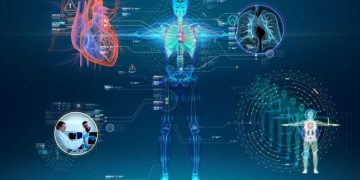
In healthcare, AI has made significant strides in diagnostic accuracy, personalized medicine, drug discovery, and treatment planning. AI-powered systems are now capable of diagnosing conditions such as cancer, heart disease, and diabetes by analyzing medical images or genetic data with higher accuracy than human doctors in some cases.
- AI in Diagnostics: AI models, such as Google Health’s AI for breast cancer detection, have surpassed human radiologists in terms of diagnostic accuracy. Deep learning algorithms trained on massive datasets of medical images can detect early signs of diseases, even in their asymptomatic stages.
- AI for Personalized Medicine: AI is being used to tailor medical treatments to individual patients based on their genetic makeup, medical history, and other personal factors. This is particularly impactful in areas like oncology and pharmacogenomics.
2.1.2 Financial Services
AI is reshaping the financial services industry by enabling more efficient fraud detection, algorithmic trading, and personalized financial services. Machine learning algorithms can analyze vast amounts of transactional data to detect suspicious behavior or predict market trends.
- Fraud Detection: Banks and financial institutions are leveraging AI for real-time fraud detection by monitoring transactions and identifying unusual patterns indicative of fraud.
- Algorithmic Trading: Hedge funds and investment firms use AI-powered algorithms to conduct high-frequency trading, where decisions are made within milliseconds to exploit market opportunities.
2.1.3 Manufacturing and Automation
AI-powered automation in manufacturing has led to smarter, more efficient production lines, as well as predictive maintenance systems that reduce downtime.
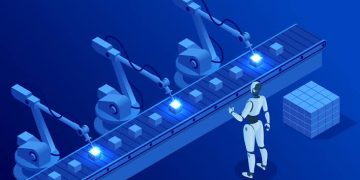
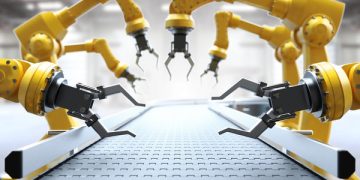
- Robotics and Automation: AI-driven robots can now perform complex tasks on production lines, from assembling electronic devices to packaging goods. These robots can adapt to different tasks and optimize their performance over time.
- Predictive Maintenance: AI systems can predict when machinery is likely to fail, allowing companies to perform maintenance proactively and avoid costly downtime.
2.1.4 Retail and E-commerce
AI’s role in retail and e-commerce is also significant. From recommendation systems to personalized marketing, AI is transforming the way retailers interact with customers.
- Personalized Recommendations: Companies like Amazon and Netflix use AI-powered recommendation systems to suggest products or content based on users’ previous behaviors, preferences, and purchases. These personalized systems have dramatically increased sales and customer engagement.
- Supply Chain Optimization: Retailers are using AI to predict demand, optimize inventory management, and improve supply chain logistics. AI can analyze consumer data to forecast demand fluctuations and optimize stock levels in real-time.
2.2 Driving Innovation with AI: The Role of Research Institutions and Companies
Many experts agree that AI’s rapid progression is not just a result of incremental advancements in machine learning and hardware but also a reflection of extensive collaboration between research institutions, tech giants, and startups. Key players driving AI’s industrial breakthrough include:
2.2.1 Tech Giants and Corporate Research
Large companies such as Google, Amazon, Microsoft, and IBM have invested billions of dollars in AI research and development. These companies are not only developing AI tools but are also applying AI to their internal operations and customer-facing services, thereby accelerating AI adoption across industries.
- Google DeepMind: A leader in deep learning and reinforcement learning, DeepMind has achieved major milestones, such as AlphaGo, an AI program that defeated the world champion in the complex game of Go. This has prompted a new wave of interest in AI’s potential to solve problems in complex domains like healthcare and climate change.
- Microsoft AI: Microsoft’s AI initiatives have been instrumental in bringing AI to the enterprise. The company’s Azure cloud platform, which incorporates AI services for data analysis, natural language understanding, and computer vision, has accelerated AI adoption in businesses worldwide.
2.2.2 Startups and Research Institutes
Many startups are also making significant contributions to AI development, often focusing on niche applications and innovative AI solutions. Additionally, academic research institutions continue to push the boundaries of AI in areas like ethics, explainability, and general AI.
- OpenAI: A non-profit research organization that aims to ensure that artificial general intelligence (AGI) benefits all of humanity. OpenAI has developed cutting-edge models, including GPT-3 and DALL·E, which have significantly advanced natural language generation and image synthesis.
- Stanford AI Lab: Stanford University continues to be a major hub for AI research, making substantial contributions to deep learning, reinforcement learning, and robotics.
3. AI’s Impact on the Workforce and Society
3.1 The Future of Work in the Age of AI
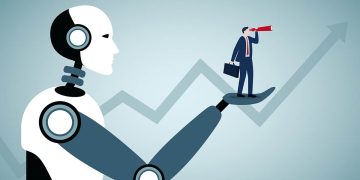
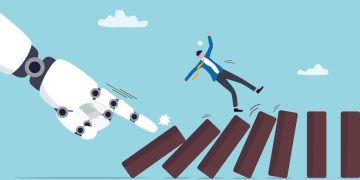
As AI continues to break through into various industries, its impact on the workforce is becoming more evident. While AI will automate many routine and repetitive tasks, it will also create new opportunities for human workers to engage in more complex, creative, and strategic roles.
- Job Creation and Transformation: New jobs are emerging in fields like AI research, data science, and robotics engineering. Existing roles in industries like healthcare, manufacturing, and finance are evolving as workers need to become proficient in managing and working alongside AI systems.
- Upskilling and Reskilling: The rapid integration of AI means that continuous learning and upskilling will become critical. Educational institutions and online learning platforms like Coursera, edX, and Udacity are offering specialized courses to help workers gain AI skills.
3.2 Societal Impacts of AI
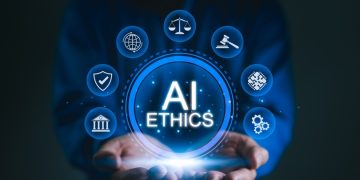
AI also has broader societal implications, particularly in terms of ethics and privacy. Governments and organizations must address challenges such as:
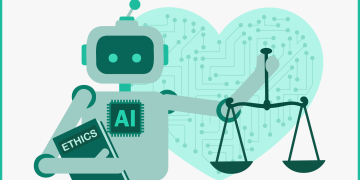
- Bias and Fairness: Ensuring that AI systems are not biased in decision-making processes, particularly in areas like hiring, criminal justice, and lending, is a critical concern.
- Privacy Concerns: The vast amounts of personal data required to train AI systems raise concerns about data privacy and security. Proper regulations will be essential to mitigate these risks.
Conclusion: The Dawn of AI’s Industrial Revolution
AI has officially entered the “breaking wall” stage, marking a monumental shift from its early days in research labs to large-scale, industrial applications. As AI continues to evolve, it will undoubtedly transform how industries operate, impact the workforce, and shape society. The future of AI promises even more breakthroughs, making this an exciting time for professionals, businesses, and innovators alike. However, it is important to manage its growth responsibly, ensuring that its potential benefits are maximized while addressing the challenges that come with its widespread adoption.