
















AIInsiderUpdates
  • Home
  • AI News
    Global AI Competition: Dominance in the AI Chip Sector, with NVIDIA Maintaining Its Leading Position

    Global AI Competition: Dominance in the AI Chip Sector, with NVIDIA Maintaining Its Leading Position

    AI Is No Longer Confined to Text Generation: Toward Integrated Capabilities in Vision, Perception, and Embodied Robotics

    AI Is No Longer Confined to Text Generation: Toward Integrated Capabilities in Vision, Perception, and Embodied Robotics

    AI Technology and Its Integration with Traditional Industries as a Key to Enhancing Enterprise Competitiveness

    AI Technology and Its Integration with Traditional Industries as a Key to Enhancing Enterprise Competitiveness

    AI Has Entered the ‘Breaking Wall’ Stage: From Laboratory Development to Large-Scale Industrial Applications

    AI Has Entered the ‘Breaking Wall’ Stage: From Laboratory Development to Large-Scale Industrial Applications

    AI and the Intensifying Competition in the Semiconductor Industry

    AI and the Intensifying Competition in the Semiconductor Industry

    New AI Chips and Heterogeneous Architectures Driving the Computational Power Revolution

    New AI Chips and Heterogeneous Architectures Driving the Computational Power Revolution

  • Technology Trends
    Natural Language Processing: One of the Core Pillars of AI

    Natural Language Processing: One of the Core Pillars of AI

    Deep Learning Simulates Human Brain Signal Processing Pathways Through the Construction of Multi-Layer Neural Networks

    Deep Learning Simulates Human Brain Signal Processing Pathways Through the Construction of Multi-Layer Neural Networks

    Autonomous Driving and Robotics: Continuous Advancements in Perception and Intelligent Decision-Making Capabilities

    Autonomous Driving and Robotics: Continuous Advancements in Perception and Intelligent Decision-Making Capabilities

    AI in Assisting Pathological Image Recognition, Disease Diagnosis, and Personalized Treatment Plans

    AI in Assisting Pathological Image Recognition, Disease Diagnosis, and Personalized Treatment Plans

    NLP Technologies: From Understanding to Generation

    NLP Technologies: From Understanding to Generation

    Self-Supervised Learning, Federated Learning, and Other Emerging Training Methods: Reducing the Dependence on Labeled Data and Improving Model Generalization

    Self-Supervised Learning, Federated Learning, and Other Emerging Training Methods: Reducing the Dependence on Labeled Data and Improving Model Generalization

  • Interviews & Opinions
    Experts Predict That Future AI Data Labeling and Training Will Rely More on Domain Expert Skills Rather Than Fully Synthetic Data

    Experts Predict That Future AI Data Labeling and Training Will Rely More on Domain Expert Skills Rather Than Fully Synthetic Data

    Public Attention on the Immediate Impact of Artificial Intelligence on Employment and Privacy

    Public Attention on the Immediate Impact of Artificial Intelligence on Employment and Privacy

    The Role of AI in Think Tanks and Strategic Research

    The Role of AI in Think Tanks and Strategic Research

    AI Security and Responsible Development: Perspectives and Insights

    AI Security and Responsible Development: Perspectives and Insights

    AI’s Impact on Industry and Employment

    AI’s Impact on Industry and Employment

    Multimodal and the Next-Generation AI Models Breakthroughs

    Multimodal and the Next-Generation AI Models Breakthroughs

  • Case Studies
    BMW Leverages AI + Digital Twin Technology to Simulate Production Processes and Train Models for Defect Detection

    BMW Leverages AI + Digital Twin Technology to Simulate Production Processes and Train Models for Defect Detection

    Traditional Industries Such as Retail and Manufacturing Apply Artificial Intelligence to Predictive Maintenance and Demand Forecasting

    Traditional Industries Such as Retail and Manufacturing Apply Artificial Intelligence to Predictive Maintenance and Demand Forecasting

    Financial Industry: Risk Control and Intelligent Customer Service

    Financial Industry: Risk Control and Intelligent Customer Service

    Retail and E-Commerce: Smart Forecasting and Enhancing User Experience

    Retail and E-Commerce: Smart Forecasting and Enhancing User Experience

    Automated Health Management and Process Optimization

    Automated Health Management and Process Optimization

    Medical Imaging and Diagnostic Assistance

    Medical Imaging and Diagnostic Assistance

  • Tools & Resources
    How to Start Learning AI from Scratch: A Roadmap and Time Plan

    How to Start Learning AI from Scratch: A Roadmap and Time Plan

    Anthropic Claude: A Large Language Model Focused on Model Safety and Conversational Control, Emphasizing “Controllable and Trustworthy” AI Capabilities

    Anthropic Claude: A Large Language Model Focused on Model Safety and Conversational Control, Emphasizing “Controllable and Trustworthy” AI Capabilities

    AI Model Repositories and Open-Source Resources: A Comprehensive Guide

    AI Model Repositories and Open-Source Resources: A Comprehensive Guide

    The Proliferation of Generative AI Models and Platforms in the Market

    The Proliferation of Generative AI Models and Platforms in the Market

    AI Learning Resources and Tutorial Recommendations

    AI Learning Resources and Tutorial Recommendations

    Cloud Services and Training/Inference Platforms

    Cloud Services and Training/Inference Platforms

AIInsiderUpdates
  • Home
  • AI News
    Global AI Competition: Dominance in the AI Chip Sector, with NVIDIA Maintaining Its Leading Position

    Global AI Competition: Dominance in the AI Chip Sector, with NVIDIA Maintaining Its Leading Position

    AI Is No Longer Confined to Text Generation: Toward Integrated Capabilities in Vision, Perception, and Embodied Robotics

    AI Is No Longer Confined to Text Generation: Toward Integrated Capabilities in Vision, Perception, and Embodied Robotics

    AI Technology and Its Integration with Traditional Industries as a Key to Enhancing Enterprise Competitiveness

    AI Technology and Its Integration with Traditional Industries as a Key to Enhancing Enterprise Competitiveness

    AI Has Entered the ‘Breaking Wall’ Stage: From Laboratory Development to Large-Scale Industrial Applications

    AI Has Entered the ‘Breaking Wall’ Stage: From Laboratory Development to Large-Scale Industrial Applications

    AI and the Intensifying Competition in the Semiconductor Industry

    AI and the Intensifying Competition in the Semiconductor Industry

    New AI Chips and Heterogeneous Architectures Driving the Computational Power Revolution

    New AI Chips and Heterogeneous Architectures Driving the Computational Power Revolution

  • Technology Trends
    Natural Language Processing: One of the Core Pillars of AI

    Natural Language Processing: One of the Core Pillars of AI

    Deep Learning Simulates Human Brain Signal Processing Pathways Through the Construction of Multi-Layer Neural Networks

    Deep Learning Simulates Human Brain Signal Processing Pathways Through the Construction of Multi-Layer Neural Networks

    Autonomous Driving and Robotics: Continuous Advancements in Perception and Intelligent Decision-Making Capabilities

    Autonomous Driving and Robotics: Continuous Advancements in Perception and Intelligent Decision-Making Capabilities

    AI in Assisting Pathological Image Recognition, Disease Diagnosis, and Personalized Treatment Plans

    AI in Assisting Pathological Image Recognition, Disease Diagnosis, and Personalized Treatment Plans

    NLP Technologies: From Understanding to Generation

    NLP Technologies: From Understanding to Generation

    Self-Supervised Learning, Federated Learning, and Other Emerging Training Methods: Reducing the Dependence on Labeled Data and Improving Model Generalization

    Self-Supervised Learning, Federated Learning, and Other Emerging Training Methods: Reducing the Dependence on Labeled Data and Improving Model Generalization

  • Interviews & Opinions
    Experts Predict That Future AI Data Labeling and Training Will Rely More on Domain Expert Skills Rather Than Fully Synthetic Data

    Experts Predict That Future AI Data Labeling and Training Will Rely More on Domain Expert Skills Rather Than Fully Synthetic Data

    Public Attention on the Immediate Impact of Artificial Intelligence on Employment and Privacy

    Public Attention on the Immediate Impact of Artificial Intelligence on Employment and Privacy

    The Role of AI in Think Tanks and Strategic Research

    The Role of AI in Think Tanks and Strategic Research

    AI Security and Responsible Development: Perspectives and Insights

    AI Security and Responsible Development: Perspectives and Insights

    AI’s Impact on Industry and Employment

    AI’s Impact on Industry and Employment

    Multimodal and the Next-Generation AI Models Breakthroughs

    Multimodal and the Next-Generation AI Models Breakthroughs

  • Case Studies
    BMW Leverages AI + Digital Twin Technology to Simulate Production Processes and Train Models for Defect Detection

    BMW Leverages AI + Digital Twin Technology to Simulate Production Processes and Train Models for Defect Detection

    Traditional Industries Such as Retail and Manufacturing Apply Artificial Intelligence to Predictive Maintenance and Demand Forecasting

    Traditional Industries Such as Retail and Manufacturing Apply Artificial Intelligence to Predictive Maintenance and Demand Forecasting

    Financial Industry: Risk Control and Intelligent Customer Service

    Financial Industry: Risk Control and Intelligent Customer Service

    Retail and E-Commerce: Smart Forecasting and Enhancing User Experience

    Retail and E-Commerce: Smart Forecasting and Enhancing User Experience

    Automated Health Management and Process Optimization

    Automated Health Management and Process Optimization

    Medical Imaging and Diagnostic Assistance

    Medical Imaging and Diagnostic Assistance

  • Tools & Resources
    How to Start Learning AI from Scratch: A Roadmap and Time Plan

    How to Start Learning AI from Scratch: A Roadmap and Time Plan

    Anthropic Claude: A Large Language Model Focused on Model Safety and Conversational Control, Emphasizing “Controllable and Trustworthy” AI Capabilities

    Anthropic Claude: A Large Language Model Focused on Model Safety and Conversational Control, Emphasizing “Controllable and Trustworthy” AI Capabilities

    AI Model Repositories and Open-Source Resources: A Comprehensive Guide

    AI Model Repositories and Open-Source Resources: A Comprehensive Guide

    The Proliferation of Generative AI Models and Platforms in the Market

    The Proliferation of Generative AI Models and Platforms in the Market

    AI Learning Resources and Tutorial Recommendations

    AI Learning Resources and Tutorial Recommendations

    Cloud Services and Training/Inference Platforms

    Cloud Services and Training/Inference Platforms

AIInsiderUpdates
No Result
View All Result

Deep Learning Simulates Human Brain Signal Processing Pathways Through the Construction of Multi-Layer Neural Networks

January 14, 2026
Deep Learning Simulates Human Brain Signal Processing Pathways Through the Construction of Multi-Layer Neural Networks

Abstract

Deep learning has emerged as one of the most influential paradigms in modern artificial intelligence (AI), fundamentally reshaping how machines perceive, learn, reason, and make decisions. By constructing multi-layer neural networks inspired by the structural and functional organization of the human brain, deep learning models aim to simulate the hierarchical signal processing pathways that underlie human cognition. This article provides a comprehensive and professional exploration of how deep learning mirrors brain-like information processing, from biological neural mechanisms to artificial neural architectures. We examine the historical evolution of neural networks, the neuroscientific foundations of hierarchical processing, the mathematical principles behind deep models, and their practical implementations across diverse domains. Furthermore, we analyze the limitations of current deep learning systems in capturing true brain intelligence and discuss future directions that may bridge the gap between artificial and biological cognition. Through an interdisciplinary lens combining neuroscience, computer science, and cognitive theory, this article elucidates why deep learning represents both a technological breakthrough and a scientific hypothesis about intelligence itself.


1. Introduction

The quest to understand intelligence—both natural and artificial—has long captivated scientists, philosophers, and engineers. Human intelligence, rooted in the complex structure and dynamic activity of the brain, demonstrates remarkable capabilities: perception, abstraction, learning, creativity, and adaptation. Artificial intelligence, particularly deep learning, seeks to replicate or approximate these capabilities through computational systems.

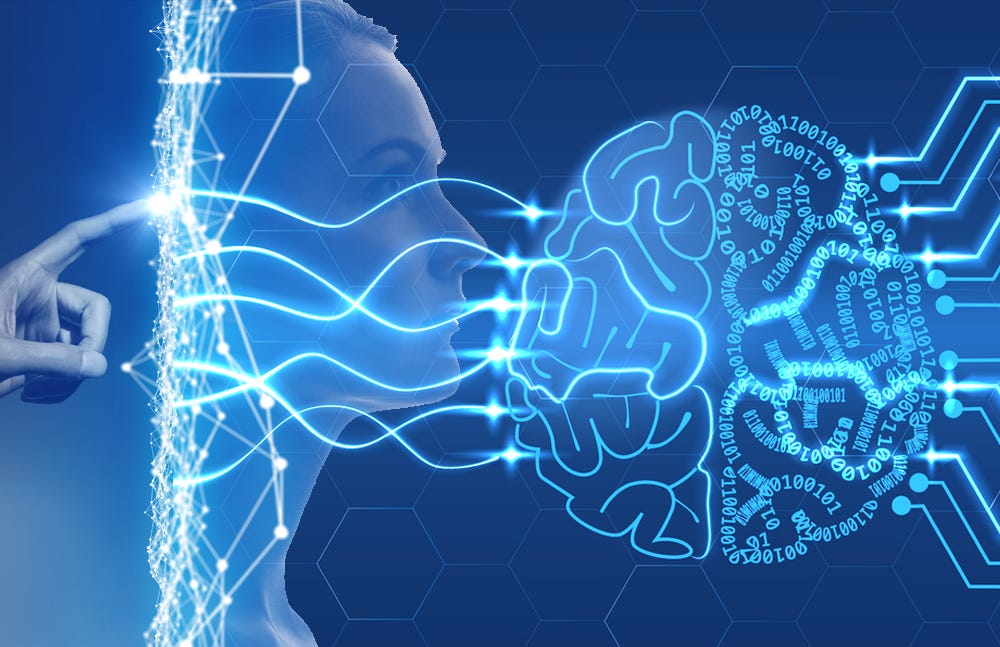
Deep learning distinguishes itself from earlier AI approaches by explicitly embracing a brain-inspired architecture. Instead of relying on handcrafted rules or shallow models, deep learning constructs multi-layer neural networks that process information in stages, reminiscent of how sensory signals propagate through different regions of the human brain. Visual input, for example, is transformed from raw pixel intensities into edges, shapes, objects, and semantic concepts—an abstraction hierarchy that mirrors biological vision.

This article explores deep learning as a computational analogy to human brain signal processing pathways. Rather than claiming that deep neural networks are literal replicas of the brain, we examine how they abstract key principles—distributed representation, hierarchical processing, and adaptive learning—to achieve intelligent behavior. Understanding this relationship not only advances AI engineering but also provides insights into neuroscience and cognitive science.


2. Biological Foundations: Signal Processing in the Human Brain

2.1 Neurons and Synapses

The human brain contains approximately 86 billion neurons interconnected by trillions of synapses. Neurons are specialized cells that transmit electrical and chemical signals. Each neuron integrates inputs from other neurons through dendrites, processes them in the cell body, and transmits outputs via an axon. Synaptic connections vary in strength, allowing learning and memory to emerge through synaptic plasticity.

From a computational perspective, a neuron performs a weighted summation of inputs followed by a nonlinear transformation—an abstraction that directly inspired artificial neurons in neural networks.

2.2 Hierarchical Organization of the Brain

One of the most critical features of brain signal processing is its hierarchical organization. Sensory information is processed through multiple layers of abstraction:

  • Low-level processing: Detection of simple features (e.g., edges, tones).
  • Mid-level processing: Integration into patterns and structures.
  • High-level processing: Semantic interpretation, decision-making, and action planning.

For example, in the visual cortex, signals flow from the retina to the primary visual cortex (V1), then to higher visual areas (V2, V4, IT), each responsible for increasingly abstract representations. This layered processing is a foundational inspiration for deep neural networks.

2.3 Parallelism and Distributed Representation

Unlike traditional computers that process instructions sequentially, the brain operates through massive parallelism. Information is represented in a distributed manner, meaning that concepts are encoded across populations of neurons rather than isolated units. This redundancy enhances robustness and generalization—properties also observed in well-trained deep learning models.


3. From Neuroscience to Computation: The Emergence of Artificial Neural Networks

3.1 Early Neural Models

The earliest artificial neuron models date back to the mid-20th century. The McCulloch–Pitts neuron formalized neurons as binary threshold units, while the perceptron introduced learnable weights. Although these early models were limited, they laid the groundwork for biologically inspired computation.

3.2 The Rise and Fall of Shallow Networks

Single-layer and shallow neural networks demonstrated promise but quickly encountered limitations in representing complex functions. The inability of perceptrons to solve non-linearly separable problems highlighted the need for multiple layers. However, computational constraints and training difficulties led to periods of reduced interest in neural networks.

3.3 The Deep Learning Renaissance

The resurgence of neural networks in the 21st century—often called the deep learning revolution—was enabled by three key factors:

  1. Large-scale data availability
  2. Increased computational power (GPUs and specialized hardware)
  3. Algorithmic advances such as backpropagation, activation functions, and regularization

These advances made it feasible to train deep, multi-layer networks that approximate complex hierarchical mappings, echoing the brain’s signal processing pathways.

4. Architecture of Deep Neural Networks

4.1 Layers as Processing Stages

In deep learning, a neural network consists of an input layer, multiple hidden layers, and an output layer. Each hidden layer transforms the representation from the previous layer into a more abstract form. This layered transformation parallels the progression of information through cortical regions.

4.2 Nonlinearity and Representation Power

Nonlinear activation functions—such as ReLU, sigmoid, and tanh—are essential for modeling complex relationships. Without nonlinearity, stacked layers would collapse into a single linear transformation. In biological terms, nonlinear neuronal firing enables the brain to encode rich, high-dimensional representations.

4.3 Specialized Architectures Inspired by Brain Functions

Different deep learning architectures reflect specific aspects of brain processing:

  • Convolutional Neural Networks (CNNs): Inspired by the visual cortex, CNNs exploit spatial locality and hierarchical feature extraction.
  • Recurrent Neural Networks (RNNs): Model temporal dynamics, resembling sequential processing in language and memory.
  • Transformers: Though less biologically grounded, they capture long-range dependencies and parallel attention mechanisms.

Each architecture emphasizes different signal processing pathways found in human cognition.


5. Learning Mechanisms: From Synaptic Plasticity to Backpropagation

5.1 Biological Learning Principles

Learning in the brain is primarily driven by synaptic plasticity—the ability of synapses to strengthen or weaken based on activity. Hebbian learning, often summarized as “cells that fire together wire together,” captures a key principle of experience-driven adaptation.

5.2 Backpropagation as an Approximation

In deep learning, backpropagation computes gradients of a loss function and adjusts weights to minimize error. While not biologically identical to synaptic learning, backpropagation serves as an efficient computational mechanism for optimizing multi-layer systems.

Researchers continue to explore biologically plausible alternatives that more closely resemble brain learning while retaining computational effectiveness.

5.3 Representation Learning

One of deep learning’s greatest strengths is its ability to automatically learn representations from data. Rather than relying on handcrafted features, deep networks discover task-relevant abstractions—much like the brain learns perceptual categories through experience.


6. Deep Learning as a Model of Cognitive Processing

6.1 Perception and Pattern Recognition

Deep learning has achieved human-level or superhuman performance in tasks such as image recognition, speech processing, and game playing. These achievements reinforce the analogy between deep networks and sensory processing pathways in the brain.

6.2 Memory, Attention, and Reasoning

Modern architectures incorporate mechanisms analogous to cognitive functions:

  • Attention mechanisms prioritize relevant information.
  • Memory networks store and retrieve contextual knowledge.
  • Hierarchical reasoning emerges through layered abstraction.

Although simplified, these mechanisms offer computational analogs to human cognition.

6.3 Learning Transfer and Generalization

Humans excel at transferring knowledge across domains. Deep learning models, particularly those trained with large datasets and pretraining strategies, increasingly demonstrate transfer learning capabilities, reflecting a core property of biological intelligence.


7. Applications Across Domains

7.1 Computer Vision

Deep learning models process visual data through hierarchical layers that mirror visual cortex pathways. Applications include medical imaging, autonomous driving, and remote sensing.

7.2 Natural Language Processing

Language processing involves sequential and hierarchical structures. Deep models capture syntax, semantics, and context, enabling translation, summarization, and dialogue systems.

7.3 Neuroscience and Brain Modeling

Deep learning is not only inspired by the brain but also used to study it. Neural networks help model brain activity, decode neural signals, and test hypotheses about cognitive processing.

7.4 Robotics and Embodied Intelligence

By integrating perception, decision-making, and control, deep learning enables robots to interact with complex environments—approaching the adaptive behavior seen in biological organisms.


8. Limitations and Fundamental Differences

8.1 Energy Efficiency

The human brain operates on approximately 20 watts of power, while deep learning models often require enormous computational resources. This gap highlights fundamental differences in efficiency.

8.2 Learning Flexibility

Humans learn from limited data and adapt rapidly. Deep learning typically requires large datasets and extensive training, indicating that current models capture only part of brain intelligence.

8.3 Consciousness and Understanding

While deep learning systems can perform tasks effectively, they lack subjective experience and true understanding. The simulation of signal processing does not equate to consciousness or self-awareness.


9. Future Directions: Toward Brain-Inspired Intelligence

9.1 Neuromorphic Computing

Hardware designed to mimic neural architectures may bridge efficiency gaps and bring AI closer to biological computation.

9.2 Integrating Symbolic and Neural Approaches

Combining deep learning with symbolic reasoning may reflect higher-level cognitive functions in the brain.

9.3 Interdisciplinary Collaboration

Advances in AI increasingly depend on collaboration between neuroscience, psychology, computer science, and philosophy, fostering a deeper understanding of intelligence itself.


10. Conclusion

Deep learning, through the construction of multi-layer neural networks, represents a powerful computational analogy to human brain signal processing pathways. By abstracting key principles such as hierarchical organization, distributed representation, and adaptive learning, deep learning systems achieve remarkable performance across diverse domains.

While these models do not replicate the full complexity of the human brain, they provide valuable insights into how layered processing can give rise to intelligent behavior. As research continues to integrate biological inspiration with computational innovation, deep learning will remain both a practical technology and a conceptual framework for exploring the nature of intelligence.

Ultimately, the study of deep learning is not merely about building smarter machines—it is also about understanding ourselves.


Tags: Deep learningneural networksTechnology Trends
ShareTweetShare

Related Posts

Natural Language Processing: One of the Core Pillars of AI
Technology Trends

Natural Language Processing: One of the Core Pillars of AI

January 15, 2026
Autonomous Driving and Robotics: Continuous Advancements in Perception and Intelligent Decision-Making Capabilities
Technology Trends

Autonomous Driving and Robotics: Continuous Advancements in Perception and Intelligent Decision-Making Capabilities

January 13, 2026
AI in Assisting Pathological Image Recognition, Disease Diagnosis, and Personalized Treatment Plans
Technology Trends

AI in Assisting Pathological Image Recognition, Disease Diagnosis, and Personalized Treatment Plans

January 12, 2026
NLP Technologies: From Understanding to Generation
Technology Trends

NLP Technologies: From Understanding to Generation

January 11, 2026
Self-Supervised Learning, Federated Learning, and Other Emerging Training Methods: Reducing the Dependence on Labeled Data and Improving Model Generalization
Technology Trends

Self-Supervised Learning, Federated Learning, and Other Emerging Training Methods: Reducing the Dependence on Labeled Data and Improving Model Generalization

January 10, 2026
Natural Language Processing (NLP) Enters a Phase of Maturity and Innovation
Technology Trends

Natural Language Processing (NLP) Enters a Phase of Maturity and Innovation

January 9, 2026
Leave Comment
  • Trending
  • Comments
  • Latest
How Artificial Intelligence is Achieving Revolutionary Breakthroughs in the Healthcare Industry: What Success Stories Teach Us

How Artificial Intelligence is Achieving Revolutionary Breakthroughs in the Healthcare Industry: What Success Stories Teach Us

July 26, 2025
AI in the Financial Sector: Which Innovative Strategies Are Driving Digital Transformation?

AI in the Financial Sector: Which Innovative Strategies Are Driving Digital Transformation?

July 26, 2025
From Beginner to Expert: Which AI Platforms Are Best for Beginners? Experts’ Take on Learning Curves and Practical Applications

From Beginner to Expert: Which AI Platforms Are Best for Beginners? Experts’ Take on Learning Curves and Practical Applications

July 23, 2025
How to Find Truly Useful AI Resources Among the Crowd? Experts Share How to Select Efficient and Innovative Tools!

How to Find Truly Useful AI Resources Among the Crowd? Experts Share How to Select Efficient and Innovative Tools!

July 23, 2025
How Artificial Intelligence Enhances Diagnostic Accuracy and Transforms Treatment Methods in Healthcare

How Artificial Intelligence Enhances Diagnostic Accuracy and Transforms Treatment Methods in Healthcare

How AI Enhances Customer Experience and Drives Sales Growth in Retail

How AI Enhances Customer Experience and Drives Sales Growth in Retail

How Artificial Intelligence Enables Precise Risk Assessment and Decision-Making

How Artificial Intelligence Enables Precise Risk Assessment and Decision-Making

How AI is Driving the Revolution in Smart Manufacturing and Production Efficiency

How AI is Driving the Revolution in Smart Manufacturing and Production Efficiency

How to Start Learning AI from Scratch: A Roadmap and Time Plan

How to Start Learning AI from Scratch: A Roadmap and Time Plan

January 15, 2026
BMW Leverages AI + Digital Twin Technology to Simulate Production Processes and Train Models for Defect Detection

BMW Leverages AI + Digital Twin Technology to Simulate Production Processes and Train Models for Defect Detection

January 15, 2026
Experts Predict That Future AI Data Labeling and Training Will Rely More on Domain Expert Skills Rather Than Fully Synthetic Data

Experts Predict That Future AI Data Labeling and Training Will Rely More on Domain Expert Skills Rather Than Fully Synthetic Data

January 15, 2026
Natural Language Processing: One of the Core Pillars of AI

Natural Language Processing: One of the Core Pillars of AI

January 15, 2026
AIInsiderUpdates

Our platform is dedicated to delivering comprehensive coverage of AI developments, featuring news, case studies, expert interviews, and valuable resources for professionals and enthusiasts alike.

© 2025 aiinsiderupdates.com. contacts:[email protected]

No Result
View All Result
  • Home
  • AI News
  • Technology Trends
  • Interviews & Opinions
  • Case Studies
  • Tools & Resources

© 2025 aiinsiderupdates.com. contacts:[email protected]

Welcome Back!

Login to your account below

Forgotten Password?

Retrieve your password

Please enter your username or email address to reset your password.

Log In