




















Abstract
As artificial intelligence (AI) systems rapidly transition from experimental technologies to pervasive societal infrastructures, public attention has increasingly focused on their immediate and tangible impacts—particularly on employment and privacy. Unlike earlier technological revolutions whose effects unfolded gradually, AI-driven automation, algorithmic decision-making, and large-scale data analytics are reshaping labor markets and personal data governance in real time. This article provides a comprehensive, professional, and critical examination of how AI is transforming employment structures and redefining privacy boundaries. It analyzes the economic, social, legal, and ethical dimensions of these changes, highlighting both opportunities and risks. By integrating perspectives from economics, sociology, technology policy, and ethics, the article aims to clarify why public concern has intensified and how societies can respond through informed governance, adaptive education, and responsible innovation.
1. Introduction
Artificial intelligence has moved beyond the realm of science fiction and academic research into the core of everyday life. AI systems now screen job applications, recommend products, monitor public spaces, generate content, and optimize business operations. These developments have delivered unprecedented efficiency and innovation, yet they have also triggered widespread public concern. Among the many issues associated with AI, two stand out as the most immediate and emotionally resonant: employment and privacy.
Unlike long-term speculative risks, such as superintelligence or existential threats, employment disruption and privacy erosion are already being experienced by individuals, organizations, and governments. Workers worry about job displacement, skill obsolescence, and wage polarization, while citizens express anxiety over data collection, surveillance, and loss of control over personal information. These concerns are not abstract—they are grounded in observable changes occurring across industries and societies.
This article explores why public attention has converged on these two dimensions of AI impact, how AI technologies are reshaping labor and privacy in concrete ways, and what this means for the future of work, personal autonomy, and social trust. By focusing on the immediate effects rather than distant possibilities, we aim to provide a grounded and actionable understanding of one of the defining challenges of the AI era.
2. Why Employment and Privacy Dominate Public Concern
2.1 Tangibility and Personal Relevance
Employment and privacy are foundational to individual well-being. A job provides income, identity, and social status, while privacy underpins autonomy, dignity, and freedom. When AI threatens either, the impact is felt directly and personally. Unlike abstract technological metrics, job loss or data misuse affects daily life in visible ways.
2.2 Speed of Technological Deployment
AI systems can be deployed at scale with remarkable speed. A single software update can automate thousands of tasks, and a new data analytics platform can instantly aggregate information on millions of users. This rapid diffusion leaves little time for gradual adaptation, intensifying public anxiety.
2.3 Media Coverage and Public Discourse
High-profile cases—such as mass layoffs attributed to automation, data breaches, or revelations of algorithmic surveillance—have amplified public awareness. Media narratives often frame AI as both a revolutionary force and a disruptive threat, reinforcing the perception of urgency.
3. AI and Employment: Transforming the World of Work
3.1 Automation and Job Displacement
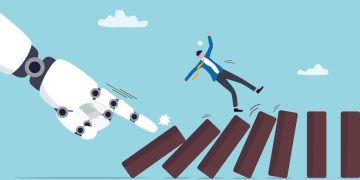
One of the most visible impacts of AI on employment is automation. Machine learning algorithms and robotic systems can now perform tasks once thought to require human intelligence, including image recognition, language translation, customer service, and even basic legal or medical analysis.
3.1.1 Routine and Non-Routine Tasks
Early automation primarily affected routine, manual labor. AI, however, extends automation into non-routine cognitive tasks. This shift challenges the traditional assumption that education alone guarantees job security.
3.1.2 Sectors Most Affected
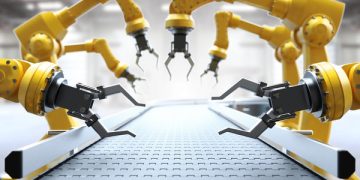
- Manufacturing: Predictive maintenance and robotic assembly reduce demand for manual labor.
- Services: Chatbots and automated scheduling replace entry-level service roles.
- Finance and Law: Algorithmic analysis accelerates tasks such as auditing, compliance, and document review.
3.2 Job Transformation Rather Than Elimination
While displacement is a real concern, AI also transforms existing jobs. Many roles are not eliminated but redefined, requiring workers to collaborate with AI systems.
- Augmented decision-making in healthcare and engineering
- Human-in-the-loop systems in content moderation and quality control
- New roles such as AI trainers, data curators, and ethics officers
This transformation demands continuous skill development and adaptability.
3.3 Skill Polarization and Inequality
AI tends to increase demand for high-skill, high-wage jobs while reducing opportunities for middle-skill roles. This polarization can exacerbate income inequality and social stratification.
- Highly educated workers benefit from productivity gains
- Low-skill workers face displacement without clear pathways to reskilling
- Regional disparities intensify as AI adoption concentrates in urban tech hubs
3.4 Psychological and Social Impacts
Beyond economics, employment disruption affects mental health and social cohesion. Job insecurity can lead to stress, loss of identity, and diminished trust in institutions. Public concern reflects not only financial risk but also fear of social marginalization.

4. AI and Privacy: Redefining Personal Data Boundaries
4.1 The Data-Driven Nature of AI
Modern AI systems rely on vast amounts of data to function effectively. Personal data—such as location, behavior, preferences, and biometric information—has become a critical resource.
4.2 Surveillance and Data Collection
AI enables unprecedented forms of surveillance:
- Facial recognition in public and private spaces
- Behavioral tracking through apps and online platforms
- Predictive analytics that infer sensitive attributes
While often justified for security or convenience, these practices raise concerns about consent, proportionality, and misuse.
4.3 Erosion of Informed Consent
Traditional privacy frameworks assume that individuals can meaningfully consent to data use. In practice, AI systems operate through complex data flows that are difficult for users to understand or control. Consent becomes symbolic rather than substantive.
4.4 Algorithmic Profiling and Discrimination
AI-driven profiling can categorize individuals based on predicted behavior or risk. Such profiling affects access to employment, credit, insurance, and public services, often without transparency or recourse.
Public concern intensifies when privacy violations intersect with discrimination and social exclusion.
5. The Intersection of Employment and Privacy
5.1 Workplace Surveillance
AI-powered monitoring tools track employee productivity, communication patterns, and even emotional states. While employers argue these tools improve efficiency, workers often perceive them as intrusive.
- Continuous monitoring blurs the boundary between work and personal life
- Data collected for performance evaluation may be repurposed
- Power asymmetry limits employee choice
5.2 Algorithmic Hiring and Management
AI systems increasingly influence hiring, promotion, and termination decisions. These systems rely on personal data and predictive models, raising concerns about bias, transparency, and accountability.
The combination of job insecurity and opaque data use amplifies public unease.
6. Legal and Regulatory Responses
6.1 Employment Law and AI
Existing labor laws were designed for human decision-makers. AI challenges these frameworks by introducing algorithmic authority.
Key regulatory questions include:
- Who is responsible for AI-driven employment decisions?
- How can workers contest automated outcomes?
- What protections exist against algorithmic bias?
6.2 Data Protection and Privacy Regulation
Regulations such as data protection laws aim to safeguard personal information, but enforcement struggles to keep pace with AI innovation.
Challenges include:
- Cross-border data flows
- Rapid evolution of AI techniques
- Limited technical expertise among regulators
Public trust depends on whether legal systems can provide meaningful oversight.
7. Ethical Dimensions and Public Trust
7.1 Fairness and Transparency
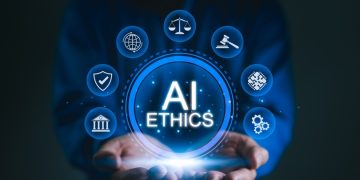
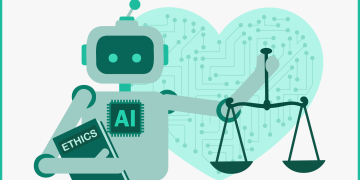
Ethical AI principles emphasize fairness, accountability, and transparency. However, translating these principles into practice remains difficult.
- Complex models resist explanation
- Commercial incentives may conflict with ethical goals
- Ethical guidelines lack enforcement mechanisms
7.2 Trust as a Social Resource
Public trust is essential for the sustainable adoption of AI. Employment insecurity and privacy violations erode this trust, leading to resistance, backlash, and social polarization.
8. The Role of Education and Reskilling
8.1 Lifelong Learning as a Necessity
As AI reshapes employment, continuous education becomes essential. Public concern reflects uncertainty about whether individuals and institutions can adapt quickly enough.
8.2 Digital Literacy and Privacy Awareness
Understanding how AI uses data empowers individuals to make informed choices. Education plays a critical role in reducing fear and misinformation.
9. Corporate Responsibility and Governance
9.1 Responsible AI Development
Companies developing and deploying AI systems influence employment and privacy outcomes directly. Responsible practices include:
- Impact assessments
- Inclusive design
- Transparent data policies
9.2 Stakeholder Engagement
Engaging workers, users, and communities in AI governance can mitigate conflict and build legitimacy.
10. Future Outlook: Managing Immediate Impacts
10.1 Balancing Innovation and Protection
The challenge is not to halt AI development but to guide it. Policies must balance economic competitiveness with social protection.
10.2 Adaptive Institutions
Governments, educational systems, and labor organizations must evolve to address AI’s immediate effects. Static institutions cannot manage dynamic technologies.
11. Conclusion
Public attention on the immediate impact of artificial intelligence on employment and privacy reflects a rational response to rapid and profound change. AI is reshaping how people work, how decisions are made, and how personal data is collected and used—often faster than social norms and legal frameworks can adapt.
Employment and privacy concerns dominate public discourse because they touch the core of human security and autonomy. Job displacement, workplace surveillance, data exploitation, and algorithmic decision-making are not future scenarios; they are present realities.
Addressing these challenges requires more than technical solutions. It demands inclusive governance, ethical commitment, legal innovation, and sustained public dialogue. By acknowledging and responding to these concerns, societies can harness the benefits of AI while protecting the values that underpin social stability and human dignity.
In this sense, public concern is not an obstacle to progress but a vital signal—one that calls for responsible, human-centered approaches to artificial intelligence in the modern world.