

























AIInsiderUpdates
  • Home
  • AI News
    Global AI Competition: Dominance in the AI Chip Sector, with NVIDIA Maintaining Its Leading Position

    Global AI Competition: Dominance in the AI Chip Sector, with NVIDIA Maintaining Its Leading Position

    AI Is No Longer Confined to Text Generation: Toward Integrated Capabilities in Vision, Perception, and Embodied Robotics

    AI Is No Longer Confined to Text Generation: Toward Integrated Capabilities in Vision, Perception, and Embodied Robotics

    AI Technology and Its Integration with Traditional Industries as a Key to Enhancing Enterprise Competitiveness

    AI Technology and Its Integration with Traditional Industries as a Key to Enhancing Enterprise Competitiveness

    AI Has Entered the ‘Breaking Wall’ Stage: From Laboratory Development to Large-Scale Industrial Applications

    AI Has Entered the ‘Breaking Wall’ Stage: From Laboratory Development to Large-Scale Industrial Applications

    AI and the Intensifying Competition in the Semiconductor Industry

    AI and the Intensifying Competition in the Semiconductor Industry

    New AI Chips and Heterogeneous Architectures Driving the Computational Power Revolution

    New AI Chips and Heterogeneous Architectures Driving the Computational Power Revolution

  • Technology Trends
    Natural Language Processing: One of the Core Pillars of AI

    Natural Language Processing: One of the Core Pillars of AI

    Deep Learning Simulates Human Brain Signal Processing Pathways Through the Construction of Multi-Layer Neural Networks

    Deep Learning Simulates Human Brain Signal Processing Pathways Through the Construction of Multi-Layer Neural Networks

    Autonomous Driving and Robotics: Continuous Advancements in Perception and Intelligent Decision-Making Capabilities

    Autonomous Driving and Robotics: Continuous Advancements in Perception and Intelligent Decision-Making Capabilities

    AI in Assisting Pathological Image Recognition, Disease Diagnosis, and Personalized Treatment Plans

    AI in Assisting Pathological Image Recognition, Disease Diagnosis, and Personalized Treatment Plans

    NLP Technologies: From Understanding to Generation

    NLP Technologies: From Understanding to Generation

    Self-Supervised Learning, Federated Learning, and Other Emerging Training Methods: Reducing the Dependence on Labeled Data and Improving Model Generalization

    Self-Supervised Learning, Federated Learning, and Other Emerging Training Methods: Reducing the Dependence on Labeled Data and Improving Model Generalization

  • Interviews & Opinions
    Experts Predict That Future AI Data Labeling and Training Will Rely More on Domain Expert Skills Rather Than Fully Synthetic Data

    Experts Predict That Future AI Data Labeling and Training Will Rely More on Domain Expert Skills Rather Than Fully Synthetic Data

    Public Attention on the Immediate Impact of Artificial Intelligence on Employment and Privacy

    Public Attention on the Immediate Impact of Artificial Intelligence on Employment and Privacy

    The Role of AI in Think Tanks and Strategic Research

    The Role of AI in Think Tanks and Strategic Research

    AI Security and Responsible Development: Perspectives and Insights

    AI Security and Responsible Development: Perspectives and Insights

    AI’s Impact on Industry and Employment

    AI’s Impact on Industry and Employment

    Multimodal and the Next-Generation AI Models Breakthroughs

    Multimodal and the Next-Generation AI Models Breakthroughs

  • Case Studies
    BMW Leverages AI + Digital Twin Technology to Simulate Production Processes and Train Models for Defect Detection

    BMW Leverages AI + Digital Twin Technology to Simulate Production Processes and Train Models for Defect Detection

    Traditional Industries Such as Retail and Manufacturing Apply Artificial Intelligence to Predictive Maintenance and Demand Forecasting

    Traditional Industries Such as Retail and Manufacturing Apply Artificial Intelligence to Predictive Maintenance and Demand Forecasting

    Financial Industry: Risk Control and Intelligent Customer Service

    Financial Industry: Risk Control and Intelligent Customer Service

    Retail and E-Commerce: Smart Forecasting and Enhancing User Experience

    Retail and E-Commerce: Smart Forecasting and Enhancing User Experience

    Automated Health Management and Process Optimization

    Automated Health Management and Process Optimization

    Medical Imaging and Diagnostic Assistance

    Medical Imaging and Diagnostic Assistance

  • Tools & Resources
    How to Start Learning AI from Scratch: A Roadmap and Time Plan

    How to Start Learning AI from Scratch: A Roadmap and Time Plan

    Anthropic Claude: A Large Language Model Focused on Model Safety and Conversational Control, Emphasizing “Controllable and Trustworthy” AI Capabilities

    Anthropic Claude: A Large Language Model Focused on Model Safety and Conversational Control, Emphasizing “Controllable and Trustworthy” AI Capabilities

    AI Model Repositories and Open-Source Resources: A Comprehensive Guide

    AI Model Repositories and Open-Source Resources: A Comprehensive Guide

    The Proliferation of Generative AI Models and Platforms in the Market

    The Proliferation of Generative AI Models and Platforms in the Market

    AI Learning Resources and Tutorial Recommendations

    AI Learning Resources and Tutorial Recommendations

    Cloud Services and Training/Inference Platforms

    Cloud Services and Training/Inference Platforms

AIInsiderUpdates
  • Home
  • AI News
    Global AI Competition: Dominance in the AI Chip Sector, with NVIDIA Maintaining Its Leading Position

    Global AI Competition: Dominance in the AI Chip Sector, with NVIDIA Maintaining Its Leading Position

    AI Is No Longer Confined to Text Generation: Toward Integrated Capabilities in Vision, Perception, and Embodied Robotics

    AI Is No Longer Confined to Text Generation: Toward Integrated Capabilities in Vision, Perception, and Embodied Robotics

    AI Technology and Its Integration with Traditional Industries as a Key to Enhancing Enterprise Competitiveness

    AI Technology and Its Integration with Traditional Industries as a Key to Enhancing Enterprise Competitiveness

    AI Has Entered the ‘Breaking Wall’ Stage: From Laboratory Development to Large-Scale Industrial Applications

    AI Has Entered the ‘Breaking Wall’ Stage: From Laboratory Development to Large-Scale Industrial Applications

    AI and the Intensifying Competition in the Semiconductor Industry

    AI and the Intensifying Competition in the Semiconductor Industry

    New AI Chips and Heterogeneous Architectures Driving the Computational Power Revolution

    New AI Chips and Heterogeneous Architectures Driving the Computational Power Revolution

  • Technology Trends
    Natural Language Processing: One of the Core Pillars of AI

    Natural Language Processing: One of the Core Pillars of AI

    Deep Learning Simulates Human Brain Signal Processing Pathways Through the Construction of Multi-Layer Neural Networks

    Deep Learning Simulates Human Brain Signal Processing Pathways Through the Construction of Multi-Layer Neural Networks

    Autonomous Driving and Robotics: Continuous Advancements in Perception and Intelligent Decision-Making Capabilities

    Autonomous Driving and Robotics: Continuous Advancements in Perception and Intelligent Decision-Making Capabilities

    AI in Assisting Pathological Image Recognition, Disease Diagnosis, and Personalized Treatment Plans

    AI in Assisting Pathological Image Recognition, Disease Diagnosis, and Personalized Treatment Plans

    NLP Technologies: From Understanding to Generation

    NLP Technologies: From Understanding to Generation

    Self-Supervised Learning, Federated Learning, and Other Emerging Training Methods: Reducing the Dependence on Labeled Data and Improving Model Generalization

    Self-Supervised Learning, Federated Learning, and Other Emerging Training Methods: Reducing the Dependence on Labeled Data and Improving Model Generalization

  • Interviews & Opinions
    Experts Predict That Future AI Data Labeling and Training Will Rely More on Domain Expert Skills Rather Than Fully Synthetic Data

    Experts Predict That Future AI Data Labeling and Training Will Rely More on Domain Expert Skills Rather Than Fully Synthetic Data

    Public Attention on the Immediate Impact of Artificial Intelligence on Employment and Privacy

    Public Attention on the Immediate Impact of Artificial Intelligence on Employment and Privacy

    The Role of AI in Think Tanks and Strategic Research

    The Role of AI in Think Tanks and Strategic Research

    AI Security and Responsible Development: Perspectives and Insights

    AI Security and Responsible Development: Perspectives and Insights

    AI’s Impact on Industry and Employment

    AI’s Impact on Industry and Employment

    Multimodal and the Next-Generation AI Models Breakthroughs

    Multimodal and the Next-Generation AI Models Breakthroughs

  • Case Studies
    BMW Leverages AI + Digital Twin Technology to Simulate Production Processes and Train Models for Defect Detection

    BMW Leverages AI + Digital Twin Technology to Simulate Production Processes and Train Models for Defect Detection

    Traditional Industries Such as Retail and Manufacturing Apply Artificial Intelligence to Predictive Maintenance and Demand Forecasting

    Traditional Industries Such as Retail and Manufacturing Apply Artificial Intelligence to Predictive Maintenance and Demand Forecasting

    Financial Industry: Risk Control and Intelligent Customer Service

    Financial Industry: Risk Control and Intelligent Customer Service

    Retail and E-Commerce: Smart Forecasting and Enhancing User Experience

    Retail and E-Commerce: Smart Forecasting and Enhancing User Experience

    Automated Health Management and Process Optimization

    Automated Health Management and Process Optimization

    Medical Imaging and Diagnostic Assistance

    Medical Imaging and Diagnostic Assistance

  • Tools & Resources
    How to Start Learning AI from Scratch: A Roadmap and Time Plan

    How to Start Learning AI from Scratch: A Roadmap and Time Plan

    Anthropic Claude: A Large Language Model Focused on Model Safety and Conversational Control, Emphasizing “Controllable and Trustworthy” AI Capabilities

    Anthropic Claude: A Large Language Model Focused on Model Safety and Conversational Control, Emphasizing “Controllable and Trustworthy” AI Capabilities

    AI Model Repositories and Open-Source Resources: A Comprehensive Guide

    AI Model Repositories and Open-Source Resources: A Comprehensive Guide

    The Proliferation of Generative AI Models and Platforms in the Market

    The Proliferation of Generative AI Models and Platforms in the Market

    AI Learning Resources and Tutorial Recommendations

    AI Learning Resources and Tutorial Recommendations

    Cloud Services and Training/Inference Platforms

    Cloud Services and Training/Inference Platforms

AIInsiderUpdates
No Result
View All Result

AI Technology and Its Integration with Traditional Industries as a Key to Enhancing Enterprise Competitiveness

January 13, 2026
AI Technology and Its Integration with Traditional Industries as a Key to Enhancing Enterprise Competitiveness

Introduction: The Transformation of Traditional Industries

In today’s fast-paced digital world, Artificial Intelligence (AI) has evolved from a cutting-edge technology into a mainstream tool that businesses in almost every industry are integrating into their operations. From healthcare and manufacturing to retail and agriculture, AI is revolutionizing the way traditional industries operate, offering companies innovative solutions to enhance productivity, improve decision-making, and ultimately, boost their competitiveness in the market.

The convergence of AI with traditional industries represents a shift towards smarter, more efficient ways of doing business. With AI’s ability to automate tasks, optimize processes, and extract valuable insights from vast amounts of data, enterprises can gain a competitive edge by leveraging these advancements to streamline operations, reduce costs, and enhance customer experiences. In this article, we will explore how AI technologies are being integrated into various sectors and how this fusion is empowering businesses to adapt to the challenges of the modern economy.


1. The Growing Importance of AI in Modern Business

AI is not a one-size-fits-all solution; rather, it offers a diverse set of technologies that can be applied in many different ways across industries. AI encompasses several technologies including machine learning (ML), natural language processing (NLP), computer vision, robotics, and predictive analytics, among others. These tools enable machines to learn, understand, and perform tasks that once required human intervention, transforming how traditional businesses operate.

As competition increases, businesses are constantly searching for new ways to stand out. By integrating AI into business strategies, companies are able to unlock opportunities that were previously impossible. The ability to predict trends, make data-driven decisions, optimize resource allocation, and automate repetitive tasks enables businesses to innovate while remaining agile in a rapidly changing market.


2. Key Areas of AI Integration into Traditional Industries

While the potential applications of AI are nearly endless, its integration into traditional industries has already shown remarkable results. Here are some key sectors where AI is being used to enhance productivity and competitiveness:

2.1 Manufacturing: Automation and Predictive Maintenance

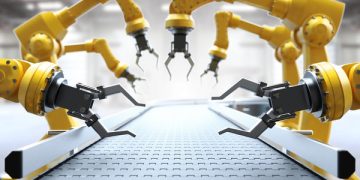
AI is transforming manufacturing operations through automation, predictive maintenance, and supply chain optimization. Traditionally, manufacturing involved manual labor and time-consuming processes, but AI technologies have paved the way for smarter factories.

  • Automation: AI-powered robots are increasingly used in factories to perform repetitive tasks such as assembly, packaging, and quality control. These robots are not only more efficient but also help minimize human error, improving the quality of the final product.
  • Predictive Maintenance: Predictive analytics, powered by AI, allows manufacturers to foresee equipment failures before they happen. By monitoring the health of machinery through sensors and AI models, businesses can reduce downtime and extend the life of their equipment, saving both time and money.
  • Supply Chain Optimization: AI also plays a significant role in managing and optimizing supply chains. AI algorithms can analyze real-time data from various sources to predict demand, optimize inventory levels, and even reduce transportation costs by identifying the most efficient routes.

Real-World Example:

General Electric (GE) is utilizing AI in its manufacturing processes, particularly in the area of predictive maintenance. By employing AI-powered sensors and analytics, GE helps its industrial clients monitor equipment health and prevent costly breakdowns.

2.2 Healthcare: Enhancing Diagnosis and Patient Care

The healthcare sector is one of the most promising areas for AI integration. AI is being used to improve diagnostic accuracy, personalize treatments, and manage patient care more efficiently.

  • Medical Imaging: AI models, particularly those based on deep learning, are improving the accuracy of medical imaging analysis. For example, AI algorithms can now analyze X-rays, CT scans, and MRIs to detect diseases such as cancer, heart disease, and neurological disorders with greater precision than human doctors in some cases.
  • Personalized Medicine: By analyzing large datasets of genetic information and patient records, AI can help tailor personalized treatment plans for individuals, improving outcomes and minimizing side effects.
  • Robotic Surgery: AI-assisted robotic systems are enabling minimally invasive surgeries with greater precision and reduced recovery times. These technologies allow surgeons to perform complex operations with enhanced control and accuracy.

Real-World Example:

IBM’s Watson for Health uses AI to analyze vast datasets of clinical and medical literature, enabling healthcare professionals to make more informed decisions about patient care. It has been particularly effective in oncology, where it helps doctors identify the best treatment options for cancer patients.

2.3 Retail: Customer Insights and Personalized Shopping Experiences

Retailers are increasingly turning to AI to understand customer preferences, optimize supply chains, and create personalized shopping experiences that drive customer loyalty.

  • Personalized Recommendations: AI-driven recommendation systems, such as those used by Amazon and Netflix, suggest products to customers based on their browsing behavior, past purchases, and preferences, increasing sales and customer satisfaction.
  • Inventory Management: AI is also being used to optimize inventory management. By analyzing consumer behavior and sales trends, AI can predict which products are likely to be in high demand, ensuring that retailers maintain optimal stock levels.
  • Chatbots and Virtual Assistants: AI-powered chatbots and virtual assistants are improving customer service by providing instant responses to customer inquiries. These bots can handle common questions, helping businesses reduce wait times and provide 24/7 support.

Real-World Example:

Alibaba’s AI system is designed to recommend products based on real-time customer data, helping retailers boost sales through personalized offers. The company also uses AI to optimize its supply chain by predicting customer demand.

2.4 Agriculture: AI for Precision Farming

The agricultural sector has also embraced AI, leveraging it to enhance crop yields, reduce resource consumption, and improve sustainability.

  • Precision Farming: AI tools help farmers make data-driven decisions about when to plant, irrigate, and harvest crops. By analyzing soil conditions, weather forecasts, and crop health data, AI systems enable farmers to optimize their operations and reduce costs.
  • Drones and Robotics: AI-powered drones are increasingly used in agriculture to monitor large fields, analyze crop health, and even plant seeds. These drones can cover much larger areas in a shorter amount of time than human workers, allowing farmers to focus on other critical tasks.
  • AI for Pest Control: AI systems can detect pests early and recommend the most effective treatments. This reduces the need for chemical pesticides, promoting more sustainable farming practices.

Real-World Example:

John Deere, a leader in agricultural machinery, has integrated AI and machine learning into its equipment to help farmers optimize crop production. Their AI-powered systems analyze data collected from fields to make real-time decisions on planting, irrigation, and harvesting.


3. Benefits of AI Integration for Traditional Industries

The integration of AI into traditional industries offers numerous benefits, all of which contribute to increased competitiveness and sustainability in the market.

3.1 Enhanced Efficiency and Productivity

AI enables businesses to streamline operations by automating repetitive tasks, reducing the reliance on human labor for mundane processes, and improving decision-making. In manufacturing, for instance, AI systems monitor production lines, identify bottlenecks, and ensure that processes run smoothly. The result is a more efficient operation with faster production cycles and fewer errors.

3.2 Improved Decision-Making

AI provides businesses with advanced analytics and insights derived from big data. By leveraging machine learning algorithms, businesses can make informed decisions based on accurate predictions and trends. In sectors like finance, AI can analyze vast amounts of data to identify market trends and forecast financial risks, allowing companies to adjust their strategies accordingly.

3.3 Cost Reduction

AI helps businesses save money by reducing waste, optimizing resource allocation, and predicting maintenance needs before expensive breakdowns occur. In retail, AI can optimize inventory management, reducing overstocking and understocking, while in manufacturing, predictive maintenance helps prevent costly downtime.

3.4 Innovation and Competitive Advantage

AI provides a competitive advantage by enabling companies to innovate and differentiate themselves in their respective markets. By using AI to offer personalized services, enhance customer experiences, and develop innovative products, businesses can stand out from their competitors. AI-driven product development can also lead to the creation of new products and services that better meet customer needs.


4. Challenges and Considerations for AI Adoption in Traditional Industries

While the benefits of AI integration are significant, there are also several challenges that businesses must address to fully capitalize on the technology.

4.1 Data Privacy and Security

AI systems often rely on large datasets to function effectively, raising concerns about data privacy and security. Ensuring that AI models adhere to strict data protection regulations is essential, especially in sectors such as healthcare and finance where sensitive information is involved.

4.2 Workforce Displacement and Reskilling

AI’s automation capabilities may lead to job displacement, particularly in sectors where routine tasks are common. To mitigate these impacts, companies need to focus on reskilling and upskilling their workforce, ensuring that employees can transition into more advanced roles where human oversight and decision-making are required.

4.3 Integration Complexity

Integrating AI into existing systems can be a complex and time-consuming process. Businesses must ensure that their infrastructure is ready to support AI tools and that employees are adequately trained to use them effectively.


Conclusion: AI as a Catalyst for Industry Transformation

The integration of AI into traditional industries is no longer a distant prospect but a reality that is already transforming businesses across the globe. From manufacturing to healthcare, retail to agriculture, AI is driving innovation, enhancing efficiency, and offering businesses a significant competitive edge. As AI technologies continue to evolve, industries must embrace these innovations, invest in the necessary infrastructure, and prepare their workforce for the future. The companies that successfully integrate AI into their operations will not only improve their bottom line but will also become leaders in their respective markets, setting new standards of excellence in the process.


Tags: AI in traditional industriesAI newsAI technology and business transformation
ShareTweetShare

Related Posts

Global AI Competition: Dominance in the AI Chip Sector, with NVIDIA Maintaining Its Leading Position
AI News

Global AI Competition: Dominance in the AI Chip Sector, with NVIDIA Maintaining Its Leading Position

January 15, 2026
AI Is No Longer Confined to Text Generation: Toward Integrated Capabilities in Vision, Perception, and Embodied Robotics
AI News

AI Is No Longer Confined to Text Generation: Toward Integrated Capabilities in Vision, Perception, and Embodied Robotics

January 14, 2026
AI Has Entered the ‘Breaking Wall’ Stage: From Laboratory Development to Large-Scale Industrial Applications
AI News

AI Has Entered the ‘Breaking Wall’ Stage: From Laboratory Development to Large-Scale Industrial Applications

January 12, 2026
AI and the Intensifying Competition in the Semiconductor Industry
AI News

AI and the Intensifying Competition in the Semiconductor Industry

January 11, 2026
New AI Chips and Heterogeneous Architectures Driving the Computational Power Revolution
AI News

New AI Chips and Heterogeneous Architectures Driving the Computational Power Revolution

January 10, 2026
Accelerating AI Penetration in Healthcare, Manufacturing, and Autonomous Driving
AI News

Accelerating AI Penetration in Healthcare, Manufacturing, and Autonomous Driving

January 9, 2026
Leave Comment
  • Trending
  • Comments
  • Latest
How Artificial Intelligence is Achieving Revolutionary Breakthroughs in the Healthcare Industry: What Success Stories Teach Us

How Artificial Intelligence is Achieving Revolutionary Breakthroughs in the Healthcare Industry: What Success Stories Teach Us

July 26, 2025
AI in the Financial Sector: Which Innovative Strategies Are Driving Digital Transformation?

AI in the Financial Sector: Which Innovative Strategies Are Driving Digital Transformation?

July 26, 2025
From Beginner to Expert: Which AI Platforms Are Best for Beginners? Experts’ Take on Learning Curves and Practical Applications

From Beginner to Expert: Which AI Platforms Are Best for Beginners? Experts’ Take on Learning Curves and Practical Applications

July 23, 2025
How to Find Truly Useful AI Resources Among the Crowd? Experts Share How to Select Efficient and Innovative Tools!

How to Find Truly Useful AI Resources Among the Crowd? Experts Share How to Select Efficient and Innovative Tools!

July 23, 2025
How Artificial Intelligence Enhances Diagnostic Accuracy and Transforms Treatment Methods in Healthcare

How Artificial Intelligence Enhances Diagnostic Accuracy and Transforms Treatment Methods in Healthcare

How AI Enhances Customer Experience and Drives Sales Growth in Retail

How AI Enhances Customer Experience and Drives Sales Growth in Retail

How Artificial Intelligence Enables Precise Risk Assessment and Decision-Making

How Artificial Intelligence Enables Precise Risk Assessment and Decision-Making

How AI is Driving the Revolution in Smart Manufacturing and Production Efficiency

How AI is Driving the Revolution in Smart Manufacturing and Production Efficiency

How to Start Learning AI from Scratch: A Roadmap and Time Plan

How to Start Learning AI from Scratch: A Roadmap and Time Plan

January 15, 2026
BMW Leverages AI + Digital Twin Technology to Simulate Production Processes and Train Models for Defect Detection

BMW Leverages AI + Digital Twin Technology to Simulate Production Processes and Train Models for Defect Detection

January 15, 2026
Experts Predict That Future AI Data Labeling and Training Will Rely More on Domain Expert Skills Rather Than Fully Synthetic Data

Experts Predict That Future AI Data Labeling and Training Will Rely More on Domain Expert Skills Rather Than Fully Synthetic Data

January 15, 2026
Natural Language Processing: One of the Core Pillars of AI

Natural Language Processing: One of the Core Pillars of AI

January 15, 2026
AIInsiderUpdates

Our platform is dedicated to delivering comprehensive coverage of AI developments, featuring news, case studies, expert interviews, and valuable resources for professionals and enthusiasts alike.

© 2025 aiinsiderupdates.com. contacts:[email protected]

No Result
View All Result
  • Home
  • AI News
  • Technology Trends
  • Interviews & Opinions
  • Case Studies
  • Tools & Resources

© 2025 aiinsiderupdates.com. contacts:[email protected]

Welcome Back!

Login to your account below

Forgotten Password?

Retrieve your password

Please enter your username or email address to reset your password.

Log In