





























Introduction
The rapid advancement of Artificial Intelligence (AI) technology has brought unprecedented opportunities to various sectors, including healthcare, finance, education, and entertainment. AI is revolutionizing the way we live and work, enabling automation, personalization, and improved decision-making. However, as AI systems become more sophisticated and integrated into critical areas of society, ethical issues have begun to emerge with increasing prominence. The ability of AI to make autonomous decisions, process vast amounts of data, and influence social dynamics raises important questions about accountability, fairness, privacy, bias, and human rights.
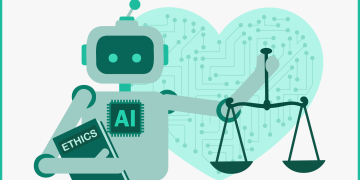
This article explores the ethical challenges arising from the development and deployment of AI, examines key concerns such as bias, privacy, and accountability, and discusses the potential solutions and frameworks needed to ensure that AI is developed and used in a responsible and ethical manner.
The Rise of AI and Its Ethical Implications
AI has been evolving rapidly over the past few decades, driven by advancements in machine learning (ML), deep learning, natural language processing (NLP), and robotics. Today, AI is widely used in applications ranging from facial recognition systems, self-driving cars, and virtual assistants to predictive analytics and recommendation algorithms. With AI becoming increasingly embedded in our daily lives, the ethical implications of its use are becoming more apparent.
While AI offers numerous benefits, including enhanced efficiency, reduced human error, and the ability to solve complex problems, it also raises significant concerns. These concerns are compounded by the fact that many AI systems operate as “black boxes,” making it difficult for users and regulators to understand how decisions are made. This lack of transparency has heightened the need for ethical guidelines and regulations to ensure that AI is used in ways that benefit society while minimizing harm.
Ethical Issues in AI Technology
- Bias and Discrimination
One of the most pressing ethical issues in AI is the potential for bias and discrimination. AI systems are trained on large datasets, and if these datasets contain biases—whether based on race, gender, socioeconomic status, or other factors—the AI can unintentionally reinforce or even amplify these biases. For example, facial recognition systems have been shown to perform less accurately on people of color, and predictive policing algorithms may disproportionately target minority communities.
Bias in AI systems can have serious real-world consequences. In healthcare, biased AI could lead to unequal treatment, where certain groups may receive worse diagnoses or treatment recommendations based on biased data. In hiring, algorithms used to screen resumes or evaluate candidates may inadvertently favor one demographic group over others, leading to discriminatory hiring practices.
To address these issues, it is essential to ensure that AI systems are trained on diverse, representative datasets and that bias is continuously monitored and corrected throughout the lifecycle of the system. Additionally, AI systems should be designed with fairness in mind, ensuring that they do not disproportionately harm vulnerable groups. - Privacy and Data Security
As AI systems often rely on vast amounts of personal data, privacy and data security have become central ethical concerns. AI-powered technologies such as social media platforms, healthcare apps, and financial services collect and process personal information about individuals. This raises questions about who owns the data, how it is used, and how it is protected from misuse.
One key issue is the extent to which individuals’ data is collected without their explicit consent. For instance, many AI-powered platforms collect data from users without clear consent or transparency about how the data will be used. This practice raises concerns about surveillance, the erosion of privacy, and the potential for abuse, especially in authoritarian regimes where AI can be used for social control.
Another concern is data security. AI systems are vulnerable to cyberattacks, and breaches of personal data can have severe consequences for individuals, including identity theft, financial fraud, and reputational damage. Ensuring that AI systems are secure and that data is handled responsibly is crucial for maintaining trust and protecting users’ rights.
Privacy-preserving AI techniques, such as differential privacy and federated learning, offer promising solutions to mitigate these risks. These methods allow AI systems to learn from data without compromising individual privacy, thereby enabling the development of ethical AI systems that respect privacy while still providing valuable insights. - Accountability and Transparency
As AI systems become more autonomous, determining accountability for their actions has become an increasingly difficult ethical challenge. AI systems are often designed to make decisions without human intervention, but when something goes wrong—such as a self-driving car causing an accident or an algorithm making a discriminatory decision—who is responsible?
The lack of transparency in many AI models complicates the issue of accountability. Many AI systems, particularly deep learning models, operate as “black boxes,” meaning that it is difficult to understand how they arrive at their decisions. This lack of interpretability makes it challenging to hold developers, organizations, or AI systems themselves accountable for their actions.
To address these concerns, there is a growing call for “explainable AI” (XAI), which aims to create models that are transparent and interpretable. By making AI systems more understandable, XAI can help ensure that decisions made by AI can be scrutinized, challenged, and held accountable. - Autonomy and Human Control
Another ethical concern related to AI is the question of autonomy and human control. As AI systems become more capable of making decisions independently, there is growing concern about how much control humans should retain over these systems. The prospect of AI making decisions on behalf of humans in critical areas—such as healthcare, law enforcement, and military operations—raises serious ethical questions about the role of human judgment in these decisions.
The concept of “human-in-the-loop” (HITL) is often proposed as a solution to this issue, ensuring that humans remain involved in critical decision-making processes. In HITL systems, AI assists or augments human decision-making rather than replacing it entirely. This approach helps balance the benefits of AI with the need for human oversight and control.
However, as AI systems become more advanced, the question of how much autonomy is appropriate remains a topic of debate. While AI can offer significant improvements in efficiency and accuracy, it is essential to ensure that humans retain ultimate responsibility for decisions that affect people’s lives. - AI in Warfare and Autonomous Weapons
The use of AI in warfare, particularly in the development of autonomous weapons systems, is one of the most contentious ethical issues. Autonomous weapons, sometimes referred to as “killer robots,” are AI systems capable of making life-or-death decisions without human intervention. These weapons could potentially target and kill individuals based on data-driven decisions, raising concerns about accountability, bias, and the ethics of removing human judgment from the decision-making process.
The prospect of AI-powered autonomous weapons has led to calls for international regulation and treaties to ban or limit their use. Critics argue that the use of AI in warfare could lead to uncontrollable escalation, accidental conflicts, and violations of international humanitarian law. Ensuring that AI is used responsibly in military contexts is crucial for maintaining global peace and security.

Solutions to AI Ethical Challenges
- Ethical AI Frameworks and Guidelines
To ensure that AI is developed and used ethically, many organizations and governments have proposed frameworks and guidelines for ethical AI. These frameworks emphasize key principles such as fairness, transparency, accountability, privacy, and human rights. Examples include the Ethics Guidelines for Trustworthy AI proposed by the European Commission and the AI Principles developed by organizations such as OpenAI.
These frameworks provide a set of ethical guidelines that AI developers and users can follow to mitigate risks and ensure that AI systems benefit society. By promoting ethical standards in AI development, these frameworks help guide decision-making and ensure that AI systems are designed to align with human values. - AI Regulation and Governance
Given the rapid growth of AI technology, it is essential to establish regulatory frameworks and governance structures that can keep pace with its development. Governments and international organizations are increasingly working to create regulations that address the ethical challenges posed by AI. For example, the General Data Protection Regulation (GDPR) in the European Union includes provisions related to AI and automated decision-making, ensuring that individuals have the right to challenge decisions made by AI systems.
Regulation should also address issues such as transparency, accountability, and bias. For instance, AI developers could be required to disclose the datasets used to train their models and provide evidence that their systems are free from discriminatory bias. International cooperation will be necessary to create global standards and ensure that AI development is aligned with universal ethical principles. - AI Ethics Education and Awareness
As AI technology becomes more pervasive, it is important to educate both developers and the public about the ethical implications of AI. AI ethics education can help developers understand the potential risks and challenges associated with AI and equip them with the tools to build ethical systems. Public awareness campaigns can also help individuals better understand how AI impacts their lives and how they can protect their rights in an AI-driven world.
Incorporating AI ethics into computer science and engineering curricula is essential for ensuring that future generations of AI developers prioritize ethical considerations in their work.
Conclusion
The rapid development of AI technology presents both remarkable opportunities and significant ethical challenges. As AI systems become more advanced and integrated into our daily lives, it is crucial to address the ethical issues surrounding bias, privacy, accountability, autonomy, and the use of AI in warfare. Ethical frameworks, regulations, and education will play a key role in ensuring that AI is developed and used in a way that benefits society while minimizing harm.
By fostering a culture of ethical AI development and promoting responsible governance, we can create a future where AI enhances human well-being and advances global progress while protecting fundamental rights and freedoms.