









Introduction
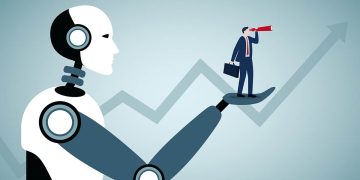
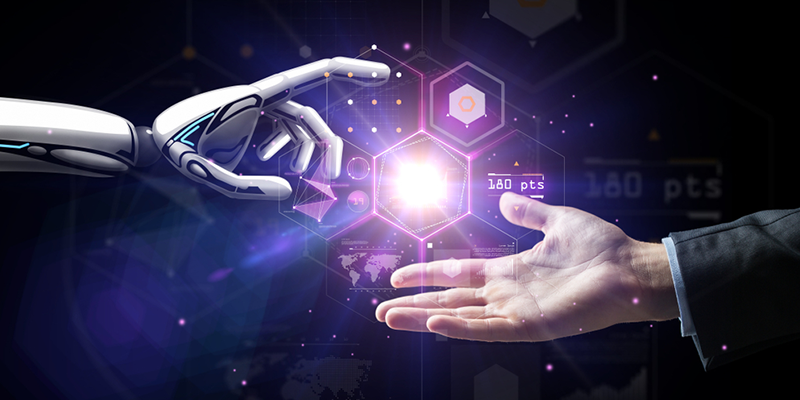
As the world continues to embrace artificial intelligence (AI), the focus of technological advancement is rapidly shifting toward the concept of human-machine collaboration. Gone are the days when AI was envisioned solely as a tool for replacing human workers. Today, AI technologies are being harnessed to augment human capabilities, facilitating more efficient decision-making, enhancing creativity, and driving innovation across industries. One of the most powerful ways that AI is being integrated into human workflows is through its role in trend prediction — an area where machines can analyze vast amounts of data, detect emerging patterns, and provide valuable insights, empowering humans to make better-informed decisions.
This article delves into the concept of human-machine collaboration and how it plays a pivotal role in the prediction of trends. By understanding how humans and machines can work together to identify trends, businesses and individuals can stay ahead of the curve and make proactive, data-driven decisions. We will explore the benefits, challenges, and future potential of human-machine collaboration in trend prediction, focusing on its applications in areas such as business strategy, marketing, financial forecasting, supply chain management, and healthcare.
The Evolution of Human-Machine Collaboration
1. From Automation to Collaboration
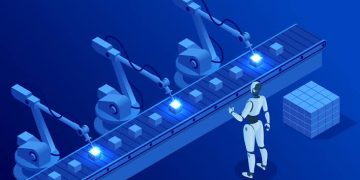
The evolution of artificial intelligence can be broadly divided into three stages: automation, augmentation, and collaboration. Initially, AI technologies were used to automate repetitive tasks, such as data entry or assembly line operations, where human intervention was either minimal or unnecessary. While automation brought about significant efficiencies, it often led to concerns about job displacement and the role of human workers in the future.
However, as AI technologies advanced, particularly in fields such as machine learning and natural language processing, the focus shifted toward augmenting human capabilities rather than replacing them. AI began to assist humans by providing insights, recommending actions, and supporting decision-making processes. Tools such as recommendation engines, predictive analytics, and chatbots became commonplace in businesses, assisting employees in delivering better outcomes with less effort.
The third and final stage is collaboration—a more holistic approach where humans and machines work together seamlessly, each contributing their unique strengths. In this context, AI does not merely provide support but actively collaborates with humans to solve complex problems, make predictions, and drive innovation.
2. Human Strengths vs. Machine Strengths
The key to effective human-machine collaboration lies in understanding the complementary strengths of both parties. While AI excels at processing large datasets, identifying patterns, and making predictions based on data, humans bring critical qualities such as creativity, intuition, and the ability to understand complex social contexts. The collaboration between human decision-makers and AI systems amplifies the strengths of both, resulting in more informed and timely decisions.
Humans excel in:
- Contextual judgment: Understanding the social, emotional, and cultural aspects of situations.
- Creative problem-solving: Using intuition and experience to innovate and generate new ideas.
- Ethical reasoning: Applying moral judgment and considering the broader implications of decisions.
Machines excel in:
- Data processing: Analyzing large datasets at scale and speed.
- Pattern recognition: Identifying trends and correlations that may not be obvious to humans.
- Repetitive tasks: Handling routine, data-driven tasks efficiently.
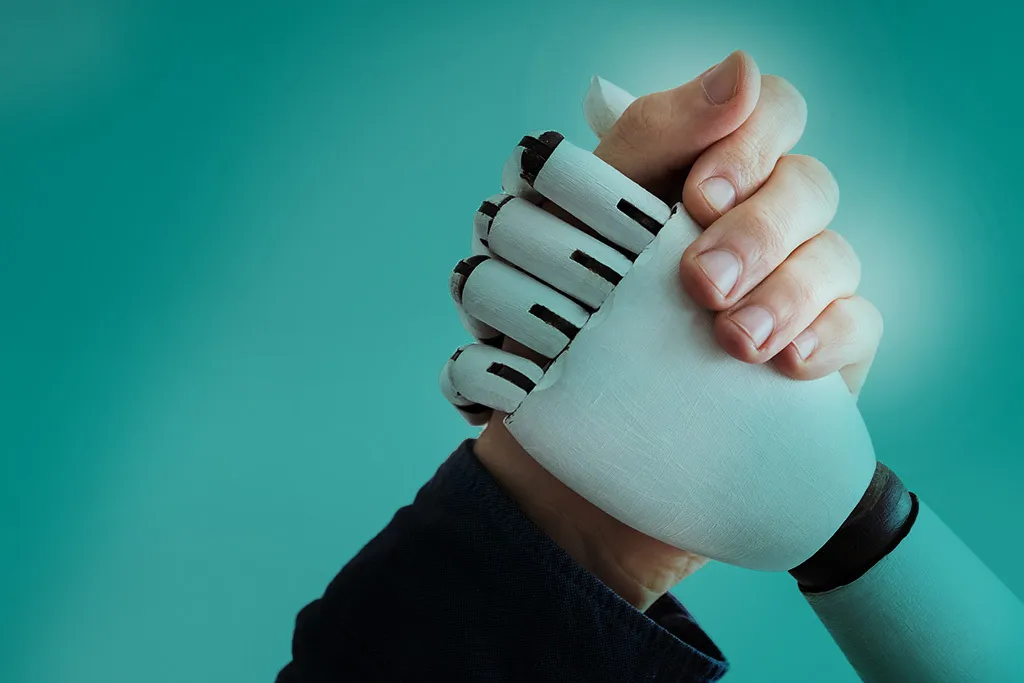
By leveraging the strengths of both humans and machines, organizations can create an ecosystem where both parties collaborate in a synergistic relationship that drives more accurate trend predictions and better decision-making.
The Role of AI in Trend Prediction
1. Predictive Analytics in Business Strategy
One of the most significant applications of trend prediction is in business strategy. AI-driven predictive analytics has transformed how companies forecast market trends, consumer behavior, and industry developments. By analyzing historical data, consumer patterns, and external factors, AI systems can generate predictive models that offer insights into potential future scenarios.
For instance, businesses can use AI to predict sales trends, identify emerging market demands, and optimize their product development strategies. By integrating AI-powered tools into their decision-making processes, companies can stay ahead of competitors by making data-driven decisions rather than relying on guesswork or traditional forecasting methods.
AI in trend prediction helps businesses:
- Identify seasonal fluctuations in demand.
- Optimize inventory management and supply chain logistics.
- Anticipate changes in consumer sentiment and market dynamics.
2. AI in Marketing and Consumer Behavior Analysis
Marketing is one of the areas where human-machine collaboration is thriving, particularly in trend prediction. AI tools such as predictive analytics and sentiment analysis help marketers anticipate consumer behavior, optimize campaigns, and create personalized experiences. By analyzing social media activity, search trends, and consumer reviews, AI can provide insights into the future preferences of customers, helping businesses adjust their marketing strategies accordingly.
For example, AI systems can predict which products will become popular by analyzing patterns in social media conversations, online reviews, and search engine queries. Marketers can then use these insights to design targeted advertising campaigns, optimize content creation, and even adjust product offerings based on predicted demand.
Humans and AI collaborate in this context by:
- Humans using their understanding of cultural trends and emotional intelligence to interpret data.
- AI analyzing vast amounts of online behavior, reviews, and historical data to predict consumer preferences.
3. Financial Forecasting and Risk Management
AI has also made a significant impact in the field of financial forecasting. In an industry where timing and precision are critical, AI is used to predict market trends, investment opportunities, and economic shifts. AI-powered systems can analyze financial data, historical trends, and external factors to generate predictive models that help financial analysts make more informed investment decisions.
AI tools can predict:
- Stock market trends and potential fluctuations.
- Risk factors associated with particular investments.
- Economic indicators, such as GDP growth and unemployment rates, to assess the broader market environment.
By combining AI-driven predictions with human expertise in financial analysis, investors and analysts can create more effective risk management strategies and investment portfolios.
4. Supply Chain Management and Optimization
AI is transforming supply chain management by providing advanced predictive capabilities that optimize inventory, logistics, and distribution. By analyzing historical data, seasonal trends, and external disruptions (e.g., natural disasters or geopolitical events), AI can help predict future demand, optimize production schedules, and identify potential bottlenecks in the supply chain.
Through human-machine collaboration, companies can:
- Predict product demand more accurately to avoid stockouts or overstocking.
- Optimize logistics to reduce transportation costs and delivery times.
- Enhance supplier management by anticipating delays and disruptions.
AI helps humans in this process by handling the complex data analysis required to make accurate predictions, while humans bring their knowledge of the specific industry context and human oversight to ensure decisions are aligned with company values and operational goals.
Benefits of Human-Machine Collaboration in Trend Prediction
1. Improved Decision-Making
The synergy between human expertise and AI capabilities leads to more accurate and informed decision-making. While AI provides the analytical power to process and predict trends, humans contribute critical thinking, intuition, and a deep understanding of the broader context. This results in more reliable predictions and more strategic decisions across industries.
2. Increased Efficiency and Speed
AI systems can analyze large volumes of data at incredible speeds, allowing organizations to identify emerging trends before they become apparent to human analysts. By automating routine tasks and data analysis, AI frees up time for humans to focus on higher-level decision-making and strategy, ultimately increasing overall operational efficiency.
3. Enhanced Creativity and Innovation
When humans collaborate with AI, the combination of analytical insights from AI and creative problem-solving from humans fosters innovation. AI can provide new perspectives, identify untapped opportunities, and offer novel solutions to problems that humans may not have considered. This dynamic fosters a culture of innovation and accelerates the development of new ideas, products, and services.
4. Scalability and Adaptability
AI-powered trend prediction can scale to handle large datasets, enabling organizations to monitor global markets, consumer behavior, and industry developments. As AI systems continuously learn from new data, they become more adaptable and capable of predicting evolving trends. Humans, in turn, can leverage this adaptability to make strategic adjustments in real-time, helping organizations stay competitive in rapidly changing markets.
Challenges in Human-Machine Collaboration for Trend Prediction
1. Data Quality and Bias
AI systems are only as good as the data they are trained on. If the data used for trend prediction is incomplete, biased, or inaccurate, the predictions generated by AI can be misleading or harmful. It is crucial for organizations to ensure that their data is high-quality, unbiased, and representative of the real-world scenarios they are trying to predict.
2. Complexity of Interpretation
AI-driven trend predictions can be complex and difficult for humans to interpret. While AI can identify patterns in data, the reasons behind those patterns are often difficult to explain. This lack of interpretability can create challenges when trying to trust AI predictions, especially in high-stakes areas such as healthcare or finance.
3. Ethical Concerns
As with any AI system, human-machine collaboration in trend prediction raises ethical concerns. These include issues of data privacy, the potential for AI to reinforce biases, and the need for transparent and fair decision-making processes. Ensuring that AI systems are developed and used responsibly is crucial for the success of human-machine collaboration.
The Future of Human-Machine Collaboration in Trend Prediction
The future of human-machine collaboration in trend prediction is incredibly promising. As AI technologies continue to evolve, their ability to process complex datasets, learn from new information, and make more accurate predictions will improve. By integrating AI into decision-making processes, businesses, governments, and individuals will be able to anticipate and react to emerging trends with greater precision and speed.
Additionally, as AI systems become more interpretable and transparent, humans will be able to collaborate more effectively with machines, ensuring that predictions are trustworthy and ethically sound. The future of work will involve a seamless partnership between humans and machines, where both contribute their strengths to create smarter, more sustainable solutions for complex problems.
Conclusion
Human-machine collaboration is fundamentally reshaping how trends are predicted and decisions are made across industries. By leveraging the strengths of both AI and human expertise, organizations can enhance decision-making, increase efficiency, and foster innovation. While there are challenges in ensuring data quality, interpretability, and ethical responsibility, the potential benefits of AI-driven trend prediction are vast.
As AI continues to evolve, the partnership between humans and machines will only become more integral to shaping the future of work, business strategy, and decision-making. The path ahead promises a future where humans and machines work side by side, each playing a pivotal role in navigating the complexities of an increasingly dynamic and data-driven world.