














In the ever-evolving landscape of artificial intelligence (AI), two paradigms have emerged as particularly transformative: reinforcement learning (RL) and deep learning (DL). Individually, both have made remarkable strides in solving complex problems, but their combination, known as deep reinforcement learning (DRL), has unlocked a new realm of possibilities across numerous fields. By merging the decision-making capabilities of RL with the powerful pattern recognition of DL, this hybrid approach is driving cutting-edge innovations and has led to breakthrough developments in robotics, healthcare, finance, autonomous vehicles, and more.
This article explores the fusion of RL and DL, their individual strengths, their synergistic impact, and how their combination is reshaping industries and redefining technological advancements.
I. Understanding the Fundamentals of Reinforcement Learning and Deep Learning
Before delving into the innovations stemming from their combination, it is essential to understand the core concepts behind reinforcement learning and deep learning.
1. Reinforcement Learning: A Brief Overview
Reinforcement learning is a branch of machine learning focused on training agents to make sequences of decisions by interacting with an environment. In RL, an agent learns by trial and error, receiving feedback in the form of rewards or penalties based on its actions. The goal of RL is to maximize cumulative rewards over time, using strategies like exploration and exploitation.
Key components of RL include:
- Agent: The decision-maker that interacts with the environment.
- Environment: The external system with which the agent interacts.
- State: A representation of the current situation of the agent within the environment.
- Action: The decision made by the agent that affects the state.
- Reward: A scalar feedback signal received after taking an action.
- Policy: A strategy that defines the agent’s behavior in a given state.
2. Deep Learning: A Brief Overview
Deep learning is a subset of machine learning that focuses on neural networks with many layers (also called deep neural networks). These models are particularly effective at learning from vast amounts of unstructured data, such as images, audio, and text. The deep neural network learns to represent data at multiple levels of abstraction, allowing it to make predictions or classifications with high accuracy.
Deep learning models have seen significant success in applications such as:
- Computer Vision: Analyzing and understanding images and videos.
- Natural Language Processing (NLP): Understanding and generating human language.
- Speech Recognition: Translating spoken language into text.
3. The Fusion: Deep Reinforcement Learning (DRL)
Deep reinforcement learning combines the principles of RL with deep learning techniques. Instead of using traditional, simple models, DRL leverages deep neural networks to approximate complex functions like the value function or policy, allowing the agent to handle high-dimensional input data (e.g., images or sensory data) in a more efficient and scalable way.
In DRL, deep neural networks are used to:
- Approximate Value Functions: Estimating the future reward of taking a certain action in a particular state.
- Policy Optimization: Learning the best policy that maximizes rewards, often using gradient-based optimization techniques.
- Exploration and Exploitation: Balancing the exploration of new actions with the exploitation of known strategies for long-term gains.

II. Applications of Deep Reinforcement Learning Across Multiple Domains
The convergence of RL and DL has driven transformative innovation across numerous sectors. Below, we explore how DRL is being applied in various domains, highlighting its disruptive potential.
1. Robotics and Automation
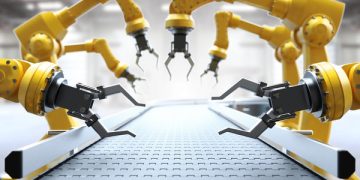
In robotics, DRL has enabled significant advances in training autonomous systems to perform complex tasks. Traditional robotic programming often involves predefining exact movements and responses, which is cumbersome and limited in scope. DRL, on the other hand, allows robots to learn by interacting with their environment and optimizing their behaviors over time.
Key applications include:
- Robotic Manipulation: Teaching robots to perform tasks like picking and placing objects, assembling products, or packing goods, even in unstructured environments.
- Autonomous Navigation: DRL enables robots to navigate through dynamic environments, avoiding obstacles and adapting to changing conditions in real-time.
- Multi-agent Systems: In environments with multiple robots, DRL can help coordinate tasks, optimize communication, and improve collaboration between agents.
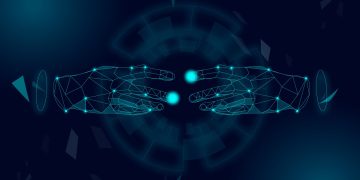
One landmark achievement in robotics came from the application of DRL in Google DeepMind’s robotic hands, which learned to manipulate objects in a complex environment without prior knowledge.
2. Healthcare: Personalized Medicine and Drug Discovery
Deep reinforcement learning is also making substantial strides in healthcare, from optimizing personalized treatments to accelerating drug discovery.
- Personalized Treatment: In the field of personalized medicine, DRL algorithms can analyze patient data—such as genetic information, medical history, and environmental factors—and learn optimal treatment strategies for individual patients. This approach could lead to more effective therapies tailored to specific genetic profiles.
- Drug Discovery: Traditional drug discovery involves high costs and lengthy timelines. DRL has shown promise in accelerating this process by enabling AI to predict the interactions between molecules and their target proteins. By training agents to simulate biological processes, DRL can help identify promising drug candidates more efficiently than traditional methods.
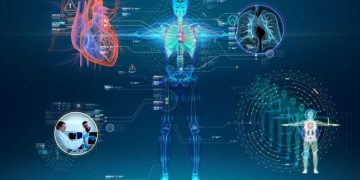
- Medical Imaging: DRL models are also applied in medical imaging to assist in tasks such as tumor detection and analysis. By training models on medical images, AI systems can identify patterns that might be overlooked by human doctors.
3. Autonomous Vehicles: Safety, Navigation, and Traffic Management
Autonomous vehicles (AVs) represent one of the most high-profile applications of deep reinforcement learning. DRL is integral to the development of self-driving cars, helping them navigate complex road environments, obey traffic laws, and avoid accidents.
Applications in autonomous vehicles include:
- End-to-End Driving Control: DRL enables AVs to learn to control acceleration, braking, and steering through continuous interaction with simulated environments.
- Safe Navigation: DRL algorithms help AVs learn how to make real-time decisions that prioritize safety, including handling sudden obstacles, road changes, and unpredictable traffic conditions.
- Traffic Optimization: Beyond individual vehicles, DRL is being applied to optimize traffic flow across entire cities. By coordinating traffic lights, routing systems, and vehicular movements, DRL can help reduce congestion and improve overall efficiency.
One of the most well-known applications of DRL in autonomous vehicles comes from companies like Waymo, where AI has played a crucial role in the successful deployment of self-driving cars.
4. Finance and Trading
In finance, DRL is being used to optimize decision-making in portfolio management, asset trading, and risk assessment. By training agents to learn from historical data and real-time market conditions, DRL can identify profitable strategies and execute trades with minimal human intervention.
Key applications in finance include:
- Algorithmic Trading: DRL agents can autonomously generate trading strategies, optimizing decisions based on market conditions and historical trends. These agents can adapt to changes in the market, making real-time adjustments to portfolios.
- Credit Scoring and Fraud Detection: DRL can also be used to improve credit scoring algorithms, learning from large datasets of customer behavior to predict creditworthiness. Furthermore, DRL models are being employed to detect fraudulent activity in financial transactions by identifying unusual patterns and outliers.
- Portfolio Management: DRL agents can manage investment portfolios by learning to balance risk and reward, adjusting asset allocation based on market conditions and individual investor profiles.
5. Entertainment: Gaming and Content Creation
The entertainment industry, particularly video gaming, has greatly benefited from the advances in DRL. Deep reinforcement learning has revolutionized the way AI plays and creates games, leading to impressive breakthroughs in game AI and content generation.
Applications in entertainment include:
- Game AI: DRL has been used to train AI agents that can compete with humans in complex games. Notable successes include AlphaGo, which defeated the world champion in the ancient Chinese game of Go, and OpenAI’s Dota 2-playing bot, which excelled against human teams.
- Procedural Content Generation: DRL is also used to generate dynamic and engaging content for games, such as levels, challenges, and narratives. By training agents to adapt content based on player behavior, game designers can create personalized experiences that evolve over time.
- Game Development: DRL techniques are helping developers optimize game mechanics and improve in-game economies by analyzing player interactions and adjusting game dynamics accordingly.
III. Challenges and Future Prospects of DRL
While deep reinforcement learning offers immense potential, there are several challenges that researchers and practitioners continue to face.
1. Sample Efficiency
Training DRL models often requires massive amounts of data and interaction with the environment. In many cases, this can be computationally expensive and time-consuming. Improvements in sample efficiency, such as transfer learning and meta-learning, are being explored to reduce the need for large datasets.
2. Stability and Convergence
DRL algorithms can be unstable and difficult to tune, particularly when applied to complex real-world environments. Ensuring that these models converge to optimal solutions remains an ongoing challenge in the field.
3. Interpretability and Safety
One of the biggest concerns in DRL applications, especially in safety-critical domains like healthcare and autonomous vehicles, is the interpretability of the models. Ensuring that agents’ decision-making processes are transparent and that they operate safely is crucial for widespread adoption.
IV. Conclusion
The convergence of reinforcement learning and deep learning has catalyzed a new era of AI innovation, driving breakthroughs in a wide range of industries. From autonomous robots and self-driving cars to personalized healthcare and intelligent trading systems, DRL is transforming how machines learn, adapt, and make decisions. While challenges remain, the continued development of DRL promises to unlock even more sophisticated and effective AI applications in the future.