




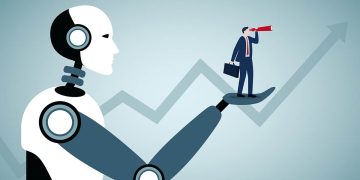






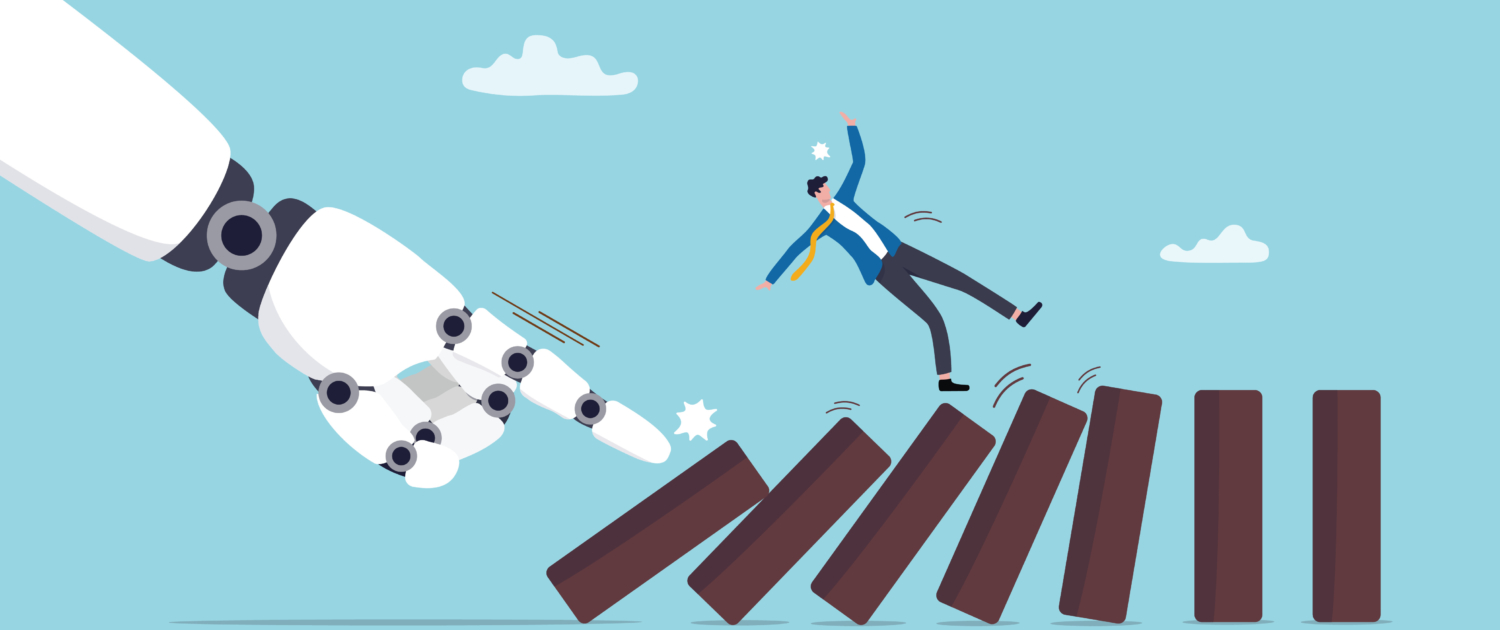
The rapid development and deployment of artificial intelligence (AI) technologies are having profound effects on economies worldwide, particularly in the labor market. As AI systems, from machine learning algorithms to robotic process automation, increasingly take on tasks traditionally performed by humans, concerns about job displacement, economic inequality, and social upheaval have emerged. While AI has the potential to enhance productivity, create new industries, and improve the quality of life, it also poses significant challenges for workers, employers, and policymakers.
This article critically examines the impact of AI on the labor market, exploring both the opportunities and challenges it presents. By analyzing current trends and future projections, the article aims to provide a comprehensive understanding of AI’s effects on employment, skill requirements, wage structures, and labor force dynamics. Additionally, it discusses potential strategies to mitigate negative consequences and ensure that AI benefits are equitably distributed.
1. Understanding the Impact of AI on the Labor Market
1.1 Automation and Job Displacement
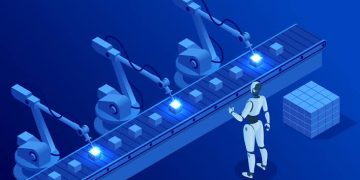
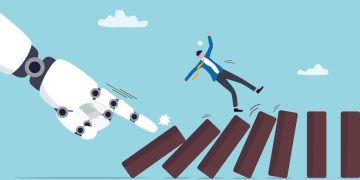
One of the most widely discussed concerns surrounding AI is its potential to automate jobs. Automation refers to the use of machines, algorithms, and AI technologies to perform tasks that were once done by humans. This transformation is particularly noticeable in industries such as manufacturing, logistics, and retail, where AI-driven automation is replacing routine and repetitive tasks.
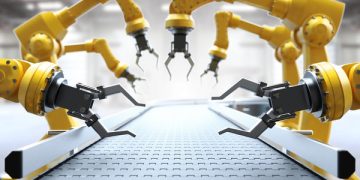
For example, in the automotive industry, robots have long been used in assembly lines to perform precise, repetitive tasks such as welding, painting, and installing components. Similarly, in retail, AI-powered checkout systems and inventory management tools are replacing the need for cashiers and stock clerks. In these scenarios, AI has been shown to increase efficiency and reduce costs, but it also leads to the displacement of workers who are no longer needed to perform these roles.
However, the impact of AI on employment is not limited to low-skilled, repetitive jobs. Recent advancements in AI, particularly in areas like natural language processing (NLP) and machine learning, have enabled automation of more complex, cognitive tasks. This includes roles in areas such as customer service, finance, and even healthcare. AI-powered chatbots, for instance, are being used to handle customer inquiries, reducing the need for human call center employees. In finance, algorithms can process and analyze financial data far more efficiently than humans, leading to the potential reduction in demand for financial analysts.
1.2 Job Creation and New Industries
While AI-driven automation may lead to job displacement in certain sectors, it also holds the potential to create new jobs and industries. Historically, technological advancements have often resulted in the creation of new forms of work. The industrial revolution, for example, led to the rise of new industries such as textiles and steel production, which created millions of jobs.
Similarly, the rise of AI is expected to lead to the emergence of entirely new industries, particularly in fields such as AI development, data science, robotics, and AI ethics. These fields will require highly skilled workers capable of designing, developing, and managing AI systems. Moreover, AI could create new jobs in areas like AI education, AI auditing, and the regulation of AI applications, where human oversight will remain necessary.
Additionally, as AI technologies augment human capabilities rather than replace them entirely, many jobs will evolve rather than disappear. For example, in healthcare, AI systems can assist doctors with diagnosis and treatment recommendations, but human doctors will still be required to make critical decisions, provide care, and interact with patients. Similarly, in education, AI can enhance personalized learning, but teachers will remain essential for providing emotional support, motivation, and human interaction to students.
1.3 AI and the Shifting Nature of Work
AI’s impact on the labor market is not just about job displacement and creation but also about the transformation of the nature of work itself. AI is enabling greater flexibility in how, where, and when people work. Remote work, for instance, has become more widespread due to advancements in AI-powered collaboration tools and communication platforms. These tools not only make remote work more efficient but also offer the potential for greater work-life balance.
Moreover, AI has the potential to drive more inclusive labor markets. For example, people with disabilities may benefit from AI-powered tools that assist with daily tasks and enable them to participate more fully in the workforce. AI-driven technologies such as speech recognition, assistive devices, and smart technologies can remove barriers to employment, making it easier for individuals to work in various industries.
However, the shift toward a more flexible and AI-enhanced workforce also raises concerns about job security, worker rights, and the gig economy. As automation and AI become more integrated into workplaces, the distinction between full-time, stable employment and short-term or gig work may become blurred, leading to the growth of precarious work conditions.
2. The Impact of AI on Skill Requirements
2.1 The Growing Demand for Technical Skills
As AI continues to advance, the demand for workers with technical skills, particularly in fields like data science, machine learning, and AI programming, is expected to increase dramatically. Skills in AI development and the ability to manage and interpret large datasets are becoming essential in almost every industry. For example, AI engineers, data scientists, and machine learning specialists are among the fastest-growing job categories worldwide.
This increasing demand for technical expertise has led to the emergence of new educational programs, certifications, and training opportunities aimed at preparing the workforce for the AI-driven economy. Companies are investing in upskilling and reskilling initiatives to ensure their employees can transition into new roles that require AI-related skills.
2.2 Soft Skills and Human Expertise
While technical skills are increasingly in demand, soft skills such as creativity, problem-solving, emotional intelligence, and critical thinking remain essential in the AI-driven workplace. Many tasks that require human judgment, empathy, and interaction cannot be easily replicated by AI systems. For example, in customer service, human workers are still needed to handle complex or sensitive issues that AI may not be able to address appropriately.
In healthcare, while AI can assist with diagnostics and treatment suggestions, doctors and nurses are still needed to communicate with patients, provide comfort, and make nuanced medical decisions that require human experience and empathy. As such, the future workforce will need to blend technical proficiency with these essential human skills to remain competitive.
2.3 The Need for Lifelong Learning
As AI and automation continue to reshape industries, workers will need to engage in lifelong learning to remain relevant in the job market. The traditional model of education—one that involves acquiring skills during childhood or early adulthood and applying them throughout one’s career—may no longer suffice in an era of rapid technological change. Workers will need to continuously update their knowledge and skills to keep pace with advancements in AI and automation.
Governments, educational institutions, and businesses will need to collaborate to create a culture of lifelong learning, providing workers with access to affordable, accessible training programs that help them adapt to the evolving demands of the labor market.

3. Economic Inequality and AI
3.1 Job Polarization and Wage Disparities
While AI has the potential to create new industries and high-paying jobs, it also risks exacerbating economic inequality. One of the key concerns is job polarization, where AI and automation disproportionately affect middle-skill jobs, leading to a hollowing out of the labor market. High-skill jobs that require advanced technical expertise and creativity are less likely to be automated, while low-skill jobs that involve routine, repetitive tasks are most at risk.
As a result, the labor market could become increasingly divided, with a growing gap between high-wage, high-skill jobs and low-wage, low-skill jobs. Workers in the middle, whose jobs may be vulnerable to automation, could find themselves displaced or relegated to low-paying roles, exacerbating income inequality.
3.2 Access to AI-Driven Opportunities
Another concern is the unequal access to AI-driven opportunities. Companies and industries that have the resources to invest in AI technologies and automation will likely benefit the most, while smaller businesses and workers in low-income regions may struggle to adapt. In some cases, AI could further entrench existing disparities, making it more difficult for disadvantaged groups to access opportunities in the labor market.
To mitigate these risks, policymakers will need to ensure that the benefits of AI are distributed equitably. This could involve initiatives such as universal basic income (UBI), targeted retraining programs for displaced workers, and policies that encourage inclusive growth and job creation.
4. Policy Responses and Strategies for Mitigating Negative Impacts
4.1 Government and Corporate Responsibility
Governments and businesses have a shared responsibility to manage the transition to an AI-driven economy. Governments can play a key role in supporting workers by investing in education, retraining, and social safety nets for those affected by automation. Policies that encourage the creation of new industries and foster inclusive growth will be critical in addressing the potential negative impacts of AI on the labor market.
At the same time, businesses must take proactive steps to upskill their workforce, invest in employee well-being, and ensure that their AI deployments are ethical and socially responsible. Companies should prioritize reskilling and offer opportunities for their workers to learn new skills that will be valuable in an AI-driven economy.
4.2 Embracing AI as a Tool for Augmentation, Not Replacement
Rather than viewing AI solely as a replacement for human labor, companies and workers should focus on how AI can augment human capabilities. AI has the potential to enhance productivity, improve decision-making, and enable workers to focus on higher-value tasks that require creativity, judgment, and emotional intelligence. By embracing AI as a tool for collaboration, rather than competition, organizations can create a more balanced and sustainable future of work.
5. Conclusion
AI is reshaping the labor market in profound ways. While it presents significant challenges, including job displacement, economic inequality, and the need for new skill sets, it also holds the potential to create new industries, enhance productivity, and improve overall well-being. To
ensure that AI’s benefits are widely shared, governments, businesses, and workers must work together to address the social, economic, and ethical implications of these technologies.
The key to navigating the future of work in an AI-driven world lies in proactive planning, education, and collaboration. By prioritizing lifelong learning, fostering inclusive growth, and developing policies that support displaced workers, we can ensure that the labor market adapts to the changing landscape of work while minimizing the risks of inequality and job displacement.