




























AIInsiderUpdates
  • Home
  • AI News
    Global Regulatory Frameworks for AI: Progressing Towards Security, Ethics, Accountability, and Data Protection

    Global Regulatory Frameworks for AI: Progressing Towards Security, Ethics, Accountability, and Data Protection

    International Collaboration: A Key Driver for AI Technology Standards and Ecosystem Development

    International Collaboration: A Key Driver for AI Technology Standards and Ecosystem Development

    Industry-Leading AI Companies and Cloud Service Providers

    Industry-Leading AI Companies and Cloud Service Providers

    An Increasing Number of Enterprises Integrating AI into Core Strategy

    An Increasing Number of Enterprises Integrating AI into Core Strategy

    Large Model Providers and Enterprises in Speech & NLP Continue Expanding Application Scenarios

    Large Model Providers and Enterprises in Speech & NLP Continue Expanding Application Scenarios

    Breakthrough Advances in AI for Complex Perception and Reasoning Tasks

    Breakthrough Advances in AI for Complex Perception and Reasoning Tasks

  • Technology Trends
    AI Explainability and Ethics: Balancing Transparency, Accountability, and Trust in AI Systems

    AI Explainability and Ethics: Balancing Transparency, Accountability, and Trust in AI Systems

    Multimodal AI: Revolutionizing Data Integration and Understanding

    Multimodal AI: Revolutionizing Data Integration and Understanding

    Smart Manufacturing and Industrial AI

    Smart Manufacturing and Industrial AI

    Multilingual Understanding and Generation, Especially in Non-English Language Contexts: A Global Innovation Frontier

    Multilingual Understanding and Generation, Especially in Non-English Language Contexts: A Global Innovation Frontier

    AI Systems Are No Longer Limited to Single Inputs: The Rise of Multimodal AI

    AI Systems Are No Longer Limited to Single Inputs: The Rise of Multimodal AI

    Optimizing Transformer and Self-Attention Architectures to Enhance Model Expressiveness

    Optimizing Transformer and Self-Attention Architectures to Enhance Model Expressiveness

  • Interviews & Opinions
    Human-Machine Collaboration and Trend Prediction: The Future of Work and Decision-Making

    Human-Machine Collaboration and Trend Prediction: The Future of Work and Decision-Making

    Despite AI Automation Enhancements, Human Contribution Remains Unmatched in Data Creation and Cultural Context Understanding

    Despite AI Automation Enhancements, Human Contribution Remains Unmatched in Data Creation and Cultural Context Understanding

    Investment Bubbles and Risk Management: Diverging Perspectives

    Investment Bubbles and Risk Management: Diverging Perspectives

    CEO Perspectives on AI Data Contribution and the Role of Humans

    CEO Perspectives on AI Data Contribution and the Role of Humans

    Differences Between Academic and Public Perspectives on AI: Bridging the Gap

    Differences Between Academic and Public Perspectives on AI: Bridging the Gap

    AI Technology is No Longer Just a Tool: It Has Become a Core Component of Enterprise Competitiveness

    AI Technology is No Longer Just a Tool: It Has Become a Core Component of Enterprise Competitiveness

  • Case Studies
    Multidimensional Applications of AI in the Digital Transformation of Manufacturing

    Multidimensional Applications of AI in the Digital Transformation of Manufacturing

    AI Customer Service Bots and Smart Advisors: Helping Banks Reduce Human Customer Support Costs While Enhancing Response Efficiency, User Engagement, and Satisfaction

    AI Customer Service Bots and Smart Advisors: Helping Banks Reduce Human Customer Support Costs While Enhancing Response Efficiency, User Engagement, and Satisfaction

    Personalized Recommendation and Inventory Optimization

    Personalized Recommendation and Inventory Optimization

    How Retailers Use AI Models to Predict Sales Trends and Optimize Inventory Levels

    How Retailers Use AI Models to Predict Sales Trends and Optimize Inventory Levels

    AI Not Only Enhances Diagnostic Capabilities but Also Significantly Improves Backend Healthcare Services

    AI Not Only Enhances Diagnostic Capabilities but Also Significantly Improves Backend Healthcare Services

    AI in Manufacturing: Achieving Significant Cost Savings and Efficiency Improvements

    AI in Manufacturing: Achieving Significant Cost Savings and Efficiency Improvements

  • Tools & Resources
    Real-World Testing and Efficiency Evaluation of Emerging Technological Trends

    Real-World Testing and Efficiency Evaluation of Emerging Technological Trends

    Auxiliary AI Toolset: Enhancing Productivity, Innovation, and Problem Solving Across Industries

    Auxiliary AI Toolset: Enhancing Productivity, Innovation, and Problem Solving Across Industries

    Dataset Preprocessing and Labeling Strategies: A Resource Guide

    Dataset Preprocessing and Labeling Strategies: A Resource Guide

    Recommended Open Source Model Trade-Off Strategies

    Recommended Open Source Model Trade-Off Strategies

    Practical Roadmap: End-to-End Experience from Model Training to Deployment

    Practical Roadmap: End-to-End Experience from Model Training to Deployment

    Scalability and Performance Optimization: Insights and Best Practices

    Scalability and Performance Optimization: Insights and Best Practices

AIInsiderUpdates
  • Home
  • AI News
    Global Regulatory Frameworks for AI: Progressing Towards Security, Ethics, Accountability, and Data Protection

    Global Regulatory Frameworks for AI: Progressing Towards Security, Ethics, Accountability, and Data Protection

    International Collaboration: A Key Driver for AI Technology Standards and Ecosystem Development

    International Collaboration: A Key Driver for AI Technology Standards and Ecosystem Development

    Industry-Leading AI Companies and Cloud Service Providers

    Industry-Leading AI Companies and Cloud Service Providers

    An Increasing Number of Enterprises Integrating AI into Core Strategy

    An Increasing Number of Enterprises Integrating AI into Core Strategy

    Large Model Providers and Enterprises in Speech & NLP Continue Expanding Application Scenarios

    Large Model Providers and Enterprises in Speech & NLP Continue Expanding Application Scenarios

    Breakthrough Advances in AI for Complex Perception and Reasoning Tasks

    Breakthrough Advances in AI for Complex Perception and Reasoning Tasks

  • Technology Trends
    AI Explainability and Ethics: Balancing Transparency, Accountability, and Trust in AI Systems

    AI Explainability and Ethics: Balancing Transparency, Accountability, and Trust in AI Systems

    Multimodal AI: Revolutionizing Data Integration and Understanding

    Multimodal AI: Revolutionizing Data Integration and Understanding

    Smart Manufacturing and Industrial AI

    Smart Manufacturing and Industrial AI

    Multilingual Understanding and Generation, Especially in Non-English Language Contexts: A Global Innovation Frontier

    Multilingual Understanding and Generation, Especially in Non-English Language Contexts: A Global Innovation Frontier

    AI Systems Are No Longer Limited to Single Inputs: The Rise of Multimodal AI

    AI Systems Are No Longer Limited to Single Inputs: The Rise of Multimodal AI

    Optimizing Transformer and Self-Attention Architectures to Enhance Model Expressiveness

    Optimizing Transformer and Self-Attention Architectures to Enhance Model Expressiveness

  • Interviews & Opinions
    Human-Machine Collaboration and Trend Prediction: The Future of Work and Decision-Making

    Human-Machine Collaboration and Trend Prediction: The Future of Work and Decision-Making

    Despite AI Automation Enhancements, Human Contribution Remains Unmatched in Data Creation and Cultural Context Understanding

    Despite AI Automation Enhancements, Human Contribution Remains Unmatched in Data Creation and Cultural Context Understanding

    Investment Bubbles and Risk Management: Diverging Perspectives

    Investment Bubbles and Risk Management: Diverging Perspectives

    CEO Perspectives on AI Data Contribution and the Role of Humans

    CEO Perspectives on AI Data Contribution and the Role of Humans

    Differences Between Academic and Public Perspectives on AI: Bridging the Gap

    Differences Between Academic and Public Perspectives on AI: Bridging the Gap

    AI Technology is No Longer Just a Tool: It Has Become a Core Component of Enterprise Competitiveness

    AI Technology is No Longer Just a Tool: It Has Become a Core Component of Enterprise Competitiveness

  • Case Studies
    Multidimensional Applications of AI in the Digital Transformation of Manufacturing

    Multidimensional Applications of AI in the Digital Transformation of Manufacturing

    AI Customer Service Bots and Smart Advisors: Helping Banks Reduce Human Customer Support Costs While Enhancing Response Efficiency, User Engagement, and Satisfaction

    AI Customer Service Bots and Smart Advisors: Helping Banks Reduce Human Customer Support Costs While Enhancing Response Efficiency, User Engagement, and Satisfaction

    Personalized Recommendation and Inventory Optimization

    Personalized Recommendation and Inventory Optimization

    How Retailers Use AI Models to Predict Sales Trends and Optimize Inventory Levels

    How Retailers Use AI Models to Predict Sales Trends and Optimize Inventory Levels

    AI Not Only Enhances Diagnostic Capabilities but Also Significantly Improves Backend Healthcare Services

    AI Not Only Enhances Diagnostic Capabilities but Also Significantly Improves Backend Healthcare Services

    AI in Manufacturing: Achieving Significant Cost Savings and Efficiency Improvements

    AI in Manufacturing: Achieving Significant Cost Savings and Efficiency Improvements

  • Tools & Resources
    Real-World Testing and Efficiency Evaluation of Emerging Technological Trends

    Real-World Testing and Efficiency Evaluation of Emerging Technological Trends

    Auxiliary AI Toolset: Enhancing Productivity, Innovation, and Problem Solving Across Industries

    Auxiliary AI Toolset: Enhancing Productivity, Innovation, and Problem Solving Across Industries

    Dataset Preprocessing and Labeling Strategies: A Resource Guide

    Dataset Preprocessing and Labeling Strategies: A Resource Guide

    Recommended Open Source Model Trade-Off Strategies

    Recommended Open Source Model Trade-Off Strategies

    Practical Roadmap: End-to-End Experience from Model Training to Deployment

    Practical Roadmap: End-to-End Experience from Model Training to Deployment

    Scalability and Performance Optimization: Insights and Best Practices

    Scalability and Performance Optimization: Insights and Best Practices

AIInsiderUpdates
No Result
View All Result

Deep Learning Remains the Core Engine

January 8, 2026
Deep Learning Remains the Core Engine

Artificial intelligence (AI) has rapidly evolved over the last decade, transforming industries ranging from healthcare to finance, manufacturing, and entertainment. At the heart of these advances lies deep learning (DL)—a subset of machine learning inspired by the structure and function of the human brain. While AI encompasses a broad spectrum of approaches including symbolic reasoning, reinforcement learning, and probabilistic models, deep learning remains the primary driver of modern AI breakthroughs. This article explores why deep learning continues to be the core engine of AI, its foundational technologies, key applications, challenges, and the future directions that will shape the next wave of intelligent systems.


1. Introduction: The Central Role of Deep Learning

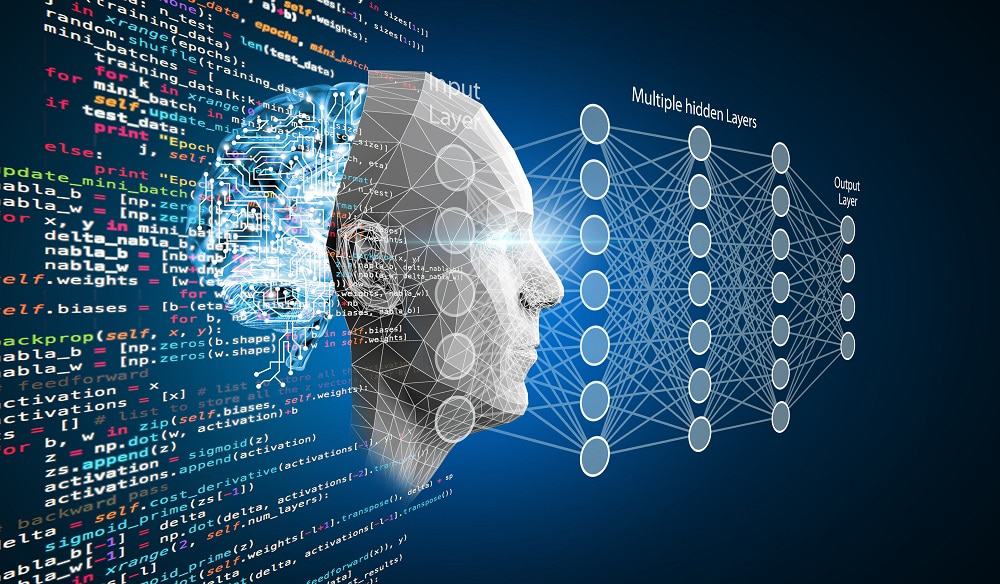
Deep learning models are structured as artificial neural networks with multiple layers, enabling the automatic extraction of complex patterns from vast amounts of data. Unlike traditional machine learning methods, which rely heavily on manual feature engineering, deep learning learns hierarchical representations directly from raw data, making it highly adaptable across domains.

Key reasons deep learning remains central to AI include:

  • Scalability: Deep neural networks can leverage large datasets and high-performance computing infrastructure.
  • Versatility: DL models excel across modalities—text, images, audio, and video.
  • Performance: In tasks such as image recognition, speech recognition, natural language understanding, and generative modeling, deep learning consistently outperforms traditional approaches.

Despite emerging AI paradigms such as symbolic AI and multimodal transformers, the efficiency, adaptability, and predictive power of deep learning ensure its continued dominance.


2. Core Technologies of Deep Learning

2.1 Artificial Neural Networks

  • Structure: Composed of interconnected layers of neurons, including input, hidden, and output layers.
  • Activation Functions: Non-linear functions like ReLU, sigmoid, and tanh enable networks to capture complex relationships.
  • Training: Backpropagation and gradient descent algorithms optimize network weights based on loss functions.

2.2 Convolutional Neural Networks (CNNs)

  • Specialized for image and spatial data processing.
  • Key components: convolutional layers, pooling layers, and fully connected layers.
  • Applications: computer vision, medical imaging, autonomous vehicles, and video analytics.

2.3 Recurrent Neural Networks (RNNs) and Transformers

  • RNNs: Capture sequential dependencies in data, used for time-series analysis and language modeling.
  • Transformers: Introduced by Vaswani et al., these models revolutionized NLP by enabling parallel processing and self-attention mechanisms.
  • Applications: machine translation, text summarization, code generation, and chatbots.

2.4 Generative Models

  • Generative Adversarial Networks (GANs): Use two networks—generator and discriminator—to produce realistic data.
  • Variational Autoencoders (VAEs): Encode data into latent representations and decode to generate new samples.
  • Applications: image synthesis, video generation, and AI-driven content creation.

2.5 Reinforcement Learning with Deep Networks

  • Combines deep learning with reinforcement learning (deep RL).
  • Agents learn policies to maximize cumulative rewards through trial-and-error interactions.
  • Applications: robotics, game AI (e.g., AlphaGo), autonomous systems, and optimization tasks.

3. Applications Across Industries

Deep learning serves as the backbone of AI applications across nearly every sector:

3.1 Healthcare

  • Medical Imaging: CNNs detect anomalies in X-rays, MRIs, and CT scans.
  • Drug Discovery: Deep generative models predict molecular structures and optimize compounds.
  • Patient Monitoring: Time-series data analysis identifies early warning signs and predicts disease progression.

3.2 Finance

  • Fraud Detection: DL models identify abnormal transaction patterns.
  • Algorithmic Trading: Predictive models optimize trading strategies using historical and real-time data.
  • Credit Scoring: Neural networks assess borrower risk based on multi-dimensional datasets.

3.3 Autonomous Systems

  • Self-Driving Cars: Multimodal DL models process sensor data, detect obstacles, and make navigation decisions.
  • Drones and Robotics: CNNs and RL enable object recognition, path planning, and adaptive behavior.

3.4 Natural Language Processing

  • Chatbots and Virtual Assistants: LLMs like GPT leverage deep learning for conversational AI.
  • Machine Translation: Neural machine translation models outperform traditional statistical approaches.
  • Content Generation: Text, code, and media can be generated at scale with generative DL models.

3.5 Industrial Applications

  • Predictive Maintenance: Neural networks analyze sensor data to prevent equipment failures.
  • Quality Control: Image-based DL systems detect defects in manufacturing processes.
  • Process Optimization: Deep reinforcement learning optimizes supply chains and operational workflows.

4. Advantages of Deep Learning

  1. Automatic Feature Extraction: Reduces reliance on domain-specific feature engineering.
  2. High Accuracy: Superior performance on large-scale and complex datasets.
  3. Adaptability: Applicable to diverse data types—text, image, audio, and multimodal inputs.
  4. Scalability: Benefits from GPU and TPU acceleration, enabling the training of massive models.
  5. End-to-End Learning: Learns complex mappings directly from input to output, simplifying workflows.

5. Challenges and Limitations

Despite its transformative impact, deep learning faces several challenges:

5.1 Data Requirements

  • DL models require large volumes of high-quality, labeled data.
  • Data scarcity or imbalance can hinder performance and introduce bias.

5.2 Computational Costs

  • Training state-of-the-art models demands significant GPU/TPU resources.
  • Energy consumption is a growing concern in sustainability-conscious applications.

5.3 Interpretability

  • Deep networks are often considered “black boxes,” complicating decision transparency.
  • Explainable AI (XAI) techniques aim to improve understanding of model behavior.

5.4 Generalization and Robustness

  • Models may fail under distribution shifts or adversarial attacks.
  • Robustness and domain adaptation remain active research areas.

5.5 Ethical and Social Implications

  • Deep learning applications raise concerns around privacy, fairness, bias, and misinformation.
  • Responsible AI frameworks are critical for mitigating these risks.

6. Innovations Sustaining Deep Learning as the Core Engine

6.1 Transformer Architectures

  • The success of models like GPT, BERT, and ViT demonstrates the flexibility of transformers across domains.
  • Self-attention mechanisms allow long-range dependencies to be captured efficiently.

6.2 Multimodal and Embodied AI

  • Integrating deep learning across multiple modalities enables AI to perceive and act in complex environments.
  • Embodied AI agents rely on DL for perception, decision-making, and control.

6.3 Model Compression and Efficiency

  • Techniques such as pruning, quantization, and knowledge distillation reduce model size and inference time.
  • Enables deployment on edge devices and resource-constrained environments.

6.4 Self-Supervised and Unsupervised Learning

  • Reduces dependence on labeled data by learning from raw, unlabeled inputs.
  • Examples include contrastive learning, masked autoencoding, and generative pretraining.

6.5 Federated Learning

  • Distributed learning approach preserves data privacy while enabling DL models to learn from decentralized datasets.
  • Crucial for healthcare, finance, and IoT applications.

7. Future Directions

  1. Scalable Multimodal Models: Expanding DL to seamlessly integrate text, image, audio, video, and sensor data.
  2. Energy-Efficient Training: Optimizing architectures and hardware to reduce energy consumption.
  3. Explainable Deep Learning: Enhancing transparency and trustworthiness of model predictions.
  4. Integration with Symbolic AI: Combining neural networks with logic-based reasoning for more robust decision-making.
  5. Real-Time Adaptive Systems: Deploying DL in dynamic environments such as robotics, autonomous vehicles, and smart cities.

8. Case Studies Demonstrating Deep Learning’s Core Role

8.1 OpenAI GPT Series

  • GPT models demonstrate how deep learning drives state-of-the-art language understanding and generation.
  • Applications: chatbots, code generation, creative writing, research assistance.

8.2 Google DeepMind AlphaFold

  • DL predicts 3D protein structures with unprecedented accuracy.
  • Revolutionizes drug discovery, biotechnology, and molecular biology.

8.3 Tesla Autopilot and Full Self-Driving

  • Convolutional and recurrent neural networks process camera, radar, and ultrasonic sensor data.
  • Enables perception, decision-making, and autonomous navigation in complex driving environments.

8.4 NVIDIA GauGAN and DALL·E

  • Generative DL models create photorealistic images from semantic layouts or textual prompts.
  • Applications: design, marketing, virtual reality, and entertainment.

9. Strategic Implications for Enterprises

  • Invest in Core DL Infrastructure: GPUs, TPUs, and cloud resources are essential for competitive AI development.
  • Foster Data-Centric Culture: High-quality data collection, labeling, and management amplify DL model effectiveness.
  • Prioritize Research and Innovation: Keep pace with evolving DL architectures and methodologies.
  • Address Ethics and Governance: Ensure DL models comply with privacy, fairness, and regulatory standards.
  • Leverage Transfer Learning: Pretrained models accelerate deployment and reduce resource requirements.

10. Conclusion

Deep learning remains the engine driving modern AI, powering breakthroughs in natural language processing, computer vision, robotics, healthcare, finance, and beyond. Its ability to automatically learn complex patterns from large-scale data, adapt across domains, and integrate with emerging AI paradigms—such as multimodal systems and embodied intelligence—ensures its central role in both research and industrial applications. While challenges remain in interpretability, data efficiency, and ethical deployment, innovations in model architecture, training efficiency, and hybrid AI approaches will sustain deep learning as the core of AI for years to come.

In short, as AI continues to expand its influence across society, deep learning will remain the indispensable engine fueling intelligence, creativity, and automation across domains.


Tags: AI EngineDeep learningTechnology Trends
ShareTweetShare

Related Posts

AI Explainability and Ethics: Balancing Transparency, Accountability, and Trust in AI Systems
Technology Trends

AI Explainability and Ethics: Balancing Transparency, Accountability, and Trust in AI Systems

January 21, 2026
Multimodal AI: Revolutionizing Data Integration and Understanding
Technology Trends

Multimodal AI: Revolutionizing Data Integration and Understanding

January 20, 2026
Smart Manufacturing and Industrial AI
Technology Trends

Smart Manufacturing and Industrial AI

January 19, 2026
Multilingual Understanding and Generation, Especially in Non-English Language Contexts: A Global Innovation Frontier
Technology Trends

Multilingual Understanding and Generation, Especially in Non-English Language Contexts: A Global Innovation Frontier

January 18, 2026
AI Systems Are No Longer Limited to Single Inputs: The Rise of Multimodal AI
Technology Trends

AI Systems Are No Longer Limited to Single Inputs: The Rise of Multimodal AI

January 17, 2026
Optimizing Transformer and Self-Attention Architectures to Enhance Model Expressiveness
Technology Trends

Optimizing Transformer and Self-Attention Architectures to Enhance Model Expressiveness

January 16, 2026
Leave Comment
  • Trending
  • Comments
  • Latest
How Artificial Intelligence is Achieving Revolutionary Breakthroughs in the Healthcare Industry: What Success Stories Teach Us

How Artificial Intelligence is Achieving Revolutionary Breakthroughs in the Healthcare Industry: What Success Stories Teach Us

July 26, 2025
AI in the Financial Sector: Which Innovative Strategies Are Driving Digital Transformation?

AI in the Financial Sector: Which Innovative Strategies Are Driving Digital Transformation?

July 26, 2025
From Beginner to Expert: Which AI Platforms Are Best for Beginners? Experts’ Take on Learning Curves and Practical Applications

From Beginner to Expert: Which AI Platforms Are Best for Beginners? Experts’ Take on Learning Curves and Practical Applications

July 23, 2025
How to Find Truly Useful AI Resources Among the Crowd? Experts Share How to Select Efficient and Innovative Tools!

How to Find Truly Useful AI Resources Among the Crowd? Experts Share How to Select Efficient and Innovative Tools!

July 23, 2025
How Artificial Intelligence Enhances Diagnostic Accuracy and Transforms Treatment Methods in Healthcare

How Artificial Intelligence Enhances Diagnostic Accuracy and Transforms Treatment Methods in Healthcare

How AI Enhances Customer Experience and Drives Sales Growth in Retail

How AI Enhances Customer Experience and Drives Sales Growth in Retail

How Artificial Intelligence Enables Precise Risk Assessment and Decision-Making

How Artificial Intelligence Enables Precise Risk Assessment and Decision-Making

How AI is Driving the Revolution in Smart Manufacturing and Production Efficiency

How AI is Driving the Revolution in Smart Manufacturing and Production Efficiency

Real-World Testing and Efficiency Evaluation of Emerging Technological Trends

Real-World Testing and Efficiency Evaluation of Emerging Technological Trends

January 21, 2026
Multidimensional Applications of AI in the Digital Transformation of Manufacturing

Multidimensional Applications of AI in the Digital Transformation of Manufacturing

January 21, 2026
Human-Machine Collaboration and Trend Prediction: The Future of Work and Decision-Making

Human-Machine Collaboration and Trend Prediction: The Future of Work and Decision-Making

January 21, 2026
AI Explainability and Ethics: Balancing Transparency, Accountability, and Trust in AI Systems

AI Explainability and Ethics: Balancing Transparency, Accountability, and Trust in AI Systems

January 21, 2026
AIInsiderUpdates

Our platform is dedicated to delivering comprehensive coverage of AI developments, featuring news, case studies, expert interviews, and valuable resources for professionals and enthusiasts alike.

© 2025 aiinsiderupdates.com. contacts:[email protected]

No Result
View All Result
  • Home
  • AI News
  • Technology Trends
  • Interviews & Opinions
  • Case Studies
  • Tools & Resources

© 2025 aiinsiderupdates.com. contacts:[email protected]

Welcome Back!

Login to your account below

Forgotten Password?

Retrieve your password

Please enter your username or email address to reset your password.

Log In