













Introduction
As artificial intelligence (AI) continues to advance at a rapid pace, the discourse surrounding its impact on the workforce and human society has become increasingly polarized. One prevalent concern is the idea that AI will replace human workers, leading to mass unemployment and societal disruption. However, Fei-Fei Li, one of the foremost leaders in AI research, argues against this notion. Instead, she advocates for human-AI collaboration—a partnership where AI enhances human productivity and creativity, rather than simply replacing human labor.
In her various talks and writings, Fei-Fei Li emphasizes that the future of AI should not be seen as a zero-sum game where machines take over human jobs. Rather, she envisions a future where AI and humans work together, each augmenting the other’s strengths. This vision aligns with the idea of using AI to empower individuals and societies to reach new levels of creativity, problem-solving, and innovation.
This article explores Fei-Fei Li’s philosophy on human-AI collaboration, examining how AI can enhance human productivity and creativity. We will also look at the ethical considerations, real-world applications, and challenges associated with this approach.
Fei-Fei Li: A Pioneer of Human-Centered AI
Fei-Fei Li is a professor of computer science at Stanford University and a leading researcher in the fields of computer vision and artificial intelligence. Throughout her career, she has been a vocal advocate for the development of AI technologies that prioritize human values and societal well-being. Li is well-known for her pioneering work in deep learning and AI systems that enable machines to understand and interpret visual information—ultimately bridging the gap between human perception and machine understanding.
Fei-Fei Li’s work has fundamentally shaped the conversation around AI, particularly with her emphasis on human-centered AI. Unlike other AI researchers who have focused on creating machines capable of outperforming humans, Li’s approach advocates for AI systems that complement human intelligence and foster cooperation. She argues that AI should be developed with the goal of benefiting humanity, making our work more productive, enriching, and creative.
One of her core beliefs is that AI should be designed to enhance human capabilities rather than to supplant them. This human-centered approach is based on the idea that AI can amplify human potential, whether in creative fields like art and music or in complex, data-driven domains like healthcare and science.
Human-AI Collaboration: The Path to Productivity and Creativity
1. AI as a Tool for Augmenting Human Abilities
Fei-Fei Li argues that AI, when used correctly, has the potential to significantly enhance human productivity and creativity. By automating routine tasks and handling large-scale data analysis, AI can free up human workers to focus on higher-level, more creative tasks. In this vision, AI acts as a tool that empowers people to achieve more and push the boundaries of innovation.
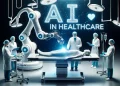
For instance, in industries such as healthcare, AI can be used to analyze medical data and predict patient outcomes, allowing doctors to make more accurate diagnoses and treatment plans. By taking over time-consuming and repetitive tasks, AI enables medical professionals to spend more time interacting with patients, conducting research, and innovating new treatments.
In the creative industries, AI can augment human artistic expression by assisting in tasks such as image generation, music composition, and even writing. AI-powered tools like DALL·E (for image generation) and OpenAI’s GPT models (for natural language processing) can help artists, writers, and designers explore new creative possibilities, offering suggestions and generating content that humans can then refine and build upon.
2. Enhancing Creativity Through AI-Driven Collaboration
Fei-Fei Li often emphasizes that the most transformative applications of AI will occur when humans and machines collaborate to create something new and valuable. AI has the capacity to assist in the creative process, not by replacing human creators, but by working alongside them to generate novel ideas, explore new possibilities, and optimize their work.
In fields such as artificial intelligence-assisted music composition, AI tools can help composers experiment with melodies, harmonies, and rhythms in ways that would be time-consuming or difficult for humans alone. For example, AI systems can generate music samples that serve as the foundation for human composers to build upon, blending human intuition with AI’s computational power.
Similarly, AI has made significant strides in visual arts and design. Generative adversarial networks (GANs) can create realistic images, while machine learning models can assist in generating new visual styles, inspiring designers to create innovative concepts that were previously beyond human reach.
In science and technology, AI can help researchers explore vast amounts of data to uncover patterns and make new discoveries. AI-driven platforms can sift through thousands of scientific papers, experimental results, and simulations to suggest new hypotheses or identify previously overlooked relationships. This accelerates the process of scientific discovery, empowering researchers to pursue more ambitious projects and drive innovation in fields like biotechnology, materials science, and climate change.
3. AI in the Workforce: Enhancing Human Labor
The future of AI in the workforce should not be about machines replacing people, but rather about machines supporting and augmenting human work. Fei-Fei Li argues that human-AI collaboration can make workers more effective, enhance decision-making, and create new job opportunities that leverage human creativity and expertise.
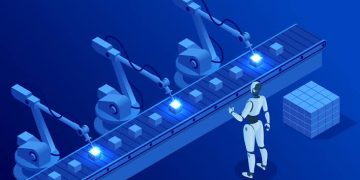
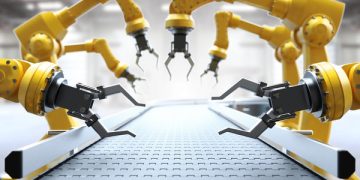
For example, in manufacturing and automation, AI can take over dangerous, repetitive, or physically demanding tasks, allowing human workers to focus on higher-level activities such as quality control, troubleshooting, and innovation. Instead of eliminating jobs, AI may shift the nature of work, requiring new skill sets and offering employees the opportunity to engage in more fulfilling and intellectually stimulating tasks.
In finance, AI can assist professionals by analyzing large datasets to identify trends, predict market movements, and optimize investment strategies. Financial analysts can use AI-driven tools to make more informed decisions, while still providing their expertise and human judgment in areas where intuition and experience are crucial.
By adopting AI as a collaborative partner in the workplace, workers can be empowered to focus on the creative and decision-making aspects of their jobs, increasing productivity and satisfaction.
Fei-Fei Li’s Vision of Ethical AI
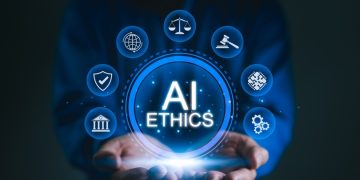
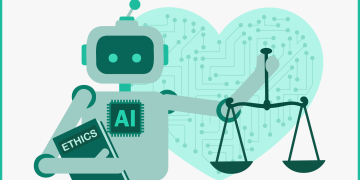
While advocating for human-AI collaboration, Fei-Fei Li has also consistently called for ethical considerations in AI development. She has stressed that the design and deployment of AI systems must prioritize human welfare, social justice, and fairness. For AI to be a force for good, it must be developed with transparency, accountability, and inclusivity.
Fei-Fei Li’s work has often touched on the need for AI systems that are not only technologically advanced but also culturally and socially responsible. For instance, AI systems used in decision-making—whether in healthcare, hiring, or criminal justice—must be designed to avoid biases that could harm marginalized communities. Ethical AI development is crucial to ensuring that AI benefits everyone, not just a select few.
In her TED talks and public engagements, Fei-Fei Li has emphasized the importance of diversity in AI research. She believes that involving people from diverse backgrounds—across gender, race, and nationality—is essential for creating AI systems that reflect the full spectrum of human experience and needs. By encouraging diverse teams and perspectives, the AI community can ensure that AI development is inclusive and benefits all people, regardless of background or circumstance.

Challenges and Limitations of Human-AI Collaboration
While the vision of human-AI collaboration is promising, several challenges must be addressed to fully realize its potential:
1. Ensuring Fairness and Inclusivity
As mentioned, one of the main concerns in AI is ensuring that AI systems are fair and do not perpetuate existing biases. AI models trained on biased data can produce skewed results, leading to discrimination in areas such as hiring, lending, and law enforcement. It is essential for AI developers to create systems that are transparent, explainable, and accountable to avoid these issues.
2. Job Displacement and Reskilling
Although Fei-Fei Li advocates for human-AI collaboration rather than replacement, there are valid concerns about the potential displacement of jobs due to automation. As AI becomes more capable, certain tasks and roles may become obsolete. It is critical to invest in reskilling and upskilling programs to ensure that workers are equipped to thrive in an AI-augmented world.
3. Data Privacy and Security
AI systems rely on vast amounts of data, and ensuring the privacy and security of that data is a key concern. As AI becomes more embedded in everyday life, protecting sensitive personal and corporate information will be essential. Strong data governance frameworks must be in place to safeguard privacy.
Conclusion
Fei-Fei Li’s vision of human-AI collaboration offers an optimistic future where AI and humans work together to amplify each other’s strengths. By embracing AI as a tool for enhancing creativity, productivity, and decision-making, society can unlock new possibilities across all sectors, from healthcare to the arts and beyond.
However, realizing this vision requires thoughtful consideration of the ethical, social, and economic implications of AI, as well as a commitment to developing AI systems that prioritize human well-being. With careful planning and responsible development, AI can become a partner that drives innovation, creativity, and progress, rather than a force of displacement.
In the end, Fei-Fei Li’s philosophy offers a hopeful outlook for the future—one in which AI doesn’t replace humans, but empowers them to achieve new heights of human potential.