























AIInsiderUpdates
  • Home
  • AI News
    Many Industries Are Adopting AI-Driven Robots to Replace Human Labor

    Many Industries Are Adopting AI-Driven Robots to Replace Human Labor

    Artificial Intelligence Ethics and Regulations

    Artificial Intelligence Ethics and Regulations

    Ensuring Fairness and Transparency in AI Decision-Making: A Priority for Companies and Governments

    Ensuring Fairness and Transparency in AI Decision-Making: A Priority for Companies and Governments

    The Growing Global Debate on AI Ethics and Governance

    The Growing Global Debate on AI Ethics and Governance

    Global Regulatory Frameworks for AI: Progressing Towards Security, Ethics, Accountability, and Data Protection

    Global Regulatory Frameworks for AI: Progressing Towards Security, Ethics, Accountability, and Data Protection

    International Collaboration: A Key Driver for AI Technology Standards and Ecosystem Development

    International Collaboration: A Key Driver for AI Technology Standards and Ecosystem Development

  • Technology Trends
    The Transformer Architecture: The Core of Deep Learning

    The Transformer Architecture: The Core of Deep Learning

    Neural Architecture Search: A Revolution in Artificial Intelligence

    Neural Architecture Search: A Revolution in Artificial Intelligence

    Significant Advances in Self-Supervised Learning (SSL) Methods in Deep Learning

    Significant Advances in Self-Supervised Learning (SSL) Methods in Deep Learning

    Breakthroughs in Deep Learning and Neural Networks: Revolutionizing the Future of AI

    Breakthroughs in Deep Learning and Neural Networks: Revolutionizing the Future of AI

    AI Explainability and Ethics: Balancing Transparency, Accountability, and Trust in AI Systems

    AI Explainability and Ethics: Balancing Transparency, Accountability, and Trust in AI Systems

    Multimodal AI: Revolutionizing Data Integration and Understanding

    Multimodal AI: Revolutionizing Data Integration and Understanding

  • Interviews & Opinions
    AI and Automation Will Take on More of the Heavy Lifting

    AI and Automation Will Take on More of the Heavy Lifting

    As AI Technology Continues to Evolve, Ethical Issues Are Becoming More Prominent

    As AI Technology Continues to Evolve, Ethical Issues Are Becoming More Prominent

    AI Fairness: Addressing Bias and Promoting Equity in Artificial Intelligence

    AI Fairness: Addressing Bias and Promoting Equity in Artificial Intelligence

    The Impact of AI on the Labor Market: A Critical Examination

    The Impact of AI on the Labor Market: A Critical Examination

    Human-Machine Collaboration and Trend Prediction: The Future of Work and Decision-Making

    Human-Machine Collaboration and Trend Prediction: The Future of Work and Decision-Making

    Despite AI Automation Enhancements, Human Contribution Remains Unmatched in Data Creation and Cultural Context Understanding

    Despite AI Automation Enhancements, Human Contribution Remains Unmatched in Data Creation and Cultural Context Understanding

  • Case Studies
    The Application of AI in the Financial Industry

    The Application of AI in the Financial Industry

    The Application of AI in Medical Imaging: A Significant Advancement

    The Application of AI in Medical Imaging: A Significant Advancement

    AI Significantly Enhancing Disease Diagnosis Efficiency and Accuracy

    AI Significantly Enhancing Disease Diagnosis Efficiency and Accuracy

    The Application of AI in Healthcare: Revolutionizing Medicine and Patient Care

    The Application of AI in Healthcare: Revolutionizing Medicine and Patient Care

    Multidimensional Applications of AI in the Digital Transformation of Manufacturing

    Multidimensional Applications of AI in the Digital Transformation of Manufacturing

    AI Customer Service Bots and Smart Advisors: Helping Banks Reduce Human Customer Support Costs While Enhancing Response Efficiency, User Engagement, and Satisfaction

    AI Customer Service Bots and Smart Advisors: Helping Banks Reduce Human Customer Support Costs While Enhancing Response Efficiency, User Engagement, and Satisfaction

  • Tools & Resources
    Keras: Making AI Development Easier While Supporting Complex Model Designs

    Keras: Making AI Development Easier While Supporting Complex Model Designs

    PyTorch: A Flexible and Debug-Friendly Deep Learning Framework

    PyTorch: A Flexible and Debug-Friendly Deep Learning Framework

    AutoAI Tools Enable Developers to Reduce Manual Model Tuning Workload

    AutoAI Tools Enable Developers to Reduce Manual Model Tuning Workload

    AI Development Platforms and Frameworks

    AI Development Platforms and Frameworks

    Real-World Testing and Efficiency Evaluation of Emerging Technological Trends

    Real-World Testing and Efficiency Evaluation of Emerging Technological Trends

    Auxiliary AI Toolset: Enhancing Productivity, Innovation, and Problem Solving Across Industries

    Auxiliary AI Toolset: Enhancing Productivity, Innovation, and Problem Solving Across Industries

AIInsiderUpdates
  • Home
  • AI News
    Many Industries Are Adopting AI-Driven Robots to Replace Human Labor

    Many Industries Are Adopting AI-Driven Robots to Replace Human Labor

    Artificial Intelligence Ethics and Regulations

    Artificial Intelligence Ethics and Regulations

    Ensuring Fairness and Transparency in AI Decision-Making: A Priority for Companies and Governments

    Ensuring Fairness and Transparency in AI Decision-Making: A Priority for Companies and Governments

    The Growing Global Debate on AI Ethics and Governance

    The Growing Global Debate on AI Ethics and Governance

    Global Regulatory Frameworks for AI: Progressing Towards Security, Ethics, Accountability, and Data Protection

    Global Regulatory Frameworks for AI: Progressing Towards Security, Ethics, Accountability, and Data Protection

    International Collaboration: A Key Driver for AI Technology Standards and Ecosystem Development

    International Collaboration: A Key Driver for AI Technology Standards and Ecosystem Development

  • Technology Trends
    The Transformer Architecture: The Core of Deep Learning

    The Transformer Architecture: The Core of Deep Learning

    Neural Architecture Search: A Revolution in Artificial Intelligence

    Neural Architecture Search: A Revolution in Artificial Intelligence

    Significant Advances in Self-Supervised Learning (SSL) Methods in Deep Learning

    Significant Advances in Self-Supervised Learning (SSL) Methods in Deep Learning

    Breakthroughs in Deep Learning and Neural Networks: Revolutionizing the Future of AI

    Breakthroughs in Deep Learning and Neural Networks: Revolutionizing the Future of AI

    AI Explainability and Ethics: Balancing Transparency, Accountability, and Trust in AI Systems

    AI Explainability and Ethics: Balancing Transparency, Accountability, and Trust in AI Systems

    Multimodal AI: Revolutionizing Data Integration and Understanding

    Multimodal AI: Revolutionizing Data Integration and Understanding

  • Interviews & Opinions
    AI and Automation Will Take on More of the Heavy Lifting

    AI and Automation Will Take on More of the Heavy Lifting

    As AI Technology Continues to Evolve, Ethical Issues Are Becoming More Prominent

    As AI Technology Continues to Evolve, Ethical Issues Are Becoming More Prominent

    AI Fairness: Addressing Bias and Promoting Equity in Artificial Intelligence

    AI Fairness: Addressing Bias and Promoting Equity in Artificial Intelligence

    The Impact of AI on the Labor Market: A Critical Examination

    The Impact of AI on the Labor Market: A Critical Examination

    Human-Machine Collaboration and Trend Prediction: The Future of Work and Decision-Making

    Human-Machine Collaboration and Trend Prediction: The Future of Work and Decision-Making

    Despite AI Automation Enhancements, Human Contribution Remains Unmatched in Data Creation and Cultural Context Understanding

    Despite AI Automation Enhancements, Human Contribution Remains Unmatched in Data Creation and Cultural Context Understanding

  • Case Studies
    The Application of AI in the Financial Industry

    The Application of AI in the Financial Industry

    The Application of AI in Medical Imaging: A Significant Advancement

    The Application of AI in Medical Imaging: A Significant Advancement

    AI Significantly Enhancing Disease Diagnosis Efficiency and Accuracy

    AI Significantly Enhancing Disease Diagnosis Efficiency and Accuracy

    The Application of AI in Healthcare: Revolutionizing Medicine and Patient Care

    The Application of AI in Healthcare: Revolutionizing Medicine and Patient Care

    Multidimensional Applications of AI in the Digital Transformation of Manufacturing

    Multidimensional Applications of AI in the Digital Transformation of Manufacturing

    AI Customer Service Bots and Smart Advisors: Helping Banks Reduce Human Customer Support Costs While Enhancing Response Efficiency, User Engagement, and Satisfaction

    AI Customer Service Bots and Smart Advisors: Helping Banks Reduce Human Customer Support Costs While Enhancing Response Efficiency, User Engagement, and Satisfaction

  • Tools & Resources
    Keras: Making AI Development Easier While Supporting Complex Model Designs

    Keras: Making AI Development Easier While Supporting Complex Model Designs

    PyTorch: A Flexible and Debug-Friendly Deep Learning Framework

    PyTorch: A Flexible and Debug-Friendly Deep Learning Framework

    AutoAI Tools Enable Developers to Reduce Manual Model Tuning Workload

    AutoAI Tools Enable Developers to Reduce Manual Model Tuning Workload

    AI Development Platforms and Frameworks

    AI Development Platforms and Frameworks

    Real-World Testing and Efficiency Evaluation of Emerging Technological Trends

    Real-World Testing and Efficiency Evaluation of Emerging Technological Trends

    Auxiliary AI Toolset: Enhancing Productivity, Innovation, and Problem Solving Across Industries

    Auxiliary AI Toolset: Enhancing Productivity, Innovation, and Problem Solving Across Industries

AIInsiderUpdates
No Result
View All Result

AI and Automation Will Take on More of the Heavy Lifting

April 21, 2026
AI and Automation Will Take on More of the Heavy Lifting

Introduction

In the past decade, Artificial Intelligence (AI) and automation have revolutionized numerous industries, transforming the way businesses operate and reshaping the workforce. From manufacturing floors to healthcare, finance, and customer service, AI and automation technologies are stepping in to handle repetitive, time-consuming tasks, freeing up human workers to focus on higher-value activities. This shift is expected to grow significantly in the coming years, as these technologies become more advanced and integrated into everyday operations.

The promise of AI and automation to handle “the heavy lifting” is not just about improving efficiency; it’s about changing how businesses think about labor, productivity, and even human creativity. However, as AI systems and robots take on more complex roles, several challenges arise, including concerns about job displacement, ethical considerations, and the long-term implications for the global workforce. This article explores the impact of AI and automation on industries and society, how these technologies are evolving, and the opportunities and challenges they present.

The Rise of AI and Automation Technologies

AI and automation have been gradually evolving over the last few decades. Early applications were focused on narrow, rule-based systems designed to perform specific tasks. These early forms of automation were limited in their capabilities and largely confined to repetitive processes, such as assembling parts in a factory or managing data entry tasks.

However, recent advances in machine learning, natural language processing (NLP), robotics, and autonomous systems have given rise to far more capable and sophisticated AI solutions. AI systems now have the ability to analyze vast amounts of data, recognize patterns, make predictions, and even engage in conversations with humans. Robots can perform tasks such as assembling products, navigating complex environments, and even providing customer support.

Automation technologies, which encompass everything from simple conveyor belts to complex industrial robots, are also becoming increasingly intelligent. As AI systems are integrated into automation tools, machines can learn from their environments, adapt to new challenges, and optimize their workflows without human intervention. This is changing the definition of what can be automated and the scale at which it can happen.

AI and Automation in Key Industries

  1. Manufacturing and Industrial Automation
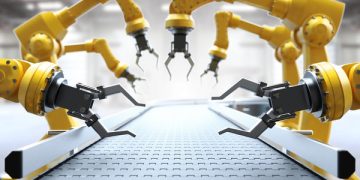
    One of the earliest and most significant applications of AI and automation has been in manufacturing. Industrial automation has been transforming factories for decades, and AI is now adding another layer of sophistication to these systems. The combination of AI, robotics, and machine learning is enabling factories to become “smart,” where machines are not only performing tasks but also monitoring themselves, diagnosing faults, and making real-time adjustments.
    Robots equipped with AI can take on tasks such as assembly, welding, and painting, which were previously labor-intensive and required a high level of precision. These robots are capable of learning from their experiences and adapting to changes in their environment. For instance, collaborative robots (cobots) are designed to work alongside humans, assisting in tasks that are either too dangerous, too repetitive, or too complex for humans to do efficiently. This not only improves productivity but also reduces human error and injury.
    AI-powered predictive maintenance systems are another example of how automation can “lift the load” in manufacturing. These systems analyze data from equipment sensors to predict when a machine is likely to fail, allowing for proactive repairs and minimizing downtime.
  2. Healthcare: AI-Assisted Diagnosis and Automation in Patient Care
    In healthcare, AI and automation are significantly improving the accuracy and efficiency of patient care. From diagnostics to treatment recommendations, AI-powered tools are transforming the way healthcare providers operate. One of the most promising applications of AI in healthcare is medical imaging. AI systems can analyze radiology scans, such as X-rays and MRIs, to detect diseases such as cancer, pneumonia, and brain abnormalities with remarkable accuracy, often matching or surpassing the abilities of human doctors.
    Robotic surgery is another area where AI and automation are taking over heavy tasks. Surgical robots, guided by AI, allow for highly precise procedures, minimizing human error and reducing recovery times. These robots can also assist with minimally invasive surgeries, which require less recovery time and reduce the risk of complications.
    Automated patient monitoring is another area where AI is playing a major role. Wearable devices can track a patient’s vital signs, sending real-time data to healthcare providers, who can intervene before a patient’s condition worsens. AI algorithms can analyze these data streams and flag potential issues, allowing for faster responses and more personalized care.
  3. Customer Service: AI-Powered Chatbots and Virtual Assistants
    AI and automation are also transforming the customer service industry. Chatbots and virtual assistants, powered by natural language processing (NLP), are able to handle routine customer inquiries, provide 24/7 support, and resolve common issues without the need for human intervention. These AI systems can manage a wide range of tasks, from answering basic questions to processing orders, booking appointments, and troubleshooting problems.
    Companies are increasingly adopting AI-powered customer service tools because they allow businesses to provide faster, more efficient service, reduce operational costs, and enhance customer satisfaction. AI chatbots can handle thousands of queries simultaneously, something that would be impossible for a human workforce to match. Moreover, AI systems can learn from previous interactions and improve their responses over time, further improving the customer experience.
  4. Transportation: Autonomous Vehicles and Drones
    The transportation sector is another area where AI and automation are taking on more of the heavy lifting. Autonomous vehicles (self-driving cars, trucks, and buses) are set to revolutionize the way goods and people are transported. AI systems enable vehicles to navigate roads, detect obstacles, and make decisions in real-time, all while adhering to traffic laws and safety protocols.
    Autonomous trucks, for example, are already being tested in logistics to transport goods over long distances without the need for a human driver. This has the potential to significantly reduce costs in freight transport, increase efficiency, and alleviate driver shortages in the trucking industry.
    Drones are also increasingly being used for deliveries, surveillance, and inspections, reducing the need for human intervention in dangerous or time-consuming tasks. Drones are already being used by companies like Amazon for parcel deliveries, while they are also employed in areas like agriculture for crop monitoring, spraying pesticides, and analyzing field data.
  5. Finance: AI-Driven Trading and Fraud Detection
    In the financial industry, AI and automation are playing an increasingly vital role in everything from algorithmic trading to fraud detection. AI systems can analyze market data, news, and trends in real-time to predict stock prices, enabling firms to make more informed investment decisions. Algorithmic trading, powered by AI, is now a critical part of the global financial market, with AI-driven systems executing trades at speeds and frequencies that far exceed human capabilities.
    AI is also being used to detect fraudulent activities. Machine learning algorithms can analyze patterns of behavior to spot anomalies, such as unusual transactions or identity theft. These systems are able to flag potentially fraudulent activities before they result in significant losses, thereby increasing security for both businesses and consumers.
  6. Retail: AI for Inventory Management and Customer Insights
    In the retail sector, AI and automation are increasingly being used to optimize supply chains, improve inventory management, and offer personalized shopping experiences. Retailers are employing AI-powered systems to forecast demand, track inventory levels in real-time, and ensure that shelves are stocked with the right products at the right time. AI-driven recommendation engines, which suggest products based on a customer’s preferences and browsing history, are also becoming a standard feature in e-commerce platforms.
    Automated warehouse robots are improving efficiency in inventory management by picking and packing products without human involvement. These robots can move items more quickly and accurately than human workers, reducing operational costs and minimizing errors.

The Benefits of AI and Automation

  1. Increased Efficiency and Productivity
    One of the most significant advantages of AI and automation is the improvement in efficiency and productivity. Machines can operate 24/7 without the need for breaks, and AI systems can process vast amounts of data quickly and accurately. This leads to faster decision-making, reduced downtime, and optimized workflows. For businesses, this translates into cost savings and the ability to focus human labor on more creative and strategic tasks.
  2. Improved Safety and Risk Reduction
    Automation is especially valuable in industries where workers are exposed to dangerous environments. In mining, construction, and chemical processing, robots and AI systems can take on tasks that would otherwise put human workers at risk. For example, AI-powered robots can be deployed in hazardous areas to perform inspections, conduct repairs, or monitor for dangerous conditions, reducing the likelihood of accidents and injuries.
  3. Enhanced Accuracy and Reduced Human Error
    AI and automation systems are known for their accuracy and consistency. Unlike humans, machines do not tire or become distracted, which means they can perform tasks with a high degree of precision. In industries like healthcare, finance, and manufacturing, this precision leads to better outcomes, whether it’s more accurate medical diagnoses, fraud detection, or the assembly of products.
  4. Job Creation in New Areas
    While there is concern about job displacement due to automation, there is also significant potential for new jobs to emerge. As AI and automation technologies evolve, new roles are being created in fields like AI ethics, data science, robotics engineering, and software development. Moreover, by freeing humans from routine tasks, AI has the potential to foster creativity, innovation, and entrepreneurship, leading to the creation of entirely new industries and business models.

Challenges and Considerations

  1. Job Displacement and the Future of Work
    One of the most significant concerns about the increasing adoption of AI and automation is the potential for widespread job displacement. While automation will undoubtedly lead to job creation in certain sectors, it may also result in job losses in others, particularly in roles that involve repetitive, manual labor. Workers in industries such as manufacturing, transportation, and retail may find themselves displaced by machines.
    To address this issue, governments and organizations must invest in reskilling and upskilling programs to help workers transition to new roles. Policymakers should also consider implementing social safety nets, such as universal basic income, to ensure that displaced workers are supported during their transitions.
  2. Ethical and Social Implications
    As AI systems take on more tasks, ethical considerations become increasingly important. Issues such as algorithmic bias, data privacy, accountability, and transparency must be addressed to ensure that AI systems are used in ways that benefit society as a whole. There is also the risk of automation exacerbating existing social inequalities, particularly if the benefits of automation are not distributed equitably across society.
  3. Security Concerns
    With the increased reliance on AI and automation comes the potential for security vulnerabilities. Cyberattacks targeting AI systems could have severe consequences, ranging from data breaches to the sabotage of critical infrastructure. It is essential to implement robust cybersecurity measures and ensure that AI systems are resilient to potential threats.

Conclusion

AI and automation are undoubtedly transforming the way industries operate and are set to take on more of the “heavy lifting” in the years to come. From manufacturing and healthcare to finance and retail, these technologies are increasing efficiency, improving safety, and driving innovation. However, they also bring about significant challenges, including concerns about job displacement, ethical considerations, and security risks.

As we move forward, it is crucial that we develop strategies to address these challenges, ensuring that AI and automation are used in ways that benefit society while minimizing harm. By investing in education, reskilling, and ethical frameworks, we can create a future where AI and automation work alongside humans to create a more efficient, equitable, and prosperous world.


Tags: aiautomationInterviews & Opinions
ShareTweetShare

Related Posts

As AI Technology Continues to Evolve, Ethical Issues Are Becoming More Prominent
Interviews & Opinions

As AI Technology Continues to Evolve, Ethical Issues Are Becoming More Prominent

April 21, 2026
AI Fairness: Addressing Bias and Promoting Equity in Artificial Intelligence
Interviews & Opinions

AI Fairness: Addressing Bias and Promoting Equity in Artificial Intelligence

April 4, 2026
The Impact of AI on the Labor Market: A Critical Examination
Interviews & Opinions

The Impact of AI on the Labor Market: A Critical Examination

April 4, 2026
Human-Machine Collaboration and Trend Prediction: The Future of Work and Decision-Making
Interviews & Opinions

Human-Machine Collaboration and Trend Prediction: The Future of Work and Decision-Making

January 21, 2026
Despite AI Automation Enhancements, Human Contribution Remains Unmatched in Data Creation and Cultural Context Understanding
Interviews & Opinions

Despite AI Automation Enhancements, Human Contribution Remains Unmatched in Data Creation and Cultural Context Understanding

January 20, 2026
Investment Bubbles and Risk Management: Diverging Perspectives
Interviews & Opinions

Investment Bubbles and Risk Management: Diverging Perspectives

January 19, 2026
Leave Comment
  • Trending
  • Comments
  • Latest
How Artificial Intelligence is Achieving Revolutionary Breakthroughs in the Healthcare Industry: What Success Stories Teach Us

How Artificial Intelligence is Achieving Revolutionary Breakthroughs in the Healthcare Industry: What Success Stories Teach Us

July 26, 2025
Deep Learning Simulates Human Brain Signal Processing Pathways Through the Construction of Multi-Layer Neural Networks

Deep Learning Simulates Human Brain Signal Processing Pathways Through the Construction of Multi-Layer Neural Networks

January 14, 2026
From Beginner to Expert: Which AI Platforms Are Best for Beginners? Experts’ Take on Learning Curves and Practical Applications

From Beginner to Expert: Which AI Platforms Are Best for Beginners? Experts’ Take on Learning Curves and Practical Applications

July 23, 2025
AI in the Financial Sector: Which Innovative Strategies Are Driving Digital Transformation?

AI in the Financial Sector: Which Innovative Strategies Are Driving Digital Transformation?

July 26, 2025
How Artificial Intelligence Enhances Diagnostic Accuracy and Transforms Treatment Methods in Healthcare

How Artificial Intelligence Enhances Diagnostic Accuracy and Transforms Treatment Methods in Healthcare

How AI Enhances Customer Experience and Drives Sales Growth in Retail

How AI Enhances Customer Experience and Drives Sales Growth in Retail

How Artificial Intelligence Enables Precise Risk Assessment and Decision-Making

How Artificial Intelligence Enables Precise Risk Assessment and Decision-Making

How AI is Driving the Revolution in Smart Manufacturing and Production Efficiency

How AI is Driving the Revolution in Smart Manufacturing and Production Efficiency

Keras: Making AI Development Easier While Supporting Complex Model Designs

Keras: Making AI Development Easier While Supporting Complex Model Designs

April 21, 2026
PyTorch: A Flexible and Debug-Friendly Deep Learning Framework

PyTorch: A Flexible and Debug-Friendly Deep Learning Framework

April 21, 2026
The Application of AI in the Financial Industry

The Application of AI in the Financial Industry

April 21, 2026
The Application of AI in Medical Imaging: A Significant Advancement

The Application of AI in Medical Imaging: A Significant Advancement

April 21, 2026
AIInsiderUpdates

Our platform is dedicated to delivering comprehensive coverage of AI developments, featuring news, case studies, expert interviews, and valuable resources for professionals and enthusiasts alike.

© 2025 aiinsiderupdates.com. contacts:[email protected]

No Result
View All Result
  • Home
  • AI News
  • Technology Trends
  • Interviews & Opinions
  • Case Studies
  • Tools & Resources

© 2025 aiinsiderupdates.com. contacts:[email protected]

Welcome Back!

Login to your account below

Forgotten Password?

Retrieve your password

Please enter your username or email address to reset your password.

Log In