













Introduction
Self-supervised learning (SSL) has emerged as one of the most exciting and promising areas of research in the field of deep learning. As a paradigm that bridges the gap between supervised and unsupervised learning, SSL allows machine learning models to learn from data without the need for extensive labeled datasets. This breakthrough approach has the potential to revolutionize many domains of AI, from natural language processing (NLP) to computer vision and beyond. By reducing the reliance on costly labeled data, self-supervised learning is opening new possibilities for training powerful AI systems that can learn in a more human-like manner.
In this article, we will explore what self-supervised learning is, how it works, its advantages over other learning paradigms, its applications in various fields, and its future implications for AI. We will also examine the challenges that need to be overcome to unlock its full potential.
What is Self-Supervised Learning?
Self-supervised learning is a type of machine learning where models learn from unlabeled data by generating their own supervision signals. Unlike supervised learning, where the model is trained using labeled data (input-output pairs), SSL involves training models on large amounts of unlabeled data and creating pseudo-labels from the data itself. These pseudo-labels serve as the “supervision” for the learning process.
In essence, SSL leverages the structure inherent in the data to predict parts of the input from other parts. For example, in natural language processing, a model might be tasked with predicting a missing word in a sentence based on the surrounding words. In computer vision, a model might learn to predict the missing pieces of an image or identify the relationship between different parts of an image.
The goal of self-supervised learning is to extract useful features and representations from the data without needing manual annotations, allowing the model to learn in a more scalable and efficient manner.
How Does Self-Supervised Learning Work?
Self-supervised learning can be broken down into the following general steps:
- Data Preprocessing: The first step involves preparing the data. In SSL, the data is often unstructured (e.g., raw images, text, or audio), and the model must be designed to learn from it without explicit supervision.
- Pretext Task Creation: A pretext task is designed, which is a task that the model solves using the data itself. This task is not the final goal but serves as a proxy for learning useful representations. Common examples of pretext tasks include:
- Masking: In NLP, this could involve removing certain words in a sentence and asking the model to predict them.
- Contextual Prediction: In computer vision, this might involve cropping parts of an image and asking the model to predict the missing sections.
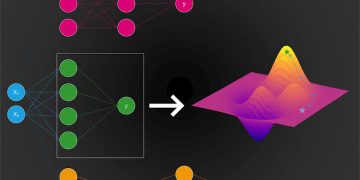
- Representation Learning: The model learns to perform the pretext task by creating internal representations (features) of the data that are useful for solving the task. This is where the deep learning models, such as convolutional neural networks (CNNs) for images or transformers for text, come into play.
- Fine-Tuning: Once the model has learned useful features, it can be fine-tuned on a downstream task, such as classification or regression. The idea is that the representations learned through self-supervision will transfer well to the specific task, even if it has limited labeled data.
Examples of Self-Supervised Learning Tasks
- Masked Language Modeling (MLM): A task where some words in a sentence are hidden, and the model is tasked with predicting the missing words. This task is central to training models like BERT (Bidirectional Encoder Representations from Transformers) in NLP.
- Contrastive Learning: A technique where the model learns to distinguish between similar and dissimilar pairs of data points. In computer vision, for example, the model might learn to identify images of the same object or scene, even when viewed from different angles.
- Predicting Future Frames: In video analysis, SSL can be used to predict future frames of a video based on past frames, teaching the model to learn motion patterns.
- Autoencoding: In this approach, the model learns to encode an input into a compressed representation and then reconstruct it. Variants of this approach, like Variational Autoencoders (VAEs) and Generative Adversarial Networks (GANs), have been highly successful in learning representations in an unsupervised manner.
Advantages of Self-Supervised Learning
Self-supervised learning offers several significant advantages over traditional supervised learning:
1. Reduced Need for Labeled Data
One of the most significant advantages of SSL is its ability to learn from unlabeled data. Labeling large datasets is often time-consuming, expensive, and sometimes impractical. In contrast, SSL allows models to be trained on massive amounts of unlabeled data, which is much more readily available.
2. Improved Generalization
Self-supervised learning models tend to learn more generalizable representations, meaning they are better at transferring learned features to new tasks. Since SSL models learn from data itself and are not reliant on specific labels, they can capture underlying structures and patterns that make them more adaptable to different scenarios.
3. Scalability
Since SSL relies on unlabeled data, it is much easier to scale up the amount of data used for training. In many cases, unlabeled data is abundant, especially in domains like healthcare (medical images), web data (texts, images, videos), and autonomous driving (sensor data).
4. Efficient Use of Data
Self-supervised learning allows the model to extract rich feature representations from data without the need for manual annotation. This enables the efficient use of data and results in models that can perform well even when labeled data is scarce.
Applications of Self-Supervised Learning
Self-supervised learning has shown significant promise in a variety of fields. Below are some of the key areas where SSL is being applied:
1. Natural Language Processing (NLP)
Self-supervised learning has become a foundational technique in modern NLP. Models like BERT, GPT, and RoBERTa are all based on SSL principles. These models have achieved state-of-the-art results on a wide range of tasks, including sentiment analysis, text classification, translation, and summarization.
- Masked Language Modeling (MLM): BERT is trained using a masked language modeling task, where random words in a sentence are replaced with a mask, and the model is tasked with predicting the missing words. This helps the model learn contextual relationships between words in a sentence.
- Next Sentence Prediction: BERT also uses a task called next sentence prediction (NSP), where the model learns to predict whether two sentences appear consecutively in a document.
2. Computer Vision
In computer vision, self-supervised learning has been applied to a variety of tasks, including image classification, object detection, and segmentation. By using SSL, vision models can learn from unlabeled images, which is especially valuable given the difficulty and expense of annotating large image datasets.
- Contrastive Learning: One of the most successful techniques in SSL for vision is contrastive learning, where the model learns to distinguish between similar and dissimilar pairs of images. The SimCLR model is a prime example of a self-supervised learning approach for image classification that uses contrastive learning to learn high-quality image representations.
- Autoencoders for Image Generation: SSL is also used in generative tasks like image synthesis, where models like Autoencoders and Generative Adversarial Networks (GANs) learn to generate new images based on learned representations.
3. Speech and Audio Processing
Self-supervised learning has been increasingly applied to audio and speech processing tasks, such as speech recognition and emotion detection. By training on unlabeled audio data, SSL models can learn to understand acoustic features, phonetic patterns, and even speaker-specific characteristics.
- Wave2Vec: The Wave2Vec model uses SSL to learn speech representations from raw audio waveforms. It is trained to predict parts of the audio signal based on context, achieving state-of-the-art performance in speech recognition.
4. Robotics and Autonomous Systems
In robotics, SSL can be used to train models that learn useful representations of the environment and tasks. Robots can use self-supervised methods to learn to perform tasks like object manipulation, navigation, and planning without requiring labeled data for every possible scenario.
- Sim2Real Transfer: SSL is also being used in transfer learning, where models trained in simulation can be transferred to real-world environments, enabling robots to learn from synthetic data and apply the knowledge to real-world tasks.

Challenges and Limitations of Self-Supervised Learning
Despite its promise, self-supervised learning still faces several challenges:
1. Pretext Task Design
One of the biggest hurdles in SSL is designing effective pretext tasks. These tasks must be carefully constructed to ensure that the learned representations are useful for downstream tasks. Poorly designed pretext tasks may lead to models that do not generalize well to real-world applications.
2. Evaluation and Benchmarking
Evaluating self-supervised models can be difficult, as SSL models are often evaluated based on their performance on downstream tasks. Defining robust evaluation metrics and benchmarks is essential to assess the true effectiveness of SSL models.
3. Scalability of Models
Although SSL reduces the reliance on labeled data, it still requires large computational resources to process and learn from vast amounts of unlabeled data. Training self-supervised models at scale can be resource-intensive, requiring specialized hardware like GPUs or TPUs.
4. Lack of Theoretical Foundations
While self-supervised learning has shown impressive results in practice, the theoretical underpinnings of the approach are still being developed. More research is needed to understand why and how SSL models learn so effectively and to establish clearer guidelines for designing SSL tasks.
The Future of Self-Supervised Learning
Self-supervised learning is poised to play a pivotal role in the future of AI and deep learning. As models continue to improve and more domains adopt SSL techniques, we can expect significant advancements in tasks like computer vision, NLP, and robotics. However, overcoming the challenges of pretext task design, model evaluation, and scalability will be crucial for further success.
The next frontier in self-supervised learning will likely involve refining the pretext tasks to ensure better transfer to real-world applications, as well as optimizing training methods to handle larger, more complex datasets. With continued research and innovation, SSL has the potential to unlock the full power of AI, enabling models to learn from vast amounts of unlabeled data and drive future breakthroughs across industries.