

















AIInsiderUpdates
  • Home
  • AI News
    Global Regulatory Frameworks for AI: Progressing Towards Security, Ethics, Accountability, and Data Protection

    Global Regulatory Frameworks for AI: Progressing Towards Security, Ethics, Accountability, and Data Protection

    International Collaboration: A Key Driver for AI Technology Standards and Ecosystem Development

    International Collaboration: A Key Driver for AI Technology Standards and Ecosystem Development

    Industry-Leading AI Companies and Cloud Service Providers

    Industry-Leading AI Companies and Cloud Service Providers

    An Increasing Number of Enterprises Integrating AI into Core Strategy

    An Increasing Number of Enterprises Integrating AI into Core Strategy

    Large Model Providers and Enterprises in Speech & NLP Continue Expanding Application Scenarios

    Large Model Providers and Enterprises in Speech & NLP Continue Expanding Application Scenarios

    Breakthrough Advances in AI for Complex Perception and Reasoning Tasks

    Breakthrough Advances in AI for Complex Perception and Reasoning Tasks

  • Technology Trends
    AI Explainability and Ethics: Balancing Transparency, Accountability, and Trust in AI Systems

    AI Explainability and Ethics: Balancing Transparency, Accountability, and Trust in AI Systems

    Multimodal AI: Revolutionizing Data Integration and Understanding

    Multimodal AI: Revolutionizing Data Integration and Understanding

    Smart Manufacturing and Industrial AI

    Smart Manufacturing and Industrial AI

    Multilingual Understanding and Generation, Especially in Non-English Language Contexts: A Global Innovation Frontier

    Multilingual Understanding and Generation, Especially in Non-English Language Contexts: A Global Innovation Frontier

    AI Systems Are No Longer Limited to Single Inputs: The Rise of Multimodal AI

    AI Systems Are No Longer Limited to Single Inputs: The Rise of Multimodal AI

    Optimizing Transformer and Self-Attention Architectures to Enhance Model Expressiveness

    Optimizing Transformer and Self-Attention Architectures to Enhance Model Expressiveness

  • Interviews & Opinions
    Human-Machine Collaboration and Trend Prediction: The Future of Work and Decision-Making

    Human-Machine Collaboration and Trend Prediction: The Future of Work and Decision-Making

    Despite AI Automation Enhancements, Human Contribution Remains Unmatched in Data Creation and Cultural Context Understanding

    Despite AI Automation Enhancements, Human Contribution Remains Unmatched in Data Creation and Cultural Context Understanding

    Investment Bubbles and Risk Management: Diverging Perspectives

    Investment Bubbles and Risk Management: Diverging Perspectives

    CEO Perspectives on AI Data Contribution and the Role of Humans

    CEO Perspectives on AI Data Contribution and the Role of Humans

    Differences Between Academic and Public Perspectives on AI: Bridging the Gap

    Differences Between Academic and Public Perspectives on AI: Bridging the Gap

    AI Technology is No Longer Just a Tool: It Has Become a Core Component of Enterprise Competitiveness

    AI Technology is No Longer Just a Tool: It Has Become a Core Component of Enterprise Competitiveness

  • Case Studies
    Multidimensional Applications of AI in the Digital Transformation of Manufacturing

    Multidimensional Applications of AI in the Digital Transformation of Manufacturing

    AI Customer Service Bots and Smart Advisors: Helping Banks Reduce Human Customer Support Costs While Enhancing Response Efficiency, User Engagement, and Satisfaction

    AI Customer Service Bots and Smart Advisors: Helping Banks Reduce Human Customer Support Costs While Enhancing Response Efficiency, User Engagement, and Satisfaction

    Personalized Recommendation and Inventory Optimization

    Personalized Recommendation and Inventory Optimization

    How Retailers Use AI Models to Predict Sales Trends and Optimize Inventory Levels

    How Retailers Use AI Models to Predict Sales Trends and Optimize Inventory Levels

    AI Not Only Enhances Diagnostic Capabilities but Also Significantly Improves Backend Healthcare Services

    AI Not Only Enhances Diagnostic Capabilities but Also Significantly Improves Backend Healthcare Services

    AI in Manufacturing: Achieving Significant Cost Savings and Efficiency Improvements

    AI in Manufacturing: Achieving Significant Cost Savings and Efficiency Improvements

  • Tools & Resources
    Real-World Testing and Efficiency Evaluation of Emerging Technological Trends

    Real-World Testing and Efficiency Evaluation of Emerging Technological Trends

    Auxiliary AI Toolset: Enhancing Productivity, Innovation, and Problem Solving Across Industries

    Auxiliary AI Toolset: Enhancing Productivity, Innovation, and Problem Solving Across Industries

    Dataset Preprocessing and Labeling Strategies: A Resource Guide

    Dataset Preprocessing and Labeling Strategies: A Resource Guide

    Recommended Open Source Model Trade-Off Strategies

    Recommended Open Source Model Trade-Off Strategies

    Practical Roadmap: End-to-End Experience from Model Training to Deployment

    Practical Roadmap: End-to-End Experience from Model Training to Deployment

    Scalability and Performance Optimization: Insights and Best Practices

    Scalability and Performance Optimization: Insights and Best Practices

AIInsiderUpdates
  • Home
  • AI News
    Global Regulatory Frameworks for AI: Progressing Towards Security, Ethics, Accountability, and Data Protection

    Global Regulatory Frameworks for AI: Progressing Towards Security, Ethics, Accountability, and Data Protection

    International Collaboration: A Key Driver for AI Technology Standards and Ecosystem Development

    International Collaboration: A Key Driver for AI Technology Standards and Ecosystem Development

    Industry-Leading AI Companies and Cloud Service Providers

    Industry-Leading AI Companies and Cloud Service Providers

    An Increasing Number of Enterprises Integrating AI into Core Strategy

    An Increasing Number of Enterprises Integrating AI into Core Strategy

    Large Model Providers and Enterprises in Speech & NLP Continue Expanding Application Scenarios

    Large Model Providers and Enterprises in Speech & NLP Continue Expanding Application Scenarios

    Breakthrough Advances in AI for Complex Perception and Reasoning Tasks

    Breakthrough Advances in AI for Complex Perception and Reasoning Tasks

  • Technology Trends
    AI Explainability and Ethics: Balancing Transparency, Accountability, and Trust in AI Systems

    AI Explainability and Ethics: Balancing Transparency, Accountability, and Trust in AI Systems

    Multimodal AI: Revolutionizing Data Integration and Understanding

    Multimodal AI: Revolutionizing Data Integration and Understanding

    Smart Manufacturing and Industrial AI

    Smart Manufacturing and Industrial AI

    Multilingual Understanding and Generation, Especially in Non-English Language Contexts: A Global Innovation Frontier

    Multilingual Understanding and Generation, Especially in Non-English Language Contexts: A Global Innovation Frontier

    AI Systems Are No Longer Limited to Single Inputs: The Rise of Multimodal AI

    AI Systems Are No Longer Limited to Single Inputs: The Rise of Multimodal AI

    Optimizing Transformer and Self-Attention Architectures to Enhance Model Expressiveness

    Optimizing Transformer and Self-Attention Architectures to Enhance Model Expressiveness

  • Interviews & Opinions
    Human-Machine Collaboration and Trend Prediction: The Future of Work and Decision-Making

    Human-Machine Collaboration and Trend Prediction: The Future of Work and Decision-Making

    Despite AI Automation Enhancements, Human Contribution Remains Unmatched in Data Creation and Cultural Context Understanding

    Despite AI Automation Enhancements, Human Contribution Remains Unmatched in Data Creation and Cultural Context Understanding

    Investment Bubbles and Risk Management: Diverging Perspectives

    Investment Bubbles and Risk Management: Diverging Perspectives

    CEO Perspectives on AI Data Contribution and the Role of Humans

    CEO Perspectives on AI Data Contribution and the Role of Humans

    Differences Between Academic and Public Perspectives on AI: Bridging the Gap

    Differences Between Academic and Public Perspectives on AI: Bridging the Gap

    AI Technology is No Longer Just a Tool: It Has Become a Core Component of Enterprise Competitiveness

    AI Technology is No Longer Just a Tool: It Has Become a Core Component of Enterprise Competitiveness

  • Case Studies
    Multidimensional Applications of AI in the Digital Transformation of Manufacturing

    Multidimensional Applications of AI in the Digital Transformation of Manufacturing

    AI Customer Service Bots and Smart Advisors: Helping Banks Reduce Human Customer Support Costs While Enhancing Response Efficiency, User Engagement, and Satisfaction

    AI Customer Service Bots and Smart Advisors: Helping Banks Reduce Human Customer Support Costs While Enhancing Response Efficiency, User Engagement, and Satisfaction

    Personalized Recommendation and Inventory Optimization

    Personalized Recommendation and Inventory Optimization

    How Retailers Use AI Models to Predict Sales Trends and Optimize Inventory Levels

    How Retailers Use AI Models to Predict Sales Trends and Optimize Inventory Levels

    AI Not Only Enhances Diagnostic Capabilities but Also Significantly Improves Backend Healthcare Services

    AI Not Only Enhances Diagnostic Capabilities but Also Significantly Improves Backend Healthcare Services

    AI in Manufacturing: Achieving Significant Cost Savings and Efficiency Improvements

    AI in Manufacturing: Achieving Significant Cost Savings and Efficiency Improvements

  • Tools & Resources
    Real-World Testing and Efficiency Evaluation of Emerging Technological Trends

    Real-World Testing and Efficiency Evaluation of Emerging Technological Trends

    Auxiliary AI Toolset: Enhancing Productivity, Innovation, and Problem Solving Across Industries

    Auxiliary AI Toolset: Enhancing Productivity, Innovation, and Problem Solving Across Industries

    Dataset Preprocessing and Labeling Strategies: A Resource Guide

    Dataset Preprocessing and Labeling Strategies: A Resource Guide

    Recommended Open Source Model Trade-Off Strategies

    Recommended Open Source Model Trade-Off Strategies

    Practical Roadmap: End-to-End Experience from Model Training to Deployment

    Practical Roadmap: End-to-End Experience from Model Training to Deployment

    Scalability and Performance Optimization: Insights and Best Practices

    Scalability and Performance Optimization: Insights and Best Practices

AIInsiderUpdates
No Result
View All Result

How Do Renowned Experts View the Impact of Artificial Intelligence on the Future of Work?

March 25, 2025
How Do Renowned Experts View the Impact of Artificial Intelligence on the Future of Work?

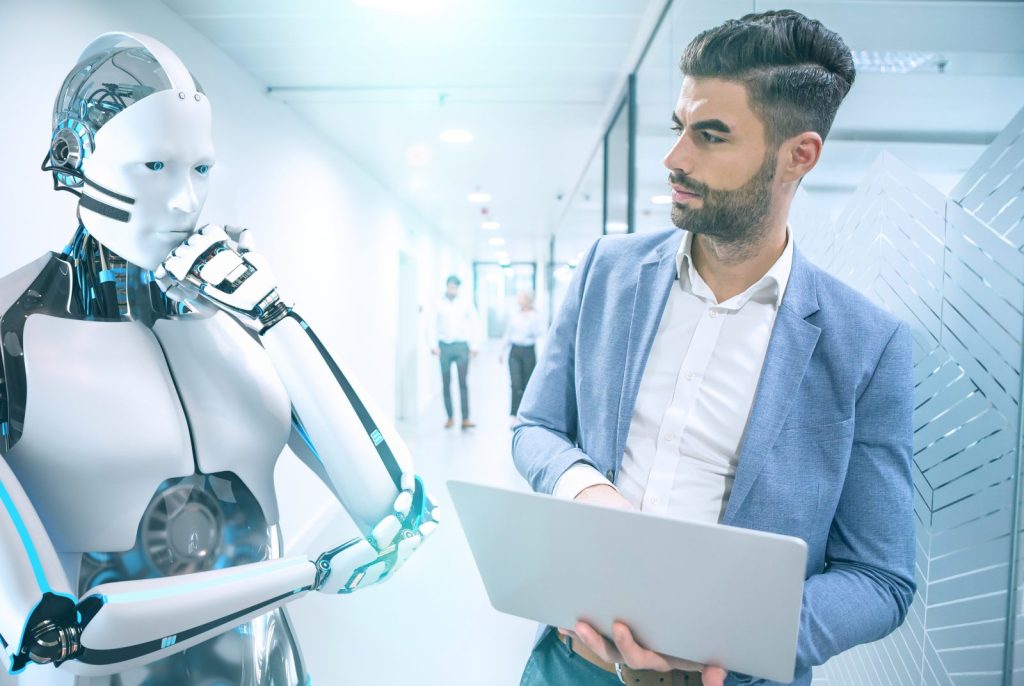
In a futuristic office, a professional works with a humanoid robot for efficient operations, blending tech and humans AIG62

Introduction:

Artificial Intelligence (AI) is increasingly becoming a transformative force, shaping not only technological innovations but also redefining the structure of the modern workplace. From automated tasks and enhanced productivity to the potential displacement of certain jobs, the impact of AI on the future of work is profound and multifaceted. As AI technologies evolve, industry leaders, economists, and experts in the field are offering diverse perspectives on how AI will affect jobs, workplace dynamics, and employment opportunities in the years to come.

In this article, we delve into the viewpoints of some renowned experts who have studied AI’s implications on the workforce. We will explore their predictions, concerns, and suggestions for how businesses and employees can prepare for an AI-driven future. By understanding these perspectives, we can better navigate the inevitable changes and challenges brought by AI while leveraging its potential for positive transformation in the workplace.


1. The Role of AI in Transforming Job Functions: Expert Insights

AI’s ability to automate tasks and process data has raised questions about its role in changing job functions across industries. Some experts argue that AI will eliminate certain types of jobs, while others emphasize its potential to create new opportunities by reshaping how work is done.

1.1. Dr. Kai-Fu Lee: AI as a Job Creator, Not Just a Job Killer

Dr. Kai-Fu Lee, a leading AI expert and the author of AI Superpowers, provides a nuanced perspective on AI’s impact on jobs. According to Dr. Lee, while AI will undoubtedly displace certain jobs, particularly in industries like manufacturing, retail, and transportation, it will also create a new wave of employment opportunities in fields such as AI development, data analysis, and machine learning.

Dr. Lee highlights that jobs that involve repetitive, predictable tasks are at high risk of automation. However, jobs requiring creativity, empathy, and complex decision-making are less likely to be automated, and may even see greater demand due to AI’s ability to handle more mundane aspects of work. For example, healthcare professionals, educators, and creative workers will likely see their roles evolve, but their core functions will remain indispensable as AI handles routine administrative tasks or provides advanced decision support.

1.2. Andrew Ng: AI as a Tool for Augmenting Human Work

Andrew Ng, a renowned AI researcher and co-founder of Google Brain, emphasizes that AI should be viewed primarily as a tool to augment human capabilities rather than replace workers altogether. He argues that the future of work lies in human-AI collaboration, where AI enhances productivity by assisting with data processing, decision-making, and repetitive tasks, allowing human workers to focus on higher-level, more strategic activities.

Ng believes that, as AI automates more routine tasks, employees will need to adapt by developing new skills that complement AI systems. For instance, workers might move into roles that require them to manage AI systems, interpret complex data, or apply AI-generated insights in creative and strategic ways. In industries like education, customer service, and healthcare, AI has the potential to elevate workers’ ability to provide personalized, high-quality services by handling administrative burdens and offering data-driven recommendations.


2. AI and the Rise of Remote Work: Perspectives from Industry Leaders

AI’s role in the workforce is not just about automation—it’s also reshaping where and how people work. Remote work, a trend accelerated by AI tools, has become a significant part of the future of work, especially in a post-pandemic world.

2.1. Dr. Tom Davenport: The Role of AI in Enabling Remote Work

Dr. Tom Davenport, a leading expert on AI and business innovation, underscores how AI-powered collaboration tools have facilitated the rise of remote work. From virtual assistants that schedule meetings and manage tasks to AI-driven communication platforms that analyze team performance and enhance productivity, AI is enhancing the remote working experience.

Davenport predicts that as AI technologies continue to evolve, workers will have more autonomy to manage their schedules, tasks, and workflows. AI will act as a personal assistant, helping employees balance work-life commitments by managing their time and communications. Additionally, AI’s ability to assist with information retrieval, task automation, and real-time feedback will help employees work more efficiently without the need for physical office space.

However, Davenport also highlights that there are concerns related to the remote work revolution, such as employee burnout, the potential for social isolation, and the challenge of maintaining organizational culture. The widespread use of AI to monitor employee performance remotely could lead to privacy concerns and trust issues. Balancing AI’s role in enhancing productivity with the need for human connection and well-being will be a key challenge for businesses in the future.


3. AI and Upskilling: The Need for New Competencies in the Workforce

As AI reshapes job roles, there is a growing emphasis on the need for employees to develop new skills. Experts agree that adapting to the AI-driven workplace will require a focus on upskilling and reskilling workers to remain relevant in the job market.

3.1. Garry Kasparov: Human Intelligence and Emotional Skills in the Age of AI

Former world chess champion and AI advocate Garry Kasparov believes that AI will never replace the uniquely human qualities of creativity, emotional intelligence, and ethical decision-making. He argues that the future workforce will need to focus on these aspects of human intelligence, which AI cannot replicate. Kasparov advocates for integrating emotional intelligence and soft skills into the workforce development agenda, especially as AI tools increasingly handle technical and cognitive tasks.

In his view, while AI excels at analyzing data and making recommendations, it cannot engage in empathy-driven interactions or navigate the complexities of human relationships. As a result, jobs that require interpersonal communication, leadership, and creativity—such as those in management, healthcare, education, and entertainment—will continue to be valuable, even as AI automates more technical and administrative tasks.

3.2. Daron Acemoglu: The Need for Policy and Education Reform

Daron Acemoglu, an economist at MIT and a leading scholar on the economics of AI, warns that while AI has the potential to create new jobs, it may also exacerbate inequalities if its benefits are not broadly distributed. He argues that the key to navigating the future of work in an AI-driven world is a focus on education and policy reform. Governments, businesses, and educational institutions need to collaborate to ensure workers are equipped with the skills necessary to thrive in the evolving economy.

Acemoglu advocates for a shift in educational priorities, emphasizing STEM (science, technology, engineering, and mathematics) education, along with critical thinking, problem-solving, and collaboration skills. He stresses that it’s not just about technical expertise, but also about cultivating workers who can navigate complex, unpredictable work environments where AI is one tool among many.

4. AI’s Impact on Job Displacement and Income Inequality

While experts agree that AI will generate new opportunities, many also caution about the negative effects it may have on job displacement and income inequality.

4.1. Erik Brynjolfsson and Andrew McAfee: The “Second Machine Age”

In their influential book, The Second Machine Age, Erik Brynjolfsson and Andrew McAfee explore how technological advancements, including AI, will bring about a new wave of economic change. They argue that AI-driven automation will result in job displacement, particularly for workers in routine, manual, and low-skill positions. However, they also believe that AI can be a driver of economic growth if managed properly.

Brynjolfsson and McAfee suggest that while automation may reduce the number of low-skill jobs, it will also create new, high-skill roles in fields like data science, AI programming, and robotics engineering. They call for policies that help workers transition to these new roles through retraining programs and universal basic income (UBI) as a way to mitigate the negative effects of job loss.


5. The Ethical Considerations of AI in the Workforce

As AI becomes an integral part of the workplace, there are significant ethical considerations regarding its deployment and impact on workers.

5.1. Shoshana Zuboff: Surveillance Capitalism and Worker Rights

Shoshana Zuboff, a professor emerita at Harvard University and author of The Age of Surveillance Capitalism, warns that AI, if used irresponsibly, could exacerbate issues of surveillance and worker exploitation. Zuboff is concerned about the rise of “surveillance capitalism,” where AI-powered tools are used to monitor and control workers, often without their knowledge or consent.

She argues that businesses must be transparent about how AI systems are being used in the workplace, especially when it comes to monitoring employees. Zuboff advocates for strong data privacy regulations and ethical guidelines for AI deployment to ensure that workers’ rights are protected, and that AI is used in a manner that supports, rather than undermines, their well-being.


6. Conclusion: The Future of Work in an AI-Driven World

The perspectives of leading experts on AI and the future of work highlight a variety of viewpoints on how AI will reshape the workplace. While AI has the potential to automate routine tasks and enhance productivity, it also brings challenges such as job displacement, ethical concerns, and the need for upskilling.

Experts agree that businesses, governments, and educational institutions must work together to ensure that workers are equipped to adapt to an AI-driven world. By focusing on education, ethical AI deployment, and policy reform, societies can harness the benefits of AI while minimizing its negative impact on employment and income inequality.

The future of work will be shaped by how we choose to integrate AI into our organizations and our lives—using it as a tool to augment human intelligence, not replace it. With the right strategies and policies in place, AI can be a force for good, unlocking new opportunities and helping workers and businesses thrive in an increasingly AI-powered world.


Tags: aiArtificial intelligenceCase studyInterviewsprofessiontechnologyTools
ShareTweetShare

Related Posts

Human-Machine Collaboration and Trend Prediction: The Future of Work and Decision-Making
Interviews & Opinions

Human-Machine Collaboration and Trend Prediction: The Future of Work and Decision-Making

January 21, 2026
Despite AI Automation Enhancements, Human Contribution Remains Unmatched in Data Creation and Cultural Context Understanding
Interviews & Opinions

Despite AI Automation Enhancements, Human Contribution Remains Unmatched in Data Creation and Cultural Context Understanding

January 20, 2026
Investment Bubbles and Risk Management: Diverging Perspectives
Interviews & Opinions

Investment Bubbles and Risk Management: Diverging Perspectives

January 19, 2026
CEO Perspectives on AI Data Contribution and the Role of Humans
Interviews & Opinions

CEO Perspectives on AI Data Contribution and the Role of Humans

January 18, 2026
Differences Between Academic and Public Perspectives on AI: Bridging the Gap
Interviews & Opinions

Differences Between Academic and Public Perspectives on AI: Bridging the Gap

January 17, 2026
AI Technology is No Longer Just a Tool: It Has Become a Core Component of Enterprise Competitiveness
Interviews & Opinions

AI Technology is No Longer Just a Tool: It Has Become a Core Component of Enterprise Competitiveness

January 16, 2026
Leave Comment
  • Trending
  • Comments
  • Latest
How Artificial Intelligence is Achieving Revolutionary Breakthroughs in the Healthcare Industry: What Success Stories Teach Us

How Artificial Intelligence is Achieving Revolutionary Breakthroughs in the Healthcare Industry: What Success Stories Teach Us

July 26, 2025
AI in the Financial Sector: Which Innovative Strategies Are Driving Digital Transformation?

AI in the Financial Sector: Which Innovative Strategies Are Driving Digital Transformation?

July 26, 2025
From Beginner to Expert: Which AI Platforms Are Best for Beginners? Experts’ Take on Learning Curves and Practical Applications

From Beginner to Expert: Which AI Platforms Are Best for Beginners? Experts’ Take on Learning Curves and Practical Applications

July 23, 2025
How to Find Truly Useful AI Resources Among the Crowd? Experts Share How to Select Efficient and Innovative Tools!

How to Find Truly Useful AI Resources Among the Crowd? Experts Share How to Select Efficient and Innovative Tools!

July 23, 2025
How Artificial Intelligence Enhances Diagnostic Accuracy and Transforms Treatment Methods in Healthcare

How Artificial Intelligence Enhances Diagnostic Accuracy and Transforms Treatment Methods in Healthcare

How AI Enhances Customer Experience and Drives Sales Growth in Retail

How AI Enhances Customer Experience and Drives Sales Growth in Retail

How Artificial Intelligence Enables Precise Risk Assessment and Decision-Making

How Artificial Intelligence Enables Precise Risk Assessment and Decision-Making

How AI is Driving the Revolution in Smart Manufacturing and Production Efficiency

How AI is Driving the Revolution in Smart Manufacturing and Production Efficiency

Real-World Testing and Efficiency Evaluation of Emerging Technological Trends

Real-World Testing and Efficiency Evaluation of Emerging Technological Trends

January 21, 2026
Multidimensional Applications of AI in the Digital Transformation of Manufacturing

Multidimensional Applications of AI in the Digital Transformation of Manufacturing

January 21, 2026
Human-Machine Collaboration and Trend Prediction: The Future of Work and Decision-Making

Human-Machine Collaboration and Trend Prediction: The Future of Work and Decision-Making

January 21, 2026
AI Explainability and Ethics: Balancing Transparency, Accountability, and Trust in AI Systems

AI Explainability and Ethics: Balancing Transparency, Accountability, and Trust in AI Systems

January 21, 2026
AIInsiderUpdates

Our platform is dedicated to delivering comprehensive coverage of AI developments, featuring news, case studies, expert interviews, and valuable resources for professionals and enthusiasts alike.

© 2025 aiinsiderupdates.com. contacts:[email protected]

No Result
View All Result
  • Home
  • AI News
  • Technology Trends
  • Interviews & Opinions
  • Case Studies
  • Tools & Resources

© 2025 aiinsiderupdates.com. contacts:[email protected]

Welcome Back!

Login to your account below

Forgotten Password?

Retrieve your password

Please enter your username or email address to reset your password.

Log In