



























AIInsiderUpdates
  • Home
  • AI News
    Global Regulatory Frameworks for AI: Progressing Towards Security, Ethics, Accountability, and Data Protection

    Global Regulatory Frameworks for AI: Progressing Towards Security, Ethics, Accountability, and Data Protection

    International Collaboration: A Key Driver for AI Technology Standards and Ecosystem Development

    International Collaboration: A Key Driver for AI Technology Standards and Ecosystem Development

    Industry-Leading AI Companies and Cloud Service Providers

    Industry-Leading AI Companies and Cloud Service Providers

    An Increasing Number of Enterprises Integrating AI into Core Strategy

    An Increasing Number of Enterprises Integrating AI into Core Strategy

    Large Model Providers and Enterprises in Speech & NLP Continue Expanding Application Scenarios

    Large Model Providers and Enterprises in Speech & NLP Continue Expanding Application Scenarios

    Breakthrough Advances in AI for Complex Perception and Reasoning Tasks

    Breakthrough Advances in AI for Complex Perception and Reasoning Tasks

  • Technology Trends
    AI Explainability and Ethics: Balancing Transparency, Accountability, and Trust in AI Systems

    AI Explainability and Ethics: Balancing Transparency, Accountability, and Trust in AI Systems

    Multimodal AI: Revolutionizing Data Integration and Understanding

    Multimodal AI: Revolutionizing Data Integration and Understanding

    Smart Manufacturing and Industrial AI

    Smart Manufacturing and Industrial AI

    Multilingual Understanding and Generation, Especially in Non-English Language Contexts: A Global Innovation Frontier

    Multilingual Understanding and Generation, Especially in Non-English Language Contexts: A Global Innovation Frontier

    AI Systems Are No Longer Limited to Single Inputs: The Rise of Multimodal AI

    AI Systems Are No Longer Limited to Single Inputs: The Rise of Multimodal AI

    Optimizing Transformer and Self-Attention Architectures to Enhance Model Expressiveness

    Optimizing Transformer and Self-Attention Architectures to Enhance Model Expressiveness

  • Interviews & Opinions
    Human-Machine Collaboration and Trend Prediction: The Future of Work and Decision-Making

    Human-Machine Collaboration and Trend Prediction: The Future of Work and Decision-Making

    Despite AI Automation Enhancements, Human Contribution Remains Unmatched in Data Creation and Cultural Context Understanding

    Despite AI Automation Enhancements, Human Contribution Remains Unmatched in Data Creation and Cultural Context Understanding

    Investment Bubbles and Risk Management: Diverging Perspectives

    Investment Bubbles and Risk Management: Diverging Perspectives

    CEO Perspectives on AI Data Contribution and the Role of Humans

    CEO Perspectives on AI Data Contribution and the Role of Humans

    Differences Between Academic and Public Perspectives on AI: Bridging the Gap

    Differences Between Academic and Public Perspectives on AI: Bridging the Gap

    AI Technology is No Longer Just a Tool: It Has Become a Core Component of Enterprise Competitiveness

    AI Technology is No Longer Just a Tool: It Has Become a Core Component of Enterprise Competitiveness

  • Case Studies
    Multidimensional Applications of AI in the Digital Transformation of Manufacturing

    Multidimensional Applications of AI in the Digital Transformation of Manufacturing

    AI Customer Service Bots and Smart Advisors: Helping Banks Reduce Human Customer Support Costs While Enhancing Response Efficiency, User Engagement, and Satisfaction

    AI Customer Service Bots and Smart Advisors: Helping Banks Reduce Human Customer Support Costs While Enhancing Response Efficiency, User Engagement, and Satisfaction

    Personalized Recommendation and Inventory Optimization

    Personalized Recommendation and Inventory Optimization

    How Retailers Use AI Models to Predict Sales Trends and Optimize Inventory Levels

    How Retailers Use AI Models to Predict Sales Trends and Optimize Inventory Levels

    AI Not Only Enhances Diagnostic Capabilities but Also Significantly Improves Backend Healthcare Services

    AI Not Only Enhances Diagnostic Capabilities but Also Significantly Improves Backend Healthcare Services

    AI in Manufacturing: Achieving Significant Cost Savings and Efficiency Improvements

    AI in Manufacturing: Achieving Significant Cost Savings and Efficiency Improvements

  • Tools & Resources
    Real-World Testing and Efficiency Evaluation of Emerging Technological Trends

    Real-World Testing and Efficiency Evaluation of Emerging Technological Trends

    Auxiliary AI Toolset: Enhancing Productivity, Innovation, and Problem Solving Across Industries

    Auxiliary AI Toolset: Enhancing Productivity, Innovation, and Problem Solving Across Industries

    Dataset Preprocessing and Labeling Strategies: A Resource Guide

    Dataset Preprocessing and Labeling Strategies: A Resource Guide

    Recommended Open Source Model Trade-Off Strategies

    Recommended Open Source Model Trade-Off Strategies

    Practical Roadmap: End-to-End Experience from Model Training to Deployment

    Practical Roadmap: End-to-End Experience from Model Training to Deployment

    Scalability and Performance Optimization: Insights and Best Practices

    Scalability and Performance Optimization: Insights and Best Practices

AIInsiderUpdates
  • Home
  • AI News
    Global Regulatory Frameworks for AI: Progressing Towards Security, Ethics, Accountability, and Data Protection

    Global Regulatory Frameworks for AI: Progressing Towards Security, Ethics, Accountability, and Data Protection

    International Collaboration: A Key Driver for AI Technology Standards and Ecosystem Development

    International Collaboration: A Key Driver for AI Technology Standards and Ecosystem Development

    Industry-Leading AI Companies and Cloud Service Providers

    Industry-Leading AI Companies and Cloud Service Providers

    An Increasing Number of Enterprises Integrating AI into Core Strategy

    An Increasing Number of Enterprises Integrating AI into Core Strategy

    Large Model Providers and Enterprises in Speech & NLP Continue Expanding Application Scenarios

    Large Model Providers and Enterprises in Speech & NLP Continue Expanding Application Scenarios

    Breakthrough Advances in AI for Complex Perception and Reasoning Tasks

    Breakthrough Advances in AI for Complex Perception and Reasoning Tasks

  • Technology Trends
    AI Explainability and Ethics: Balancing Transparency, Accountability, and Trust in AI Systems

    AI Explainability and Ethics: Balancing Transparency, Accountability, and Trust in AI Systems

    Multimodal AI: Revolutionizing Data Integration and Understanding

    Multimodal AI: Revolutionizing Data Integration and Understanding

    Smart Manufacturing and Industrial AI

    Smart Manufacturing and Industrial AI

    Multilingual Understanding and Generation, Especially in Non-English Language Contexts: A Global Innovation Frontier

    Multilingual Understanding and Generation, Especially in Non-English Language Contexts: A Global Innovation Frontier

    AI Systems Are No Longer Limited to Single Inputs: The Rise of Multimodal AI

    AI Systems Are No Longer Limited to Single Inputs: The Rise of Multimodal AI

    Optimizing Transformer and Self-Attention Architectures to Enhance Model Expressiveness

    Optimizing Transformer and Self-Attention Architectures to Enhance Model Expressiveness

  • Interviews & Opinions
    Human-Machine Collaboration and Trend Prediction: The Future of Work and Decision-Making

    Human-Machine Collaboration and Trend Prediction: The Future of Work and Decision-Making

    Despite AI Automation Enhancements, Human Contribution Remains Unmatched in Data Creation and Cultural Context Understanding

    Despite AI Automation Enhancements, Human Contribution Remains Unmatched in Data Creation and Cultural Context Understanding

    Investment Bubbles and Risk Management: Diverging Perspectives

    Investment Bubbles and Risk Management: Diverging Perspectives

    CEO Perspectives on AI Data Contribution and the Role of Humans

    CEO Perspectives on AI Data Contribution and the Role of Humans

    Differences Between Academic and Public Perspectives on AI: Bridging the Gap

    Differences Between Academic and Public Perspectives on AI: Bridging the Gap

    AI Technology is No Longer Just a Tool: It Has Become a Core Component of Enterprise Competitiveness

    AI Technology is No Longer Just a Tool: It Has Become a Core Component of Enterprise Competitiveness

  • Case Studies
    Multidimensional Applications of AI in the Digital Transformation of Manufacturing

    Multidimensional Applications of AI in the Digital Transformation of Manufacturing

    AI Customer Service Bots and Smart Advisors: Helping Banks Reduce Human Customer Support Costs While Enhancing Response Efficiency, User Engagement, and Satisfaction

    AI Customer Service Bots and Smart Advisors: Helping Banks Reduce Human Customer Support Costs While Enhancing Response Efficiency, User Engagement, and Satisfaction

    Personalized Recommendation and Inventory Optimization

    Personalized Recommendation and Inventory Optimization

    How Retailers Use AI Models to Predict Sales Trends and Optimize Inventory Levels

    How Retailers Use AI Models to Predict Sales Trends and Optimize Inventory Levels

    AI Not Only Enhances Diagnostic Capabilities but Also Significantly Improves Backend Healthcare Services

    AI Not Only Enhances Diagnostic Capabilities but Also Significantly Improves Backend Healthcare Services

    AI in Manufacturing: Achieving Significant Cost Savings and Efficiency Improvements

    AI in Manufacturing: Achieving Significant Cost Savings and Efficiency Improvements

  • Tools & Resources
    Real-World Testing and Efficiency Evaluation of Emerging Technological Trends

    Real-World Testing and Efficiency Evaluation of Emerging Technological Trends

    Auxiliary AI Toolset: Enhancing Productivity, Innovation, and Problem Solving Across Industries

    Auxiliary AI Toolset: Enhancing Productivity, Innovation, and Problem Solving Across Industries

    Dataset Preprocessing and Labeling Strategies: A Resource Guide

    Dataset Preprocessing and Labeling Strategies: A Resource Guide

    Recommended Open Source Model Trade-Off Strategies

    Recommended Open Source Model Trade-Off Strategies

    Practical Roadmap: End-to-End Experience from Model Training to Deployment

    Practical Roadmap: End-to-End Experience from Model Training to Deployment

    Scalability and Performance Optimization: Insights and Best Practices

    Scalability and Performance Optimization: Insights and Best Practices

AIInsiderUpdates
No Result
View All Result

AI in Financial Markets: Predictive Analytics and Algorithmic Trading

February 20, 2025
AI in Financial Markets: Predictive Analytics and Algorithmic Trading

The integration of Artificial Intelligence (AI) into financial markets has revolutionized how investors, traders, and financial institutions make decisions, manage risk, and optimize portfolios. With the ability to analyze vast amounts of data, identify patterns, and make predictions, AI technologies are enhancing the accuracy and speed of financial decision-making. From predictive analytics that forecast market trends to algorithmic trading that executes high-frequency transactions, AI is reshaping the landscape of global finance. This article delves into the role of AI in predicting market trends, optimizing portfolios, and managing risk, while also examining case studies in hedge funds and banking. Additionally, we will explore the regulatory challenges surrounding AI in finance and consider its future implications.

The Role of AI in Predicting Market Trends and Optimizing Portfolios

One of the most significant contributions of AI to the financial markets is its ability to predict market trends. Financial markets are influenced by an array of factors, including economic data, geopolitical events, company performance, and investor sentiment. Predicting how these factors will affect the market is a challenging task, but AI-powered predictive analytics are helping investors gain valuable insights.

AI in Predictive Analytics

AI models, particularly machine learning (ML) algorithms, excel at processing and analyzing large datasets at speeds and scales that humans cannot match. By training on historical market data, news reports, and even social media sentiment, AI can identify patterns that indicate future market movements. Machine learning models such as neural networks, decision trees, and reinforcement learning algorithms can analyze vast amounts of real-time data to forecast price movements, volatility, and market trends with a high degree of accuracy.

For example, a machine learning algorithm may be trained on years of stock price data, incorporating variables like economic indicators, company earnings, and global events, to predict the likelihood of a stock’s price going up or down in the near future. These predictions can help investors make more informed decisions, such as when to buy or sell a particular stock or asset.

AI in Portfolio Optimization

AI is also playing a pivotal role in portfolio management by optimizing asset allocation and helping investors achieve their desired risk-return profiles. Portfolio optimization traditionally involved using models such as the Markowitz efficient frontier, which seeks to maximize returns while minimizing risk. However, with AI, investors can now employ more sophisticated approaches that take into account a broader set of variables and evolving market conditions.

Machine learning algorithms can process historical data and real-time information to build dynamic, adaptive portfolios that automatically adjust to changing market conditions. AI can optimize asset allocations by analyzing risk factors, predicting returns, and factoring in correlations between assets. This approach can significantly improve the performance of investment portfolios, reduce risk, and increase diversification.

Furthermore, AI can identify opportunities in real-time that may not be immediately visible to human portfolio managers. For instance, AI-driven models can monitor market news, economic reports, and social media sentiment to detect potential market-moving events or shifts in sentiment that could influence portfolio performance.

Machine Learning Models for Risk Assessment and Fraud Detection

AI’s application in risk assessment and fraud detection has become a cornerstone of modern financial institutions’ efforts to safeguard assets and maintain regulatory compliance. Traditional methods of risk management were based on historical data and statistical models, but AI now allows for more sophisticated, real-time analysis.

Risk Assessment

AI-powered risk assessment models are particularly useful in evaluating credit risk, operational risk, and market risk. Machine learning algorithms can assess creditworthiness by analyzing a wide range of data, including financial statements, transaction history, and even alternative data like social media activity or consumer behavior. These models are able to process data more efficiently and provide more accurate risk assessments compared to traditional credit scoring models.

For example, in lending, AI can quickly evaluate a borrower’s credit risk by analyzing not only their credit score but also factors like their transaction history, income patterns, and spending behavior. This more holistic view of risk allows lenders to make more accurate decisions and potentially offer better terms to borrowers who might be overlooked by traditional scoring systems.

In the realm of market risk, AI models can predict market fluctuations by analyzing real-time market data and historical trends. These models can also adjust their risk predictions based on changing market conditions and news, providing more accurate and up-to-date risk assessments than conventional methods.

Fraud Detection

AI is also transforming the way financial institutions detect and prevent fraud. Traditional fraud detection systems relied on rules-based models that identified suspicious transactions based on predefined patterns. However, these systems often struggled to detect new or sophisticated forms of fraud.

Machine learning models, particularly deep learning algorithms, are more effective at identifying fraud by recognizing patterns in large datasets that might be indicative of fraudulent activity. These models are trained on historical transaction data to detect anomalies and flag suspicious transactions in real-time. By continuously learning from new data, AI systems can adapt to emerging fraud tactics and detect unusual behavior more accurately than rule-based systems.

For example, AI-driven fraud detection systems are used in credit card transactions to monitor real-time activity and flag potentially fraudulent transactions, such as unusual spending patterns or geographic inconsistencies. Similarly, AI models are used in anti-money laundering (AML) efforts to identify suspicious transactions that may indicate money laundering or other illegal activities.
Case Studies of AI in Hedge Funds and Banking

AI’s impact on financial markets is already evident in the success stories of hedge funds and banks that have adopted AI-driven strategies for trading, investment, and risk management.

Hedge Funds and Algorithmic Trading

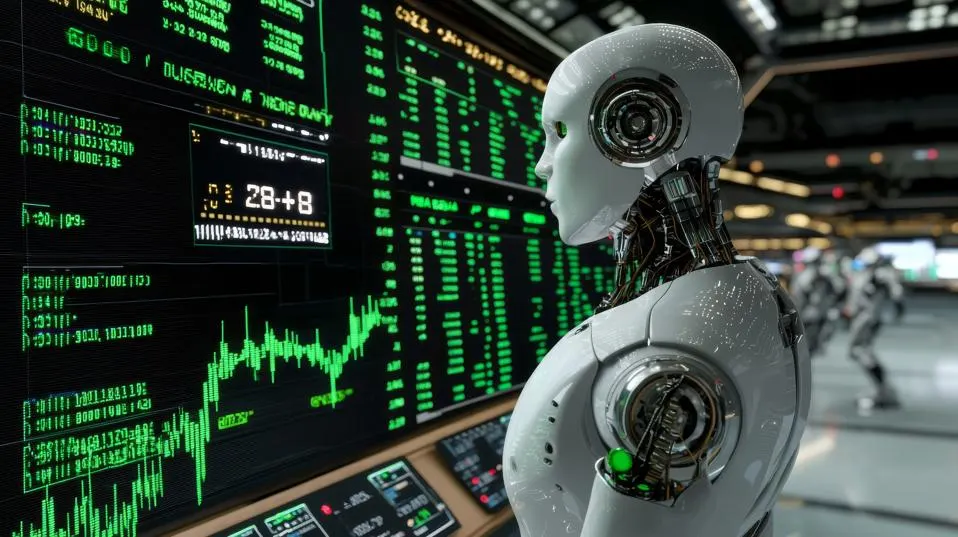
Hedge funds have been among the early adopters of AI and algorithmic trading, utilizing machine learning models to gain an edge in the markets. These funds employ AI to identify trading opportunities, execute trades at optimal times, and manage risk. One of the most well-known examples is Renaissance Technologies, a hedge fund that employs advanced machine learning algorithms to analyze vast amounts of data and make high-frequency trades. Renaissance’s Medallion Fund has been one of the most successful funds in history, largely due to its use of AI and quantitative strategies.

Another example is Two Sigma, which uses machine learning models to develop trading strategies based on data analysis. Two Sigma’s AI-driven approach is based on analyzing market data, news sentiment, and other non-traditional sources of information to predict price movements and execute trades in real-time. These hedge funds are at the forefront of the AI-driven transformation in finance, demonstrating the potential for machine learning to optimize trading and portfolio management.

AI in Banking

In banking, AI is being used to streamline operations, enhance customer service, and improve risk management. For example, JPMorgan Chase has implemented AI-driven models to improve its trading desk’s efficiency and enhance risk management. The bank uses AI to analyze vast amounts of market data to inform trading decisions, and it also uses machine learning models to identify potential risks in its loan portfolio.

AI is also playing a role in customer service, with banks implementing chatbots and virtual assistants to handle routine customer inquiries and provide personalized financial advice. These AI systems can analyze customer behavior, financial history, and preferences to offer tailored recommendations on investments, loans, and credit products.

Regulatory Challenges and the Future of AI in Finance

As AI becomes more prevalent in financial markets, regulatory bodies face the challenge of ensuring that these technologies are used safely and ethically. AI in finance presents unique challenges due to the complexity and opacity of machine learning models, the potential for market manipulation, and the risks associated with high-frequency trading.

Regulatory Challenges

One of the primary regulatory challenges is the transparency of AI models. Machine learning algorithms, particularly deep learning models, can be complex and difficult to interpret, which raises concerns about accountability in decision-making. Regulators need to ensure that financial institutions using AI are able to explain how their models work, especially when these models are used to make critical decisions about investments, loans, or risk assessments.

Another concern is the potential for market manipulation. AI-driven trading strategies, particularly those used in high-frequency trading, can move markets in ways that may not be immediately visible to regulators. The speed at which trades can be executed using AI algorithms raises concerns about market stability and fairness. Regulators must ensure that AI-powered trading does not create undue risks of market volatility or abuse.

Finally, there is a need to address issues related to data privacy and security, as AI models often rely on vast amounts of personal and financial data to make decisions. Protecting sensitive customer data is critical, and regulatory frameworks must ensure that financial institutions are adhering to data privacy standards.

The Future of AI in Finance

Looking ahead, the future of AI in finance is bright, with potential for further advancements in predictive analytics, algorithmic trading, and risk management. As AI models become more sophisticated, they will continue to improve the accuracy of predictions, enabling investors and financial institutions to make better-informed decisions. The increasing use of AI in personalized financial services, such as tailored investment strategies and risk assessments, will also lead to more efficient and accessible financial products.

Additionally, the continued evolution of AI regulations will play a key role in shaping the future of AI in finance. As regulators develop new guidelines for AI in financial markets, we can expect to see more oversight, transparency, and accountability in the use of AI-driven financial technologies.

Conclusion

AI is transforming financial markets by improving predictive analytics, optimizing portfolios, and enhancing risk management. Machine learning models are helping investors and financial institutions make better decisions, identify opportunities, and detect fraud. Case studies in hedge funds and banking demonstrate the tangible benefits of AI in finance, and the future promises even greater advancements. However, the rise of AI in finance also raises important regulatory and ethical challenges that must be addressed to ensure market stability, fairness, and transparency. As AI continues to evolve, it will play an increasingly integral role in shaping the future of global finance.


Tags: AI in Financial MarketsAI Portfolio OptimizationAlgorithmic Tradingpredictive analytics
ShareTweetShare

Related Posts

AI Explainability and Ethics: Balancing Transparency, Accountability, and Trust in AI Systems
Technology Trends

AI Explainability and Ethics: Balancing Transparency, Accountability, and Trust in AI Systems

January 21, 2026
Global Regulatory Frameworks for AI: Progressing Towards Security, Ethics, Accountability, and Data Protection
AI News

Global Regulatory Frameworks for AI: Progressing Towards Security, Ethics, Accountability, and Data Protection

January 21, 2026
Multimodal AI: Revolutionizing Data Integration and Understanding
Technology Trends

Multimodal AI: Revolutionizing Data Integration and Understanding

January 20, 2026
International Collaboration: A Key Driver for AI Technology Standards and Ecosystem Development
AI News

International Collaboration: A Key Driver for AI Technology Standards and Ecosystem Development

January 20, 2026
Smart Manufacturing and Industrial AI
Technology Trends

Smart Manufacturing and Industrial AI

January 19, 2026
Industry-Leading AI Companies and Cloud Service Providers
AI News

Industry-Leading AI Companies and Cloud Service Providers

January 19, 2026
Leave Comment
  • Trending
  • Comments
  • Latest
How Artificial Intelligence is Achieving Revolutionary Breakthroughs in the Healthcare Industry: What Success Stories Teach Us

How Artificial Intelligence is Achieving Revolutionary Breakthroughs in the Healthcare Industry: What Success Stories Teach Us

July 26, 2025
AI in the Financial Sector: Which Innovative Strategies Are Driving Digital Transformation?

AI in the Financial Sector: Which Innovative Strategies Are Driving Digital Transformation?

July 26, 2025
From Beginner to Expert: Which AI Platforms Are Best for Beginners? Experts’ Take on Learning Curves and Practical Applications

From Beginner to Expert: Which AI Platforms Are Best for Beginners? Experts’ Take on Learning Curves and Practical Applications

July 23, 2025
How to Find Truly Useful AI Resources Among the Crowd? Experts Share How to Select Efficient and Innovative Tools!

How to Find Truly Useful AI Resources Among the Crowd? Experts Share How to Select Efficient and Innovative Tools!

July 23, 2025
How Artificial Intelligence Enhances Diagnostic Accuracy and Transforms Treatment Methods in Healthcare

How Artificial Intelligence Enhances Diagnostic Accuracy and Transforms Treatment Methods in Healthcare

How AI Enhances Customer Experience and Drives Sales Growth in Retail

How AI Enhances Customer Experience and Drives Sales Growth in Retail

How Artificial Intelligence Enables Precise Risk Assessment and Decision-Making

How Artificial Intelligence Enables Precise Risk Assessment and Decision-Making

How AI is Driving the Revolution in Smart Manufacturing and Production Efficiency

How AI is Driving the Revolution in Smart Manufacturing and Production Efficiency

Real-World Testing and Efficiency Evaluation of Emerging Technological Trends

Real-World Testing and Efficiency Evaluation of Emerging Technological Trends

January 21, 2026
Multidimensional Applications of AI in the Digital Transformation of Manufacturing

Multidimensional Applications of AI in the Digital Transformation of Manufacturing

January 21, 2026
Human-Machine Collaboration and Trend Prediction: The Future of Work and Decision-Making

Human-Machine Collaboration and Trend Prediction: The Future of Work and Decision-Making

January 21, 2026
AI Explainability and Ethics: Balancing Transparency, Accountability, and Trust in AI Systems

AI Explainability and Ethics: Balancing Transparency, Accountability, and Trust in AI Systems

January 21, 2026
AIInsiderUpdates

Our platform is dedicated to delivering comprehensive coverage of AI developments, featuring news, case studies, expert interviews, and valuable resources for professionals and enthusiasts alike.

© 2025 aiinsiderupdates.com. contacts:[email protected]

No Result
View All Result
  • Home
  • AI News
  • Technology Trends
  • Interviews & Opinions
  • Case Studies
  • Tools & Resources

© 2025 aiinsiderupdates.com. contacts:[email protected]

Welcome Back!

Login to your account below

Forgotten Password?

Retrieve your password

Please enter your username or email address to reset your password.

Log In