
























AIInsiderUpdates
  • Home
  • AI News
    Application of AI in Drug Therapy

    Application of AI in Drug Therapy

    The Popularization of AI: Automation of Traditional Jobs and Its Impact on the Labor Market

    The Popularization of AI: Automation of Traditional Jobs and Its Impact on the Labor Market

    Many Industries Are Adopting AI-Driven Robots to Replace Human Labor

    Many Industries Are Adopting AI-Driven Robots to Replace Human Labor

    Artificial Intelligence Ethics and Regulations

    Artificial Intelligence Ethics and Regulations

    Ensuring Fairness and Transparency in AI Decision-Making: A Priority for Companies and Governments

    Ensuring Fairness and Transparency in AI Decision-Making: A Priority for Companies and Governments

    The Growing Global Debate on AI Ethics and Governance

    The Growing Global Debate on AI Ethics and Governance

  • Technology Trends
    Fine-tuning Large Language Models to Meet Specific Task or Industry Needs: A Key Focus in AI Research

    Fine-tuning Large Language Models to Meet Specific Task or Industry Needs: A Key Focus in AI Research

    The Convergence of Reinforcement Learning and Deep Learning: Driving Innovation Across Multiple Domains

    The Convergence of Reinforcement Learning and Deep Learning: Driving Innovation Across Multiple Domains

    The Transformer Architecture: The Core of Deep Learning

    The Transformer Architecture: The Core of Deep Learning

    Neural Architecture Search: A Revolution in Artificial Intelligence

    Neural Architecture Search: A Revolution in Artificial Intelligence

    Significant Advances in Self-Supervised Learning (SSL) Methods in Deep Learning

    Significant Advances in Self-Supervised Learning (SSL) Methods in Deep Learning

    Breakthroughs in Deep Learning and Neural Networks: Revolutionizing the Future of AI

    Breakthroughs in Deep Learning and Neural Networks: Revolutionizing the Future of AI

  • Interviews & Opinions
    AI May Replace Some Low-Skill, Repetitive Jobs, but It Will Also Create New Types of Jobs

    AI May Replace Some Low-Skill, Repetitive Jobs, but It Will Also Create New Types of Jobs

    The Future of AI Systems: Why Explainability Should Be a Core Feature

    The Future of AI Systems: Why Explainability Should Be a Core Feature

    AI and Automation Will Take on More of the Heavy Lifting

    AI and Automation Will Take on More of the Heavy Lifting

    As AI Technology Continues to Evolve, Ethical Issues Are Becoming More Prominent

    As AI Technology Continues to Evolve, Ethical Issues Are Becoming More Prominent

    AI Fairness: Addressing Bias and Promoting Equity in Artificial Intelligence

    AI Fairness: Addressing Bias and Promoting Equity in Artificial Intelligence

    The Impact of AI on the Labor Market: A Critical Examination

    The Impact of AI on the Labor Market: A Critical Examination

  • Case Studies
    AI-Based Anti-Fraud Systems

    AI-Based Anti-Fraud Systems

    The Application of AI in Retail and E-Commerce

    The Application of AI in Retail and E-Commerce

    The Application of AI in the Financial Industry

    The Application of AI in the Financial Industry

    The Application of AI in Medical Imaging: A Significant Advancement

    The Application of AI in Medical Imaging: A Significant Advancement

    AI Significantly Enhancing Disease Diagnosis Efficiency and Accuracy

    AI Significantly Enhancing Disease Diagnosis Efficiency and Accuracy

    The Application of AI in Healthcare: Revolutionizing Medicine and Patient Care

    The Application of AI in Healthcare: Revolutionizing Medicine and Patient Care

  • Tools & Resources
    AI Learning Resources and Educational Platforms

    AI Learning Resources and Educational Platforms

    AI Automation and Model Training Tools: Revolutionizing the Future of Artificial Intelligence

    AI Automation and Model Training Tools: Revolutionizing the Future of Artificial Intelligence

    Keras: Making AI Development Easier While Supporting Complex Model Designs

    Keras: Making AI Development Easier While Supporting Complex Model Designs

    PyTorch: A Flexible and Debug-Friendly Deep Learning Framework

    PyTorch: A Flexible and Debug-Friendly Deep Learning Framework

    AutoAI Tools Enable Developers to Reduce Manual Model Tuning Workload

    AutoAI Tools Enable Developers to Reduce Manual Model Tuning Workload

    AI Development Platforms and Frameworks

    AI Development Platforms and Frameworks

AIInsiderUpdates
  • Home
  • AI News
    Application of AI in Drug Therapy

    Application of AI in Drug Therapy

    The Popularization of AI: Automation of Traditional Jobs and Its Impact on the Labor Market

    The Popularization of AI: Automation of Traditional Jobs and Its Impact on the Labor Market

    Many Industries Are Adopting AI-Driven Robots to Replace Human Labor

    Many Industries Are Adopting AI-Driven Robots to Replace Human Labor

    Artificial Intelligence Ethics and Regulations

    Artificial Intelligence Ethics and Regulations

    Ensuring Fairness and Transparency in AI Decision-Making: A Priority for Companies and Governments

    Ensuring Fairness and Transparency in AI Decision-Making: A Priority for Companies and Governments

    The Growing Global Debate on AI Ethics and Governance

    The Growing Global Debate on AI Ethics and Governance

  • Technology Trends
    Fine-tuning Large Language Models to Meet Specific Task or Industry Needs: A Key Focus in AI Research

    Fine-tuning Large Language Models to Meet Specific Task or Industry Needs: A Key Focus in AI Research

    The Convergence of Reinforcement Learning and Deep Learning: Driving Innovation Across Multiple Domains

    The Convergence of Reinforcement Learning and Deep Learning: Driving Innovation Across Multiple Domains

    The Transformer Architecture: The Core of Deep Learning

    The Transformer Architecture: The Core of Deep Learning

    Neural Architecture Search: A Revolution in Artificial Intelligence

    Neural Architecture Search: A Revolution in Artificial Intelligence

    Significant Advances in Self-Supervised Learning (SSL) Methods in Deep Learning

    Significant Advances in Self-Supervised Learning (SSL) Methods in Deep Learning

    Breakthroughs in Deep Learning and Neural Networks: Revolutionizing the Future of AI

    Breakthroughs in Deep Learning and Neural Networks: Revolutionizing the Future of AI

  • Interviews & Opinions
    AI May Replace Some Low-Skill, Repetitive Jobs, but It Will Also Create New Types of Jobs

    AI May Replace Some Low-Skill, Repetitive Jobs, but It Will Also Create New Types of Jobs

    The Future of AI Systems: Why Explainability Should Be a Core Feature

    The Future of AI Systems: Why Explainability Should Be a Core Feature

    AI and Automation Will Take on More of the Heavy Lifting

    AI and Automation Will Take on More of the Heavy Lifting

    As AI Technology Continues to Evolve, Ethical Issues Are Becoming More Prominent

    As AI Technology Continues to Evolve, Ethical Issues Are Becoming More Prominent

    AI Fairness: Addressing Bias and Promoting Equity in Artificial Intelligence

    AI Fairness: Addressing Bias and Promoting Equity in Artificial Intelligence

    The Impact of AI on the Labor Market: A Critical Examination

    The Impact of AI on the Labor Market: A Critical Examination

  • Case Studies
    AI-Based Anti-Fraud Systems

    AI-Based Anti-Fraud Systems

    The Application of AI in Retail and E-Commerce

    The Application of AI in Retail and E-Commerce

    The Application of AI in the Financial Industry

    The Application of AI in the Financial Industry

    The Application of AI in Medical Imaging: A Significant Advancement

    The Application of AI in Medical Imaging: A Significant Advancement

    AI Significantly Enhancing Disease Diagnosis Efficiency and Accuracy

    AI Significantly Enhancing Disease Diagnosis Efficiency and Accuracy

    The Application of AI in Healthcare: Revolutionizing Medicine and Patient Care

    The Application of AI in Healthcare: Revolutionizing Medicine and Patient Care

  • Tools & Resources
    AI Learning Resources and Educational Platforms

    AI Learning Resources and Educational Platforms

    AI Automation and Model Training Tools: Revolutionizing the Future of Artificial Intelligence

    AI Automation and Model Training Tools: Revolutionizing the Future of Artificial Intelligence

    Keras: Making AI Development Easier While Supporting Complex Model Designs

    Keras: Making AI Development Easier While Supporting Complex Model Designs

    PyTorch: A Flexible and Debug-Friendly Deep Learning Framework

    PyTorch: A Flexible and Debug-Friendly Deep Learning Framework

    AutoAI Tools Enable Developers to Reduce Manual Model Tuning Workload

    AutoAI Tools Enable Developers to Reduce Manual Model Tuning Workload

    AI Development Platforms and Frameworks

    AI Development Platforms and Frameworks

AIInsiderUpdates
No Result
View All Result

Fine-tuning Large Language Models to Meet Specific Task or Industry Needs: A Key Focus in AI Research

April 28, 2026
Fine-tuning Large Language Models to Meet Specific Task or Industry Needs: A Key Focus in AI Research

In recent years, large language models (LLMs) like GPT-3, GPT-4, and BERT have demonstrated extraordinary capabilities in understanding and generating human-like text. Their versatility across a wide range of applications, from text generation to question answering and language translation, has made them central to the field of artificial intelligence (AI). However, while these models are powerful out of the box, they may not always perform optimally for specific tasks or industries. As such, fine-tuning LLMs to adapt to the nuances of particular applications has become a hot topic in AI research and development.

Fine-tuning refers to the process of taking a pre-trained LLM and refining its capabilities for specific domains, tasks, or industries by training it further on task-specific data. This process leverages the foundational knowledge learned during the initial training while enhancing the model’s ability to specialize in particular areas, improving accuracy and performance. In this article, we explore the importance of fine-tuning LLMs, the methodologies involved, key challenges, and the impact of fine-tuned models across various industries.

I. The Necessity of Fine-tuning in LLMs

1. Generalization and Specialization

While large language models, such as GPT-3 and GPT-4, are trained on massive datasets that cover diverse topics, they are not always optimized for specific use cases or industries. These models are designed to be general-purpose, but specialized knowledge, industry-specific terminology, and domain-relevant insights are often underrepresented in their training data. As a result, while LLMs can perform admirably across general tasks, they may fall short when it comes to niche applications or specific tasks.

For example, an LLM trained on general web data may not be equipped to handle specialized legal, medical, or scientific texts with the precision and depth required in those fields. Fine-tuning allows the model to learn the specific language, jargon, and concepts unique to a particular domain, thus improving its accuracy and relevance in that context.

2. Enhancing Model Performance

Fine-tuning improves the performance of an LLM by adapting it to the unique patterns of a given task. For example, in a customer support context, an LLM might be fine-tuned on previous customer interactions, learning how to recognize and respond to customer queries more effectively. Similarly, fine-tuning can enhance an LLM’s performance in more complex tasks, such as medical diagnosis, legal document interpretation, or financial analysis, where industry-specific knowledge is critical.

Fine-tuned models are typically more efficient, effective, and focused on delivering higher-quality responses tailored to the specific task, enabling businesses and developers to deploy AI solutions that are not only more accurate but also more relevant to the end users.

II. Methods of Fine-tuning LLMs

Fine-tuning involves adjusting the weights and parameters of a pre-trained LLM based on a new dataset relevant to the specific task. Several techniques are commonly used in the fine-tuning process, each suited to different types of applications and data requirements.

1. Supervised Fine-tuning

Supervised fine-tuning involves training the model on a labeled dataset, where the correct output is known for each input. For example, if the task is to classify customer complaints into different categories (e.g., shipping issue, payment problem, etc.), the model is trained with a dataset where each input query is paired with a specific label that indicates the correct category.

This method is widely used in domains like sentiment analysis, text classification, and named entity recognition (NER), where labeled data is abundant. The model learns to adapt its internal parameters to better predict the desired outputs, improving its task-specific accuracy.

2. Few-shot and Zero-shot Learning

Few-shot learning allows the LLM to adapt to a specific task with minimal data. Instead of requiring large datasets for fine-tuning, the model is trained using a small number of examples (sometimes as few as 5 to 10). This technique works well when there is limited task-specific data available or when there are specific domain requirements, such as in highly specialized fields like medicine or law.

Zero-shot learning, on the other hand, enables the LLM to perform tasks without any task-specific examples. In this case, the model is expected to generalize based on its pre-existing knowledge from training on large, diverse datasets. While less common, zero-shot learning is particularly useful for applications where training data is scarce or non-existent.
3. Transfer Learning

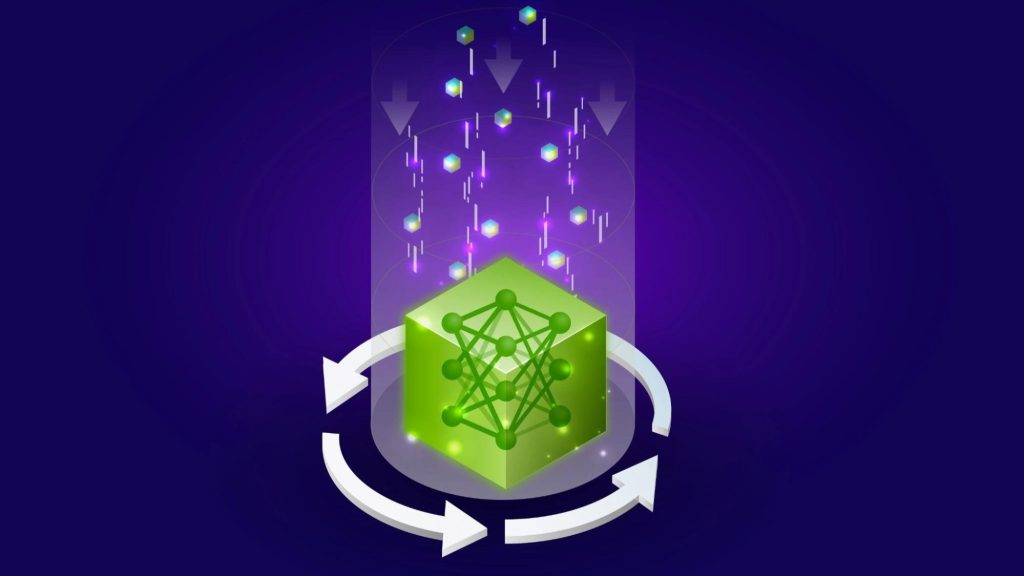
Transfer learning is a foundational approach in LLM fine-tuning. It involves leveraging the knowledge gained from one task or domain and applying it to a related task. By starting with a pre-trained model, which already contains a wealth of general knowledge, the fine-tuning process requires significantly fewer resources and data than training a model from scratch.

This approach is particularly beneficial in scenarios where building a task-specific model from scratch would be computationally expensive or data-intensive. In transfer learning, the model adapts to the new task by adjusting only the final layers or specific components that are most relevant to the new domain.

4. Domain Adaptation

Domain adaptation focuses on adapting a pre-trained LLM to a specific field or industry. This involves fine-tuning the model on domain-specific corpora that contain jargon, technical terms, and knowledge relevant to the field in question. For example, a general-purpose LLM could be adapted to understand legal contracts by fine-tuning it with a corpus of legal documents and terminology.

Domain adaptation can significantly improve the performance of LLMs in specialized areas, enabling more accurate and contextually appropriate outputs. It is commonly applied in industries such as healthcare, finance, law, and technical support.

5. Reinforcement Learning from Human Feedback (RLHF)

Reinforcement Learning from Human Feedback (RLHF) is an emerging approach to fine-tuning LLMs. In this method, human evaluators provide feedback on the model’s outputs, rewarding or penalizing the model based on the quality of its responses. Over time, the model learns to optimize its outputs based on these feedback signals.

RLHF is particularly effective in ensuring that LLMs align with human values, preferences, and ethical standards. It is being increasingly used to refine models in areas like customer service, content moderation, and even content generation, where the quality of the response is subjective and dependent on human judgment.

III. Challenges in Fine-tuning LLMs

Despite the remarkable potential of fine-tuning, there are several challenges that developers must address to successfully tailor LLMs for specific tasks or industries.

1. Data Availability and Quality

One of the primary challenges in fine-tuning is obtaining high-quality, task-specific data. While some industries have large, labeled datasets (e.g., medical records, legal documents), others may have limited access to relevant data. Fine-tuning an LLM requires a substantial amount of domain-specific data to improve its performance, and the quality of the data significantly impacts the success of the fine-tuning process.

Data sparsity can be mitigated through techniques like few-shot learning, data augmentation, or transferring knowledge from related domains. However, obtaining sufficient data is often a major bottleneck in fine-tuning models for specialized applications.

2. Ethical Considerations

As LLMs are fine-tuned for specific tasks, there are critical ethical considerations to account for. These include concerns about bias in training data, privacy issues, and the risk of reinforcing harmful stereotypes or misinformation. Fine-tuning models for sensitive domains, such as healthcare or legal applications, requires careful attention to ensure that the outputs are accurate, ethical, and unbiased.

Moreover, ensuring transparency and accountability in fine-tuned models is vital, especially when they are used for decision-making in sectors like law enforcement, finance, or hiring.

3. Overfitting and Generalization

When fine-tuning an LLM on a small or highly specialized dataset, there is a risk of overfitting. Overfitting occurs when the model becomes too tailored to the training data and performs poorly on unseen examples. To avoid this, fine-tuning must be conducted carefully, ensuring that the model generalizes well to new, real-world data while still performing well on the task-specific training data.

4. Resource Intensive

Fine-tuning large language models requires significant computational resources, particularly when working with models that have billions of parameters. The training process can be both time-consuming and expensive, requiring powerful hardware infrastructure, which may not be accessible to all organizations or developers.

IV. Impact of Fine-tuning Across Industries

Fine-tuned LLMs have had a transformative impact on various industries. Below, we explore some of the key applications:

1. Healthcare

In healthcare, fine-tuned LLMs are being used for tasks such as medical document analysis, diagnosis prediction, and patient interaction. By training models on medical literature, electronic health records, and clinical notes, LLMs can assist healthcare professionals in making more informed decisions, automating repetitive tasks, and providing personalized treatment recommendations.

2. Legal Industry

Fine-tuning LLMs for the legal industry has led to significant improvements in contract analysis, legal research, and document review. By adapting LLMs to understand legal terminology and context, firms can automate many time-consuming tasks, allowing legal professionals to focus on more complex matters.

3. Customer Support

In customer support, fine-tuned LLMs can better handle industry-specific queries, enabling businesses to provide more efficient and accurate responses. Fine-tuning allows chatbots and virtual assistants to understand the nuances of customer interactions, improving user satisfaction and reducing the need for human intervention.

4. Finance

In the finance sector, LLMs are fine-tuned for tasks such as fraud detection, financial forecasting, and risk assessment. By training models on historical financial data, market trends, and regulatory documents, AI can provide more accurate predictions and improve decision-making.

V. Conclusion

Fine-tuning large language models for specific tasks or industries is one of the most exciting developments in AI research. By enhancing the capabilities of pre-trained models, fine-tuning enables businesses and researchers to leverage the full potential of LLMs across a wide array of domains. While challenges such as data quality, ethical concerns, and resource requirements remain, the continued evolution of fine-tuning techniques promises to drive further innovation and transformation across industries.

The future of fine-tuned LLMs is undoubtedly bright, with their potential to revolutionize fields like healthcare, law, customer service, and beyond. As research advances and resources improve, fine-tuning will continue to be a key area of focus for AI development, pushing the boundaries of what is possible with natural language processing.


Tags: aiLarge Language ModelsTechnology Trends
ShareTweetShare

Related Posts

The Convergence of Reinforcement Learning and Deep Learning: Driving Innovation Across Multiple Domains
Technology Trends

The Convergence of Reinforcement Learning and Deep Learning: Driving Innovation Across Multiple Domains

April 28, 2026
The Transformer Architecture: The Core of Deep Learning
Technology Trends

The Transformer Architecture: The Core of Deep Learning

April 21, 2026
Neural Architecture Search: A Revolution in Artificial Intelligence
Technology Trends

Neural Architecture Search: A Revolution in Artificial Intelligence

April 21, 2026
Significant Advances in Self-Supervised Learning (SSL) Methods in Deep Learning
Technology Trends

Significant Advances in Self-Supervised Learning (SSL) Methods in Deep Learning

April 4, 2026
Breakthroughs in Deep Learning and Neural Networks: Revolutionizing the Future of AI
Technology Trends

Breakthroughs in Deep Learning and Neural Networks: Revolutionizing the Future of AI

April 4, 2026
AI Explainability and Ethics: Balancing Transparency, Accountability, and Trust in AI Systems
Technology Trends

AI Explainability and Ethics: Balancing Transparency, Accountability, and Trust in AI Systems

January 21, 2026
Leave Comment
  • Trending
  • Comments
  • Latest
How Artificial Intelligence is Achieving Revolutionary Breakthroughs in the Healthcare Industry: What Success Stories Teach Us

How Artificial Intelligence is Achieving Revolutionary Breakthroughs in the Healthcare Industry: What Success Stories Teach Us

July 26, 2025
Deep Learning Simulates Human Brain Signal Processing Pathways Through the Construction of Multi-Layer Neural Networks

Deep Learning Simulates Human Brain Signal Processing Pathways Through the Construction of Multi-Layer Neural Networks

January 14, 2026
From Beginner to Expert: Which AI Platforms Are Best for Beginners? Experts’ Take on Learning Curves and Practical Applications

From Beginner to Expert: Which AI Platforms Are Best for Beginners? Experts’ Take on Learning Curves and Practical Applications

July 23, 2025
AI in the Financial Sector: Which Innovative Strategies Are Driving Digital Transformation?

AI in the Financial Sector: Which Innovative Strategies Are Driving Digital Transformation?

July 26, 2025
How Artificial Intelligence Enhances Diagnostic Accuracy and Transforms Treatment Methods in Healthcare

How Artificial Intelligence Enhances Diagnostic Accuracy and Transforms Treatment Methods in Healthcare

How AI Enhances Customer Experience and Drives Sales Growth in Retail

How AI Enhances Customer Experience and Drives Sales Growth in Retail

How Artificial Intelligence Enables Precise Risk Assessment and Decision-Making

How Artificial Intelligence Enables Precise Risk Assessment and Decision-Making

How AI is Driving the Revolution in Smart Manufacturing and Production Efficiency

How AI is Driving the Revolution in Smart Manufacturing and Production Efficiency

AI Learning Resources and Educational Platforms

AI Learning Resources and Educational Platforms

April 28, 2026
AI Automation and Model Training Tools: Revolutionizing the Future of Artificial Intelligence

AI Automation and Model Training Tools: Revolutionizing the Future of Artificial Intelligence

April 28, 2026
AI-Based Anti-Fraud Systems

AI-Based Anti-Fraud Systems

April 28, 2026
The Application of AI in Retail and E-Commerce

The Application of AI in Retail and E-Commerce

April 28, 2026
AIInsiderUpdates

Our platform is dedicated to delivering comprehensive coverage of AI developments, featuring news, case studies, expert interviews, and valuable resources for professionals and enthusiasts alike.

© 2025 aiinsiderupdates.com. contacts:[email protected]

No Result
View All Result
  • Home
  • AI News
  • Technology Trends
  • Interviews & Opinions
  • Case Studies
  • Tools & Resources

© 2025 aiinsiderupdates.com. contacts:[email protected]

Welcome Back!

Login to your account below

Forgotten Password?

Retrieve your password

Please enter your username or email address to reset your password.

Log In