


















AIInsiderUpdates
  • Home
  • AI News
    Application of AI in Drug Therapy

    Application of AI in Drug Therapy

    The Popularization of AI: Automation of Traditional Jobs and Its Impact on the Labor Market

    The Popularization of AI: Automation of Traditional Jobs and Its Impact on the Labor Market

    Many Industries Are Adopting AI-Driven Robots to Replace Human Labor

    Many Industries Are Adopting AI-Driven Robots to Replace Human Labor

    Artificial Intelligence Ethics and Regulations

    Artificial Intelligence Ethics and Regulations

    Ensuring Fairness and Transparency in AI Decision-Making: A Priority for Companies and Governments

    Ensuring Fairness and Transparency in AI Decision-Making: A Priority for Companies and Governments

    The Growing Global Debate on AI Ethics and Governance

    The Growing Global Debate on AI Ethics and Governance

  • Technology Trends
    Fine-tuning Large Language Models to Meet Specific Task or Industry Needs: A Key Focus in AI Research

    Fine-tuning Large Language Models to Meet Specific Task or Industry Needs: A Key Focus in AI Research

    The Convergence of Reinforcement Learning and Deep Learning: Driving Innovation Across Multiple Domains

    The Convergence of Reinforcement Learning and Deep Learning: Driving Innovation Across Multiple Domains

    The Transformer Architecture: The Core of Deep Learning

    The Transformer Architecture: The Core of Deep Learning

    Neural Architecture Search: A Revolution in Artificial Intelligence

    Neural Architecture Search: A Revolution in Artificial Intelligence

    Significant Advances in Self-Supervised Learning (SSL) Methods in Deep Learning

    Significant Advances in Self-Supervised Learning (SSL) Methods in Deep Learning

    Breakthroughs in Deep Learning and Neural Networks: Revolutionizing the Future of AI

    Breakthroughs in Deep Learning and Neural Networks: Revolutionizing the Future of AI

  • Interviews & Opinions
    AI May Replace Some Low-Skill, Repetitive Jobs, but It Will Also Create New Types of Jobs

    AI May Replace Some Low-Skill, Repetitive Jobs, but It Will Also Create New Types of Jobs

    The Future of AI Systems: Why Explainability Should Be a Core Feature

    The Future of AI Systems: Why Explainability Should Be a Core Feature

    AI and Automation Will Take on More of the Heavy Lifting

    AI and Automation Will Take on More of the Heavy Lifting

    As AI Technology Continues to Evolve, Ethical Issues Are Becoming More Prominent

    As AI Technology Continues to Evolve, Ethical Issues Are Becoming More Prominent

    AI Fairness: Addressing Bias and Promoting Equity in Artificial Intelligence

    AI Fairness: Addressing Bias and Promoting Equity in Artificial Intelligence

    The Impact of AI on the Labor Market: A Critical Examination

    The Impact of AI on the Labor Market: A Critical Examination

  • Case Studies
    AI-Based Anti-Fraud Systems

    AI-Based Anti-Fraud Systems

    The Application of AI in Retail and E-Commerce

    The Application of AI in Retail and E-Commerce

    The Application of AI in the Financial Industry

    The Application of AI in the Financial Industry

    The Application of AI in Medical Imaging: A Significant Advancement

    The Application of AI in Medical Imaging: A Significant Advancement

    AI Significantly Enhancing Disease Diagnosis Efficiency and Accuracy

    AI Significantly Enhancing Disease Diagnosis Efficiency and Accuracy

    The Application of AI in Healthcare: Revolutionizing Medicine and Patient Care

    The Application of AI in Healthcare: Revolutionizing Medicine and Patient Care

  • Tools & Resources
    AI Learning Resources and Educational Platforms

    AI Learning Resources and Educational Platforms

    AI Automation and Model Training Tools: Revolutionizing the Future of Artificial Intelligence

    AI Automation and Model Training Tools: Revolutionizing the Future of Artificial Intelligence

    Keras: Making AI Development Easier While Supporting Complex Model Designs

    Keras: Making AI Development Easier While Supporting Complex Model Designs

    PyTorch: A Flexible and Debug-Friendly Deep Learning Framework

    PyTorch: A Flexible and Debug-Friendly Deep Learning Framework

    AutoAI Tools Enable Developers to Reduce Manual Model Tuning Workload

    AutoAI Tools Enable Developers to Reduce Manual Model Tuning Workload

    AI Development Platforms and Frameworks

    AI Development Platforms and Frameworks

AIInsiderUpdates
  • Home
  • AI News
    Application of AI in Drug Therapy

    Application of AI in Drug Therapy

    The Popularization of AI: Automation of Traditional Jobs and Its Impact on the Labor Market

    The Popularization of AI: Automation of Traditional Jobs and Its Impact on the Labor Market

    Many Industries Are Adopting AI-Driven Robots to Replace Human Labor

    Many Industries Are Adopting AI-Driven Robots to Replace Human Labor

    Artificial Intelligence Ethics and Regulations

    Artificial Intelligence Ethics and Regulations

    Ensuring Fairness and Transparency in AI Decision-Making: A Priority for Companies and Governments

    Ensuring Fairness and Transparency in AI Decision-Making: A Priority for Companies and Governments

    The Growing Global Debate on AI Ethics and Governance

    The Growing Global Debate on AI Ethics and Governance

  • Technology Trends
    Fine-tuning Large Language Models to Meet Specific Task or Industry Needs: A Key Focus in AI Research

    Fine-tuning Large Language Models to Meet Specific Task or Industry Needs: A Key Focus in AI Research

    The Convergence of Reinforcement Learning and Deep Learning: Driving Innovation Across Multiple Domains

    The Convergence of Reinforcement Learning and Deep Learning: Driving Innovation Across Multiple Domains

    The Transformer Architecture: The Core of Deep Learning

    The Transformer Architecture: The Core of Deep Learning

    Neural Architecture Search: A Revolution in Artificial Intelligence

    Neural Architecture Search: A Revolution in Artificial Intelligence

    Significant Advances in Self-Supervised Learning (SSL) Methods in Deep Learning

    Significant Advances in Self-Supervised Learning (SSL) Methods in Deep Learning

    Breakthroughs in Deep Learning and Neural Networks: Revolutionizing the Future of AI

    Breakthroughs in Deep Learning and Neural Networks: Revolutionizing the Future of AI

  • Interviews & Opinions
    AI May Replace Some Low-Skill, Repetitive Jobs, but It Will Also Create New Types of Jobs

    AI May Replace Some Low-Skill, Repetitive Jobs, but It Will Also Create New Types of Jobs

    The Future of AI Systems: Why Explainability Should Be a Core Feature

    The Future of AI Systems: Why Explainability Should Be a Core Feature

    AI and Automation Will Take on More of the Heavy Lifting

    AI and Automation Will Take on More of the Heavy Lifting

    As AI Technology Continues to Evolve, Ethical Issues Are Becoming More Prominent

    As AI Technology Continues to Evolve, Ethical Issues Are Becoming More Prominent

    AI Fairness: Addressing Bias and Promoting Equity in Artificial Intelligence

    AI Fairness: Addressing Bias and Promoting Equity in Artificial Intelligence

    The Impact of AI on the Labor Market: A Critical Examination

    The Impact of AI on the Labor Market: A Critical Examination

  • Case Studies
    AI-Based Anti-Fraud Systems

    AI-Based Anti-Fraud Systems

    The Application of AI in Retail and E-Commerce

    The Application of AI in Retail and E-Commerce

    The Application of AI in the Financial Industry

    The Application of AI in the Financial Industry

    The Application of AI in Medical Imaging: A Significant Advancement

    The Application of AI in Medical Imaging: A Significant Advancement

    AI Significantly Enhancing Disease Diagnosis Efficiency and Accuracy

    AI Significantly Enhancing Disease Diagnosis Efficiency and Accuracy

    The Application of AI in Healthcare: Revolutionizing Medicine and Patient Care

    The Application of AI in Healthcare: Revolutionizing Medicine and Patient Care

  • Tools & Resources
    AI Learning Resources and Educational Platforms

    AI Learning Resources and Educational Platforms

    AI Automation and Model Training Tools: Revolutionizing the Future of Artificial Intelligence

    AI Automation and Model Training Tools: Revolutionizing the Future of Artificial Intelligence

    Keras: Making AI Development Easier While Supporting Complex Model Designs

    Keras: Making AI Development Easier While Supporting Complex Model Designs

    PyTorch: A Flexible and Debug-Friendly Deep Learning Framework

    PyTorch: A Flexible and Debug-Friendly Deep Learning Framework

    AutoAI Tools Enable Developers to Reduce Manual Model Tuning Workload

    AutoAI Tools Enable Developers to Reduce Manual Model Tuning Workload

    AI Development Platforms and Frameworks

    AI Development Platforms and Frameworks

AIInsiderUpdates
No Result
View All Result

The Popularization of AI: Automation of Traditional Jobs and Its Impact on the Labor Market

April 28, 2026
The Popularization of AI: Automation of Traditional Jobs and Its Impact on the Labor Market

Introduction

Artificial Intelligence (AI) has rapidly evolved from a futuristic concept to an integral part of modern society. As its applications expand across various industries, AI has significantly influenced many facets of human life, from healthcare to finance, and from education to manufacturing. One of the most profound effects of AI is its ability to automate traditional jobs, transforming the labor market in ways that were once considered impossible. The automation of routine tasks, especially those in manual labor and administrative sectors, is reshaping the global workforce. However, this widespread adoption of AI is not without consequences. While some jobs are at risk of being entirely replaced, new roles are being created, leading to both challenges and opportunities.

This article explores the automation of traditional jobs by AI, its profound influence on the labor market, and the broader socio-economic consequences. We will analyze the positive and negative effects of AI on employment, discuss the skills required to thrive in an AI-driven economy, and offer insights into how individuals and organizations can adapt to these changes.


The Rise of AI and Automation

AI’s integration into the workforce began with the automation of routine, repetitive tasks in industries such as manufacturing, data entry, and customer service. Initially, automation was seen as a way to increase efficiency and reduce human error. Robots, machine learning algorithms, and software applications have now replaced human workers in tasks ranging from assembling products to answering customer inquiries.

For example, in the automotive industry, robots have taken over repetitive tasks such as welding, painting, and assembly, dramatically improving productivity and safety. In finance, AI is used to automate data analysis, detect fraud, and even make investment decisions. In customer service, chatbots and virtual assistants have become commonplace, offering instant, 24/7 support without the need for human intervention.

The growing sophistication of AI, particularly in the realm of machine learning and natural language processing, has allowed for even more complex tasks to be automated. Jobs that were once thought to require human intelligence, such as legal document review or medical diagnostics, are now increasingly being performed by AI-powered systems.


The Impact on the Labor Market

The widespread adoption of AI and automation has brought about significant changes in the labor market. While automation leads to greater efficiency and lower operational costs for businesses, it also raises concerns about job displacement, income inequality, and the future of work.

1. Job Displacement

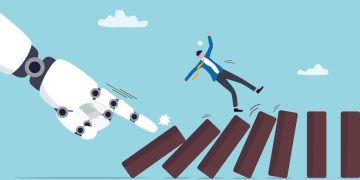
One of the most immediate and visible effects of AI on the labor market is job displacement. As AI systems take over more routine and repetitive tasks, many traditional jobs, particularly in manufacturing, retail, and customer service, are becoming obsolete. According to a report by the McKinsey Global Institute, approximately 15% of the global workforce could be displaced by automation by 2030.

For example, in the transportation sector, self-driving technology threatens jobs in trucking, delivery, and taxi services. A 2019 study estimated that automation could lead to the displacement of over 4 million truck drivers in the United States alone. Similarly, cashier jobs in retail stores are increasingly being replaced by automated checkout systems and self-service kiosks.

These job losses are not limited to low-skilled positions. AI is also beginning to impact higher-skilled professions, such as accountants, paralegals, and journalists, where automation tools can process large volumes of data and generate reports faster than a human could. The growing capabilities of AI to perform tasks that require analysis and decision-making mean that no job, regardless of skill level, is entirely immune from automation.

2. Job Creation

Despite the potential for job displacement, AI also has the capacity to create new jobs. As automation eliminates certain roles, new opportunities emerge, often in industries and sectors that didn’t exist before. The rise of AI has led to the creation of entirely new fields, such as AI development, data science, and robotics engineering. These jobs require advanced technical skills but offer high salaries and significant job security in an increasingly technology-driven world.

In addition, AI is giving rise to entirely new industries, such as autonomous vehicles, personalized medicine, and smart cities. The widespread adoption of AI technologies is expected to create millions of new jobs across a variety of sectors, from research and development to sales and marketing.

3. Shifts in Skill Demand

AI is also causing a shift in the types of skills that are in demand. As routine tasks become automated, there is a growing emphasis on skills that cannot be easily replicated by machines. These include creative thinking, emotional intelligence, and problem-solving—skills that are essential for jobs in fields like design, management, and strategy.

Additionally, technical skills related to AI, machine learning, data analysis, and programming are becoming increasingly valuable. Individuals who possess these skills will be in high demand, as they will be needed to develop, maintain, and improve AI systems.

However, the shift in skill demand also presents challenges for the workforce. Many workers whose jobs are at risk of automation may not have the skills required to transition into new roles. As a result, there is a growing need for reskilling and upskilling programs that can help individuals adapt to the changing demands of the labor market.


The Socio-Economic Consequences

The impact of AI on the labor market extends beyond job displacement and creation. It has the potential to exacerbate social and economic inequalities in several ways.

1. Income Inequality

AI-driven automation has the potential to increase income inequality. While highly skilled workers in AI-related fields can command high salaries, low-skilled workers whose jobs are replaced by machines may face job insecurity and stagnant wages. This disparity can contribute to a widening wealth gap, as those who benefit from AI will accumulate wealth, while those who are displaced will face greater financial instability.

Moreover, the rise of AI has created a “winner-takes-all” economy, where the most successful companies and individuals—those who control the AI technologies—stand to reap the greatest rewards. This concentration of wealth and power can further deepen economic divides between different social classes, regions, and countries.

2. Job Polarization

AI’s impact on the labor market is also contributing to job polarization, where middle-skill jobs are disappearing, leaving behind a growing divide between high-skilled and low-skilled jobs. While highly skilled workers in technical fields enjoy job security and high wages, low-skilled workers in sectors such as retail and manufacturing may struggle to find new opportunities.

This shift could lead to the creation of a “dual economy,” where a small number of highly paid, highly skilled workers dominate the labor market, while a large number of low-paid, low-skilled workers are left behind. Addressing this issue will require policies that promote equal access to education, training, and career development opportunities.

3. Ethical Concerns

The widespread use of AI also raises ethical concerns related to job displacement and the future of work. As machines replace human workers, there is a growing question about how society should handle mass unemployment and economic disruption. Should governments provide financial support for those displaced by AI, or should they focus on reskilling and retraining workers for new roles?

Additionally, the use of AI in decision-making processes, such as hiring, lending, and law enforcement, raises concerns about fairness, bias, and accountability. AI systems are only as good as the data they are trained on, and if the data is biased, the outcomes can be discriminatory. For example, an AI system used in hiring could unintentionally discriminate against women or minority groups if it is trained on biased historical data.


Adapting to an AI-Driven Economy

To thrive in an AI-driven economy, both individuals and organizations must adapt to the changing landscape of work. Here are some strategies for adapting to the age of automation:

1. Embrace Lifelong Learning

Given the rapid pace of technological change, individuals must commit to lifelong learning in order to stay competitive in the job market. This involves acquiring new skills, staying up-to-date with industry trends, and being open to new technologies. Many workers will need to reskill or upskill to remain relevant in an AI-driven world.

2. Foster Collaboration Between Humans and AI

Rather than viewing AI as a replacement for human workers, organizations should embrace the idea of collaboration between humans and machines. AI can augment human abilities, making workers more efficient and productive. By combining the strengths of AI with human creativity and problem-solving skills, businesses can achieve greater outcomes.

3. Government and Policy Intervention

Governments play a crucial role in ensuring that the benefits of AI are widely distributed and that workers are supported in their transition to new roles. Policies such as universal basic income, retraining programs, and access to affordable education can help mitigate the negative effects of automation and create a more inclusive economy.


Conclusion

The popularization of AI is transforming the labor market in profound ways. While it offers numerous benefits, such as increased efficiency, productivity, and the creation of new jobs, it also presents significant challenges, including job displacement, income inequality, and the need for new skills. The future of work will depend on how individuals, organizations, and governments respond to these changes. By embracing lifelong learning, fostering collaboration between humans and AI, and implementing thoughtful policies, we can ensure that the AI revolution benefits everyone, not just a select few.


Tags: aiAI newsLabor Market
ShareTweetShare

Related Posts

Application of AI in Drug Therapy
AI News

Application of AI in Drug Therapy

April 28, 2026
Many Industries Are Adopting AI-Driven Robots to Replace Human Labor
AI News

Many Industries Are Adopting AI-Driven Robots to Replace Human Labor

April 21, 2026
Artificial Intelligence Ethics and Regulations
AI News

Artificial Intelligence Ethics and Regulations

April 21, 2026
Ensuring Fairness and Transparency in AI Decision-Making: A Priority for Companies and Governments
AI News

Ensuring Fairness and Transparency in AI Decision-Making: A Priority for Companies and Governments

April 4, 2026
The Growing Global Debate on AI Ethics and Governance
AI News

The Growing Global Debate on AI Ethics and Governance

April 4, 2026
Global Regulatory Frameworks for AI: Progressing Towards Security, Ethics, Accountability, and Data Protection
AI News

Global Regulatory Frameworks for AI: Progressing Towards Security, Ethics, Accountability, and Data Protection

January 21, 2026
Leave Comment
  • Trending
  • Comments
  • Latest
How Artificial Intelligence is Achieving Revolutionary Breakthroughs in the Healthcare Industry: What Success Stories Teach Us

How Artificial Intelligence is Achieving Revolutionary Breakthroughs in the Healthcare Industry: What Success Stories Teach Us

July 26, 2025
Deep Learning Simulates Human Brain Signal Processing Pathways Through the Construction of Multi-Layer Neural Networks

Deep Learning Simulates Human Brain Signal Processing Pathways Through the Construction of Multi-Layer Neural Networks

January 14, 2026
From Beginner to Expert: Which AI Platforms Are Best for Beginners? Experts’ Take on Learning Curves and Practical Applications

From Beginner to Expert: Which AI Platforms Are Best for Beginners? Experts’ Take on Learning Curves and Practical Applications

July 23, 2025
AI in the Financial Sector: Which Innovative Strategies Are Driving Digital Transformation?

AI in the Financial Sector: Which Innovative Strategies Are Driving Digital Transformation?

July 26, 2025
How Artificial Intelligence Enhances Diagnostic Accuracy and Transforms Treatment Methods in Healthcare

How Artificial Intelligence Enhances Diagnostic Accuracy and Transforms Treatment Methods in Healthcare

How AI Enhances Customer Experience and Drives Sales Growth in Retail

How AI Enhances Customer Experience and Drives Sales Growth in Retail

How Artificial Intelligence Enables Precise Risk Assessment and Decision-Making

How Artificial Intelligence Enables Precise Risk Assessment and Decision-Making

How AI is Driving the Revolution in Smart Manufacturing and Production Efficiency

How AI is Driving the Revolution in Smart Manufacturing and Production Efficiency

AI Learning Resources and Educational Platforms

AI Learning Resources and Educational Platforms

April 28, 2026
AI Automation and Model Training Tools: Revolutionizing the Future of Artificial Intelligence

AI Automation and Model Training Tools: Revolutionizing the Future of Artificial Intelligence

April 28, 2026
AI-Based Anti-Fraud Systems

AI-Based Anti-Fraud Systems

April 28, 2026
The Application of AI in Retail and E-Commerce

The Application of AI in Retail and E-Commerce

April 28, 2026
AIInsiderUpdates

Our platform is dedicated to delivering comprehensive coverage of AI developments, featuring news, case studies, expert interviews, and valuable resources for professionals and enthusiasts alike.

© 2025 aiinsiderupdates.com. contacts:[email protected]

No Result
View All Result
  • Home
  • AI News
  • Technology Trends
  • Interviews & Opinions
  • Case Studies
  • Tools & Resources

© 2025 aiinsiderupdates.com. contacts:[email protected]

Welcome Back!

Login to your account below

Forgotten Password?

Retrieve your password

Please enter your username or email address to reset your password.

Log In