



















In recent years, Artificial Intelligence (AI) has made tremendous strides in various industries, and healthcare is no exception. With its remarkable ability to process large amounts of data, recognize patterns, and learn from those patterns, AI is transforming the landscape of disease diagnosis. By improving diagnostic accuracy and significantly increasing efficiency, AI has the potential to revolutionize how healthcare providers detect, treat, and manage diseases. This article will explore how AI is enhancing disease diagnosis, examining its applications in medical imaging, pathology, genomics, and clinical decision support systems. Additionally, we will explore the benefits, challenges, and the future implications of AI in healthcare.
1. Introduction: AI’s Role in Disease Diagnosis
1.1 What is AI in Disease Diagnosis?
AI refers to the simulation of human intelligence processes by machines, particularly computer systems. In healthcare, AI is applied to enhance the diagnostic process by analyzing large sets of medical data, such as patient records, medical images, lab results, and genetic data. Through machine learning (ML) and deep learning (DL) techniques, AI can identify patterns in these data sets that may go unnoticed by human clinicians. These systems help healthcare providers diagnose diseases more quickly, accurately, and consistently, ultimately leading to better patient outcomes.
AI-powered diagnostic tools can also automate several aspects of the diagnostic workflow, reducing the workload for healthcare professionals and allowing them to focus more on patient care. Whether through improving early disease detection or personalizing treatment plans, AI’s role in diagnosis is becoming increasingly critical in modern healthcare.
1.2 The Need for AI in Modern Medicine
The healthcare sector faces numerous challenges, including rising patient numbers, complexity in disease diagnosis, and increasing healthcare costs. Traditional diagnostic methods are highly dependent on human expertise, which, although effective, can be time-consuming, subjective, and prone to errors. AI has the potential to significantly improve the efficiency and accuracy of these methods, enabling faster and more reliable diagnoses.
AI tools can assist in the analysis of vast amounts of clinical data, offering quick insights that can be used for decision-making in areas like diagnostic imaging, genomics, and personalized medicine. By harnessing the power of AI, healthcare providers can offer more accurate and timely diagnoses, improving overall healthcare quality.
2. AI Applications in Disease Diagnosis
2.1 AI in Medical Imaging
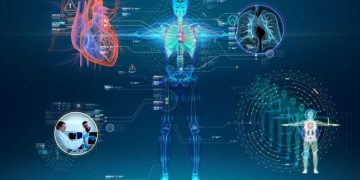
Medical imaging plays a crucial role in diagnosing a variety of diseases, from cancers to neurological conditions. Traditionally, medical imaging analysis requires the expertise of radiologists who interpret X-rays, CT scans, MRIs, and other types of medical images. AI-powered systems, particularly deep learning algorithms, can assist radiologists by analyzing images faster and more accurately than human experts alone.
AI models are trained to detect patterns in medical images that could indicate disease. For example, AI-powered tools are used for breast cancer detection through mammograms, where deep learning models can analyze mammogram images to identify early signs of cancer. A study conducted by researchers at Google Health demonstrated that AI outperformed human radiologists in detecting breast cancer, showing an impressive ability to reduce false positives and negatives.
Similarly, AI algorithms have been developed to detect lung cancer through chest CT scans. Early detection of lung cancer can improve survival rates, but it is challenging for radiologists to identify minute signs in CT images. AI, however, can spot even the most subtle abnormalities, helping physicians identify early-stage cancers.
AI is also being used in the detection and monitoring of neurological diseases. For instance, AI-based tools are used to analyze brain scans and identify early symptoms of conditions like Alzheimer’s and Parkinson’s diseases. These tools can provide clinicians with valuable insights, allowing them to initiate treatment plans earlier and slow the progression of such diseases.
2.2 AI in Pathology
Pathology is another area where AI is revolutionizing disease diagnosis. Pathologists analyze tissue samples, such as biopsies, to identify diseases like cancer. AI algorithms can assist by automating the analysis of pathology slides, speeding up the process and reducing human error. For example, AI has been used to detect various types of cancer from biopsy samples, such as breast, prostate, and skin cancer.
AI systems can analyze tissue samples more quickly and with higher accuracy than traditional methods. By identifying patterns that human pathologists may miss, AI can detect subtle signs of cancer or other diseases at early stages, improving patient outcomes. For instance, AI has shown promise in detecting lung cancer from pathology slides, outperforming pathologists in some cases.
Moreover, AI can help pathologists assess the aggressiveness of cancer and predict the likelihood of recurrence. This is especially useful in making decisions regarding treatment options, such as whether a patient will benefit from chemotherapy or immunotherapy. By providing a more accurate assessment of cancer’s progression, AI plays a pivotal role in personalized medicine.
2.3 AI in Genomic Medicine and Precision Diagnostics
AI is increasingly being integrated into genomics, where it plays a crucial role in the diagnosis of genetic disorders and cancer. Genomic data, such as DNA sequences, contains vast amounts of information that can reveal a person’s susceptibility to certain diseases, including hereditary conditions and various cancers. Analyzing this genomic data can be extremely complex, but AI systems are uniquely suited for this task.
AI algorithms can process and analyze genomic data to identify mutations or variations in genes that contribute to disease development. In oncology, for instance, AI models can detect mutations that may make certain cancers more aggressive or help predict which patients will respond to specific cancer therapies. This can lead to the development of more personalized treatment plans that are tailored to each patient’s genetic makeup.
AI also helps predict the onset of diseases based on genetic factors. For example, AI models can analyze genomic data to determine a patient’s likelihood of developing conditions like Alzheimer’s or cardiovascular disease, allowing for early interventions and better disease management.
2.4 AI in Clinical Decision Support Systems (CDSS)
Clinical decision support systems (CDSS) are AI-powered tools that assist healthcare providers in making clinical decisions based on patient data. These systems help clinicians diagnose diseases, determine treatment plans, and predict patient outcomes by analyzing large datasets, including medical history, lab results, and clinical guidelines.
AI-based CDSS can help doctors make more accurate diagnoses by providing them with evidence-based recommendations. For example, an AI-powered CDSS can suggest further tests based on the symptoms a patient presents, improving the likelihood of early detection. It can also recommend treatment options based on the latest medical research and clinical guidelines, ensuring that patients receive the best possible care.
Moreover, AI systems can continuously monitor a patient’s condition in real time and alert clinicians to any changes in the patient’s status. This proactive approach allows healthcare providers to address potential issues before they become critical, leading to better patient outcomes.
3. Benefits of AI in Disease Diagnosis
3.1 Increased Diagnostic Accuracy
AI’s ability to analyze large volumes of data, recognize patterns, and learn from those patterns significantly improves diagnostic accuracy. In fields like medical imaging and pathology, AI has demonstrated an ability to detect diseases at earlier stages than human clinicians, leading to better patient outcomes. AI systems can also minimize the chances of false positives and false negatives, which are common pitfalls in traditional diagnostic methods.
For example, AI has been shown to be more accurate than human radiologists in detecting breast cancer and lung cancer, providing a powerful tool for early disease detection. Additionally, AI can help identify rare or subtle conditions that might be overlooked by a clinician due to the sheer volume of cases they encounter.
3.2 Increased Efficiency
AI dramatically increases the speed at which diseases can be diagnosed. For instance, in medical imaging, AI algorithms can analyze X-rays, MRIs, or CT scans in a fraction of the time it would take a human to do so. This speed is particularly beneficial in time-sensitive situations, such as detecting strokes or heart attacks.
By automating repetitive tasks like image analysis and data entry, AI can free up valuable time for healthcare providers. This can help reduce waiting times for patients, allowing for quicker diagnoses and treatment plans. In turn, this can help alleviate the burden on healthcare systems, particularly in high-volume areas.
3.3 Accessibility and Democratization of Healthcare
AI has the potential to democratize access to healthcare, particularly in underserved or rural areas where there may be a shortage of skilled healthcare providers. AI-powered tools, such as mobile diagnostic apps and telemedicine platforms, allow patients to access high-quality diagnostic services remotely.
For instance, AI-powered diagnostic tools can enable individuals to detect conditions such as tuberculosis or malaria in low-resource settings. By simply using a smartphone, patients can take a picture of their symptoms or medical test results, and AI can provide an instant diagnosis. This makes healthcare more accessible to people who otherwise would not have access to the necessary medical expertise.
4. Challenges and Limitations of AI in Disease Diagnosis
4.1 Data Quality and Availability
AI models rely heavily on large datasets to learn and make accurate predictions. However, the quality and availability of medical data can be a significant challenge. Many healthcare systems still rely on paper records, and patient data may be incomplete, inconsistent, or poorly structured. Ensuring that AI models are trained on diverse, high-quality datasets is essential for achieving reliable and accurate diagnoses.
Moreover, privacy concerns surrounding patient data can make it difficult to share and collaborate on large datasets, which are critical for training AI algorithms. Ensuring the security and privacy of patient data is a top priority for healthcare organizations and AI developers.
4.2 Explainability and Trust
While AI algorithms can provide accurate predictions, they often function as “black boxes,” meaning it is difficult for clinicians to understand how the system arrived at a particular decision. This lack of transparency can lead to skepticism and reluctance among healthcare providers to trust AI-powered diagnostic tools, especially in critical situations.
Developing explainable AI (XAI) systems that can provide clear insights into how decisions are made is essential for fostering trust in these technologies. Healthcare professionals must be able to
understand the rationale behind AI’s recommendations in order to make informed decisions.
4.3 Ethical Concerns
As AI becomes more integrated into healthcare, ethical concerns related to its use must be addressed. Issues such as algorithmic bias, data privacy, and the potential for over-reliance on AI must be carefully considered. For example, AI models trained on biased datasets may produce inaccurate diagnoses for certain demographic groups, leading to health disparities.
Ensuring that AI systems are developed and deployed responsibly, with appropriate safeguards and oversight, is essential for preventing harm and ensuring equitable outcomes for all patients.
5. Future Directions
AI’s role in disease diagnosis is expected to expand further as technology continues to advance. The integration of AI with other technologies, such as blockchain and the Internet of Things (IoT), will further enhance the ability of healthcare systems to provide personalized and efficient care. Additionally, AI’s potential to analyze real-time data from wearable devices and mobile apps will enable continuous monitoring of patient health, leading to more proactive healthcare.
As AI becomes more integrated into the healthcare ecosystem, ongoing research and development will be crucial for addressing the challenges of data privacy, bias, and explainability. In the long term, AI has the potential to make healthcare more accessible, efficient, and precise, ultimately improving patient outcomes worldwide.
6. Conclusion
AI has proven to be a powerful tool in improving disease diagnosis by enhancing efficiency, accuracy, and accessibility. By revolutionizing areas such as medical imaging, pathology, genomics, and clinical decision support, AI is transforming the way healthcare is delivered. While challenges remain, particularly in areas such as data quality and trust, the continued development and responsible deployment of AI in healthcare will help unlock its full potential.