




























AIInsiderUpdates
  • Home
  • AI News
    Global AI Competition: Dominance in the AI Chip Sector, with NVIDIA Maintaining Its Leading Position

    Global AI Competition: Dominance in the AI Chip Sector, with NVIDIA Maintaining Its Leading Position

    AI Is No Longer Confined to Text Generation: Toward Integrated Capabilities in Vision, Perception, and Embodied Robotics

    AI Is No Longer Confined to Text Generation: Toward Integrated Capabilities in Vision, Perception, and Embodied Robotics

    AI Technology and Its Integration with Traditional Industries as a Key to Enhancing Enterprise Competitiveness

    AI Technology and Its Integration with Traditional Industries as a Key to Enhancing Enterprise Competitiveness

    AI Has Entered the ‘Breaking Wall’ Stage: From Laboratory Development to Large-Scale Industrial Applications

    AI Has Entered the ‘Breaking Wall’ Stage: From Laboratory Development to Large-Scale Industrial Applications

    AI and the Intensifying Competition in the Semiconductor Industry

    AI and the Intensifying Competition in the Semiconductor Industry

    New AI Chips and Heterogeneous Architectures Driving the Computational Power Revolution

    New AI Chips and Heterogeneous Architectures Driving the Computational Power Revolution

  • Technology Trends
    Natural Language Processing: One of the Core Pillars of AI

    Natural Language Processing: One of the Core Pillars of AI

    Deep Learning Simulates Human Brain Signal Processing Pathways Through the Construction of Multi-Layer Neural Networks

    Deep Learning Simulates Human Brain Signal Processing Pathways Through the Construction of Multi-Layer Neural Networks

    Autonomous Driving and Robotics: Continuous Advancements in Perception and Intelligent Decision-Making Capabilities

    Autonomous Driving and Robotics: Continuous Advancements in Perception and Intelligent Decision-Making Capabilities

    AI in Assisting Pathological Image Recognition, Disease Diagnosis, and Personalized Treatment Plans

    AI in Assisting Pathological Image Recognition, Disease Diagnosis, and Personalized Treatment Plans

    NLP Technologies: From Understanding to Generation

    NLP Technologies: From Understanding to Generation

    Self-Supervised Learning, Federated Learning, and Other Emerging Training Methods: Reducing the Dependence on Labeled Data and Improving Model Generalization

    Self-Supervised Learning, Federated Learning, and Other Emerging Training Methods: Reducing the Dependence on Labeled Data and Improving Model Generalization

  • Interviews & Opinions
    Experts Predict That Future AI Data Labeling and Training Will Rely More on Domain Expert Skills Rather Than Fully Synthetic Data

    Experts Predict That Future AI Data Labeling and Training Will Rely More on Domain Expert Skills Rather Than Fully Synthetic Data

    Public Attention on the Immediate Impact of Artificial Intelligence on Employment and Privacy

    Public Attention on the Immediate Impact of Artificial Intelligence on Employment and Privacy

    The Role of AI in Think Tanks and Strategic Research

    The Role of AI in Think Tanks and Strategic Research

    AI Security and Responsible Development: Perspectives and Insights

    AI Security and Responsible Development: Perspectives and Insights

    AI’s Impact on Industry and Employment

    AI’s Impact on Industry and Employment

    Multimodal and the Next-Generation AI Models Breakthroughs

    Multimodal and the Next-Generation AI Models Breakthroughs

  • Case Studies
    BMW Leverages AI + Digital Twin Technology to Simulate Production Processes and Train Models for Defect Detection

    BMW Leverages AI + Digital Twin Technology to Simulate Production Processes and Train Models for Defect Detection

    Traditional Industries Such as Retail and Manufacturing Apply Artificial Intelligence to Predictive Maintenance and Demand Forecasting

    Traditional Industries Such as Retail and Manufacturing Apply Artificial Intelligence to Predictive Maintenance and Demand Forecasting

    Financial Industry: Risk Control and Intelligent Customer Service

    Financial Industry: Risk Control and Intelligent Customer Service

    Retail and E-Commerce: Smart Forecasting and Enhancing User Experience

    Retail and E-Commerce: Smart Forecasting and Enhancing User Experience

    Automated Health Management and Process Optimization

    Automated Health Management and Process Optimization

    Medical Imaging and Diagnostic Assistance

    Medical Imaging and Diagnostic Assistance

  • Tools & Resources
    How to Start Learning AI from Scratch: A Roadmap and Time Plan

    How to Start Learning AI from Scratch: A Roadmap and Time Plan

    Anthropic Claude: A Large Language Model Focused on Model Safety and Conversational Control, Emphasizing “Controllable and Trustworthy” AI Capabilities

    Anthropic Claude: A Large Language Model Focused on Model Safety and Conversational Control, Emphasizing “Controllable and Trustworthy” AI Capabilities

    AI Model Repositories and Open-Source Resources: A Comprehensive Guide

    AI Model Repositories and Open-Source Resources: A Comprehensive Guide

    The Proliferation of Generative AI Models and Platforms in the Market

    The Proliferation of Generative AI Models and Platforms in the Market

    AI Learning Resources and Tutorial Recommendations

    AI Learning Resources and Tutorial Recommendations

    Cloud Services and Training/Inference Platforms

    Cloud Services and Training/Inference Platforms

AIInsiderUpdates
  • Home
  • AI News
    Global AI Competition: Dominance in the AI Chip Sector, with NVIDIA Maintaining Its Leading Position

    Global AI Competition: Dominance in the AI Chip Sector, with NVIDIA Maintaining Its Leading Position

    AI Is No Longer Confined to Text Generation: Toward Integrated Capabilities in Vision, Perception, and Embodied Robotics

    AI Is No Longer Confined to Text Generation: Toward Integrated Capabilities in Vision, Perception, and Embodied Robotics

    AI Technology and Its Integration with Traditional Industries as a Key to Enhancing Enterprise Competitiveness

    AI Technology and Its Integration with Traditional Industries as a Key to Enhancing Enterprise Competitiveness

    AI Has Entered the ‘Breaking Wall’ Stage: From Laboratory Development to Large-Scale Industrial Applications

    AI Has Entered the ‘Breaking Wall’ Stage: From Laboratory Development to Large-Scale Industrial Applications

    AI and the Intensifying Competition in the Semiconductor Industry

    AI and the Intensifying Competition in the Semiconductor Industry

    New AI Chips and Heterogeneous Architectures Driving the Computational Power Revolution

    New AI Chips and Heterogeneous Architectures Driving the Computational Power Revolution

  • Technology Trends
    Natural Language Processing: One of the Core Pillars of AI

    Natural Language Processing: One of the Core Pillars of AI

    Deep Learning Simulates Human Brain Signal Processing Pathways Through the Construction of Multi-Layer Neural Networks

    Deep Learning Simulates Human Brain Signal Processing Pathways Through the Construction of Multi-Layer Neural Networks

    Autonomous Driving and Robotics: Continuous Advancements in Perception and Intelligent Decision-Making Capabilities

    Autonomous Driving and Robotics: Continuous Advancements in Perception and Intelligent Decision-Making Capabilities

    AI in Assisting Pathological Image Recognition, Disease Diagnosis, and Personalized Treatment Plans

    AI in Assisting Pathological Image Recognition, Disease Diagnosis, and Personalized Treatment Plans

    NLP Technologies: From Understanding to Generation

    NLP Technologies: From Understanding to Generation

    Self-Supervised Learning, Federated Learning, and Other Emerging Training Methods: Reducing the Dependence on Labeled Data and Improving Model Generalization

    Self-Supervised Learning, Federated Learning, and Other Emerging Training Methods: Reducing the Dependence on Labeled Data and Improving Model Generalization

  • Interviews & Opinions
    Experts Predict That Future AI Data Labeling and Training Will Rely More on Domain Expert Skills Rather Than Fully Synthetic Data

    Experts Predict That Future AI Data Labeling and Training Will Rely More on Domain Expert Skills Rather Than Fully Synthetic Data

    Public Attention on the Immediate Impact of Artificial Intelligence on Employment and Privacy

    Public Attention on the Immediate Impact of Artificial Intelligence on Employment and Privacy

    The Role of AI in Think Tanks and Strategic Research

    The Role of AI in Think Tanks and Strategic Research

    AI Security and Responsible Development: Perspectives and Insights

    AI Security and Responsible Development: Perspectives and Insights

    AI’s Impact on Industry and Employment

    AI’s Impact on Industry and Employment

    Multimodal and the Next-Generation AI Models Breakthroughs

    Multimodal and the Next-Generation AI Models Breakthroughs

  • Case Studies
    BMW Leverages AI + Digital Twin Technology to Simulate Production Processes and Train Models for Defect Detection

    BMW Leverages AI + Digital Twin Technology to Simulate Production Processes and Train Models for Defect Detection

    Traditional Industries Such as Retail and Manufacturing Apply Artificial Intelligence to Predictive Maintenance and Demand Forecasting

    Traditional Industries Such as Retail and Manufacturing Apply Artificial Intelligence to Predictive Maintenance and Demand Forecasting

    Financial Industry: Risk Control and Intelligent Customer Service

    Financial Industry: Risk Control and Intelligent Customer Service

    Retail and E-Commerce: Smart Forecasting and Enhancing User Experience

    Retail and E-Commerce: Smart Forecasting and Enhancing User Experience

    Automated Health Management and Process Optimization

    Automated Health Management and Process Optimization

    Medical Imaging and Diagnostic Assistance

    Medical Imaging and Diagnostic Assistance

  • Tools & Resources
    How to Start Learning AI from Scratch: A Roadmap and Time Plan

    How to Start Learning AI from Scratch: A Roadmap and Time Plan

    Anthropic Claude: A Large Language Model Focused on Model Safety and Conversational Control, Emphasizing “Controllable and Trustworthy” AI Capabilities

    Anthropic Claude: A Large Language Model Focused on Model Safety and Conversational Control, Emphasizing “Controllable and Trustworthy” AI Capabilities

    AI Model Repositories and Open-Source Resources: A Comprehensive Guide

    AI Model Repositories and Open-Source Resources: A Comprehensive Guide

    The Proliferation of Generative AI Models and Platforms in the Market

    The Proliferation of Generative AI Models and Platforms in the Market

    AI Learning Resources and Tutorial Recommendations

    AI Learning Resources and Tutorial Recommendations

    Cloud Services and Training/Inference Platforms

    Cloud Services and Training/Inference Platforms

AIInsiderUpdates
No Result
View All Result

Global AI Competition: Dominance in the AI Chip Sector, with NVIDIA Maintaining Its Leading Position

January 15, 2026
Global AI Competition: Dominance in the AI Chip Sector, with NVIDIA Maintaining Its Leading Position

Abstract

In the rapidly evolving landscape of artificial intelligence (AI), the competition for dominance in the AI chip sector is one of the most crucial battlegrounds. While software algorithms and models capture much of the public’s attention, the performance of AI systems is ultimately driven by the hardware on which they run. Among the numerous companies vying for a stake in this market, NVIDIA has firmly maintained its position as a leader, thanks to its cutting-edge GPUs, innovative architecture, and strategic investments in AI research. This article provides an in-depth analysis of the global AI chip competition, examining the technological innovations, market dynamics, and strategic factors that have allowed NVIDIA to retain its leadership, while exploring the competitive challenges and opportunities posed by emerging players. Through a comprehensive look at the industry’s past, present, and future, this article aims to highlight the critical role that AI hardware plays in shaping the future of artificial intelligence and its transformative effects on global industries.


1. Introduction: The Crucial Role of AI Chips in the AI Ecosystem

As artificial intelligence continues to evolve, AI models have become more sophisticated, requiring powerful hardware to process vast amounts of data. From training large neural networks to running inference tasks in real time, the demand for high-performance computing has grown exponentially. While advances in algorithms and software are essential for AI’s progress, it is the hardware that ultimately dictates how efficiently these technologies perform.

In this context, the global competition in the AI chip market is fierce. Companies worldwide are racing to design chips that offer superior performance, scalability, energy efficiency, and cost-effectiveness. At the forefront of this competition is NVIDIA, a company that has maintained its leadership for years, driven by its advanced Graphics Processing Units (GPUs), unique architectural innovations, and strategic investments in AI and machine learning.

This article explores the competitive landscape of AI chips, focusing on NVIDIA’s sustained dominance, technological advancements, and the broader market forces at play. By examining the key players in this space, we will gain insights into the future trajectory of AI hardware and its implications for industries worldwide.


2. The Rise of AI Chips: A Game-Changer for Artificial Intelligence

2.1 AI Chips and Their Role in Modern AI

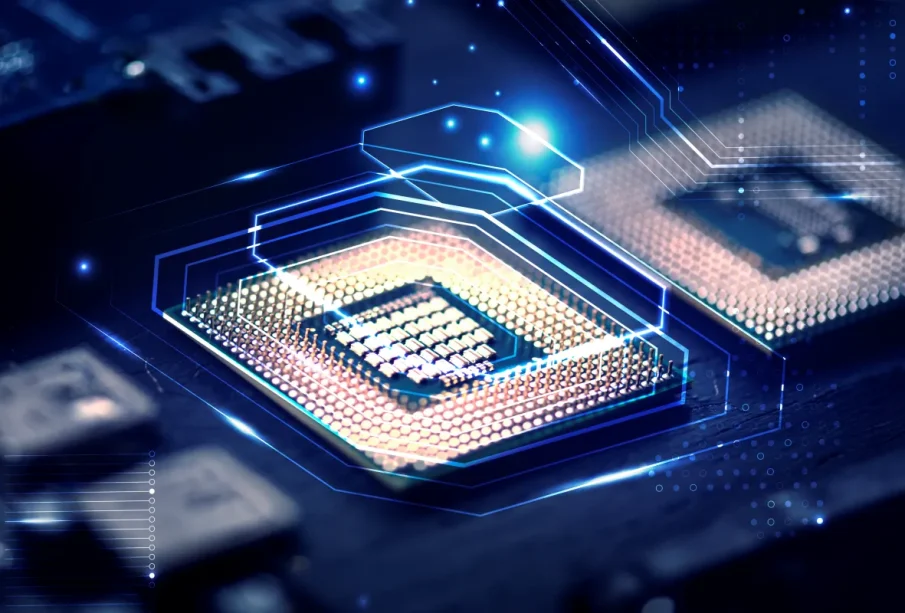
AI chips, particularly those designed for machine learning and deep learning tasks, are distinct from traditional processors like CPUs (Central Processing Units) in their architecture. Unlike CPUs, which are optimized for general-purpose computing tasks, AI chips are built to handle parallel processing, which is crucial for AI tasks like training deep neural networks.

The primary components of AI chips include:

  • Graphics Processing Units (GPUs): Initially designed for rendering graphics, GPUs have become the backbone of AI computation due to their parallel processing capabilities.
  • Tensor Processing Units (TPUs): These are specialized chips developed by Google specifically for deep learning applications.
  • Application-Specific Integrated Circuits (ASICs): These are custom-designed chips optimized for specific tasks, such as AI inference in edge devices.
  • Field-Programmable Gate Arrays (FPGAs): These are versatile chips that can be reprogrammed to suit various AI tasks, providing flexibility in hardware acceleration.

With AI’s increasing reliance on massive datasets and computational power, the demand for these specialized chips has skyrocketed.

2.2 The Evolution of AI Chip Technology

The evolution of AI chip technology can be traced through several key stages:

  • Initial AI Workloads: Early AI models were relatively simple and could run on CPUs. However, as models grew in complexity, the limitations of traditional computing hardware became apparent.
  • GPU Revolution: NVIDIA, initially known for gaming graphics, recognized the potential of its GPUs for AI workloads in the late 2000s. This shift marked the beginning of the GPU’s dominance in AI computing.
  • The Rise of Specialized Chips: As AI applications expanded, the need for more tailored solutions led to the development of TPUs, ASICs, and FPGAs. These specialized chips offer significant performance boosts for specific AI tasks.

NVIDIA’s GPUs, in particular, have played a pivotal role in this progression, serving as the foundational hardware for many of the world’s most advanced AI systems.


3. NVIDIA’s Dominance in the AI Chip Market

3.1 NVIDIA’s Strategy and Technological Innovations

NVIDIA’s continued dominance in the AI chip sector is a result of a combination of strategic foresight, technological innovation, and strong partnerships with leading AI research institutions and tech companies.

3.1.1 Pioneering GPU Architectures

NVIDIA’s GPUs have evolved significantly since the company’s initial focus on gaming hardware. Key developments include:

  • CUDA (Compute Unified Device Architecture): Introduced in 2006, CUDA enabled GPUs to be used for general-purpose computation, opening the door to parallel processing for AI workloads.
  • Volta and Turing Architectures: These architectures introduced specialized cores like Tensor Cores, designed to accelerate deep learning training and inference. Tensor Cores have become a critical feature for AI tasks, particularly for training large neural networks.
  • Ampere Architecture: The Ampere architecture, launched in 2020, is another leap forward, offering significant improvements in performance and energy efficiency, making it ideal for both AI training and inference.

NVIDIA’s continued investment in developing next-generation GPU architectures ensures that its products remain at the forefront of AI innovation.

3.1.2 Leveraging AI-Specific Hardware

In addition to GPUs, NVIDIA has expanded its product portfolio to include other AI-specific hardware solutions:

  • NVIDIA A100 Tensor Core GPUs: These GPUs are optimized for large-scale AI training tasks and are used extensively in data centers and supercomputing applications.
  • NVIDIA DGX Systems: These are turnkey AI systems that integrate multiple A100 GPUs and provide a powerful platform for researchers and enterprises.
  • NVIDIA Jetson: A platform designed for edge AI, providing developers with the tools to deploy AI applications on low-power devices.

NVIDIA’s ecosystem of AI hardware and software ensures that its technology is deeply integrated into the AI research and deployment process.


3.2 Market Share and Influence

NVIDIA’s dominance in the AI chip market is reflected in its market share and widespread adoption across industries. As of 2023, NVIDIA controls a significant portion of the AI hardware market, particularly in data centers, cloud computing, and research labs.

Key factors contributing to NVIDIA’s dominance include:

  • Enterprise Adoption: Major tech companies, including Google, Microsoft, Amazon, and Facebook, rely heavily on NVIDIA GPUs for AI research and cloud services.
  • Data Center Infrastructure: NVIDIA has secured partnerships with leading cloud providers to power AI workloads in data centers, enabling organizations to scale AI applications efficiently.
  • Academic and Research Institutions: Leading universities and research institutions use NVIDIA’s hardware to conduct cutting-edge AI research, further cementing the company’s position as a leader in the space.

NVIDIA’s broad adoption across sectors is a testament to the company’s ability to provide high-performance, scalable solutions that meet the needs of both research and commercial applications.

4. The Competitive Landscape: Emerging Players and Challenges

4.1 The Rise of Competing AI Chipmakers

While NVIDIA maintains its leadership position, it faces growing competition from other companies that are targeting the AI chip market. Some of the most notable competitors include:

  • AMD: AMD has made significant strides with its Radeon Instinct GPUs, which are designed for AI and deep learning tasks. AMD’s chips are seen as a more cost-effective alternative to NVIDIA’s high-end GPUs.
  • Intel: Intel has entered the AI chip market with its Xe GPUs and the acquisition of Habana Labs, which designs AI-specific processors. Intel’s focus on AI hardware for both data centers and edge devices positions it as a formidable competitor.
  • Google: Google’s Tensor Processing Units (TPUs) are custom-designed chips optimized for machine learning tasks. TPUs are used extensively in Google’s cloud services and AI applications, offering another layer of competition to NVIDIA’s market share.
  • Apple: Apple’s M1 and M2 chips, which include dedicated AI processing units, have positioned the company to compete in the consumer AI space, particularly in mobile devices and laptops.

Each of these companies has its own unique approach to AI hardware, with a focus on optimizing performance, energy efficiency, and cost.

4.2 The Challenge of Customization and Specialization

One of the key challenges in the AI chip market is the need for specialization. While general-purpose GPUs, such as NVIDIA’s, offer great flexibility, certain AI tasks—especially those related to deep learning training and inference—require custom-designed hardware. Companies like Google (with TPUs) and Intel (with Habana Labs’ processors) are investing heavily in creating specialized chips for specific AI workloads.

This specialization presents both opportunities and challenges for NVIDIA, as custom chips may offer performance advantages in niche applications. However, NVIDIA’s broad ecosystem and ongoing investment in GPU architecture ensure that its products remain competitive in a wide range of AI tasks.


5. The Future of AI Chips: Trends and Innovations

5.1 The Shift to Energy-Efficient AI Hardware

As AI models become more complex, the demand for energy-efficient hardware will only increase. The environmental impact of training large AI models has become a significant concern, and companies are investing in technologies that reduce power consumption while maintaining performance.

NVIDIA’s focus on energy-efficient architectures, such as its Ampere GPUs, reflects this shift. Future iterations of AI chips are likely to prioritize power efficiency without compromising on computational power.

5.2 The Growth of Edge AI and Custom Solutions

The rise of edge computing—deploying AI models closer to data sources such as IoT devices—has driven demand for specialized AI chips optimized for low-power, real-time processing. NVIDIA’s Jetson platform and other edge AI solutions are positioning the company to capitalize on this trend.

Furthermore, as AI applications diversify, custom AI chips tailored to specific industries (e.g., autonomous vehicles, healthcare, and robotics) will become more prevalent. This presents both a challenge and an opportunity for NVIDIA to expand its product offerings.

5.3 The Integration of AI Hardware and Software

The future of AI hardware will involve closer integration between hardware and software. NVIDIA has made significant strides in this direction with its CUDA platform and AI software stack. As AI chips become more specialized, having a seamless integration between hardware and software will be essential for maximizing performance.


6. Conclusion: NVIDIA’s Unyielding Leadership in the AI Chip Market

NVIDIA’s sustained dominance in the AI chip market is a testament to its strategic vision, technological innovation, and ability to adapt to the rapidly changing AI landscape. Through its pioneering GPU architectures, commitment to AI-specific hardware, and leadership in AI research, NVIDIA has positioned itself as the de facto standard in AI hardware.

While competition from companies like AMD, Intel, Google, and Apple is intensifying, NVIDIA’s continued investment in cutting-edge technologies, its robust ecosystem, and its focus on performance and scalability ensure that it remains at the forefront of the AI revolution.

The global AI chip market is poised for significant growth in the coming years, driven by advancements in machine learning, edge computing, and data center infrastructure. As AI becomes increasingly embedded in every aspect of society and industry, the importance of high-performance, trustworthy AI hardware will only continue to grow. In this landscape, NVIDIA’s leadership is unlikely to diminish anytime soon, making it a key player in shaping the future of artificial intelligence.


Tags: aiAI newsGlobal AI Competition
ShareTweetShare

Related Posts

AI Is No Longer Confined to Text Generation: Toward Integrated Capabilities in Vision, Perception, and Embodied Robotics
AI News

AI Is No Longer Confined to Text Generation: Toward Integrated Capabilities in Vision, Perception, and Embodied Robotics

January 14, 2026
AI Technology and Its Integration with Traditional Industries as a Key to Enhancing Enterprise Competitiveness
AI News

AI Technology and Its Integration with Traditional Industries as a Key to Enhancing Enterprise Competitiveness

January 13, 2026
AI Has Entered the ‘Breaking Wall’ Stage: From Laboratory Development to Large-Scale Industrial Applications
AI News

AI Has Entered the ‘Breaking Wall’ Stage: From Laboratory Development to Large-Scale Industrial Applications

January 12, 2026
AI and the Intensifying Competition in the Semiconductor Industry
AI News

AI and the Intensifying Competition in the Semiconductor Industry

January 11, 2026
New AI Chips and Heterogeneous Architectures Driving the Computational Power Revolution
AI News

New AI Chips and Heterogeneous Architectures Driving the Computational Power Revolution

January 10, 2026
Accelerating AI Penetration in Healthcare, Manufacturing, and Autonomous Driving
AI News

Accelerating AI Penetration in Healthcare, Manufacturing, and Autonomous Driving

January 9, 2026
Leave Comment
  • Trending
  • Comments
  • Latest
How Artificial Intelligence is Achieving Revolutionary Breakthroughs in the Healthcare Industry: What Success Stories Teach Us

How Artificial Intelligence is Achieving Revolutionary Breakthroughs in the Healthcare Industry: What Success Stories Teach Us

July 26, 2025
AI in the Financial Sector: Which Innovative Strategies Are Driving Digital Transformation?

AI in the Financial Sector: Which Innovative Strategies Are Driving Digital Transformation?

July 26, 2025
From Beginner to Expert: Which AI Platforms Are Best for Beginners? Experts’ Take on Learning Curves and Practical Applications

From Beginner to Expert: Which AI Platforms Are Best for Beginners? Experts’ Take on Learning Curves and Practical Applications

July 23, 2025
How to Find Truly Useful AI Resources Among the Crowd? Experts Share How to Select Efficient and Innovative Tools!

How to Find Truly Useful AI Resources Among the Crowd? Experts Share How to Select Efficient and Innovative Tools!

July 23, 2025
How Artificial Intelligence Enhances Diagnostic Accuracy and Transforms Treatment Methods in Healthcare

How Artificial Intelligence Enhances Diagnostic Accuracy and Transforms Treatment Methods in Healthcare

How AI Enhances Customer Experience and Drives Sales Growth in Retail

How AI Enhances Customer Experience and Drives Sales Growth in Retail

How Artificial Intelligence Enables Precise Risk Assessment and Decision-Making

How Artificial Intelligence Enables Precise Risk Assessment and Decision-Making

How AI is Driving the Revolution in Smart Manufacturing and Production Efficiency

How AI is Driving the Revolution in Smart Manufacturing and Production Efficiency

How to Start Learning AI from Scratch: A Roadmap and Time Plan

How to Start Learning AI from Scratch: A Roadmap and Time Plan

January 15, 2026
BMW Leverages AI + Digital Twin Technology to Simulate Production Processes and Train Models for Defect Detection

BMW Leverages AI + Digital Twin Technology to Simulate Production Processes and Train Models for Defect Detection

January 15, 2026
Experts Predict That Future AI Data Labeling and Training Will Rely More on Domain Expert Skills Rather Than Fully Synthetic Data

Experts Predict That Future AI Data Labeling and Training Will Rely More on Domain Expert Skills Rather Than Fully Synthetic Data

January 15, 2026
Natural Language Processing: One of the Core Pillars of AI

Natural Language Processing: One of the Core Pillars of AI

January 15, 2026
AIInsiderUpdates

Our platform is dedicated to delivering comprehensive coverage of AI developments, featuring news, case studies, expert interviews, and valuable resources for professionals and enthusiasts alike.

© 2025 aiinsiderupdates.com. contacts:[email protected]

No Result
View All Result
  • Home
  • AI News
  • Technology Trends
  • Interviews & Opinions
  • Case Studies
  • Tools & Resources

© 2025 aiinsiderupdates.com. contacts:[email protected]

Welcome Back!

Login to your account below

Forgotten Password?

Retrieve your password

Please enter your username or email address to reset your password.

Log In