






















AIInsiderUpdates
  • Home
  • AI News
    Application of AI in Drug Therapy

    Application of AI in Drug Therapy

    The Popularization of AI: Automation of Traditional Jobs and Its Impact on the Labor Market

    The Popularization of AI: Automation of Traditional Jobs and Its Impact on the Labor Market

    Many Industries Are Adopting AI-Driven Robots to Replace Human Labor

    Many Industries Are Adopting AI-Driven Robots to Replace Human Labor

    Artificial Intelligence Ethics and Regulations

    Artificial Intelligence Ethics and Regulations

    Ensuring Fairness and Transparency in AI Decision-Making: A Priority for Companies and Governments

    Ensuring Fairness and Transparency in AI Decision-Making: A Priority for Companies and Governments

    The Growing Global Debate on AI Ethics and Governance

    The Growing Global Debate on AI Ethics and Governance

  • Technology Trends
    Fine-tuning Large Language Models to Meet Specific Task or Industry Needs: A Key Focus in AI Research

    Fine-tuning Large Language Models to Meet Specific Task or Industry Needs: A Key Focus in AI Research

    The Convergence of Reinforcement Learning and Deep Learning: Driving Innovation Across Multiple Domains

    The Convergence of Reinforcement Learning and Deep Learning: Driving Innovation Across Multiple Domains

    The Transformer Architecture: The Core of Deep Learning

    The Transformer Architecture: The Core of Deep Learning

    Neural Architecture Search: A Revolution in Artificial Intelligence

    Neural Architecture Search: A Revolution in Artificial Intelligence

    Significant Advances in Self-Supervised Learning (SSL) Methods in Deep Learning

    Significant Advances in Self-Supervised Learning (SSL) Methods in Deep Learning

    Breakthroughs in Deep Learning and Neural Networks: Revolutionizing the Future of AI

    Breakthroughs in Deep Learning and Neural Networks: Revolutionizing the Future of AI

  • Interviews & Opinions
    AI May Replace Some Low-Skill, Repetitive Jobs, but It Will Also Create New Types of Jobs

    AI May Replace Some Low-Skill, Repetitive Jobs, but It Will Also Create New Types of Jobs

    The Future of AI Systems: Why Explainability Should Be a Core Feature

    The Future of AI Systems: Why Explainability Should Be a Core Feature

    AI and Automation Will Take on More of the Heavy Lifting

    AI and Automation Will Take on More of the Heavy Lifting

    As AI Technology Continues to Evolve, Ethical Issues Are Becoming More Prominent

    As AI Technology Continues to Evolve, Ethical Issues Are Becoming More Prominent

    AI Fairness: Addressing Bias and Promoting Equity in Artificial Intelligence

    AI Fairness: Addressing Bias and Promoting Equity in Artificial Intelligence

    The Impact of AI on the Labor Market: A Critical Examination

    The Impact of AI on the Labor Market: A Critical Examination

  • Case Studies
    AI-Based Anti-Fraud Systems

    AI-Based Anti-Fraud Systems

    The Application of AI in Retail and E-Commerce

    The Application of AI in Retail and E-Commerce

    The Application of AI in the Financial Industry

    The Application of AI in the Financial Industry

    The Application of AI in Medical Imaging: A Significant Advancement

    The Application of AI in Medical Imaging: A Significant Advancement

    AI Significantly Enhancing Disease Diagnosis Efficiency and Accuracy

    AI Significantly Enhancing Disease Diagnosis Efficiency and Accuracy

    The Application of AI in Healthcare: Revolutionizing Medicine and Patient Care

    The Application of AI in Healthcare: Revolutionizing Medicine and Patient Care

  • Tools & Resources
    AI Learning Resources and Educational Platforms

    AI Learning Resources and Educational Platforms

    AI Automation and Model Training Tools: Revolutionizing the Future of Artificial Intelligence

    AI Automation and Model Training Tools: Revolutionizing the Future of Artificial Intelligence

    Keras: Making AI Development Easier While Supporting Complex Model Designs

    Keras: Making AI Development Easier While Supporting Complex Model Designs

    PyTorch: A Flexible and Debug-Friendly Deep Learning Framework

    PyTorch: A Flexible and Debug-Friendly Deep Learning Framework

    AutoAI Tools Enable Developers to Reduce Manual Model Tuning Workload

    AutoAI Tools Enable Developers to Reduce Manual Model Tuning Workload

    AI Development Platforms and Frameworks

    AI Development Platforms and Frameworks

AIInsiderUpdates
  • Home
  • AI News
    Application of AI in Drug Therapy

    Application of AI in Drug Therapy

    The Popularization of AI: Automation of Traditional Jobs and Its Impact on the Labor Market

    The Popularization of AI: Automation of Traditional Jobs and Its Impact on the Labor Market

    Many Industries Are Adopting AI-Driven Robots to Replace Human Labor

    Many Industries Are Adopting AI-Driven Robots to Replace Human Labor

    Artificial Intelligence Ethics and Regulations

    Artificial Intelligence Ethics and Regulations

    Ensuring Fairness and Transparency in AI Decision-Making: A Priority for Companies and Governments

    Ensuring Fairness and Transparency in AI Decision-Making: A Priority for Companies and Governments

    The Growing Global Debate on AI Ethics and Governance

    The Growing Global Debate on AI Ethics and Governance

  • Technology Trends
    Fine-tuning Large Language Models to Meet Specific Task or Industry Needs: A Key Focus in AI Research

    Fine-tuning Large Language Models to Meet Specific Task or Industry Needs: A Key Focus in AI Research

    The Convergence of Reinforcement Learning and Deep Learning: Driving Innovation Across Multiple Domains

    The Convergence of Reinforcement Learning and Deep Learning: Driving Innovation Across Multiple Domains

    The Transformer Architecture: The Core of Deep Learning

    The Transformer Architecture: The Core of Deep Learning

    Neural Architecture Search: A Revolution in Artificial Intelligence

    Neural Architecture Search: A Revolution in Artificial Intelligence

    Significant Advances in Self-Supervised Learning (SSL) Methods in Deep Learning

    Significant Advances in Self-Supervised Learning (SSL) Methods in Deep Learning

    Breakthroughs in Deep Learning and Neural Networks: Revolutionizing the Future of AI

    Breakthroughs in Deep Learning and Neural Networks: Revolutionizing the Future of AI

  • Interviews & Opinions
    AI May Replace Some Low-Skill, Repetitive Jobs, but It Will Also Create New Types of Jobs

    AI May Replace Some Low-Skill, Repetitive Jobs, but It Will Also Create New Types of Jobs

    The Future of AI Systems: Why Explainability Should Be a Core Feature

    The Future of AI Systems: Why Explainability Should Be a Core Feature

    AI and Automation Will Take on More of the Heavy Lifting

    AI and Automation Will Take on More of the Heavy Lifting

    As AI Technology Continues to Evolve, Ethical Issues Are Becoming More Prominent

    As AI Technology Continues to Evolve, Ethical Issues Are Becoming More Prominent

    AI Fairness: Addressing Bias and Promoting Equity in Artificial Intelligence

    AI Fairness: Addressing Bias and Promoting Equity in Artificial Intelligence

    The Impact of AI on the Labor Market: A Critical Examination

    The Impact of AI on the Labor Market: A Critical Examination

  • Case Studies
    AI-Based Anti-Fraud Systems

    AI-Based Anti-Fraud Systems

    The Application of AI in Retail and E-Commerce

    The Application of AI in Retail and E-Commerce

    The Application of AI in the Financial Industry

    The Application of AI in the Financial Industry

    The Application of AI in Medical Imaging: A Significant Advancement

    The Application of AI in Medical Imaging: A Significant Advancement

    AI Significantly Enhancing Disease Diagnosis Efficiency and Accuracy

    AI Significantly Enhancing Disease Diagnosis Efficiency and Accuracy

    The Application of AI in Healthcare: Revolutionizing Medicine and Patient Care

    The Application of AI in Healthcare: Revolutionizing Medicine and Patient Care

  • Tools & Resources
    AI Learning Resources and Educational Platforms

    AI Learning Resources and Educational Platforms

    AI Automation and Model Training Tools: Revolutionizing the Future of Artificial Intelligence

    AI Automation and Model Training Tools: Revolutionizing the Future of Artificial Intelligence

    Keras: Making AI Development Easier While Supporting Complex Model Designs

    Keras: Making AI Development Easier While Supporting Complex Model Designs

    PyTorch: A Flexible and Debug-Friendly Deep Learning Framework

    PyTorch: A Flexible and Debug-Friendly Deep Learning Framework

    AutoAI Tools Enable Developers to Reduce Manual Model Tuning Workload

    AutoAI Tools Enable Developers to Reduce Manual Model Tuning Workload

    AI Development Platforms and Frameworks

    AI Development Platforms and Frameworks

AIInsiderUpdates
No Result
View All Result

Unemployment and Transformation: The Future of Work in an Evolving World

November 30, 2025
Unemployment and Transformation: The Future of Work in an Evolving World

Workforce organization and management. Workflow processes, workflow process design and automation, boost your office productivity concept. Pink coral blue vector isolated illustration

Introduction

The global labor market is undergoing a profound transformation driven by technological advancements, economic shifts, and societal changes. While these changes present opportunities for innovation and productivity, they also bring challenges, especially in the form of unemployment and the displacement of workers. Automation, artificial intelligence (AI), and globalization have already begun reshaping industries, rendering certain jobs obsolete while simultaneously creating new roles that require different skill sets. As these trends continue to accelerate, questions about the future of work, job security, and the path forward for displaced workers have become pressing issues for governments, businesses, and individuals alike.

In this article, we will explore the relationship between unemployment and workforce transformation, examine the factors driving these changes, and discuss the various strategies that can be employed to adapt to the shifting landscape. We will look at the role of technology in shaping the future of work, the challenges of reskilling and upskilling the workforce, and the critical importance of social policies and corporate responsibility in addressing unemployment and workforce transition.

1. The Changing Landscape of Employment

1.1. Historical Context: From Industrial Revolution to the Digital Age

Historically, periods of significant technological innovation have been followed by shifts in the labor market. The Industrial Revolution of the 18th and 19th centuries, for example, led to the mass displacement of agricultural workers as machines began replacing manual labor. However, the growth of manufacturing and new industries eventually created new job opportunities, and workers adapted by acquiring new skills suited to the evolving economy.

Similarly, the Digital Revolution in the late 20th century introduced computers, the internet, and automation technologies that transformed office work, communication, and production processes. The rise of the information economy in the 1990s and 2000s resulted in the proliferation of service jobs in fields like information technology, finance, and marketing, while traditional manufacturing roles declined.

Today, we are witnessing another transformative shift, driven by artificial intelligence (AI), robotics, automation, and globalization. These technologies are not just replacing specific tasks but are also automating entire professions, from manufacturing to transportation to retail. As these trends unfold, it is essential to understand how they will impact job markets and the types of skills needed in the workforce.

1.2. Technology and Job Displacement

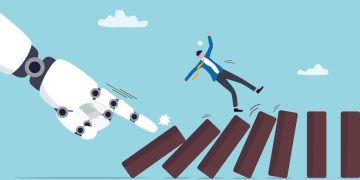
One of the most significant drivers of unemployment today is automation—the use of technology to perform tasks that were previously done by humans. Automated systems are already prevalent in industries such as manufacturing, logistics, and agriculture. Machines and robots can work around the clock, are less prone to error, and can perform repetitive tasks at a lower cost than human labor. This has led to job displacement in sectors that rely on manual labor.

For example, the rise of autonomous vehicles threatens jobs in transportation, such as truck drivers, delivery drivers, and taxi operators. Similarly, AI-powered customer service bots and chatbots are replacing human workers in call centers and other service-oriented roles. While these technologies have the potential to improve efficiency and reduce costs, they also present a risk of widespread unemployment, particularly for workers with low levels of education or those in low-skill jobs.

1.3. The Emergence of New Jobs and Skill Gaps

Although technology is displacing some jobs, it is also creating new opportunities. For example, the growing reliance on AI, big data, and cloud computing has generated demand for workers in fields such as data science, machine learning, and cybersecurity. The green economy is another area of job growth, as governments and businesses invest in renewable energy, energy efficiency, and environmental sustainability.

However, the challenge lies in the skills gap. Many of the new roles created by technology require advanced technical skills that may not be accessible to workers whose jobs have been displaced by automation. In particular, low- and mid-skill workers may struggle to transition into higher-skill roles without significant investment in training and education. This mismatch between the skills workers possess and the skills employers require is a significant factor contributing to unemployment.

2. The Challenges of Workforce Transformation

2.1. Reskilling and Upskilling the Workforce

One of the most critical aspects of addressing unemployment in the face of technological change is reskilling—providing workers with the tools, knowledge, and experience necessary to adapt to new roles. Upskilling, which refers to improving the skills of workers to meet the evolving demands of their current job, is equally important.

For example, a factory worker who has lost their job to automation might benefit from reskilling programs that teach them how to operate and maintain advanced machinery, work with robotics, or handle complex data. Similarly, workers in customer service can be trained in digital communication tools or even in areas like digital marketing, content creation, or online sales.

The World Economic Forum (WEF) has highlighted the importance of reskilling, estimating that over 50% of employees will need significant reskilling by 2025. However, reskilling programs must be accessible, affordable, and effective in addressing the specific needs of displaced workers. This requires collaboration between governments, educational institutions, and private sector organizations to create comprehensive training systems.

2.2. The Role of Lifelong Learning

As the pace of technological change accelerates, workers must embrace a mindset of lifelong learning—constantly updating their skills and knowledge to remain competitive in the labor market. The concept of lifelong learning is becoming increasingly important, as workers are required to adapt to continuous changes in their fields.

Governments and organizations must create frameworks that make continuous learning more accessible. For example, online platforms such as Coursera, Udacity, and edX provide opportunities for workers to learn new skills remotely and affordably. Furthermore, educational institutions can partner with businesses to offer apprenticeships, internships, and on-the-job training that allow workers to gain practical experience while learning new skills.

2.3. The Social Impact of Job Displacement

While technological advancements can create new opportunities, they also have a significant social impact, particularly in communities that are heavily reliant on industries that are being automated. Job displacement can lead to economic inequality, mental health issues, and social unrest. The loss of employment can lead to a sense of alienation and disempowerment, particularly for workers who have spent years or decades in the same profession.

Communities that experience high rates of job displacement may also face broader economic challenges. A decline in jobs can lead to reduced consumer spending, lower tax revenues, and greater pressure on social services. This is why governments must consider not only how to reskill workers but also how to support communities during periods of economic transition.

2.4. Policy Responses to Unemployment

To address the challenges of unemployment and workforce transformation, governments must implement proactive policies that support both individuals and industries. These policies should focus on:

  • Universal basic income (UBI): Some experts argue that providing a basic income to all citizens could help address job displacement caused by automation. By offering a financial safety net, UBI would ensure that workers have a buffer while they reskill or search for new employment opportunities.
  • Social safety nets: Strengthening unemployment benefits, healthcare access, and other safety nets can provide immediate relief to displaced workers and help them navigate periods of job loss.
  • Incentives for business investment in human capital: Governments can encourage businesses to invest in reskilling and upskilling by offering tax incentives or subsidies for training programs. This would help ensure that displaced workers are supported as they transition to new roles.
  • Workplace flexibility and remote work: The rise of remote work, accelerated by the COVID-19 pandemic, has created new opportunities for workers, especially in digital fields. Policymakers should explore ways to support remote work infrastructure and policies that allow workers to balance personal and professional commitments.

3. The Role of Technology in Workforce Transformation

3.1. AI and Automation: Partners in Transformation

While automation is often viewed as the driver of job loss, it can also be seen as a tool for empowering workers and improving job quality. AI and automation can free workers from repetitive, low-value tasks, enabling them to focus on more creative, strategic, and higher-level responsibilities. For example, an AI-powered tool may handle data entry, while a human worker analyzes the insights generated by the AI system.

In industries like healthcare, AI is assisting doctors with diagnostic tasks, but it is not replacing the doctor’s expertise in decision-making and patient care. Similarly, AI in finance helps with fraud detection and algorithmic trading, while human oversight ensures ethical decision-making. The key is to ensure that technology is used in a way that complements and enhances human labor rather than replacing it entirely.

3.2. Technology as a Bridge for Job Creation

Technology itself is a major driver of job creation. The demand for workers with skills in fields like data science, cybersecurity, software development, and cloud computing has skyrocketed as companies increasingly rely on digital infrastructure. Moreover, the gig economy has created new forms of work, with platforms like Uber, TaskRabbit, and Fiverr offering flexible, short-term employment opportunities.

By fostering innovation and encouraging entrepreneurship, technology can create new industries and job opportunities that were previously unimaginable. Governments and businesses must work together to ensure that these new roles are accessible and provide decent wages and benefits.

3.3. Technological Solutions for Reskilling and Workforce Development

Advances in technology can also help support the workforce transformation process. Online learning platforms, AI-driven career counseling, and virtual reality (VR) training simulations are examples of tools that can assist in reskilling workers. These technologies make learning more personalized, scalable, and accessible to workers of all backgrounds.

For instance, VR simulations allow workers to practice tasks in a controlled, immersive environment without the risks associated with traditional on-the-job training. AI-driven platforms can match displaced workers with new career opportunities based on their skills and experience, offering personalized guidance on how to navigate the job market.

Conclusion

The relationship between unemployment and workforce transformation is complex and multifaceted. As technology continues to reshape industries and job roles, workers will need to adapt by acquiring new skills and embracing a mindset of lifelong learning. Governments, businesses, and educational institutions must collaborate to create policies and systems that support reskilling, provide safety nets, and foster new opportunities for displaced workers.

The future of work holds both challenges and promise. While automation and AI may displace some jobs, they also have the potential to create new roles that are more rewarding, fulfilling, and impactful. By leveraging technology as a tool for empowerment rather than replacement, we can create a future where workers are equipped to thrive in an ever-evolving economy.

Tags: aiInterviews & OpinionsWork
ShareTweetShare

Related Posts

AI May Replace Some Low-Skill, Repetitive Jobs, but It Will Also Create New Types of Jobs
Interviews & Opinions

AI May Replace Some Low-Skill, Repetitive Jobs, but It Will Also Create New Types of Jobs

April 28, 2026
The Future of AI Systems: Why Explainability Should Be a Core Feature
Interviews & Opinions

The Future of AI Systems: Why Explainability Should Be a Core Feature

April 28, 2026
AI and Automation Will Take on More of the Heavy Lifting
Interviews & Opinions

AI and Automation Will Take on More of the Heavy Lifting

April 21, 2026
As AI Technology Continues to Evolve, Ethical Issues Are Becoming More Prominent
Interviews & Opinions

As AI Technology Continues to Evolve, Ethical Issues Are Becoming More Prominent

April 21, 2026
AI Fairness: Addressing Bias and Promoting Equity in Artificial Intelligence
Interviews & Opinions

AI Fairness: Addressing Bias and Promoting Equity in Artificial Intelligence

April 4, 2026
The Impact of AI on the Labor Market: A Critical Examination
Interviews & Opinions

The Impact of AI on the Labor Market: A Critical Examination

April 4, 2026
Leave Comment
  • Trending
  • Comments
  • Latest
How Artificial Intelligence is Achieving Revolutionary Breakthroughs in the Healthcare Industry: What Success Stories Teach Us

How Artificial Intelligence is Achieving Revolutionary Breakthroughs in the Healthcare Industry: What Success Stories Teach Us

July 26, 2025
Deep Learning Simulates Human Brain Signal Processing Pathways Through the Construction of Multi-Layer Neural Networks

Deep Learning Simulates Human Brain Signal Processing Pathways Through the Construction of Multi-Layer Neural Networks

January 14, 2026
From Beginner to Expert: Which AI Platforms Are Best for Beginners? Experts’ Take on Learning Curves and Practical Applications

From Beginner to Expert: Which AI Platforms Are Best for Beginners? Experts’ Take on Learning Curves and Practical Applications

July 23, 2025
AI in the Financial Sector: Which Innovative Strategies Are Driving Digital Transformation?

AI in the Financial Sector: Which Innovative Strategies Are Driving Digital Transformation?

July 26, 2025
How Artificial Intelligence Enhances Diagnostic Accuracy and Transforms Treatment Methods in Healthcare

How Artificial Intelligence Enhances Diagnostic Accuracy and Transforms Treatment Methods in Healthcare

How AI Enhances Customer Experience and Drives Sales Growth in Retail

How AI Enhances Customer Experience and Drives Sales Growth in Retail

How Artificial Intelligence Enables Precise Risk Assessment and Decision-Making

How Artificial Intelligence Enables Precise Risk Assessment and Decision-Making

How AI is Driving the Revolution in Smart Manufacturing and Production Efficiency

How AI is Driving the Revolution in Smart Manufacturing and Production Efficiency

AI Learning Resources and Educational Platforms

AI Learning Resources and Educational Platforms

April 28, 2026
AI Automation and Model Training Tools: Revolutionizing the Future of Artificial Intelligence

AI Automation and Model Training Tools: Revolutionizing the Future of Artificial Intelligence

April 28, 2026
AI-Based Anti-Fraud Systems

AI-Based Anti-Fraud Systems

April 28, 2026
The Application of AI in Retail and E-Commerce

The Application of AI in Retail and E-Commerce

April 28, 2026
AIInsiderUpdates

Our platform is dedicated to delivering comprehensive coverage of AI developments, featuring news, case studies, expert interviews, and valuable resources for professionals and enthusiasts alike.

© 2025 aiinsiderupdates.com. contacts:[email protected]

No Result
View All Result
  • Home
  • AI News
  • Technology Trends
  • Interviews & Opinions
  • Case Studies
  • Tools & Resources

© 2025 aiinsiderupdates.com. contacts:[email protected]

Welcome Back!

Login to your account below

Forgotten Password?

Retrieve your password

Please enter your username or email address to reset your password.

Log In