













AIInsiderUpdates
  • Home
  • AI News
    Global Regulatory Frameworks for AI: Progressing Towards Security, Ethics, Accountability, and Data Protection

    Global Regulatory Frameworks for AI: Progressing Towards Security, Ethics, Accountability, and Data Protection

    International Collaboration: A Key Driver for AI Technology Standards and Ecosystem Development

    International Collaboration: A Key Driver for AI Technology Standards and Ecosystem Development

    Industry-Leading AI Companies and Cloud Service Providers

    Industry-Leading AI Companies and Cloud Service Providers

    An Increasing Number of Enterprises Integrating AI into Core Strategy

    An Increasing Number of Enterprises Integrating AI into Core Strategy

    Large Model Providers and Enterprises in Speech & NLP Continue Expanding Application Scenarios

    Large Model Providers and Enterprises in Speech & NLP Continue Expanding Application Scenarios

    Breakthrough Advances in AI for Complex Perception and Reasoning Tasks

    Breakthrough Advances in AI for Complex Perception and Reasoning Tasks

  • Technology Trends
    AI Explainability and Ethics: Balancing Transparency, Accountability, and Trust in AI Systems

    AI Explainability and Ethics: Balancing Transparency, Accountability, and Trust in AI Systems

    Multimodal AI: Revolutionizing Data Integration and Understanding

    Multimodal AI: Revolutionizing Data Integration and Understanding

    Smart Manufacturing and Industrial AI

    Smart Manufacturing and Industrial AI

    Multilingual Understanding and Generation, Especially in Non-English Language Contexts: A Global Innovation Frontier

    Multilingual Understanding and Generation, Especially in Non-English Language Contexts: A Global Innovation Frontier

    AI Systems Are No Longer Limited to Single Inputs: The Rise of Multimodal AI

    AI Systems Are No Longer Limited to Single Inputs: The Rise of Multimodal AI

    Optimizing Transformer and Self-Attention Architectures to Enhance Model Expressiveness

    Optimizing Transformer and Self-Attention Architectures to Enhance Model Expressiveness

  • Interviews & Opinions
    Human-Machine Collaboration and Trend Prediction: The Future of Work and Decision-Making

    Human-Machine Collaboration and Trend Prediction: The Future of Work and Decision-Making

    Despite AI Automation Enhancements, Human Contribution Remains Unmatched in Data Creation and Cultural Context Understanding

    Despite AI Automation Enhancements, Human Contribution Remains Unmatched in Data Creation and Cultural Context Understanding

    Investment Bubbles and Risk Management: Diverging Perspectives

    Investment Bubbles and Risk Management: Diverging Perspectives

    CEO Perspectives on AI Data Contribution and the Role of Humans

    CEO Perspectives on AI Data Contribution and the Role of Humans

    Differences Between Academic and Public Perspectives on AI: Bridging the Gap

    Differences Between Academic and Public Perspectives on AI: Bridging the Gap

    AI Technology is No Longer Just a Tool: It Has Become a Core Component of Enterprise Competitiveness

    AI Technology is No Longer Just a Tool: It Has Become a Core Component of Enterprise Competitiveness

  • Case Studies
    Multidimensional Applications of AI in the Digital Transformation of Manufacturing

    Multidimensional Applications of AI in the Digital Transformation of Manufacturing

    AI Customer Service Bots and Smart Advisors: Helping Banks Reduce Human Customer Support Costs While Enhancing Response Efficiency, User Engagement, and Satisfaction

    AI Customer Service Bots and Smart Advisors: Helping Banks Reduce Human Customer Support Costs While Enhancing Response Efficiency, User Engagement, and Satisfaction

    Personalized Recommendation and Inventory Optimization

    Personalized Recommendation and Inventory Optimization

    How Retailers Use AI Models to Predict Sales Trends and Optimize Inventory Levels

    How Retailers Use AI Models to Predict Sales Trends and Optimize Inventory Levels

    AI Not Only Enhances Diagnostic Capabilities but Also Significantly Improves Backend Healthcare Services

    AI Not Only Enhances Diagnostic Capabilities but Also Significantly Improves Backend Healthcare Services

    AI in Manufacturing: Achieving Significant Cost Savings and Efficiency Improvements

    AI in Manufacturing: Achieving Significant Cost Savings and Efficiency Improvements

  • Tools & Resources
    Real-World Testing and Efficiency Evaluation of Emerging Technological Trends

    Real-World Testing and Efficiency Evaluation of Emerging Technological Trends

    Auxiliary AI Toolset: Enhancing Productivity, Innovation, and Problem Solving Across Industries

    Auxiliary AI Toolset: Enhancing Productivity, Innovation, and Problem Solving Across Industries

    Dataset Preprocessing and Labeling Strategies: A Resource Guide

    Dataset Preprocessing and Labeling Strategies: A Resource Guide

    Recommended Open Source Model Trade-Off Strategies

    Recommended Open Source Model Trade-Off Strategies

    Practical Roadmap: End-to-End Experience from Model Training to Deployment

    Practical Roadmap: End-to-End Experience from Model Training to Deployment

    Scalability and Performance Optimization: Insights and Best Practices

    Scalability and Performance Optimization: Insights and Best Practices

AIInsiderUpdates
  • Home
  • AI News
    Global Regulatory Frameworks for AI: Progressing Towards Security, Ethics, Accountability, and Data Protection

    Global Regulatory Frameworks for AI: Progressing Towards Security, Ethics, Accountability, and Data Protection

    International Collaboration: A Key Driver for AI Technology Standards and Ecosystem Development

    International Collaboration: A Key Driver for AI Technology Standards and Ecosystem Development

    Industry-Leading AI Companies and Cloud Service Providers

    Industry-Leading AI Companies and Cloud Service Providers

    An Increasing Number of Enterprises Integrating AI into Core Strategy

    An Increasing Number of Enterprises Integrating AI into Core Strategy

    Large Model Providers and Enterprises in Speech & NLP Continue Expanding Application Scenarios

    Large Model Providers and Enterprises in Speech & NLP Continue Expanding Application Scenarios

    Breakthrough Advances in AI for Complex Perception and Reasoning Tasks

    Breakthrough Advances in AI for Complex Perception and Reasoning Tasks

  • Technology Trends
    AI Explainability and Ethics: Balancing Transparency, Accountability, and Trust in AI Systems

    AI Explainability and Ethics: Balancing Transparency, Accountability, and Trust in AI Systems

    Multimodal AI: Revolutionizing Data Integration and Understanding

    Multimodal AI: Revolutionizing Data Integration and Understanding

    Smart Manufacturing and Industrial AI

    Smart Manufacturing and Industrial AI

    Multilingual Understanding and Generation, Especially in Non-English Language Contexts: A Global Innovation Frontier

    Multilingual Understanding and Generation, Especially in Non-English Language Contexts: A Global Innovation Frontier

    AI Systems Are No Longer Limited to Single Inputs: The Rise of Multimodal AI

    AI Systems Are No Longer Limited to Single Inputs: The Rise of Multimodal AI

    Optimizing Transformer and Self-Attention Architectures to Enhance Model Expressiveness

    Optimizing Transformer and Self-Attention Architectures to Enhance Model Expressiveness

  • Interviews & Opinions
    Human-Machine Collaboration and Trend Prediction: The Future of Work and Decision-Making

    Human-Machine Collaboration and Trend Prediction: The Future of Work and Decision-Making

    Despite AI Automation Enhancements, Human Contribution Remains Unmatched in Data Creation and Cultural Context Understanding

    Despite AI Automation Enhancements, Human Contribution Remains Unmatched in Data Creation and Cultural Context Understanding

    Investment Bubbles and Risk Management: Diverging Perspectives

    Investment Bubbles and Risk Management: Diverging Perspectives

    CEO Perspectives on AI Data Contribution and the Role of Humans

    CEO Perspectives on AI Data Contribution and the Role of Humans

    Differences Between Academic and Public Perspectives on AI: Bridging the Gap

    Differences Between Academic and Public Perspectives on AI: Bridging the Gap

    AI Technology is No Longer Just a Tool: It Has Become a Core Component of Enterprise Competitiveness

    AI Technology is No Longer Just a Tool: It Has Become a Core Component of Enterprise Competitiveness

  • Case Studies
    Multidimensional Applications of AI in the Digital Transformation of Manufacturing

    Multidimensional Applications of AI in the Digital Transformation of Manufacturing

    AI Customer Service Bots and Smart Advisors: Helping Banks Reduce Human Customer Support Costs While Enhancing Response Efficiency, User Engagement, and Satisfaction

    AI Customer Service Bots and Smart Advisors: Helping Banks Reduce Human Customer Support Costs While Enhancing Response Efficiency, User Engagement, and Satisfaction

    Personalized Recommendation and Inventory Optimization

    Personalized Recommendation and Inventory Optimization

    How Retailers Use AI Models to Predict Sales Trends and Optimize Inventory Levels

    How Retailers Use AI Models to Predict Sales Trends and Optimize Inventory Levels

    AI Not Only Enhances Diagnostic Capabilities but Also Significantly Improves Backend Healthcare Services

    AI Not Only Enhances Diagnostic Capabilities but Also Significantly Improves Backend Healthcare Services

    AI in Manufacturing: Achieving Significant Cost Savings and Efficiency Improvements

    AI in Manufacturing: Achieving Significant Cost Savings and Efficiency Improvements

  • Tools & Resources
    Real-World Testing and Efficiency Evaluation of Emerging Technological Trends

    Real-World Testing and Efficiency Evaluation of Emerging Technological Trends

    Auxiliary AI Toolset: Enhancing Productivity, Innovation, and Problem Solving Across Industries

    Auxiliary AI Toolset: Enhancing Productivity, Innovation, and Problem Solving Across Industries

    Dataset Preprocessing and Labeling Strategies: A Resource Guide

    Dataset Preprocessing and Labeling Strategies: A Resource Guide

    Recommended Open Source Model Trade-Off Strategies

    Recommended Open Source Model Trade-Off Strategies

    Practical Roadmap: End-to-End Experience from Model Training to Deployment

    Practical Roadmap: End-to-End Experience from Model Training to Deployment

    Scalability and Performance Optimization: Insights and Best Practices

    Scalability and Performance Optimization: Insights and Best Practices

AIInsiderUpdates
No Result
View All Result

The Expanding Role of AI in the Creative Industries

November 28, 2025
The Expanding Role of AI in the Creative Industries

Introduction

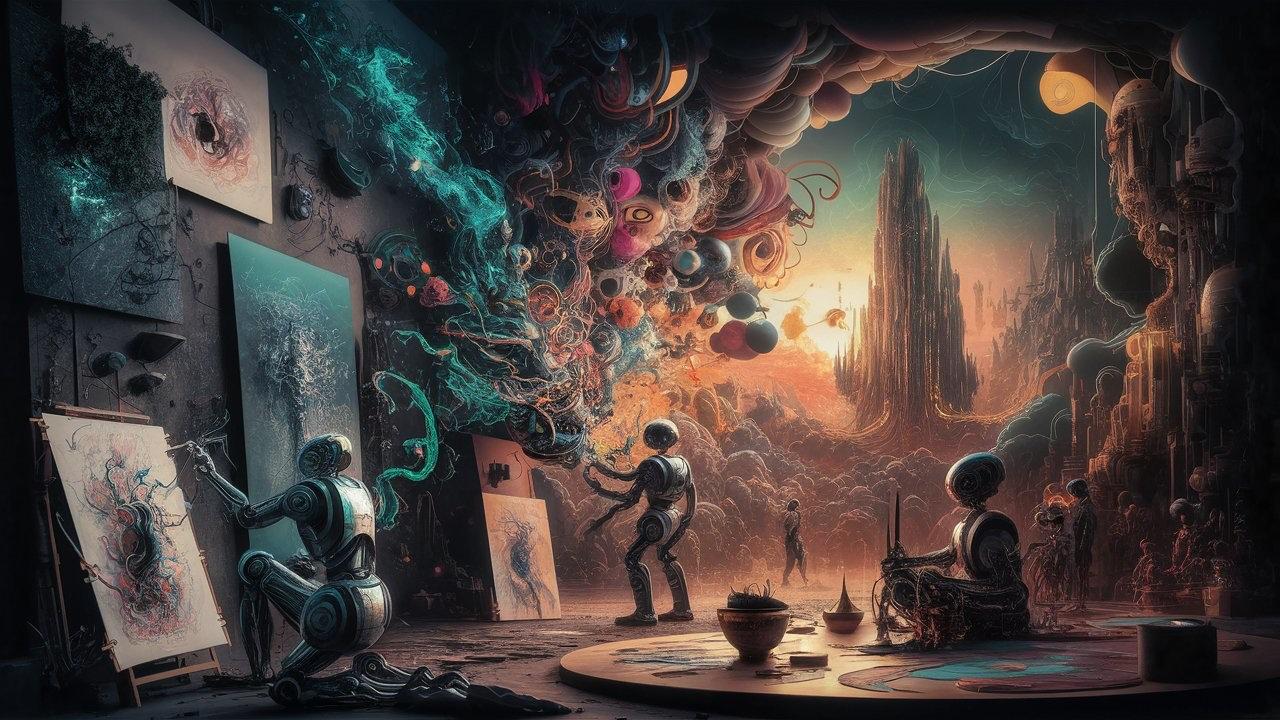
Artificial Intelligence (AI) has rapidly transitioned from a niche technological tool to a transformative force across multiple domains. Among the areas experiencing significant disruption is the creative industry, encompassing fields such as visual arts, music, literature, design, advertising, and film production. Traditionally, creativity has been considered a uniquely human trait, requiring intuition, imagination, and emotional intelligence. However, AI technologies—including generative models, neural networks, and machine learning algorithms—have begun to augment human creativity, enabling artists, writers, designers, and marketers to explore new possibilities and streamline the creative process.

The integration of AI into creative workflows raises intriguing questions about authorship, originality, and the evolving nature of creative labor. More importantly, AI’s application in creativity is not merely about replacing human creators; it is about enhancing their capabilities, optimizing workflows, and generating novel forms of artistic expression. This article explores the growing role of AI in creative industries, examining its impact on art, music, literature, design, advertising, and entertainment, while also addressing ethical considerations, technological challenges, and future trends.


1. AI in Visual Arts

1.1 Generative Art and Neural Networks

Generative AI has revolutionized the field of visual arts by enabling machines to create original artwork based on patterns learned from extensive datasets. Tools such as Generative Adversarial Networks (GANs) and Variational Autoencoders (VAEs) allow artists to produce images, paintings, and digital compositions that push traditional boundaries. GANs, in particular, consist of a generator that creates images and a discriminator that evaluates their authenticity, resulting in outputs that can mimic human artistic styles or produce entirely new aesthetics.

Prominent examples include AI-generated portraits and abstract works that have been exhibited in galleries worldwide. For instance, the AI-generated portrait “Edmond de Belamy”, created by the Paris-based collective Obvious, sold at Christie’s auction for over $400,000, highlighting the growing acceptance of AI as a tool for artistic creation.

1.2 Style Transfer and Enhancement Tools

AI-powered style transfer tools allow artists to apply the style of one image—such as a painting by Van Gogh or Picasso—to their own photographs or digital works. This capability not only democratizes access to artistic techniques but also enables rapid experimentation, allowing creators to explore multiple aesthetic directions in minimal time.

Moreover, AI-driven image enhancement tools improve workflow efficiency by automatically adjusting colors, lighting, and resolution, reducing the need for extensive manual editing. Platforms like Adobe’s Sensei AI integrate such capabilities, providing real-time suggestions for improving composition, contrast, and texture in digital art projects.


2. AI in Music Composition

2.1 Algorithmic Composition

AI has expanded the possibilities in music composition by generating melodies, harmonies, and even full orchestrations. Algorithms can learn from vast datasets of music to produce compositions in specific genres or styles. Models like OpenAI’s MuseNet and AIVA (Artificial Intelligence Virtual Artist) create music that ranges from classical symphonies to contemporary pop arrangements.

This technology allows composers and producers to explore new musical structures or overcome creative blocks. Instead of replacing human musicians, AI acts as a collaborator, offering suggestions, generating alternative sequences, or assisting in arranging complex compositions.

2.2 Personalized and Adaptive Music

Beyond composition, AI is transforming how music is consumed and personalized. Streaming services such as Spotify leverage AI algorithms to analyze listener behavior, recommending personalized playlists and even creating adaptive soundtracks. In gaming and interactive media, AI-generated music can respond dynamically to player actions or narrative changes, enhancing immersive experiences.


3. AI in Literature and Writing

3.1 AI-Generated Text and Storytelling

AI language models, such as GPT-4, ChatGPT, and Claude, have demonstrated remarkable capabilities in generating coherent, contextually relevant text. These tools enable writers to draft content, generate plot ideas, or create dialogue for novels, scripts, and interactive stories. By analyzing millions of textual examples, AI can mimic diverse writing styles, adjust tone, and suggest creative directions that authors may not have envisioned.

3.2 Enhancing Creativity and Efficiency

AI in writing acts as both an assistant and a collaborator, helping reduce the time spent on routine writing tasks, brainstorming, or content editing. Journalists, marketers, and novelists leverage AI to generate drafts, summarize research, or propose stylistic revisions, freeing them to focus on higher-level conceptual and creative decisions.

3.3 Ethical Considerations in Literary AI

The use of AI in literature raises ethical questions surrounding authorship and originality. When a text is generated by an AI system, debates arise about intellectual property rights, attribution, and the potential for plagiarism. These considerations are increasingly central as AI-generated literary works gain visibility and commercial value.
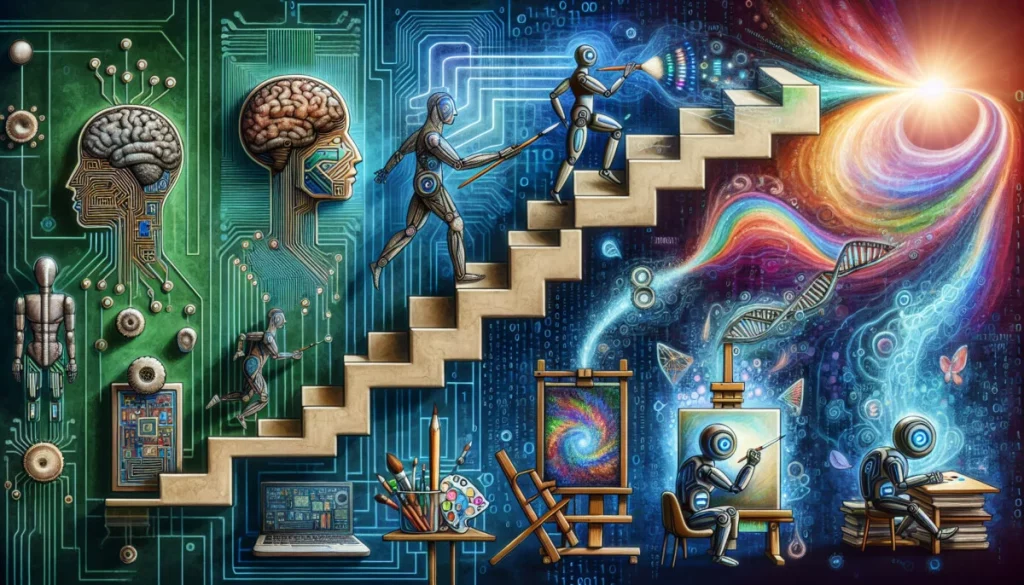

4. AI in Design and Fashion

4.1 AI-Enhanced Graphic and Product Design

In graphic design, AI tools assist designers by generating layouts, suggesting color schemes, and creating logos or promotional visuals. Platforms such as Canva, Adobe Illustrator AI, and Figma AI plugins offer generative design capabilities that accelerate creative workflows and encourage experimentation.

In product design, AI can simulate prototypes, optimize materials, and predict user preferences. By analyzing consumer trends, AI assists designers in creating products that resonate with target audiences while reducing development time and costs.

4.2 Fashion and Style Prediction

AI in fashion is leveraged to forecast trends, recommend personalized outfits, and even design garments. Retailers use AI models to analyze social media, purchase histories, and runway trends to anticipate consumer demand. Generative AI tools enable designers to experiment with new patterns, textures, and silhouettes digitally, allowing for rapid prototyping without significant material costs.


5. AI in Advertising and Marketing

5.1 AI-Generated Copywriting and Content

Advertising has benefited immensely from AI-powered content generation. Tools like Jasper, Copy.ai, and Writesonic create advertising copy, social media posts, and promotional materials in seconds. This accelerates content production while ensuring consistent messaging and tone across platforms.

AI-driven copywriting enhances creative workflows by offering variations and suggestions, empowering human marketers to select the most effective content or combine AI outputs with human creativity for superior results.

5.2 Personalized Marketing and Consumer Engagement

AI also enables hyper-personalized marketing campaigns. By analyzing consumer behavior, preferences, and interactions, AI systems can generate tailored messages, product recommendations, and targeted advertisements. This increases engagement rates, conversion, and customer satisfaction. In digital campaigns, AI can dynamically adjust visuals, copy, and media placement in real-time based on audience response.


6. AI in Film, Animation, and Video Production

6.1 AI-Assisted Filmmaking

AI has transformed the filmmaking process, from pre-production to post-production. AI-driven tools assist in script analysis, storyboarding, and scene visualization. By generating previews of shots, suggesting camera angles, or creating virtual environments, AI streamlines production workflows and reduces costs.

6.2 Video Editing and Effects

AI-powered video editing tools automate labor-intensive tasks such as color grading, motion tracking, object removal, and special effects. Platforms like Runway ML and Adobe Premiere Pro AI features use machine learning to analyze video footage, detect objects, and make intelligent edits, significantly accelerating post-production workflows.

6.3 Deepfakes and Ethical Implications

The emergence of deepfake technology, while revolutionary in content creation, introduces ethical and legal considerations. AI-generated realistic videos can enhance storytelling and visual effects but also raise concerns regarding misinformation, privacy, and consent. Responsible application and regulation of AI in video production are therefore critical.


7. Ethical, Legal, and Social Considerations

While AI opens new creative possibilities, it also introduces challenges that must be addressed:

  • Authorship and Intellectual Property: Determining ownership of AI-generated works is complex. Should the creator of the AI, the operator, or the AI itself hold rights? Legal frameworks are still evolving.
  • Bias and Representation: AI models learn from existing datasets, which may embed biases, stereotypes, or cultural limitations. Ensuring diversity and fairness in AI-generated content is crucial.
  • Originality and Authenticity: With AI capable of producing near-human-quality work, distinguishing between human-created and AI-generated content becomes challenging, raising questions about authenticity and artistic value.
  • Cultural and Societal Impact: AI may democratize creative production, allowing non-experts to generate art, music, and literature. However, it may also disrupt traditional creative labor markets, requiring new approaches to education, collaboration, and creative career paths.

8. Future Trends in AI-Driven Creativity

8.1 Collaborative AI and Human-Centered Design

The future of AI in creativity is likely to emphasize collaboration rather than replacement. Human-AI co-creation allows artists and designers to leverage AI’s generative power while applying their expertise, judgment, and emotional intelligence. Hybrid workflows—where AI generates options and humans refine them—are expected to become standard practice.

8.2 Multimodal Creative AI

Emerging AI models are increasingly multimodal, capable of integrating text, image, audio, and video inputs to produce rich, interactive content. For example, models can generate animated videos from textual prompts or create music scores synchronized with visual scenes, enabling entirely new forms of creative expression.

8.3 Democratization of Creativity

As AI tools become more accessible and user-friendly, creative production is no longer limited to professionals with specialized skills. Individuals with minimal technical or artistic training can leverage AI to create compelling art, music, literature, and media content, democratizing creativity and expanding participation in cultural production.


Conclusion

The application of AI in the creative industries is transforming the way art, music, literature, design, advertising, and media are produced and experienced. AI’s flexibility, generative capabilities, and ability to analyze vast datasets enable creators to explore new creative frontiers, enhance productivity, and deliver personalized, high-quality content at unprecedented speeds.

While AI in creativity introduces challenges related to ethics, authorship, bias, and labor dynamics, its potential to augment human talent and enable novel forms of artistic expression is undeniable. The future of creative industries will likely involve hybrid human-AI collaborations, multimodal generative systems, and democratized access to creative tools, ultimately reshaping cultural production in ways previously unimaginable.

AI is no longer merely a tool for automation; it is a co-creator, collaborator, and enabler of human imagination, redefining the boundaries of what creativity can achieve.


Tags: aiAI newsCreative
ShareTweetShare

Related Posts

Global Regulatory Frameworks for AI: Progressing Towards Security, Ethics, Accountability, and Data Protection
AI News

Global Regulatory Frameworks for AI: Progressing Towards Security, Ethics, Accountability, and Data Protection

January 21, 2026
International Collaboration: A Key Driver for AI Technology Standards and Ecosystem Development
AI News

International Collaboration: A Key Driver for AI Technology Standards and Ecosystem Development

January 20, 2026
Industry-Leading AI Companies and Cloud Service Providers
AI News

Industry-Leading AI Companies and Cloud Service Providers

January 19, 2026
An Increasing Number of Enterprises Integrating AI into Core Strategy
AI News

An Increasing Number of Enterprises Integrating AI into Core Strategy

January 18, 2026
Large Model Providers and Enterprises in Speech & NLP Continue Expanding Application Scenarios
AI News

Large Model Providers and Enterprises in Speech & NLP Continue Expanding Application Scenarios

January 17, 2026
Breakthrough Advances in AI for Complex Perception and Reasoning Tasks
AI News

Breakthrough Advances in AI for Complex Perception and Reasoning Tasks

January 16, 2026
Leave Comment
  • Trending
  • Comments
  • Latest
How Artificial Intelligence is Achieving Revolutionary Breakthroughs in the Healthcare Industry: What Success Stories Teach Us

How Artificial Intelligence is Achieving Revolutionary Breakthroughs in the Healthcare Industry: What Success Stories Teach Us

July 26, 2025
AI in the Financial Sector: Which Innovative Strategies Are Driving Digital Transformation?

AI in the Financial Sector: Which Innovative Strategies Are Driving Digital Transformation?

July 26, 2025
From Beginner to Expert: Which AI Platforms Are Best for Beginners? Experts’ Take on Learning Curves and Practical Applications

From Beginner to Expert: Which AI Platforms Are Best for Beginners? Experts’ Take on Learning Curves and Practical Applications

July 23, 2025
How to Find Truly Useful AI Resources Among the Crowd? Experts Share How to Select Efficient and Innovative Tools!

How to Find Truly Useful AI Resources Among the Crowd? Experts Share How to Select Efficient and Innovative Tools!

July 23, 2025
How Artificial Intelligence Enhances Diagnostic Accuracy and Transforms Treatment Methods in Healthcare

How Artificial Intelligence Enhances Diagnostic Accuracy and Transforms Treatment Methods in Healthcare

How AI Enhances Customer Experience and Drives Sales Growth in Retail

How AI Enhances Customer Experience and Drives Sales Growth in Retail

How Artificial Intelligence Enables Precise Risk Assessment and Decision-Making

How Artificial Intelligence Enables Precise Risk Assessment and Decision-Making

How AI is Driving the Revolution in Smart Manufacturing and Production Efficiency

How AI is Driving the Revolution in Smart Manufacturing and Production Efficiency

Real-World Testing and Efficiency Evaluation of Emerging Technological Trends

Real-World Testing and Efficiency Evaluation of Emerging Technological Trends

January 21, 2026
Multidimensional Applications of AI in the Digital Transformation of Manufacturing

Multidimensional Applications of AI in the Digital Transformation of Manufacturing

January 21, 2026
Human-Machine Collaboration and Trend Prediction: The Future of Work and Decision-Making

Human-Machine Collaboration and Trend Prediction: The Future of Work and Decision-Making

January 21, 2026
AI Explainability and Ethics: Balancing Transparency, Accountability, and Trust in AI Systems

AI Explainability and Ethics: Balancing Transparency, Accountability, and Trust in AI Systems

January 21, 2026
AIInsiderUpdates

Our platform is dedicated to delivering comprehensive coverage of AI developments, featuring news, case studies, expert interviews, and valuable resources for professionals and enthusiasts alike.

© 2025 aiinsiderupdates.com. contacts:[email protected]

No Result
View All Result
  • Home
  • AI News
  • Technology Trends
  • Interviews & Opinions
  • Case Studies
  • Tools & Resources

© 2025 aiinsiderupdates.com. contacts:[email protected]

Welcome Back!

Login to your account below

Forgotten Password?

Retrieve your password

Please enter your username or email address to reset your password.

Log In