




















AIInsiderUpdates
  • Home
  • AI News
    Global Regulatory Frameworks for AI: Progressing Towards Security, Ethics, Accountability, and Data Protection

    Global Regulatory Frameworks for AI: Progressing Towards Security, Ethics, Accountability, and Data Protection

    International Collaboration: A Key Driver for AI Technology Standards and Ecosystem Development

    International Collaboration: A Key Driver for AI Technology Standards and Ecosystem Development

    Industry-Leading AI Companies and Cloud Service Providers

    Industry-Leading AI Companies and Cloud Service Providers

    An Increasing Number of Enterprises Integrating AI into Core Strategy

    An Increasing Number of Enterprises Integrating AI into Core Strategy

    Large Model Providers and Enterprises in Speech & NLP Continue Expanding Application Scenarios

    Large Model Providers and Enterprises in Speech & NLP Continue Expanding Application Scenarios

    Breakthrough Advances in AI for Complex Perception and Reasoning Tasks

    Breakthrough Advances in AI for Complex Perception and Reasoning Tasks

  • Technology Trends
    AI Explainability and Ethics: Balancing Transparency, Accountability, and Trust in AI Systems

    AI Explainability and Ethics: Balancing Transparency, Accountability, and Trust in AI Systems

    Multimodal AI: Revolutionizing Data Integration and Understanding

    Multimodal AI: Revolutionizing Data Integration and Understanding

    Smart Manufacturing and Industrial AI

    Smart Manufacturing and Industrial AI

    Multilingual Understanding and Generation, Especially in Non-English Language Contexts: A Global Innovation Frontier

    Multilingual Understanding and Generation, Especially in Non-English Language Contexts: A Global Innovation Frontier

    AI Systems Are No Longer Limited to Single Inputs: The Rise of Multimodal AI

    AI Systems Are No Longer Limited to Single Inputs: The Rise of Multimodal AI

    Optimizing Transformer and Self-Attention Architectures to Enhance Model Expressiveness

    Optimizing Transformer and Self-Attention Architectures to Enhance Model Expressiveness

  • Interviews & Opinions
    Human-Machine Collaboration and Trend Prediction: The Future of Work and Decision-Making

    Human-Machine Collaboration and Trend Prediction: The Future of Work and Decision-Making

    Despite AI Automation Enhancements, Human Contribution Remains Unmatched in Data Creation and Cultural Context Understanding

    Despite AI Automation Enhancements, Human Contribution Remains Unmatched in Data Creation and Cultural Context Understanding

    Investment Bubbles and Risk Management: Diverging Perspectives

    Investment Bubbles and Risk Management: Diverging Perspectives

    CEO Perspectives on AI Data Contribution and the Role of Humans

    CEO Perspectives on AI Data Contribution and the Role of Humans

    Differences Between Academic and Public Perspectives on AI: Bridging the Gap

    Differences Between Academic and Public Perspectives on AI: Bridging the Gap

    AI Technology is No Longer Just a Tool: It Has Become a Core Component of Enterprise Competitiveness

    AI Technology is No Longer Just a Tool: It Has Become a Core Component of Enterprise Competitiveness

  • Case Studies
    Multidimensional Applications of AI in the Digital Transformation of Manufacturing

    Multidimensional Applications of AI in the Digital Transformation of Manufacturing

    AI Customer Service Bots and Smart Advisors: Helping Banks Reduce Human Customer Support Costs While Enhancing Response Efficiency, User Engagement, and Satisfaction

    AI Customer Service Bots and Smart Advisors: Helping Banks Reduce Human Customer Support Costs While Enhancing Response Efficiency, User Engagement, and Satisfaction

    Personalized Recommendation and Inventory Optimization

    Personalized Recommendation and Inventory Optimization

    How Retailers Use AI Models to Predict Sales Trends and Optimize Inventory Levels

    How Retailers Use AI Models to Predict Sales Trends and Optimize Inventory Levels

    AI Not Only Enhances Diagnostic Capabilities but Also Significantly Improves Backend Healthcare Services

    AI Not Only Enhances Diagnostic Capabilities but Also Significantly Improves Backend Healthcare Services

    AI in Manufacturing: Achieving Significant Cost Savings and Efficiency Improvements

    AI in Manufacturing: Achieving Significant Cost Savings and Efficiency Improvements

  • Tools & Resources
    Real-World Testing and Efficiency Evaluation of Emerging Technological Trends

    Real-World Testing and Efficiency Evaluation of Emerging Technological Trends

    Auxiliary AI Toolset: Enhancing Productivity, Innovation, and Problem Solving Across Industries

    Auxiliary AI Toolset: Enhancing Productivity, Innovation, and Problem Solving Across Industries

    Dataset Preprocessing and Labeling Strategies: A Resource Guide

    Dataset Preprocessing and Labeling Strategies: A Resource Guide

    Recommended Open Source Model Trade-Off Strategies

    Recommended Open Source Model Trade-Off Strategies

    Practical Roadmap: End-to-End Experience from Model Training to Deployment

    Practical Roadmap: End-to-End Experience from Model Training to Deployment

    Scalability and Performance Optimization: Insights and Best Practices

    Scalability and Performance Optimization: Insights and Best Practices

AIInsiderUpdates
  • Home
  • AI News
    Global Regulatory Frameworks for AI: Progressing Towards Security, Ethics, Accountability, and Data Protection

    Global Regulatory Frameworks for AI: Progressing Towards Security, Ethics, Accountability, and Data Protection

    International Collaboration: A Key Driver for AI Technology Standards and Ecosystem Development

    International Collaboration: A Key Driver for AI Technology Standards and Ecosystem Development

    Industry-Leading AI Companies and Cloud Service Providers

    Industry-Leading AI Companies and Cloud Service Providers

    An Increasing Number of Enterprises Integrating AI into Core Strategy

    An Increasing Number of Enterprises Integrating AI into Core Strategy

    Large Model Providers and Enterprises in Speech & NLP Continue Expanding Application Scenarios

    Large Model Providers and Enterprises in Speech & NLP Continue Expanding Application Scenarios

    Breakthrough Advances in AI for Complex Perception and Reasoning Tasks

    Breakthrough Advances in AI for Complex Perception and Reasoning Tasks

  • Technology Trends
    AI Explainability and Ethics: Balancing Transparency, Accountability, and Trust in AI Systems

    AI Explainability and Ethics: Balancing Transparency, Accountability, and Trust in AI Systems

    Multimodal AI: Revolutionizing Data Integration and Understanding

    Multimodal AI: Revolutionizing Data Integration and Understanding

    Smart Manufacturing and Industrial AI

    Smart Manufacturing and Industrial AI

    Multilingual Understanding and Generation, Especially in Non-English Language Contexts: A Global Innovation Frontier

    Multilingual Understanding and Generation, Especially in Non-English Language Contexts: A Global Innovation Frontier

    AI Systems Are No Longer Limited to Single Inputs: The Rise of Multimodal AI

    AI Systems Are No Longer Limited to Single Inputs: The Rise of Multimodal AI

    Optimizing Transformer and Self-Attention Architectures to Enhance Model Expressiveness

    Optimizing Transformer and Self-Attention Architectures to Enhance Model Expressiveness

  • Interviews & Opinions
    Human-Machine Collaboration and Trend Prediction: The Future of Work and Decision-Making

    Human-Machine Collaboration and Trend Prediction: The Future of Work and Decision-Making

    Despite AI Automation Enhancements, Human Contribution Remains Unmatched in Data Creation and Cultural Context Understanding

    Despite AI Automation Enhancements, Human Contribution Remains Unmatched in Data Creation and Cultural Context Understanding

    Investment Bubbles and Risk Management: Diverging Perspectives

    Investment Bubbles and Risk Management: Diverging Perspectives

    CEO Perspectives on AI Data Contribution and the Role of Humans

    CEO Perspectives on AI Data Contribution and the Role of Humans

    Differences Between Academic and Public Perspectives on AI: Bridging the Gap

    Differences Between Academic and Public Perspectives on AI: Bridging the Gap

    AI Technology is No Longer Just a Tool: It Has Become a Core Component of Enterprise Competitiveness

    AI Technology is No Longer Just a Tool: It Has Become a Core Component of Enterprise Competitiveness

  • Case Studies
    Multidimensional Applications of AI in the Digital Transformation of Manufacturing

    Multidimensional Applications of AI in the Digital Transformation of Manufacturing

    AI Customer Service Bots and Smart Advisors: Helping Banks Reduce Human Customer Support Costs While Enhancing Response Efficiency, User Engagement, and Satisfaction

    AI Customer Service Bots and Smart Advisors: Helping Banks Reduce Human Customer Support Costs While Enhancing Response Efficiency, User Engagement, and Satisfaction

    Personalized Recommendation and Inventory Optimization

    Personalized Recommendation and Inventory Optimization

    How Retailers Use AI Models to Predict Sales Trends and Optimize Inventory Levels

    How Retailers Use AI Models to Predict Sales Trends and Optimize Inventory Levels

    AI Not Only Enhances Diagnostic Capabilities but Also Significantly Improves Backend Healthcare Services

    AI Not Only Enhances Diagnostic Capabilities but Also Significantly Improves Backend Healthcare Services

    AI in Manufacturing: Achieving Significant Cost Savings and Efficiency Improvements

    AI in Manufacturing: Achieving Significant Cost Savings and Efficiency Improvements

  • Tools & Resources
    Real-World Testing and Efficiency Evaluation of Emerging Technological Trends

    Real-World Testing and Efficiency Evaluation of Emerging Technological Trends

    Auxiliary AI Toolset: Enhancing Productivity, Innovation, and Problem Solving Across Industries

    Auxiliary AI Toolset: Enhancing Productivity, Innovation, and Problem Solving Across Industries

    Dataset Preprocessing and Labeling Strategies: A Resource Guide

    Dataset Preprocessing and Labeling Strategies: A Resource Guide

    Recommended Open Source Model Trade-Off Strategies

    Recommended Open Source Model Trade-Off Strategies

    Practical Roadmap: End-to-End Experience from Model Training to Deployment

    Practical Roadmap: End-to-End Experience from Model Training to Deployment

    Scalability and Performance Optimization: Insights and Best Practices

    Scalability and Performance Optimization: Insights and Best Practices

AIInsiderUpdates
No Result
View All Result

The Impact of AI on the Labor Market

November 26, 2025
The Impact of AI on the Labor Market

Introduction

Artificial intelligence (AI) has emerged as one of the most transformative technologies of the 21st century, reshaping industries, business models, and the very nature of work itself. Its rapid development promises unprecedented efficiency, productivity, and innovation, yet it also brings significant challenges for the global labor market. AI-driven automation is altering the demand for skills, reshaping job roles, and prompting debates about the future of employment.

This article provides a comprehensive analysis of AI’s impact on the labor market. It examines both the positive and negative effects of AI adoption, explores sector-specific transformations, considers workforce skill requirements, evaluates policy implications, and envisions future trends. The goal is to provide a detailed, professional, and well-rounded perspective on how AI is transforming employment landscapes worldwide.


1. Understanding AI and Its Role in the Labor Market

Defining Artificial Intelligence in the Workplace

Artificial intelligence encompasses a broad spectrum of technologies designed to perform tasks that typically require human intelligence. These tasks range from data analysis and pattern recognition to natural language processing, problem-solving, and even creative processes. Within the labor market, AI manifests through various applications, including:

  • Robotic Process Automation (RPA): Automating repetitive administrative and clerical tasks.
  • Machine Learning Algorithms: Analyzing vast datasets to provide insights, predictions, and decision-making support.
  • Natural Language Processing (NLP): Enabling AI to understand, interpret, and generate human language, useful in customer service, translation, and content creation.
  • Computer Vision: Automating inspection, quality control, and visual recognition tasks in manufacturing and healthcare.

The Dual Nature of AI’s Impact on Labor

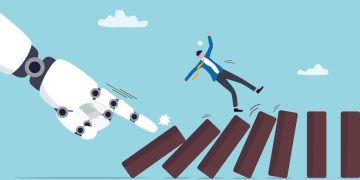
AI has a dual impact on the workforce: it can both displace certain jobs and create new opportunities. While automation may reduce the demand for routine and repetitive tasks, AI also generates demand for new skill sets, including AI system design, data analysis, and human-AI collaboration. The challenge for labor markets is to adapt to this shift in demand, requiring investments in education, training, and policy frameworks that facilitate workforce transition.


2. Job Displacement and Workforce Restructuring

Automation of Routine Tasks

AI-driven automation primarily affects jobs that involve predictable, repetitive, or data-intensive tasks. Examples include:

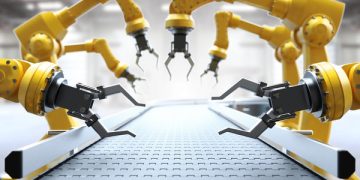
  • Manufacturing assembly lines where robots perform precision tasks faster than humans.
  • Data entry roles replaced by intelligent RPA systems.
  • Call center operations where AI chatbots handle standard customer queries.

Research from the McKinsey Global Institute suggests that up to 30% of current work activities could be automated by AI by the mid-2030s. This represents a significant restructuring of the labor market, particularly in sectors where routine work dominates.

Impact on Different Skill Levels

The effects of AI are not uniform across skill levels:

  • Low-Skill Jobs: Most vulnerable to automation. Positions such as cashiers, clerks, and assembly line workers face high replacement risk.
  • Medium-Skill Jobs: Many administrative, logistics, and technical roles are partially automatable, requiring job redesign rather than full replacement.
  • High-Skill Jobs: AI can augment but rarely fully replace high-level analytical, strategic, and creative roles. Professions in medicine, law, engineering, and research are more likely to see productivity gains rather than outright displacement.

Sector-Specific Impacts

  • Manufacturing: The adoption of AI-driven robotics and predictive maintenance tools is streamlining operations, reducing the need for manual labor, and increasing productivity.
  • Healthcare: AI assists in diagnostics, patient monitoring, and drug discovery, augmenting medical professionals but not replacing them.
  • Finance: AI automates risk assessment, fraud detection, and algorithmic trading, transforming roles but also creating opportunities for AI oversight specialists.
  • Transportation: Autonomous vehicles and AI-powered logistics systems could disrupt truck driving, delivery services, and public transportation operations.

3. Job Creation and New Opportunities

While AI displaces certain roles, it simultaneously creates new opportunities in areas that require human-AI collaboration, technological oversight, and creative problem-solving. Key examples include:

AI System Development and Maintenance

  • AI engineers, data scientists, and machine learning specialists are in high demand.
  • Roles include algorithm design, model training, performance evaluation, and system debugging.

AI-Augmented Roles in Traditional Sectors

  • Healthcare: AI-assisted surgery and diagnostics expand the role of medical practitioners.
  • Marketing: AI-generated insights and predictive analytics enhance campaign strategies, requiring human interpretation and creativity.
  • Education: Adaptive learning platforms powered by AI require educators to design curricula and personalize learning strategies based on AI recommendations.

Entrepreneurship and Innovation
AI fosters new business models and startups in sectors such as AI-powered design, virtual assistants, autonomous delivery, and AI-driven content creation. Entrepreneurs skilled in AI integration can create businesses that were unimaginable a decade ago.

The Rise of Human-AI Collaborative Jobs
The workforce increasingly includes jobs where humans and AI work together. Examples:

  • Financial analysts using AI to analyze complex datasets.
  • Journalists using AI to generate news drafts that are then refined by human editors.
  • Designers using generative AI to brainstorm new visual concepts.

4. Skills and Workforce Adaptation

The Skills Gap

The rapid adoption of AI highlights a significant skills gap in the global labor market. Workers displaced by automation may lack the technical knowledge or training to transition into AI-augmented roles. The World Economic Forum predicts that by 2025, 85 million jobs may be displaced, but 97 million new roles could emerge, emphasizing the need for reskilling.

Key Skills for the AI Era

  • Digital Literacy: Proficiency with AI tools, cloud computing, and data platforms.
  • Analytical and Critical Thinking: Ability to interpret AI-generated insights and make strategic decisions.
  • Creativity and Problem-Solving: Human creativity is crucial in areas where AI provides recommendations but cannot make value judgments.
  • Emotional Intelligence and Communication: Jobs requiring human interaction, empathy, and leadership are less susceptible to automation.

Training and Reskilling Programs

Governments and companies are implementing programs to help workers transition into AI-ready roles:

  • Online courses in AI, data science, and machine learning.
  • On-the-job training programs for AI tools integration.
  • Partnerships between industry and educational institutions to provide practical AI skills.

Lifelong Learning

The dynamic nature of AI technology necessitates a shift from static education to lifelong learning, where continuous skill updates are a fundamental requirement for employment sustainability.


5. Economic Implications

Productivity Gains and Economic Growth

AI-driven automation has the potential to significantly boost productivity and economic growth. By automating repetitive tasks, businesses can reduce operational costs, shorten production cycles, and improve quality. Sectors that adopt AI effectively may gain competitive advantages in global markets.

Income Inequality

A key concern is the potential for AI to exacerbate income inequality. High-skill workers in AI-related fields may see substantial wage growth, while low-skill workers face wage stagnation or job loss. Policymakers must consider redistribution mechanisms, such as social safety nets, universal basic income, or targeted retraining programs.

Labor Market Polarization

The labor market may become increasingly polarized, with a concentration of high-skill, high-wage jobs and low-skill, low-wage jobs, while many medium-skill roles diminish. This trend has implications for social mobility, workforce stability, and economic inclusivity.


6. Policy Considerations and Recommendations

Governments and organizations have a crucial role in ensuring that AI adoption benefits society while mitigating negative labor market impacts. Key policy considerations include:

Education and Reskilling Programs

  • Invest in AI literacy and vocational training programs.
  • Encourage STEM education from early schooling to higher education.
  • Develop flexible certification programs for AI-relevant skills.

Labor Market Regulations

  • Create frameworks to manage AI-driven job displacement.
  • Support transition programs for workers in high-risk sectors.
  • Ensure fair labor practices in AI-augmented workplaces.

Social Safety Nets

  • Consider unemployment insurance programs that address AI-related displacement.
  • Explore alternative income redistribution methods, including universal basic income pilots in AI-heavy industries.

Encouraging Responsible AI Adoption

  • Promote transparency and accountability in AI systems.
  • Ensure AI-driven decisions in the workplace are ethical and non-discriminatory.
  • Foster collaboration between industry, academia, and government for inclusive AI innovation.

7. Future Trends and Outlook

AI as an Enabler of Human Potential

Rather than solely focusing on displacement, AI has the potential to enhance human labor. By automating mundane tasks, workers can focus on creative, strategic, and interpersonal aspects of their roles. This shift could redefine work as more meaningful and intellectually engaging.

Integration of AI in Global Labor Markets

AI adoption will vary by region and sector. Advanced economies with strong technological infrastructure may see rapid integration, while developing countries may face slower adoption due to limited resources. Global cooperation and knowledge sharing are critical to ensure equitable AI benefits.

Emerging Occupations

  • AI ethics consultants to oversee responsible AI use.
  • Human-AI collaboration specialists.
  • AI data curators and trainers.
  • Virtual economy designers for AI-driven metaverse platforms.

The Human-Centric AI Approach

The future labor market should focus on human-centric AI, where technology complements rather than replaces human skills. Workers who can leverage AI as a tool rather than compete with it are likely to thrive in this evolving landscape.


Conclusion

Artificial intelligence is profoundly reshaping the labor market, simultaneously presenting challenges and opportunities. While AI-driven automation threatens to displace routine jobs, it also creates new roles, enhances productivity, and drives innovation. The key to harnessing AI’s potential lies in proactive workforce planning, comprehensive reskilling initiatives, and policies that balance technological progress with social equity.

As AI continues to evolve, the labor market will increasingly reward adaptability, creativity, and the ability to collaborate with intelligent systems. By preparing workers for this transition and fostering an inclusive approach to AI adoption, society can ensure that the rise of artificial intelligence leads to a more productive, innovative, and equitable workforce.

Tags: aiInterviews & OpinionsLabor Market
ShareTweetShare

Related Posts

Human-Machine Collaboration and Trend Prediction: The Future of Work and Decision-Making
Interviews & Opinions

Human-Machine Collaboration and Trend Prediction: The Future of Work and Decision-Making

January 21, 2026
Despite AI Automation Enhancements, Human Contribution Remains Unmatched in Data Creation and Cultural Context Understanding
Interviews & Opinions

Despite AI Automation Enhancements, Human Contribution Remains Unmatched in Data Creation and Cultural Context Understanding

January 20, 2026
Investment Bubbles and Risk Management: Diverging Perspectives
Interviews & Opinions

Investment Bubbles and Risk Management: Diverging Perspectives

January 19, 2026
CEO Perspectives on AI Data Contribution and the Role of Humans
Interviews & Opinions

CEO Perspectives on AI Data Contribution and the Role of Humans

January 18, 2026
Differences Between Academic and Public Perspectives on AI: Bridging the Gap
Interviews & Opinions

Differences Between Academic and Public Perspectives on AI: Bridging the Gap

January 17, 2026
AI Technology is No Longer Just a Tool: It Has Become a Core Component of Enterprise Competitiveness
Interviews & Opinions

AI Technology is No Longer Just a Tool: It Has Become a Core Component of Enterprise Competitiveness

January 16, 2026
Leave Comment
  • Trending
  • Comments
  • Latest
How Artificial Intelligence is Achieving Revolutionary Breakthroughs in the Healthcare Industry: What Success Stories Teach Us

How Artificial Intelligence is Achieving Revolutionary Breakthroughs in the Healthcare Industry: What Success Stories Teach Us

July 26, 2025
AI in the Financial Sector: Which Innovative Strategies Are Driving Digital Transformation?

AI in the Financial Sector: Which Innovative Strategies Are Driving Digital Transformation?

July 26, 2025
From Beginner to Expert: Which AI Platforms Are Best for Beginners? Experts’ Take on Learning Curves and Practical Applications

From Beginner to Expert: Which AI Platforms Are Best for Beginners? Experts’ Take on Learning Curves and Practical Applications

July 23, 2025
How to Find Truly Useful AI Resources Among the Crowd? Experts Share How to Select Efficient and Innovative Tools!

How to Find Truly Useful AI Resources Among the Crowd? Experts Share How to Select Efficient and Innovative Tools!

July 23, 2025
How Artificial Intelligence Enhances Diagnostic Accuracy and Transforms Treatment Methods in Healthcare

How Artificial Intelligence Enhances Diagnostic Accuracy and Transforms Treatment Methods in Healthcare

How AI Enhances Customer Experience and Drives Sales Growth in Retail

How AI Enhances Customer Experience and Drives Sales Growth in Retail

How Artificial Intelligence Enables Precise Risk Assessment and Decision-Making

How Artificial Intelligence Enables Precise Risk Assessment and Decision-Making

How AI is Driving the Revolution in Smart Manufacturing and Production Efficiency

How AI is Driving the Revolution in Smart Manufacturing and Production Efficiency

Real-World Testing and Efficiency Evaluation of Emerging Technological Trends

Real-World Testing and Efficiency Evaluation of Emerging Technological Trends

January 21, 2026
Multidimensional Applications of AI in the Digital Transformation of Manufacturing

Multidimensional Applications of AI in the Digital Transformation of Manufacturing

January 21, 2026
Human-Machine Collaboration and Trend Prediction: The Future of Work and Decision-Making

Human-Machine Collaboration and Trend Prediction: The Future of Work and Decision-Making

January 21, 2026
AI Explainability and Ethics: Balancing Transparency, Accountability, and Trust in AI Systems

AI Explainability and Ethics: Balancing Transparency, Accountability, and Trust in AI Systems

January 21, 2026
AIInsiderUpdates

Our platform is dedicated to delivering comprehensive coverage of AI developments, featuring news, case studies, expert interviews, and valuable resources for professionals and enthusiasts alike.

© 2025 aiinsiderupdates.com. contacts:[email protected]

No Result
View All Result
  • Home
  • AI News
  • Technology Trends
  • Interviews & Opinions
  • Case Studies
  • Tools & Resources

© 2025 aiinsiderupdates.com. contacts:[email protected]

Welcome Back!

Login to your account below

Forgotten Password?

Retrieve your password

Please enter your username or email address to reset your password.

Log In