






























AIInsiderUpdates
  • Home
  • AI News
    Global Regulatory Frameworks for AI: Progressing Towards Security, Ethics, Accountability, and Data Protection

    Global Regulatory Frameworks for AI: Progressing Towards Security, Ethics, Accountability, and Data Protection

    International Collaboration: A Key Driver for AI Technology Standards and Ecosystem Development

    International Collaboration: A Key Driver for AI Technology Standards and Ecosystem Development

    Industry-Leading AI Companies and Cloud Service Providers

    Industry-Leading AI Companies and Cloud Service Providers

    An Increasing Number of Enterprises Integrating AI into Core Strategy

    An Increasing Number of Enterprises Integrating AI into Core Strategy

    Large Model Providers and Enterprises in Speech & NLP Continue Expanding Application Scenarios

    Large Model Providers and Enterprises in Speech & NLP Continue Expanding Application Scenarios

    Breakthrough Advances in AI for Complex Perception and Reasoning Tasks

    Breakthrough Advances in AI for Complex Perception and Reasoning Tasks

  • Technology Trends
    AI Explainability and Ethics: Balancing Transparency, Accountability, and Trust in AI Systems

    AI Explainability and Ethics: Balancing Transparency, Accountability, and Trust in AI Systems

    Multimodal AI: Revolutionizing Data Integration and Understanding

    Multimodal AI: Revolutionizing Data Integration and Understanding

    Smart Manufacturing and Industrial AI

    Smart Manufacturing and Industrial AI

    Multilingual Understanding and Generation, Especially in Non-English Language Contexts: A Global Innovation Frontier

    Multilingual Understanding and Generation, Especially in Non-English Language Contexts: A Global Innovation Frontier

    AI Systems Are No Longer Limited to Single Inputs: The Rise of Multimodal AI

    AI Systems Are No Longer Limited to Single Inputs: The Rise of Multimodal AI

    Optimizing Transformer and Self-Attention Architectures to Enhance Model Expressiveness

    Optimizing Transformer and Self-Attention Architectures to Enhance Model Expressiveness

  • Interviews & Opinions
    Human-Machine Collaboration and Trend Prediction: The Future of Work and Decision-Making

    Human-Machine Collaboration and Trend Prediction: The Future of Work and Decision-Making

    Despite AI Automation Enhancements, Human Contribution Remains Unmatched in Data Creation and Cultural Context Understanding

    Despite AI Automation Enhancements, Human Contribution Remains Unmatched in Data Creation and Cultural Context Understanding

    Investment Bubbles and Risk Management: Diverging Perspectives

    Investment Bubbles and Risk Management: Diverging Perspectives

    CEO Perspectives on AI Data Contribution and the Role of Humans

    CEO Perspectives on AI Data Contribution and the Role of Humans

    Differences Between Academic and Public Perspectives on AI: Bridging the Gap

    Differences Between Academic and Public Perspectives on AI: Bridging the Gap

    AI Technology is No Longer Just a Tool: It Has Become a Core Component of Enterprise Competitiveness

    AI Technology is No Longer Just a Tool: It Has Become a Core Component of Enterprise Competitiveness

  • Case Studies
    Multidimensional Applications of AI in the Digital Transformation of Manufacturing

    Multidimensional Applications of AI in the Digital Transformation of Manufacturing

    AI Customer Service Bots and Smart Advisors: Helping Banks Reduce Human Customer Support Costs While Enhancing Response Efficiency, User Engagement, and Satisfaction

    AI Customer Service Bots and Smart Advisors: Helping Banks Reduce Human Customer Support Costs While Enhancing Response Efficiency, User Engagement, and Satisfaction

    Personalized Recommendation and Inventory Optimization

    Personalized Recommendation and Inventory Optimization

    How Retailers Use AI Models to Predict Sales Trends and Optimize Inventory Levels

    How Retailers Use AI Models to Predict Sales Trends and Optimize Inventory Levels

    AI Not Only Enhances Diagnostic Capabilities but Also Significantly Improves Backend Healthcare Services

    AI Not Only Enhances Diagnostic Capabilities but Also Significantly Improves Backend Healthcare Services

    AI in Manufacturing: Achieving Significant Cost Savings and Efficiency Improvements

    AI in Manufacturing: Achieving Significant Cost Savings and Efficiency Improvements

  • Tools & Resources
    Real-World Testing and Efficiency Evaluation of Emerging Technological Trends

    Real-World Testing and Efficiency Evaluation of Emerging Technological Trends

    Auxiliary AI Toolset: Enhancing Productivity, Innovation, and Problem Solving Across Industries

    Auxiliary AI Toolset: Enhancing Productivity, Innovation, and Problem Solving Across Industries

    Dataset Preprocessing and Labeling Strategies: A Resource Guide

    Dataset Preprocessing and Labeling Strategies: A Resource Guide

    Recommended Open Source Model Trade-Off Strategies

    Recommended Open Source Model Trade-Off Strategies

    Practical Roadmap: End-to-End Experience from Model Training to Deployment

    Practical Roadmap: End-to-End Experience from Model Training to Deployment

    Scalability and Performance Optimization: Insights and Best Practices

    Scalability and Performance Optimization: Insights and Best Practices

AIInsiderUpdates
  • Home
  • AI News
    Global Regulatory Frameworks for AI: Progressing Towards Security, Ethics, Accountability, and Data Protection

    Global Regulatory Frameworks for AI: Progressing Towards Security, Ethics, Accountability, and Data Protection

    International Collaboration: A Key Driver for AI Technology Standards and Ecosystem Development

    International Collaboration: A Key Driver for AI Technology Standards and Ecosystem Development

    Industry-Leading AI Companies and Cloud Service Providers

    Industry-Leading AI Companies and Cloud Service Providers

    An Increasing Number of Enterprises Integrating AI into Core Strategy

    An Increasing Number of Enterprises Integrating AI into Core Strategy

    Large Model Providers and Enterprises in Speech & NLP Continue Expanding Application Scenarios

    Large Model Providers and Enterprises in Speech & NLP Continue Expanding Application Scenarios

    Breakthrough Advances in AI for Complex Perception and Reasoning Tasks

    Breakthrough Advances in AI for Complex Perception and Reasoning Tasks

  • Technology Trends
    AI Explainability and Ethics: Balancing Transparency, Accountability, and Trust in AI Systems

    AI Explainability and Ethics: Balancing Transparency, Accountability, and Trust in AI Systems

    Multimodal AI: Revolutionizing Data Integration and Understanding

    Multimodal AI: Revolutionizing Data Integration and Understanding

    Smart Manufacturing and Industrial AI

    Smart Manufacturing and Industrial AI

    Multilingual Understanding and Generation, Especially in Non-English Language Contexts: A Global Innovation Frontier

    Multilingual Understanding and Generation, Especially in Non-English Language Contexts: A Global Innovation Frontier

    AI Systems Are No Longer Limited to Single Inputs: The Rise of Multimodal AI

    AI Systems Are No Longer Limited to Single Inputs: The Rise of Multimodal AI

    Optimizing Transformer and Self-Attention Architectures to Enhance Model Expressiveness

    Optimizing Transformer and Self-Attention Architectures to Enhance Model Expressiveness

  • Interviews & Opinions
    Human-Machine Collaboration and Trend Prediction: The Future of Work and Decision-Making

    Human-Machine Collaboration and Trend Prediction: The Future of Work and Decision-Making

    Despite AI Automation Enhancements, Human Contribution Remains Unmatched in Data Creation and Cultural Context Understanding

    Despite AI Automation Enhancements, Human Contribution Remains Unmatched in Data Creation and Cultural Context Understanding

    Investment Bubbles and Risk Management: Diverging Perspectives

    Investment Bubbles and Risk Management: Diverging Perspectives

    CEO Perspectives on AI Data Contribution and the Role of Humans

    CEO Perspectives on AI Data Contribution and the Role of Humans

    Differences Between Academic and Public Perspectives on AI: Bridging the Gap

    Differences Between Academic and Public Perspectives on AI: Bridging the Gap

    AI Technology is No Longer Just a Tool: It Has Become a Core Component of Enterprise Competitiveness

    AI Technology is No Longer Just a Tool: It Has Become a Core Component of Enterprise Competitiveness

  • Case Studies
    Multidimensional Applications of AI in the Digital Transformation of Manufacturing

    Multidimensional Applications of AI in the Digital Transformation of Manufacturing

    AI Customer Service Bots and Smart Advisors: Helping Banks Reduce Human Customer Support Costs While Enhancing Response Efficiency, User Engagement, and Satisfaction

    AI Customer Service Bots and Smart Advisors: Helping Banks Reduce Human Customer Support Costs While Enhancing Response Efficiency, User Engagement, and Satisfaction

    Personalized Recommendation and Inventory Optimization

    Personalized Recommendation and Inventory Optimization

    How Retailers Use AI Models to Predict Sales Trends and Optimize Inventory Levels

    How Retailers Use AI Models to Predict Sales Trends and Optimize Inventory Levels

    AI Not Only Enhances Diagnostic Capabilities but Also Significantly Improves Backend Healthcare Services

    AI Not Only Enhances Diagnostic Capabilities but Also Significantly Improves Backend Healthcare Services

    AI in Manufacturing: Achieving Significant Cost Savings and Efficiency Improvements

    AI in Manufacturing: Achieving Significant Cost Savings and Efficiency Improvements

  • Tools & Resources
    Real-World Testing and Efficiency Evaluation of Emerging Technological Trends

    Real-World Testing and Efficiency Evaluation of Emerging Technological Trends

    Auxiliary AI Toolset: Enhancing Productivity, Innovation, and Problem Solving Across Industries

    Auxiliary AI Toolset: Enhancing Productivity, Innovation, and Problem Solving Across Industries

    Dataset Preprocessing and Labeling Strategies: A Resource Guide

    Dataset Preprocessing and Labeling Strategies: A Resource Guide

    Recommended Open Source Model Trade-Off Strategies

    Recommended Open Source Model Trade-Off Strategies

    Practical Roadmap: End-to-End Experience from Model Training to Deployment

    Practical Roadmap: End-to-End Experience from Model Training to Deployment

    Scalability and Performance Optimization: Insights and Best Practices

    Scalability and Performance Optimization: Insights and Best Practices

AIInsiderUpdates
No Result
View All Result

Exploring Real-World Cases: How AI Is Transforming the Future of Agriculture and Environmental Protection

July 27, 2025
Exploring Real-World Cases: How AI Is Transforming the Future of Agriculture and Environmental Protection

As the global population continues to grow, there is increasing pressure on the agricultural and environmental sectors to meet the demands for food, resources, and sustainability. Traditional methods of farming and resource management are no longer sufficient to cope with the challenges of modern society, such as climate change, resource depletion, and biodiversity loss. Fortunately, Artificial Intelligence (AI) is proving to be a game-changer in both agriculture and environmental protection, offering new opportunities for optimization, sustainability, and innovation.

In this article, we explore how AI is revolutionizing the future of agriculture and environmental protection, using real-world case studies to demonstrate its potential. By integrating AI technologies such as machine learning, robotics, and data analytics, industries are not only increasing productivity but also minimizing the environmental impact, paving the way for a more sustainable future.


1. AI in Agriculture: Enhancing Productivity and Sustainability

Agriculture is one of the most critical sectors for feeding the growing population. However, it is also one of the most resource-intensive industries, consuming large amounts of water, energy, and land, while contributing significantly to greenhouse gas emissions. AI offers solutions to improve crop yield, optimize resource usage, and reduce the environmental footprint of farming practices.

1.1 Precision Agriculture: Data-Driven Decision Making

Precision agriculture involves using data and advanced technologies to manage farming practices more efficiently. AI plays a key role in enabling farmers to collect and analyze data from sensors, satellites, and drones, helping them make more informed decisions about when to plant, irrigate, fertilize, and harvest crops.

Case Study: John Deere’s AI-Powered Precision Farming

John Deere, a leading manufacturer of agricultural machinery, has incorporated AI into its precision farming solutions. The company’s AI-driven equipment and software use data from GPS, sensors, and satellite imagery to optimize planting and harvesting. This technology allows farmers to monitor crop health, predict pest infestations, and manage irrigation systems with much greater precision.

  • Impact: John Deere’s AI solutions have helped farmers reduce water and fertilizer usage, increase crop yields, and lower operating costs. For example, AI-driven irrigation systems ensure that water is applied only where and when it is needed, reducing water waste and promoting sustainability.

Lessons Learned:

  • Resource Efficiency: AI helps farmers use water, fertilizers, and pesticides more efficiently, reducing environmental impact while increasing yields.
  • Real-Time Data Insights: The integration of AI allows farmers to access real-time data, enabling them to make faster and more informed decisions on the farm.

1.2 Autonomous Machinery and Robotics in Farming

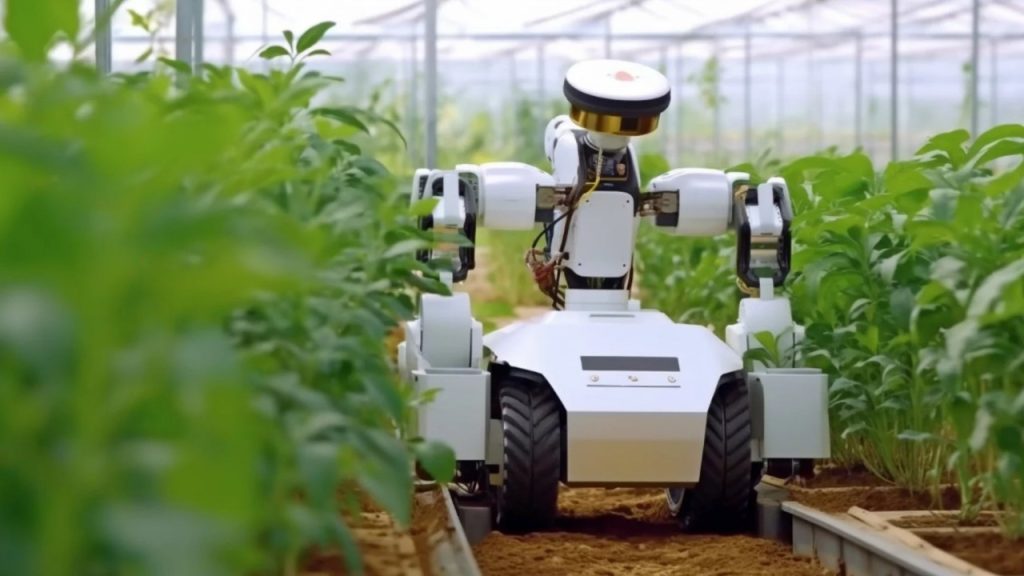
AI-powered robotics and autonomous machinery are revolutionizing farming practices by automating tasks such as planting, weeding, harvesting, and monitoring crop health. These robots use AI to navigate fields, identify weeds, and carry out tasks with minimal human intervention.

Case Study: Fendt’s Autonomous Tractors

Fendt, a German agricultural machinery manufacturer, has developed autonomous tractors that use AI and machine learning to perform tasks like tilling, sowing, and harvesting crops. These tractors are equipped with GPS and sensors that allow them to navigate fields without human input, optimizing labor costs and reducing human error.

  • Impact: Autonomous tractors have the potential to reduce labor costs, improve precision in farming operations, and minimize fuel consumption, which in turn lowers greenhouse gas emissions.

Lessons Learned:

  • Labor Efficiency: By automating tasks, AI-driven machinery reduces the need for manual labor, allowing farmers to focus on more complex tasks that require human judgment.
  • Sustainability: Autonomous machines improve the precision of farming operations, reducing waste and environmental impact.

2. AI in Environmental Protection: Monitoring, Conservation, and Sustainability

While AI is making waves in agriculture, it is also playing an increasingly important role in environmental protection. From combating deforestation to monitoring air and water quality, AI is enabling governments, organizations, and researchers to monitor and protect the environment in ways that were once impossible.

2.1 AI for Wildlife Conservation and Habitat Protection

Conservationists are increasingly turning to AI to monitor wildlife populations, track endangered species, and protect natural habitats. AI tools such as computer vision, machine learning, and drones are helping to monitor animal behavior, detect poaching, and assess habitat conditions in real time.

Case Study: The African Wildlife Foundation’s Use of AI in Poaching Prevention

The African Wildlife Foundation (AWF) has adopted AI and machine learning technologies to help prevent wildlife poaching in Africa. Using AI-powered drones and cameras, AWF can track animal movements, monitor illegal activities, and identify potential poaching threats in remote areas. The AI systems analyze images and video data to detect signs of poaching activities and send real-time alerts to rangers.

  • Impact: The use of AI in wildlife monitoring has led to a decrease in poaching activities, increased safety for endangered species, and more effective management of conservation areas.

Lessons Learned:

  • Early Detection: AI allows conservationists to detect threats in real-time, enabling faster responses and more effective protection efforts.
  • Efficient Resource Allocation: AI helps conservation organizations allocate resources more efficiently by focusing efforts on high-risk areas.

2.2 AI in Climate Change Monitoring and Prediction

AI is being used to monitor climate change and predict its effects on the environment. Machine learning algorithms can analyze vast amounts of climate data, such as temperature, precipitation, and sea-level rise, to predict future climate patterns and identify areas most at risk from climate change.

Case Study: Google’s AI for Climate Change Research

Google has developed AI-based tools to help researchers analyze climate change data and predict environmental changes. Google’s AI models use satellite data to map deforestation, monitor carbon emissions, and track the impact of natural disasters. Additionally, Google’s AI is helping researchers study the effects of climate change on agriculture, biodiversity, and weather patterns.

  • Impact: These AI models provide valuable insights that help governments, NGOs, and researchers develop effective strategies for mitigating climate change and its impacts.

Lessons Learned:

  • Data-Driven Insights: AI’s ability to process and analyze large-scale data sets is crucial in understanding climate change and predicting future environmental scenarios.
  • Early Intervention: By predicting climate impacts, AI helps policymakers and communities implement early intervention measures to reduce damage.

2.3 AI in Waste Management and Pollution Control

AI technologies are also being used to tackle pollution and improve waste management systems. From identifying pollution sources to optimizing recycling processes, AI is enhancing the ability of cities and organizations to manage waste more effectively and reduce environmental harm.

Case Study: IBM’s AI-Powered Waste Management System

IBM’s AI-powered waste management system uses machine learning algorithms to improve recycling processes and reduce waste in urban areas. By analyzing waste composition data and identifying patterns, the system optimizes the routing of garbage trucks and sorts recyclable materials more efficiently. AI also helps monitor pollution levels, enabling cities to implement targeted interventions.

  • Impact: IBM’s AI solution has helped cities reduce waste, increase recycling rates, and minimize the environmental impact of landfills.

Lessons Learned:

  • Efficiency and Optimization: AI allows cities and organizations to optimize waste collection and recycling processes, improving operational efficiency and reducing pollution.
  • Sustainability: AI-driven waste management systems help reduce the overall environmental footprint of urban areas, promoting sustainability.
3. Overcoming Challenges in AI Adoption for Agriculture and Environmental Protection

While the potential benefits of AI in agriculture and environmental protection are immense, several challenges remain:

  • Data Accessibility and Quality: AI systems require vast amounts of high-quality data to function effectively. In many cases, data may be incomplete, inconsistent, or difficult to access.
  • High Implementation Costs: The initial cost of AI technologies can be prohibitive, especially for small farmers or organizations with limited resources.
  • Ethical Considerations: As AI becomes more integrated into environmental monitoring and wildlife protection, issues such as privacy, surveillance, and data security must be addressed.
  • Scalability: While AI has shown great potential in pilot projects and case studies, scaling these solutions to larger regions or countries can be complex and costly.

To overcome these challenges, governments, organizations, and tech companies need to collaborate to develop affordable, scalable AI solutions that are accessible to a broader range of stakeholders.


4. Conclusion: The Future of AI in Agriculture and Environmental Protection

AI is already playing a transformative role in both agriculture and environmental protection, enhancing productivity, sustainability, and conservation efforts. As the technology continues to advance, AI will likely become even more integral to solving the world’s most pressing challenges, from food security to climate change and biodiversity conservation.

The real-world case studies mentioned in this article highlight how AI is already helping to optimize farming practices, reduce environmental degradation, and protect natural ecosystems. However, to unlock the full potential of AI, it is essential to overcome the current challenges and foster collaboration between technology providers, governments, environmental organizations, and agricultural stakeholders.

As we look to the future, AI’s role in these sectors will only grow, offering innovative solutions to ensure a more sustainable and environmentally-conscious world for generations to come.


Tags: AgricultureaiArtificial intelligenceCase StudiesCase studyEnvironmental protectionprofessionResourcetechnology
ShareTweetShare

Related Posts

Multidimensional Applications of AI in the Digital Transformation of Manufacturing
Case Studies

Multidimensional Applications of AI in the Digital Transformation of Manufacturing

January 21, 2026
AI Customer Service Bots and Smart Advisors: Helping Banks Reduce Human Customer Support Costs While Enhancing Response Efficiency, User Engagement, and Satisfaction
Case Studies

AI Customer Service Bots and Smart Advisors: Helping Banks Reduce Human Customer Support Costs While Enhancing Response Efficiency, User Engagement, and Satisfaction

January 20, 2026
Personalized Recommendation and Inventory Optimization
Case Studies

Personalized Recommendation and Inventory Optimization

January 19, 2026
How Retailers Use AI Models to Predict Sales Trends and Optimize Inventory Levels
Case Studies

How Retailers Use AI Models to Predict Sales Trends and Optimize Inventory Levels

January 18, 2026
AI Not Only Enhances Diagnostic Capabilities but Also Significantly Improves Backend Healthcare Services
Case Studies

AI Not Only Enhances Diagnostic Capabilities but Also Significantly Improves Backend Healthcare Services

January 17, 2026
AI in Manufacturing: Achieving Significant Cost Savings and Efficiency Improvements
Case Studies

AI in Manufacturing: Achieving Significant Cost Savings and Efficiency Improvements

January 16, 2026
Leave Comment
  • Trending
  • Comments
  • Latest
How Artificial Intelligence is Achieving Revolutionary Breakthroughs in the Healthcare Industry: What Success Stories Teach Us

How Artificial Intelligence is Achieving Revolutionary Breakthroughs in the Healthcare Industry: What Success Stories Teach Us

July 26, 2025
AI in the Financial Sector: Which Innovative Strategies Are Driving Digital Transformation?

AI in the Financial Sector: Which Innovative Strategies Are Driving Digital Transformation?

July 26, 2025
From Beginner to Expert: Which AI Platforms Are Best for Beginners? Experts’ Take on Learning Curves and Practical Applications

From Beginner to Expert: Which AI Platforms Are Best for Beginners? Experts’ Take on Learning Curves and Practical Applications

July 23, 2025
How to Find Truly Useful AI Resources Among the Crowd? Experts Share How to Select Efficient and Innovative Tools!

How to Find Truly Useful AI Resources Among the Crowd? Experts Share How to Select Efficient and Innovative Tools!

July 23, 2025
How Artificial Intelligence Enhances Diagnostic Accuracy and Transforms Treatment Methods in Healthcare

How Artificial Intelligence Enhances Diagnostic Accuracy and Transforms Treatment Methods in Healthcare

How AI Enhances Customer Experience and Drives Sales Growth in Retail

How AI Enhances Customer Experience and Drives Sales Growth in Retail

How Artificial Intelligence Enables Precise Risk Assessment and Decision-Making

How Artificial Intelligence Enables Precise Risk Assessment and Decision-Making

How AI is Driving the Revolution in Smart Manufacturing and Production Efficiency

How AI is Driving the Revolution in Smart Manufacturing and Production Efficiency

Real-World Testing and Efficiency Evaluation of Emerging Technological Trends

Real-World Testing and Efficiency Evaluation of Emerging Technological Trends

January 21, 2026
Multidimensional Applications of AI in the Digital Transformation of Manufacturing

Multidimensional Applications of AI in the Digital Transformation of Manufacturing

January 21, 2026
Human-Machine Collaboration and Trend Prediction: The Future of Work and Decision-Making

Human-Machine Collaboration and Trend Prediction: The Future of Work and Decision-Making

January 21, 2026
AI Explainability and Ethics: Balancing Transparency, Accountability, and Trust in AI Systems

AI Explainability and Ethics: Balancing Transparency, Accountability, and Trust in AI Systems

January 21, 2026
AIInsiderUpdates

Our platform is dedicated to delivering comprehensive coverage of AI developments, featuring news, case studies, expert interviews, and valuable resources for professionals and enthusiasts alike.

© 2025 aiinsiderupdates.com. contacts:[email protected]

No Result
View All Result
  • Home
  • AI News
  • Technology Trends
  • Interviews & Opinions
  • Case Studies
  • Tools & Resources

© 2025 aiinsiderupdates.com. contacts:[email protected]

Welcome Back!

Login to your account below

Forgotten Password?

Retrieve your password

Please enter your username or email address to reset your password.

Log In