





























AIInsiderUpdates
  • Home
  • AI News
    Application of AI in Drug Therapy

    Application of AI in Drug Therapy

    The Popularization of AI: Automation of Traditional Jobs and Its Impact on the Labor Market

    The Popularization of AI: Automation of Traditional Jobs and Its Impact on the Labor Market

    Many Industries Are Adopting AI-Driven Robots to Replace Human Labor

    Many Industries Are Adopting AI-Driven Robots to Replace Human Labor

    Artificial Intelligence Ethics and Regulations

    Artificial Intelligence Ethics and Regulations

    Ensuring Fairness and Transparency in AI Decision-Making: A Priority for Companies and Governments

    Ensuring Fairness and Transparency in AI Decision-Making: A Priority for Companies and Governments

    The Growing Global Debate on AI Ethics and Governance

    The Growing Global Debate on AI Ethics and Governance

  • Technology Trends
    Fine-tuning Large Language Models to Meet Specific Task or Industry Needs: A Key Focus in AI Research

    Fine-tuning Large Language Models to Meet Specific Task or Industry Needs: A Key Focus in AI Research

    The Convergence of Reinforcement Learning and Deep Learning: Driving Innovation Across Multiple Domains

    The Convergence of Reinforcement Learning and Deep Learning: Driving Innovation Across Multiple Domains

    The Transformer Architecture: The Core of Deep Learning

    The Transformer Architecture: The Core of Deep Learning

    Neural Architecture Search: A Revolution in Artificial Intelligence

    Neural Architecture Search: A Revolution in Artificial Intelligence

    Significant Advances in Self-Supervised Learning (SSL) Methods in Deep Learning

    Significant Advances in Self-Supervised Learning (SSL) Methods in Deep Learning

    Breakthroughs in Deep Learning and Neural Networks: Revolutionizing the Future of AI

    Breakthroughs in Deep Learning and Neural Networks: Revolutionizing the Future of AI

  • Interviews & Opinions
    AI May Replace Some Low-Skill, Repetitive Jobs, but It Will Also Create New Types of Jobs

    AI May Replace Some Low-Skill, Repetitive Jobs, but It Will Also Create New Types of Jobs

    The Future of AI Systems: Why Explainability Should Be a Core Feature

    The Future of AI Systems: Why Explainability Should Be a Core Feature

    AI and Automation Will Take on More of the Heavy Lifting

    AI and Automation Will Take on More of the Heavy Lifting

    As AI Technology Continues to Evolve, Ethical Issues Are Becoming More Prominent

    As AI Technology Continues to Evolve, Ethical Issues Are Becoming More Prominent

    AI Fairness: Addressing Bias and Promoting Equity in Artificial Intelligence

    AI Fairness: Addressing Bias and Promoting Equity in Artificial Intelligence

    The Impact of AI on the Labor Market: A Critical Examination

    The Impact of AI on the Labor Market: A Critical Examination

  • Case Studies
    AI-Based Anti-Fraud Systems

    AI-Based Anti-Fraud Systems

    The Application of AI in Retail and E-Commerce

    The Application of AI in Retail and E-Commerce

    The Application of AI in the Financial Industry

    The Application of AI in the Financial Industry

    The Application of AI in Medical Imaging: A Significant Advancement

    The Application of AI in Medical Imaging: A Significant Advancement

    AI Significantly Enhancing Disease Diagnosis Efficiency and Accuracy

    AI Significantly Enhancing Disease Diagnosis Efficiency and Accuracy

    The Application of AI in Healthcare: Revolutionizing Medicine and Patient Care

    The Application of AI in Healthcare: Revolutionizing Medicine and Patient Care

  • Tools & Resources
    AI Learning Resources and Educational Platforms

    AI Learning Resources and Educational Platforms

    AI Automation and Model Training Tools: Revolutionizing the Future of Artificial Intelligence

    AI Automation and Model Training Tools: Revolutionizing the Future of Artificial Intelligence

    Keras: Making AI Development Easier While Supporting Complex Model Designs

    Keras: Making AI Development Easier While Supporting Complex Model Designs

    PyTorch: A Flexible and Debug-Friendly Deep Learning Framework

    PyTorch: A Flexible and Debug-Friendly Deep Learning Framework

    AutoAI Tools Enable Developers to Reduce Manual Model Tuning Workload

    AutoAI Tools Enable Developers to Reduce Manual Model Tuning Workload

    AI Development Platforms and Frameworks

    AI Development Platforms and Frameworks

AIInsiderUpdates
  • Home
  • AI News
    Application of AI in Drug Therapy

    Application of AI in Drug Therapy

    The Popularization of AI: Automation of Traditional Jobs and Its Impact on the Labor Market

    The Popularization of AI: Automation of Traditional Jobs and Its Impact on the Labor Market

    Many Industries Are Adopting AI-Driven Robots to Replace Human Labor

    Many Industries Are Adopting AI-Driven Robots to Replace Human Labor

    Artificial Intelligence Ethics and Regulations

    Artificial Intelligence Ethics and Regulations

    Ensuring Fairness and Transparency in AI Decision-Making: A Priority for Companies and Governments

    Ensuring Fairness and Transparency in AI Decision-Making: A Priority for Companies and Governments

    The Growing Global Debate on AI Ethics and Governance

    The Growing Global Debate on AI Ethics and Governance

  • Technology Trends
    Fine-tuning Large Language Models to Meet Specific Task or Industry Needs: A Key Focus in AI Research

    Fine-tuning Large Language Models to Meet Specific Task or Industry Needs: A Key Focus in AI Research

    The Convergence of Reinforcement Learning and Deep Learning: Driving Innovation Across Multiple Domains

    The Convergence of Reinforcement Learning and Deep Learning: Driving Innovation Across Multiple Domains

    The Transformer Architecture: The Core of Deep Learning

    The Transformer Architecture: The Core of Deep Learning

    Neural Architecture Search: A Revolution in Artificial Intelligence

    Neural Architecture Search: A Revolution in Artificial Intelligence

    Significant Advances in Self-Supervised Learning (SSL) Methods in Deep Learning

    Significant Advances in Self-Supervised Learning (SSL) Methods in Deep Learning

    Breakthroughs in Deep Learning and Neural Networks: Revolutionizing the Future of AI

    Breakthroughs in Deep Learning and Neural Networks: Revolutionizing the Future of AI

  • Interviews & Opinions
    AI May Replace Some Low-Skill, Repetitive Jobs, but It Will Also Create New Types of Jobs

    AI May Replace Some Low-Skill, Repetitive Jobs, but It Will Also Create New Types of Jobs

    The Future of AI Systems: Why Explainability Should Be a Core Feature

    The Future of AI Systems: Why Explainability Should Be a Core Feature

    AI and Automation Will Take on More of the Heavy Lifting

    AI and Automation Will Take on More of the Heavy Lifting

    As AI Technology Continues to Evolve, Ethical Issues Are Becoming More Prominent

    As AI Technology Continues to Evolve, Ethical Issues Are Becoming More Prominent

    AI Fairness: Addressing Bias and Promoting Equity in Artificial Intelligence

    AI Fairness: Addressing Bias and Promoting Equity in Artificial Intelligence

    The Impact of AI on the Labor Market: A Critical Examination

    The Impact of AI on the Labor Market: A Critical Examination

  • Case Studies
    AI-Based Anti-Fraud Systems

    AI-Based Anti-Fraud Systems

    The Application of AI in Retail and E-Commerce

    The Application of AI in Retail and E-Commerce

    The Application of AI in the Financial Industry

    The Application of AI in the Financial Industry

    The Application of AI in Medical Imaging: A Significant Advancement

    The Application of AI in Medical Imaging: A Significant Advancement

    AI Significantly Enhancing Disease Diagnosis Efficiency and Accuracy

    AI Significantly Enhancing Disease Diagnosis Efficiency and Accuracy

    The Application of AI in Healthcare: Revolutionizing Medicine and Patient Care

    The Application of AI in Healthcare: Revolutionizing Medicine and Patient Care

  • Tools & Resources
    AI Learning Resources and Educational Platforms

    AI Learning Resources and Educational Platforms

    AI Automation and Model Training Tools: Revolutionizing the Future of Artificial Intelligence

    AI Automation and Model Training Tools: Revolutionizing the Future of Artificial Intelligence

    Keras: Making AI Development Easier While Supporting Complex Model Designs

    Keras: Making AI Development Easier While Supporting Complex Model Designs

    PyTorch: A Flexible and Debug-Friendly Deep Learning Framework

    PyTorch: A Flexible and Debug-Friendly Deep Learning Framework

    AutoAI Tools Enable Developers to Reduce Manual Model Tuning Workload

    AutoAI Tools Enable Developers to Reduce Manual Model Tuning Workload

    AI Development Platforms and Frameworks

    AI Development Platforms and Frameworks

AIInsiderUpdates
No Result
View All Result

The Future of Smart Manufacturing: How Businesses Can Leverage AI to Optimize Production Processes and Enhance Competitiveness

July 27, 2025
The Future of Smart Manufacturing: How Businesses Can Leverage AI to Optimize Production Processes and Enhance Competitiveness

The manufacturing sector has traditionally been at the core of industrial economies, but as global competition intensifies and consumer demands evolve, traditional manufacturing models are being disrupted. Enter smart manufacturing, where Artificial Intelligence (AI) plays a pivotal role in driving efficiency, improving product quality, and enhancing overall competitiveness.

With the integration of AI in manufacturing, businesses are seeing a dramatic shift in production processes, supply chains, quality control, and maintenance, leading to faster production cycles, reduced costs, and increased operational flexibility. From predictive analytics to autonomous robots and AI-driven design, the possibilities are virtually endless for companies willing to embrace AI technology.

This article explores the transformative role of AI in smart manufacturing, its applications across various manufacturing stages, and how businesses can harness AI to remain competitive in the future.


1. The Rise of Smart Manufacturing: AI’s Role in the Industry

The concept of smart manufacturing is not merely about automating tasks; it’s about creating an interconnected, flexible, and intelligent ecosystem where production processes are continuously optimized through data, advanced algorithms, and real-time decision-making. AI is at the heart of this transformation, enabling manufacturers to collect, analyze, and act on vast amounts of data in ways that were previously impossible.

1.1 What Is Smart Manufacturing?

Smart manufacturing refers to the use of advanced technologies—such as AI, the Internet of Things (IoT), robotics, and big data analytics—to optimize the manufacturing process. It involves the integration of digital systems, connected devices, and machine learning models to create more efficient, flexible, and intelligent production systems.

1.2 How AI is Powering Smart Manufacturing

AI enhances smart manufacturing by providing real-time insights that optimize various aspects of production, including:

  • Predictive maintenance
  • Demand forecasting
  • Supply chain optimization
  • Quality control
  • Process automation

By implementing AI solutions, manufacturers can make data-driven decisions, reduce downtime, enhance product quality, and improve efficiency.


2. Key AI Applications in Smart Manufacturing

AI is being integrated into various stages of manufacturing, transforming both production processes and business strategies. Below are some of the key applications where AI is making a significant impact.

2.1 Predictive Maintenance: Reducing Downtime and Preventing Failures

One of the most significant challenges in manufacturing is equipment failure, which can lead to unexpected downtime and costly repairs. Predictive maintenance uses AI to analyze historical data from machinery, sensors, and IoT devices to predict when a machine is likely to fail, allowing businesses to perform maintenance before the failure occurs.

Case Study: Siemens and Predictive Maintenance

Siemens has developed an AI-driven predictive maintenance solution for its industrial machinery. By analyzing data from thousands of sensors installed on factory equipment, Siemens can forecast potential failures and schedule maintenance only when needed, instead of following a fixed schedule.

  • Impact: This not only reduces costs associated with unscheduled downtime but also extends the lifespan of equipment, leading to significant savings in the long run.

Lessons Learned:

  • Data Utilization: AI can analyze massive amounts of data from sensors to detect patterns that humans might miss, improving machine reliability.
  • Cost Reduction: Predictive maintenance helps avoid unnecessary repairs, reduce downtime, and lower maintenance costs.

2.2 AI-Driven Quality Control: Enhancing Product Consistency

Ensuring high-quality products is critical in manufacturing. Traditionally, quality control has relied on manual inspections, which can be time-consuming, inconsistent, and prone to human error. AI-powered quality control systems, often supported by machine vision, can automatically inspect products in real-time, identifying defects, inconsistencies, and deviations from the desired specifications.

Case Study: Foxconn’s AI Vision System

Foxconn, one of the largest electronics manufacturers in the world, has integrated AI-driven visual inspection systems on its production lines. These systems use machine learning algorithms to analyze images of components and identify defects or irregularities that might be missed by human inspectors.

  • Impact: This AI system reduces human error, improves inspection speed, and increases overall product quality by detecting even the smallest defects in real-time.

Lessons Learned:

  • Accuracy and Speed: AI-driven quality control systems significantly improve the speed and accuracy of product inspections, leading to higher product quality and fewer defects.
  • Cost Efficiency: By automating quality control, manufacturers can reduce labor costs and avoid costly defects that result in customer returns or reputational damage.

2.3 AI in Supply Chain Optimization: Enhancing Flexibility and Responsiveness

In today’s globalized market, manufacturers are under constant pressure to optimize their supply chains for speed, cost, and flexibility. AI can play a crucial role in analyzing market trends, inventory levels, and supplier capabilities to predict demand fluctuations and ensure that manufacturers always have the right materials at the right time.

Case Study: IBM’s Watson Supply Chain

IBM’s Watson Supply Chain leverages AI to help businesses improve visibility and predict disruptions in their supply chains. By analyzing data from across the supply chain, including weather patterns, market trends, and production schedules, IBM’s AI system can forecast potential disruptions and suggest alternatives to avoid delays.

  • Impact: Businesses using AI-driven supply chain management tools can optimize their procurement, inventory, and logistics processes, leading to reduced operational costs and improved responsiveness to market changes.

Lessons Learned:

  • Dynamic Adjustment: AI allows manufacturers to adapt to changing demand and market conditions in real-time, helping avoid stockouts or overstocking.
  • Supply Chain Resilience: By predicting disruptions before they occur, AI can help businesses mitigate risks and maintain smooth operations.

2.4 Robotic Process Automation (RPA): Streamlining Production Tasks

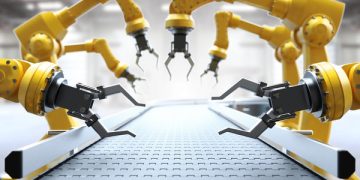
In manufacturing, repetitive tasks such as material handling, assembly, and packing can be time-consuming and resource-intensive. Robotic Process Automation (RPA), powered by AI, can automate these tasks, improving productivity, accuracy, and worker safety.

Case Study: FANUC Robotics

FANUC, a leader in industrial robotics, has developed AI-powered robots that are capable of performing a wide range of tasks in manufacturing. These robots use machine learning algorithms to adapt to different environments, optimize their tasks, and improve over time.

  • Impact: The integration of AI in robotic systems has led to increased production speeds, better precision, and reduced human error, making manufacturing processes more efficient.

Lessons Learned:

  • Flexibility and Adaptability: AI-powered robots can be reprogrammed to perform different tasks, allowing manufacturers to adjust production lines quickly.
  • Improved Safety: Automating hazardous or repetitive tasks helps improve worker safety and reduces the risk of workplace injuries.

2.5 AI-Enhanced Product Design and Customization

AI also plays a significant role in product design and customization, enabling manufacturers to design products that are more closely aligned with customer needs while also optimizing for cost-efficiency. AI-driven generative design tools allow designers to input certain parameters (e.g., material types, weight restrictions) and let the AI generate optimized design solutions.

Case Study: General Motors and AI in Design

General Motors has implemented AI in its design processes to create more efficient automotive components. Using AI-driven generative design, GM engineers can explore a wider range of design options and optimize product designs for material use and structural integrity.

  • Impact: AI allows manufacturers to design lighter, more efficient products that require fewer materials, reducing waste and costs while improving performance.

Lessons Learned:

  • Innovation in Design: AI enables manufacturers to explore design options that would be impossible to conceive manually, leading to more efficient, cost-effective products.
  • Customer-Centric Customization: AI-driven design tools allow for the creation of more personalized products that better meet customer demands.

3. Overcoming Challenges in Implementing AI in Manufacturing

Despite the enormous potential of AI in manufacturing, businesses face several challenges when adopting these technologies. Some of the key obstacles include:

  • High Initial Investment: The cost of implementing AI solutions can be prohibitive, especially for small and medium-sized enterprises (SMEs).
  • Data Quality: AI systems require large amounts of high-quality data to function effectively. Poor data quality or a lack of data infrastructure can hinder AI’s success.
  • Workforce Transition: The introduction of AI and automation raises concerns about job displacement. Manufacturers must address these concerns by reskilling employees and fostering a culture of innovation.
  • Integration Complexity: Integrating AI solutions into existing manufacturing processes and systems can be complex and time-consuming.

However, with the right strategy, businesses can navigate these challenges. Partnering with AI technology providers, starting with small-scale pilot projects, and focusing on employee training can help ease the transition to AI-powered manufacturing.


4. Conclusion: AI as a Key Driver of Competitive Advantage in Manufacturing

AI is no longer a futuristic technology—it’s a critical component of smart manufacturing that is already reshaping the industry. By leveraging AI in areas like predictive maintenance, quality control, supply chain optimization, and product design, manufacturers can enhance their competitiveness, reduce costs, and improve product quality.

As the manufacturing sector continues to embrace AI, those who adopt these technologies early will gain a competitive edge in an increasingly crowded and dynamic market. The future of manufacturing is smart, data-driven, and highly efficient, and AI will be the catalyst for this transformation.


Tags: aiArtificial intelligenceCase StudiesCase studyprofessionRPAtechnologyTools
ShareTweetShare

Related Posts

AI-Based Anti-Fraud Systems
Case Studies

AI-Based Anti-Fraud Systems

April 28, 2026
The Application of AI in Retail and E-Commerce
Case Studies

The Application of AI in Retail and E-Commerce

April 28, 2026
The Application of AI in the Financial Industry
Case Studies

The Application of AI in the Financial Industry

April 21, 2026
The Application of AI in Medical Imaging: A Significant Advancement
Case Studies

The Application of AI in Medical Imaging: A Significant Advancement

April 21, 2026
AI Significantly Enhancing Disease Diagnosis Efficiency and Accuracy
Case Studies

AI Significantly Enhancing Disease Diagnosis Efficiency and Accuracy

April 4, 2026
The Application of AI in Healthcare: Revolutionizing Medicine and Patient Care
Case Studies

The Application of AI in Healthcare: Revolutionizing Medicine and Patient Care

April 4, 2026
Leave Comment
  • Trending
  • Comments
  • Latest
How Artificial Intelligence is Achieving Revolutionary Breakthroughs in the Healthcare Industry: What Success Stories Teach Us

How Artificial Intelligence is Achieving Revolutionary Breakthroughs in the Healthcare Industry: What Success Stories Teach Us

July 26, 2025
Deep Learning Simulates Human Brain Signal Processing Pathways Through the Construction of Multi-Layer Neural Networks

Deep Learning Simulates Human Brain Signal Processing Pathways Through the Construction of Multi-Layer Neural Networks

January 14, 2026
From Beginner to Expert: Which AI Platforms Are Best for Beginners? Experts’ Take on Learning Curves and Practical Applications

From Beginner to Expert: Which AI Platforms Are Best for Beginners? Experts’ Take on Learning Curves and Practical Applications

July 23, 2025
AI in the Financial Sector: Which Innovative Strategies Are Driving Digital Transformation?

AI in the Financial Sector: Which Innovative Strategies Are Driving Digital Transformation?

July 26, 2025
How Artificial Intelligence Enhances Diagnostic Accuracy and Transforms Treatment Methods in Healthcare

How Artificial Intelligence Enhances Diagnostic Accuracy and Transforms Treatment Methods in Healthcare

How AI Enhances Customer Experience and Drives Sales Growth in Retail

How AI Enhances Customer Experience and Drives Sales Growth in Retail

How Artificial Intelligence Enables Precise Risk Assessment and Decision-Making

How Artificial Intelligence Enables Precise Risk Assessment and Decision-Making

How AI is Driving the Revolution in Smart Manufacturing and Production Efficiency

How AI is Driving the Revolution in Smart Manufacturing and Production Efficiency

AI Learning Resources and Educational Platforms

AI Learning Resources and Educational Platforms

April 28, 2026
AI Automation and Model Training Tools: Revolutionizing the Future of Artificial Intelligence

AI Automation and Model Training Tools: Revolutionizing the Future of Artificial Intelligence

April 28, 2026
AI-Based Anti-Fraud Systems

AI-Based Anti-Fraud Systems

April 28, 2026
The Application of AI in Retail and E-Commerce

The Application of AI in Retail and E-Commerce

April 28, 2026
AIInsiderUpdates

Our platform is dedicated to delivering comprehensive coverage of AI developments, featuring news, case studies, expert interviews, and valuable resources for professionals and enthusiasts alike.

© 2025 aiinsiderupdates.com. contacts:[email protected]

No Result
View All Result
  • Home
  • AI News
  • Technology Trends
  • Interviews & Opinions
  • Case Studies
  • Tools & Resources

© 2025 aiinsiderupdates.com. contacts:[email protected]

Welcome Back!

Login to your account below

Forgotten Password?

Retrieve your password

Please enter your username or email address to reset your password.

Log In