




























AIInsiderUpdates
  • Home
  • AI News
    Global Regulatory Frameworks for AI: Progressing Towards Security, Ethics, Accountability, and Data Protection

    Global Regulatory Frameworks for AI: Progressing Towards Security, Ethics, Accountability, and Data Protection

    International Collaboration: A Key Driver for AI Technology Standards and Ecosystem Development

    International Collaboration: A Key Driver for AI Technology Standards and Ecosystem Development

    Industry-Leading AI Companies and Cloud Service Providers

    Industry-Leading AI Companies and Cloud Service Providers

    An Increasing Number of Enterprises Integrating AI into Core Strategy

    An Increasing Number of Enterprises Integrating AI into Core Strategy

    Large Model Providers and Enterprises in Speech & NLP Continue Expanding Application Scenarios

    Large Model Providers and Enterprises in Speech & NLP Continue Expanding Application Scenarios

    Breakthrough Advances in AI for Complex Perception and Reasoning Tasks

    Breakthrough Advances in AI for Complex Perception and Reasoning Tasks

  • Technology Trends
    AI Explainability and Ethics: Balancing Transparency, Accountability, and Trust in AI Systems

    AI Explainability and Ethics: Balancing Transparency, Accountability, and Trust in AI Systems

    Multimodal AI: Revolutionizing Data Integration and Understanding

    Multimodal AI: Revolutionizing Data Integration and Understanding

    Smart Manufacturing and Industrial AI

    Smart Manufacturing and Industrial AI

    Multilingual Understanding and Generation, Especially in Non-English Language Contexts: A Global Innovation Frontier

    Multilingual Understanding and Generation, Especially in Non-English Language Contexts: A Global Innovation Frontier

    AI Systems Are No Longer Limited to Single Inputs: The Rise of Multimodal AI

    AI Systems Are No Longer Limited to Single Inputs: The Rise of Multimodal AI

    Optimizing Transformer and Self-Attention Architectures to Enhance Model Expressiveness

    Optimizing Transformer and Self-Attention Architectures to Enhance Model Expressiveness

  • Interviews & Opinions
    Human-Machine Collaboration and Trend Prediction: The Future of Work and Decision-Making

    Human-Machine Collaboration and Trend Prediction: The Future of Work and Decision-Making

    Despite AI Automation Enhancements, Human Contribution Remains Unmatched in Data Creation and Cultural Context Understanding

    Despite AI Automation Enhancements, Human Contribution Remains Unmatched in Data Creation and Cultural Context Understanding

    Investment Bubbles and Risk Management: Diverging Perspectives

    Investment Bubbles and Risk Management: Diverging Perspectives

    CEO Perspectives on AI Data Contribution and the Role of Humans

    CEO Perspectives on AI Data Contribution and the Role of Humans

    Differences Between Academic and Public Perspectives on AI: Bridging the Gap

    Differences Between Academic and Public Perspectives on AI: Bridging the Gap

    AI Technology is No Longer Just a Tool: It Has Become a Core Component of Enterprise Competitiveness

    AI Technology is No Longer Just a Tool: It Has Become a Core Component of Enterprise Competitiveness

  • Case Studies
    Multidimensional Applications of AI in the Digital Transformation of Manufacturing

    Multidimensional Applications of AI in the Digital Transformation of Manufacturing

    AI Customer Service Bots and Smart Advisors: Helping Banks Reduce Human Customer Support Costs While Enhancing Response Efficiency, User Engagement, and Satisfaction

    AI Customer Service Bots and Smart Advisors: Helping Banks Reduce Human Customer Support Costs While Enhancing Response Efficiency, User Engagement, and Satisfaction

    Personalized Recommendation and Inventory Optimization

    Personalized Recommendation and Inventory Optimization

    How Retailers Use AI Models to Predict Sales Trends and Optimize Inventory Levels

    How Retailers Use AI Models to Predict Sales Trends and Optimize Inventory Levels

    AI Not Only Enhances Diagnostic Capabilities but Also Significantly Improves Backend Healthcare Services

    AI Not Only Enhances Diagnostic Capabilities but Also Significantly Improves Backend Healthcare Services

    AI in Manufacturing: Achieving Significant Cost Savings and Efficiency Improvements

    AI in Manufacturing: Achieving Significant Cost Savings and Efficiency Improvements

  • Tools & Resources
    Real-World Testing and Efficiency Evaluation of Emerging Technological Trends

    Real-World Testing and Efficiency Evaluation of Emerging Technological Trends

    Auxiliary AI Toolset: Enhancing Productivity, Innovation, and Problem Solving Across Industries

    Auxiliary AI Toolset: Enhancing Productivity, Innovation, and Problem Solving Across Industries

    Dataset Preprocessing and Labeling Strategies: A Resource Guide

    Dataset Preprocessing and Labeling Strategies: A Resource Guide

    Recommended Open Source Model Trade-Off Strategies

    Recommended Open Source Model Trade-Off Strategies

    Practical Roadmap: End-to-End Experience from Model Training to Deployment

    Practical Roadmap: End-to-End Experience from Model Training to Deployment

    Scalability and Performance Optimization: Insights and Best Practices

    Scalability and Performance Optimization: Insights and Best Practices

AIInsiderUpdates
  • Home
  • AI News
    Global Regulatory Frameworks for AI: Progressing Towards Security, Ethics, Accountability, and Data Protection

    Global Regulatory Frameworks for AI: Progressing Towards Security, Ethics, Accountability, and Data Protection

    International Collaboration: A Key Driver for AI Technology Standards and Ecosystem Development

    International Collaboration: A Key Driver for AI Technology Standards and Ecosystem Development

    Industry-Leading AI Companies and Cloud Service Providers

    Industry-Leading AI Companies and Cloud Service Providers

    An Increasing Number of Enterprises Integrating AI into Core Strategy

    An Increasing Number of Enterprises Integrating AI into Core Strategy

    Large Model Providers and Enterprises in Speech & NLP Continue Expanding Application Scenarios

    Large Model Providers and Enterprises in Speech & NLP Continue Expanding Application Scenarios

    Breakthrough Advances in AI for Complex Perception and Reasoning Tasks

    Breakthrough Advances in AI for Complex Perception and Reasoning Tasks

  • Technology Trends
    AI Explainability and Ethics: Balancing Transparency, Accountability, and Trust in AI Systems

    AI Explainability and Ethics: Balancing Transparency, Accountability, and Trust in AI Systems

    Multimodal AI: Revolutionizing Data Integration and Understanding

    Multimodal AI: Revolutionizing Data Integration and Understanding

    Smart Manufacturing and Industrial AI

    Smart Manufacturing and Industrial AI

    Multilingual Understanding and Generation, Especially in Non-English Language Contexts: A Global Innovation Frontier

    Multilingual Understanding and Generation, Especially in Non-English Language Contexts: A Global Innovation Frontier

    AI Systems Are No Longer Limited to Single Inputs: The Rise of Multimodal AI

    AI Systems Are No Longer Limited to Single Inputs: The Rise of Multimodal AI

    Optimizing Transformer and Self-Attention Architectures to Enhance Model Expressiveness

    Optimizing Transformer and Self-Attention Architectures to Enhance Model Expressiveness

  • Interviews & Opinions
    Human-Machine Collaboration and Trend Prediction: The Future of Work and Decision-Making

    Human-Machine Collaboration and Trend Prediction: The Future of Work and Decision-Making

    Despite AI Automation Enhancements, Human Contribution Remains Unmatched in Data Creation and Cultural Context Understanding

    Despite AI Automation Enhancements, Human Contribution Remains Unmatched in Data Creation and Cultural Context Understanding

    Investment Bubbles and Risk Management: Diverging Perspectives

    Investment Bubbles and Risk Management: Diverging Perspectives

    CEO Perspectives on AI Data Contribution and the Role of Humans

    CEO Perspectives on AI Data Contribution and the Role of Humans

    Differences Between Academic and Public Perspectives on AI: Bridging the Gap

    Differences Between Academic and Public Perspectives on AI: Bridging the Gap

    AI Technology is No Longer Just a Tool: It Has Become a Core Component of Enterprise Competitiveness

    AI Technology is No Longer Just a Tool: It Has Become a Core Component of Enterprise Competitiveness

  • Case Studies
    Multidimensional Applications of AI in the Digital Transformation of Manufacturing

    Multidimensional Applications of AI in the Digital Transformation of Manufacturing

    AI Customer Service Bots and Smart Advisors: Helping Banks Reduce Human Customer Support Costs While Enhancing Response Efficiency, User Engagement, and Satisfaction

    AI Customer Service Bots and Smart Advisors: Helping Banks Reduce Human Customer Support Costs While Enhancing Response Efficiency, User Engagement, and Satisfaction

    Personalized Recommendation and Inventory Optimization

    Personalized Recommendation and Inventory Optimization

    How Retailers Use AI Models to Predict Sales Trends and Optimize Inventory Levels

    How Retailers Use AI Models to Predict Sales Trends and Optimize Inventory Levels

    AI Not Only Enhances Diagnostic Capabilities but Also Significantly Improves Backend Healthcare Services

    AI Not Only Enhances Diagnostic Capabilities but Also Significantly Improves Backend Healthcare Services

    AI in Manufacturing: Achieving Significant Cost Savings and Efficiency Improvements

    AI in Manufacturing: Achieving Significant Cost Savings and Efficiency Improvements

  • Tools & Resources
    Real-World Testing and Efficiency Evaluation of Emerging Technological Trends

    Real-World Testing and Efficiency Evaluation of Emerging Technological Trends

    Auxiliary AI Toolset: Enhancing Productivity, Innovation, and Problem Solving Across Industries

    Auxiliary AI Toolset: Enhancing Productivity, Innovation, and Problem Solving Across Industries

    Dataset Preprocessing and Labeling Strategies: A Resource Guide

    Dataset Preprocessing and Labeling Strategies: A Resource Guide

    Recommended Open Source Model Trade-Off Strategies

    Recommended Open Source Model Trade-Off Strategies

    Practical Roadmap: End-to-End Experience from Model Training to Deployment

    Practical Roadmap: End-to-End Experience from Model Training to Deployment

    Scalability and Performance Optimization: Insights and Best Practices

    Scalability and Performance Optimization: Insights and Best Practices

AIInsiderUpdates
No Result
View All Result

From Retail to Logistics: How AI Is Enhancing Industry Efficiency and Driving Innovation

July 27, 2025
From Retail to Logistics: How AI Is Enhancing Industry Efficiency and Driving Innovation

Artificial Intelligence (AI) is fundamentally transforming industries, and two sectors where AI’s impact is especially profound are retail and logistics. These industries are central to global commerce, requiring high levels of efficiency, speed, and precision to meet growing consumer demands. AI is enabling significant advancements, from automating operations to optimizing customer experiences and supply chains. As these technologies evolve, AI is helping businesses streamline their processes, reduce costs, and create innovative solutions that provide a competitive edge.


1. AI in Retail: Revolutionizing Customer Experience and Operational Efficiency

Retail is a fast-paced, highly competitive industry where customer satisfaction and operational efficiency are paramount. AI is reshaping retail by driving innovation in personalized shopping experiences, inventory management, and sales forecasting.

1.1 Personalized Customer Experiences

AI enables retailers to understand consumer behavior on a much deeper level by analyzing vast amounts of data, including purchase history, browsing patterns, and social media interactions. This data is used to personalize shopping experiences in real-time, offering targeted recommendations, tailored promotions, and customized marketing messages.

Case Study: Amazon’s Recommendation Engine

Amazon’s recommendation system is one of the most well-known examples of AI in retail. By analyzing customer behavior, purchase patterns, and even external factors like weather, the AI-driven recommendation engine can suggest products that a customer is more likely to purchase. This not only improves customer satisfaction but also significantly increases sales and customer retention.

  • Impact: The personalized shopping experience created by AI has contributed to Amazon’s success in maintaining its dominance in the e-commerce market.

Lessons Learned:

  • Data-Driven Personalization: AI can turn massive amounts of customer data into actionable insights, enabling hyper-targeted marketing and product recommendations.
  • Increased Customer Loyalty: Personalized experiences drive customer engagement, increasing repeat purchases and enhancing brand loyalty.

1.2 Inventory Management and Demand Forecasting

AI is also transforming inventory management, a critical aspect of retail. Machine learning algorithms can predict demand patterns based on historical sales data, seasonality, and market trends, helping retailers maintain optimal stock levels, reduce overstocking, and minimize out-of-stock situations.

Case Study: Walmart’s Smart Inventory System

Walmart employs AI-powered systems to track inventory in real time. Using machine learning algorithms, the system predicts product demand at specific stores and automates replenishment orders to prevent stockouts. This system helps reduce waste, improve stock accuracy, and ensure the availability of popular items.

  • Impact: Walmart has seen improved inventory turnover, reduced excess stock, and minimized losses due to unsold inventory.

Lessons Learned:

  • Real-Time Tracking: AI-driven systems can offer real-time insights into stock levels, helping retailers maintain the right amount of inventory.
  • Efficient Supply Chain Management: By predicting demand more accurately, AI helps retailers reduce costs and improve supply chain efficiency.

1.3 Visual Search and Augmented Reality (AR)

AI is also being integrated with augmented reality (AR) to enhance the online shopping experience. AI-powered visual search tools allow customers to search for products by uploading images, making it easier to find similar items or specific products.

Case Study: IKEA’s AR Shopping App

IKEA’s AR shopping app uses AI to allow customers to visualize how furniture would look in their homes. Customers can place virtual furniture in their living spaces and see how it fits with their existing décor.

  • Impact: The AI-driven AR experience has enhanced customer engagement and made online shopping more immersive, ultimately leading to increased sales and customer satisfaction.

Lessons Learned:

  • Enhancing the Shopping Journey: AI combined with AR can help bridge the gap between physical and online retail experiences, creating a more engaging and informative shopping journey.
  • Improved Customer Confidence: Allowing customers to visualize products in their own space reduces hesitation and encourages purchases.

2. AI in Logistics: Optimizing Supply Chains and Delivery Networks

The logistics industry is critical to the global economy, with businesses increasingly relying on technology to optimize supply chains, improve delivery speed, and reduce operational costs. AI is revolutionizing logistics by automating key processes, enhancing route optimization, and predicting demand.

2.1 Smart Warehousing and Automation

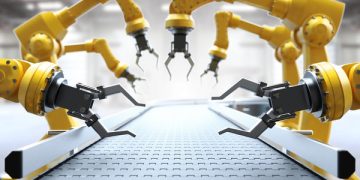
AI-powered robots and automation systems are transforming warehouses by streamlining tasks like picking, sorting, and packaging. Autonomous robots, guided by AI, can identify products, navigate storage areas, and execute tasks with speed and accuracy.

Case Study: Ocado’s Automated Warehouse System

Ocado, a UK-based online grocery retailer, has built one of the most advanced AI-driven automated warehouses in the world. The company uses AI-powered robots to pick and pack groceries with remarkable efficiency, allowing for fast delivery times and minimizing human error.

  • Impact: Ocado’s AI system reduces labor costs, enhances speed, and improves accuracy, allowing for faster, more reliable order fulfillment.

Lessons Learned:

  • Automation for Efficiency: AI and robotics can significantly streamline warehouse operations, reducing costs and improving fulfillment speed.
  • Scalability: AI-driven automation systems can scale quickly, handling increasing volumes of goods and orders without compromising performance.

2.2 AI in Route Optimization

AI is also helping logistics companies optimize delivery routes. Machine learning algorithms analyze real-time traffic data, weather conditions, and historical patterns to determine the most efficient delivery routes for drivers.

Case Study: UPS’s ORION System

UPS’s ORION (On-Road Integrated Optimization and Navigation) system uses AI to optimize delivery routes for its fleet of trucks. The system analyzes vast amounts of data to recommend the most efficient routes, saving fuel and reducing delivery times.

  • Impact: ORION has helped UPS save millions of dollars annually by reducing fuel consumption, improving delivery efficiency, and minimizing vehicle wear and tear.

Lessons Learned:

  • Efficiency Gains: AI-powered route optimization can lead to significant cost savings in fuel, time, and labor.
  • Environmental Impact: Route optimization not only boosts operational efficiency but also helps reduce the carbon footprint of logistics operations.

2.3 Predictive Analytics for Demand Forecasting

Logistics companies rely on accurate demand forecasting to ensure that inventory levels match customer needs. AI-driven predictive analytics can analyze past trends, seasonal fluctuations, and external factors to predict future demand with greater accuracy.

Case Study: DHL’s Predictive Analytics for Supply Chain Optimization

DHL uses AI and predictive analytics to improve supply chain visibility and anticipate demand fluctuations. By analyzing historical data and external variables, DHL can predict demand spikes, ensuring that goods are transported efficiently and on time.

  • Impact: Predictive analytics has enabled DHL to optimize inventory management, reduce stockouts, and enhance customer satisfaction.

Lessons Learned:

  • Data-Driven Forecasting: AI can offer highly accurate demand forecasts, reducing the risk of stockouts and excess inventory.
  • Supply Chain Resilience: AI helps companies anticipate disruptions and adjust their strategies to maintain supply chain efficiency.

3. The Future of AI in Retail and Logistics

While AI has already demonstrated its transformative power in retail and logistics, the future holds even more promise. As AI technology advances, businesses in these sectors are poised to adopt even more sophisticated tools that will further streamline operations, enhance customer experiences, and drive innovation.

3.1 AI-Driven Hyper-Personalization

In the future, AI will take personalization to the next level, enabling retailers to deliver tailored experiences for individual customers in real-time, based not only on their purchase history but also on their emotions, current context, and social media activity.

3.2 Autonomous Delivery Vehicles

Self-driving vehicles and drones will continue to evolve, potentially revolutionizing last-mile delivery in logistics. These autonomous systems could reduce costs and delivery times while enhancing efficiency and safety.

3.3 AI and Sustainability

AI can also contribute to sustainability efforts in both retail and logistics. AI-powered systems can optimize resource usage, reduce waste, and create more sustainable supply chains by predicting demand and minimizing unnecessary production or transportation.


Conclusion: AI as the Backbone of Retail and Logistics Innovation

AI is rapidly reshaping both the retail and logistics industries by optimizing operations, enhancing customer experiences, and driving efficiency. From personalized shopping experiences to automated warehouses and intelligent route optimization, AI is providing businesses with the tools they need to stay competitive in an increasingly digital world.

As AI continues to evolve, its potential to drive innovation and transform industries is vast. Retailers and logistics companies that embrace AI technologies will not only improve their operational efficiencies but also create better experiences for customers, ultimately positioning themselves for long-term success in an AI-powered future.


Tags: aiArtificial intelligenceCase StudiesCase studyprofessionResourceRetailtechnology
ShareTweetShare

Related Posts

Multidimensional Applications of AI in the Digital Transformation of Manufacturing
Case Studies

Multidimensional Applications of AI in the Digital Transformation of Manufacturing

January 21, 2026
AI Customer Service Bots and Smart Advisors: Helping Banks Reduce Human Customer Support Costs While Enhancing Response Efficiency, User Engagement, and Satisfaction
Case Studies

AI Customer Service Bots and Smart Advisors: Helping Banks Reduce Human Customer Support Costs While Enhancing Response Efficiency, User Engagement, and Satisfaction

January 20, 2026
Personalized Recommendation and Inventory Optimization
Case Studies

Personalized Recommendation and Inventory Optimization

January 19, 2026
How Retailers Use AI Models to Predict Sales Trends and Optimize Inventory Levels
Case Studies

How Retailers Use AI Models to Predict Sales Trends and Optimize Inventory Levels

January 18, 2026
AI Not Only Enhances Diagnostic Capabilities but Also Significantly Improves Backend Healthcare Services
Case Studies

AI Not Only Enhances Diagnostic Capabilities but Also Significantly Improves Backend Healthcare Services

January 17, 2026
AI in Manufacturing: Achieving Significant Cost Savings and Efficiency Improvements
Case Studies

AI in Manufacturing: Achieving Significant Cost Savings and Efficiency Improvements

January 16, 2026
Leave Comment
  • Trending
  • Comments
  • Latest
How Artificial Intelligence is Achieving Revolutionary Breakthroughs in the Healthcare Industry: What Success Stories Teach Us

How Artificial Intelligence is Achieving Revolutionary Breakthroughs in the Healthcare Industry: What Success Stories Teach Us

July 26, 2025
AI in the Financial Sector: Which Innovative Strategies Are Driving Digital Transformation?

AI in the Financial Sector: Which Innovative Strategies Are Driving Digital Transformation?

July 26, 2025
From Beginner to Expert: Which AI Platforms Are Best for Beginners? Experts’ Take on Learning Curves and Practical Applications

From Beginner to Expert: Which AI Platforms Are Best for Beginners? Experts’ Take on Learning Curves and Practical Applications

July 23, 2025
How to Find Truly Useful AI Resources Among the Crowd? Experts Share How to Select Efficient and Innovative Tools!

How to Find Truly Useful AI Resources Among the Crowd? Experts Share How to Select Efficient and Innovative Tools!

July 23, 2025
How Artificial Intelligence Enhances Diagnostic Accuracy and Transforms Treatment Methods in Healthcare

How Artificial Intelligence Enhances Diagnostic Accuracy and Transforms Treatment Methods in Healthcare

How AI Enhances Customer Experience and Drives Sales Growth in Retail

How AI Enhances Customer Experience and Drives Sales Growth in Retail

How Artificial Intelligence Enables Precise Risk Assessment and Decision-Making

How Artificial Intelligence Enables Precise Risk Assessment and Decision-Making

How AI is Driving the Revolution in Smart Manufacturing and Production Efficiency

How AI is Driving the Revolution in Smart Manufacturing and Production Efficiency

Real-World Testing and Efficiency Evaluation of Emerging Technological Trends

Real-World Testing and Efficiency Evaluation of Emerging Technological Trends

January 21, 2026
Multidimensional Applications of AI in the Digital Transformation of Manufacturing

Multidimensional Applications of AI in the Digital Transformation of Manufacturing

January 21, 2026
Human-Machine Collaboration and Trend Prediction: The Future of Work and Decision-Making

Human-Machine Collaboration and Trend Prediction: The Future of Work and Decision-Making

January 21, 2026
AI Explainability and Ethics: Balancing Transparency, Accountability, and Trust in AI Systems

AI Explainability and Ethics: Balancing Transparency, Accountability, and Trust in AI Systems

January 21, 2026
AIInsiderUpdates

Our platform is dedicated to delivering comprehensive coverage of AI developments, featuring news, case studies, expert interviews, and valuable resources for professionals and enthusiasts alike.

© 2025 aiinsiderupdates.com. contacts:[email protected]

No Result
View All Result
  • Home
  • AI News
  • Technology Trends
  • Interviews & Opinions
  • Case Studies
  • Tools & Resources

© 2025 aiinsiderupdates.com. contacts:[email protected]

Welcome Back!

Login to your account below

Forgotten Password?

Retrieve your password

Please enter your username or email address to reset your password.

Log In