






























AIInsiderUpdates
  • Home
  • AI News
    Application of AI in Drug Therapy

    Application of AI in Drug Therapy

    The Popularization of AI: Automation of Traditional Jobs and Its Impact on the Labor Market

    The Popularization of AI: Automation of Traditional Jobs and Its Impact on the Labor Market

    Many Industries Are Adopting AI-Driven Robots to Replace Human Labor

    Many Industries Are Adopting AI-Driven Robots to Replace Human Labor

    Artificial Intelligence Ethics and Regulations

    Artificial Intelligence Ethics and Regulations

    Ensuring Fairness and Transparency in AI Decision-Making: A Priority for Companies and Governments

    Ensuring Fairness and Transparency in AI Decision-Making: A Priority for Companies and Governments

    The Growing Global Debate on AI Ethics and Governance

    The Growing Global Debate on AI Ethics and Governance

  • Technology Trends
    Fine-tuning Large Language Models to Meet Specific Task or Industry Needs: A Key Focus in AI Research

    Fine-tuning Large Language Models to Meet Specific Task or Industry Needs: A Key Focus in AI Research

    The Convergence of Reinforcement Learning and Deep Learning: Driving Innovation Across Multiple Domains

    The Convergence of Reinforcement Learning and Deep Learning: Driving Innovation Across Multiple Domains

    The Transformer Architecture: The Core of Deep Learning

    The Transformer Architecture: The Core of Deep Learning

    Neural Architecture Search: A Revolution in Artificial Intelligence

    Neural Architecture Search: A Revolution in Artificial Intelligence

    Significant Advances in Self-Supervised Learning (SSL) Methods in Deep Learning

    Significant Advances in Self-Supervised Learning (SSL) Methods in Deep Learning

    Breakthroughs in Deep Learning and Neural Networks: Revolutionizing the Future of AI

    Breakthroughs in Deep Learning and Neural Networks: Revolutionizing the Future of AI

  • Interviews & Opinions
    AI May Replace Some Low-Skill, Repetitive Jobs, but It Will Also Create New Types of Jobs

    AI May Replace Some Low-Skill, Repetitive Jobs, but It Will Also Create New Types of Jobs

    The Future of AI Systems: Why Explainability Should Be a Core Feature

    The Future of AI Systems: Why Explainability Should Be a Core Feature

    AI and Automation Will Take on More of the Heavy Lifting

    AI and Automation Will Take on More of the Heavy Lifting

    As AI Technology Continues to Evolve, Ethical Issues Are Becoming More Prominent

    As AI Technology Continues to Evolve, Ethical Issues Are Becoming More Prominent

    AI Fairness: Addressing Bias and Promoting Equity in Artificial Intelligence

    AI Fairness: Addressing Bias and Promoting Equity in Artificial Intelligence

    The Impact of AI on the Labor Market: A Critical Examination

    The Impact of AI on the Labor Market: A Critical Examination

  • Case Studies
    AI-Based Anti-Fraud Systems

    AI-Based Anti-Fraud Systems

    The Application of AI in Retail and E-Commerce

    The Application of AI in Retail and E-Commerce

    The Application of AI in the Financial Industry

    The Application of AI in the Financial Industry

    The Application of AI in Medical Imaging: A Significant Advancement

    The Application of AI in Medical Imaging: A Significant Advancement

    AI Significantly Enhancing Disease Diagnosis Efficiency and Accuracy

    AI Significantly Enhancing Disease Diagnosis Efficiency and Accuracy

    The Application of AI in Healthcare: Revolutionizing Medicine and Patient Care

    The Application of AI in Healthcare: Revolutionizing Medicine and Patient Care

  • Tools & Resources
    AI Learning Resources and Educational Platforms

    AI Learning Resources and Educational Platforms

    AI Automation and Model Training Tools: Revolutionizing the Future of Artificial Intelligence

    AI Automation and Model Training Tools: Revolutionizing the Future of Artificial Intelligence

    Keras: Making AI Development Easier While Supporting Complex Model Designs

    Keras: Making AI Development Easier While Supporting Complex Model Designs

    PyTorch: A Flexible and Debug-Friendly Deep Learning Framework

    PyTorch: A Flexible and Debug-Friendly Deep Learning Framework

    AutoAI Tools Enable Developers to Reduce Manual Model Tuning Workload

    AutoAI Tools Enable Developers to Reduce Manual Model Tuning Workload

    AI Development Platforms and Frameworks

    AI Development Platforms and Frameworks

AIInsiderUpdates
  • Home
  • AI News
    Application of AI in Drug Therapy

    Application of AI in Drug Therapy

    The Popularization of AI: Automation of Traditional Jobs and Its Impact on the Labor Market

    The Popularization of AI: Automation of Traditional Jobs and Its Impact on the Labor Market

    Many Industries Are Adopting AI-Driven Robots to Replace Human Labor

    Many Industries Are Adopting AI-Driven Robots to Replace Human Labor

    Artificial Intelligence Ethics and Regulations

    Artificial Intelligence Ethics and Regulations

    Ensuring Fairness and Transparency in AI Decision-Making: A Priority for Companies and Governments

    Ensuring Fairness and Transparency in AI Decision-Making: A Priority for Companies and Governments

    The Growing Global Debate on AI Ethics and Governance

    The Growing Global Debate on AI Ethics and Governance

  • Technology Trends
    Fine-tuning Large Language Models to Meet Specific Task or Industry Needs: A Key Focus in AI Research

    Fine-tuning Large Language Models to Meet Specific Task or Industry Needs: A Key Focus in AI Research

    The Convergence of Reinforcement Learning and Deep Learning: Driving Innovation Across Multiple Domains

    The Convergence of Reinforcement Learning and Deep Learning: Driving Innovation Across Multiple Domains

    The Transformer Architecture: The Core of Deep Learning

    The Transformer Architecture: The Core of Deep Learning

    Neural Architecture Search: A Revolution in Artificial Intelligence

    Neural Architecture Search: A Revolution in Artificial Intelligence

    Significant Advances in Self-Supervised Learning (SSL) Methods in Deep Learning

    Significant Advances in Self-Supervised Learning (SSL) Methods in Deep Learning

    Breakthroughs in Deep Learning and Neural Networks: Revolutionizing the Future of AI

    Breakthroughs in Deep Learning and Neural Networks: Revolutionizing the Future of AI

  • Interviews & Opinions
    AI May Replace Some Low-Skill, Repetitive Jobs, but It Will Also Create New Types of Jobs

    AI May Replace Some Low-Skill, Repetitive Jobs, but It Will Also Create New Types of Jobs

    The Future of AI Systems: Why Explainability Should Be a Core Feature

    The Future of AI Systems: Why Explainability Should Be a Core Feature

    AI and Automation Will Take on More of the Heavy Lifting

    AI and Automation Will Take on More of the Heavy Lifting

    As AI Technology Continues to Evolve, Ethical Issues Are Becoming More Prominent

    As AI Technology Continues to Evolve, Ethical Issues Are Becoming More Prominent

    AI Fairness: Addressing Bias and Promoting Equity in Artificial Intelligence

    AI Fairness: Addressing Bias and Promoting Equity in Artificial Intelligence

    The Impact of AI on the Labor Market: A Critical Examination

    The Impact of AI on the Labor Market: A Critical Examination

  • Case Studies
    AI-Based Anti-Fraud Systems

    AI-Based Anti-Fraud Systems

    The Application of AI in Retail and E-Commerce

    The Application of AI in Retail and E-Commerce

    The Application of AI in the Financial Industry

    The Application of AI in the Financial Industry

    The Application of AI in Medical Imaging: A Significant Advancement

    The Application of AI in Medical Imaging: A Significant Advancement

    AI Significantly Enhancing Disease Diagnosis Efficiency and Accuracy

    AI Significantly Enhancing Disease Diagnosis Efficiency and Accuracy

    The Application of AI in Healthcare: Revolutionizing Medicine and Patient Care

    The Application of AI in Healthcare: Revolutionizing Medicine and Patient Care

  • Tools & Resources
    AI Learning Resources and Educational Platforms

    AI Learning Resources and Educational Platforms

    AI Automation and Model Training Tools: Revolutionizing the Future of Artificial Intelligence

    AI Automation and Model Training Tools: Revolutionizing the Future of Artificial Intelligence

    Keras: Making AI Development Easier While Supporting Complex Model Designs

    Keras: Making AI Development Easier While Supporting Complex Model Designs

    PyTorch: A Flexible and Debug-Friendly Deep Learning Framework

    PyTorch: A Flexible and Debug-Friendly Deep Learning Framework

    AutoAI Tools Enable Developers to Reduce Manual Model Tuning Workload

    AutoAI Tools Enable Developers to Reduce Manual Model Tuning Workload

    AI Development Platforms and Frameworks

    AI Development Platforms and Frameworks

AIInsiderUpdates
No Result
View All Result

From Self-Supervised Learning to Transfer Learning: Technologies Driving AI to New Heights

July 24, 2025
From Self-Supervised Learning to Transfer Learning: Technologies Driving AI to New Heights

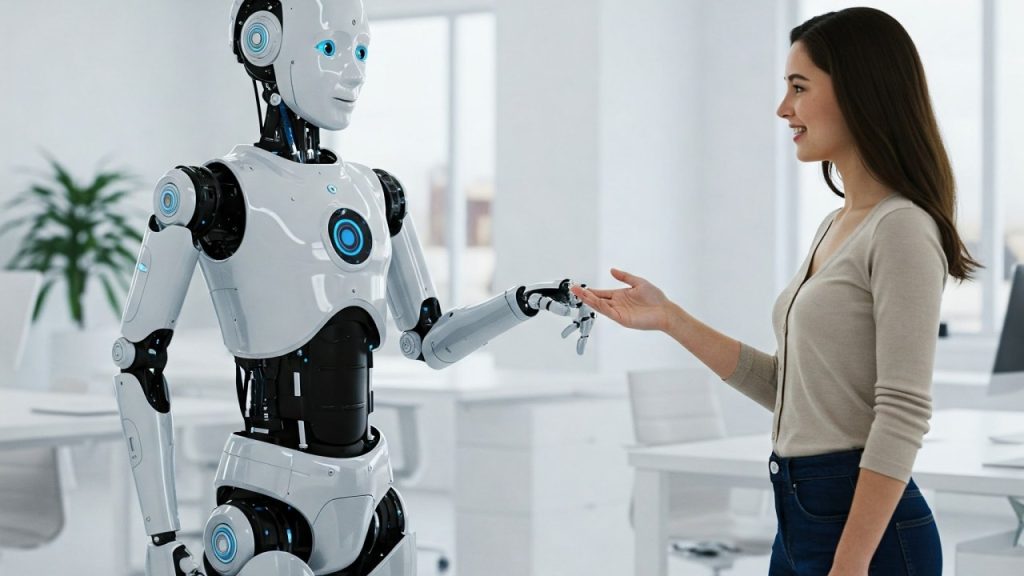
Female android using a futuristic interface

Artificial Intelligence (AI) has experienced unprecedented growth over the past decade, fueled by advances in machine learning (ML) techniques. As AI systems become increasingly integrated into our daily lives, the demand for more intelligent, efficient, and adaptable models continues to rise. While traditional supervised learning—where models are trained on labeled data—has driven much of AI’s success, a new wave of techniques, such as self-supervised learning (SSL) and transfer learning, is poised to take AI capabilities to the next level.

These methods promise to make AI models more data-efficient, capable of learning from minimal supervision, and more flexible in adapting to a wide range of tasks. This article explores the cutting-edge advancements in self-supervised learning and transfer learning, examining their potential to push the boundaries of AI.


1. The Rise of Self-Supervised Learning: Learning from Unlabeled Data

Self-supervised learning (SSL) is one of the most exciting breakthroughs in the AI community. Unlike supervised learning, where models are trained on labeled data, self-supervised learning enables machines to learn from unlabeled data. This shift is crucial because labeled data is expensive, time-consuming to create, and often limited in availability.

a. What is Self-Supervised Learning?

In SSL, the model generates its own supervision by creating pretext tasks, which are tasks that don’t require human-annotated labels. These tasks typically involve predicting part of the input data based on the rest of it. For example, in natural language processing (NLP), a model may predict the next word in a sentence based on the previous words. In computer vision, a model might predict missing pixels or the orientation of an object from a partially visible image.

The key advantage of SSL is that it enables the model to learn representations from large amounts of unlabeled data, making it scalable and efficient. The learned representations can then be fine-tuned for specific tasks using smaller amounts of labeled data.

b. Applications of Self-Supervised Learning

  • Natural Language Processing (NLP): SSL has revolutionized NLP with models like BERT (Bidirectional Encoder Representations from Transformers) and GPT-3 (Generative Pretrained Transformers). These models are trained on massive amounts of unlabeled text data and then fine-tuned for specific tasks like sentiment analysis, translation, and summarization.
  • Computer Vision: Self-supervised techniques are also making waves in computer vision. SimCLR and MoCo are examples of self-supervised models that learn visual representations without relying on labeled data. These models are particularly useful in tasks such as image classification, object detection, and even medical imaging.
  • Audio and Speech Processing: Self-supervised learning has been applied to speech recognition and audio processing, where large audio datasets are leveraged to train models that can understand sound patterns, emotions, or speech in noisy environments.

c. Advantages and Challenges of Self-Supervised Learning

Advantages:

  • Data Efficiency: SSL allows AI systems to learn from vast amounts of unlabeled data, which is often abundant and inexpensive to obtain. This is particularly valuable in fields like healthcare or robotics, where labeled data is scarce.
  • Improved Generalization: Models trained with SSL tend to develop generalizable representations that can be transferred to various tasks with minimal fine-tuning. This is because the models are trained to understand the structure and relationships within the data.

Challenges:

  • Task Design: Creating meaningful pretext tasks that drive useful learning is not always straightforward. If the pretext task does not capture the necessary features of the data, the model may fail to learn useful representations.
  • Interpretability: Understanding what a self-supervised model has learned can be challenging, making it harder to explain its behavior, particularly in critical applications such as healthcare or autonomous driving.

2. Transfer Learning: Leveraging Knowledge Across Tasks

While SSL addresses the issue of learning from unlabeled data, transfer learning focuses on improving the efficiency of learning by leveraging knowledge gained from one task to accelerate learning on another. In transfer learning, a model trained on one task (called the source task) is fine-tuned for a new, related task (called the target task).

a. What is Transfer Learning?

The idea behind transfer learning is simple: instead of training a model from scratch for every new task, we can take advantage of the knowledge a model has already learned on a related task. For example, a model trained on image classification can be reused for tasks like object detection or image segmentation with minimal retraining.

Transfer learning works by leveraging the learned parameters of a pre-trained model (often from a large dataset like ImageNet for computer vision or Wikipedia for NLP) and fine-tuning those parameters on a new, smaller dataset. This allows the model to learn quickly and efficiently, even when labeled data for the new task is limited.

b. Applications of Transfer Learning

  • Natural Language Processing (NLP): In NLP, models like BERT and GPT-3 are pre-trained on vast amounts of text and can then be fine-tuned for specific tasks such as sentiment analysis, named entity recognition, and machine translation. Transfer learning has dramatically reduced the amount of labeled data needed for effective NLP models.
  • Computer Vision: In computer vision, ResNet and VGG are popular models pre-trained on large datasets like ImageNet. These models can be adapted for a wide range of tasks such as facial recognition, medical imaging, and autonomous driving by simply fine-tuning the last few layers of the model.
  • Robotics: In robotics, transfer learning enables a robot to transfer knowledge from simulated environments (where data can be easily generated) to real-world tasks. This significantly reduces the amount of real-world data needed for training.

c. Advantages and Challenges of Transfer Learning

Advantages:

  • Efficiency: Transfer learning reduces the need for large amounts of labeled data for every new task. By leveraging pre-trained models, AI systems can adapt to new tasks with much less data and training time.
  • Better Performance: Models that benefit from transfer learning often perform better, especially in domains where labeled data is limited. The knowledge transfer helps the model generalize better to new, unseen tasks.

Challenges:

  • Task Similarity: Transfer learning works best when the source and target tasks are related. If the tasks are too dissimilar, the transfer of knowledge may not be effective, and the model’s performance could degrade.
  • Negative Transfer: This occurs when the knowledge transferred from the source task harms performance on the target task. This can happen when the learned features are not transferable or are not aligned with the new task.
3. Combining Self-Supervised and Transfer Learning for Even Greater Impact

While SSL and transfer learning are powerful on their own, combining the two can lead to even more impressive results. By first pre-training models in a self-supervised fashion on massive, unlabeled datasets, and then fine-tuning them using transfer learning on smaller labeled datasets, AI systems can achieve a high degree of flexibility and efficiency.

a. Synergies Between SSL and Transfer Learning

  • Pre-training with SSL, Fine-tuning with Transfer Learning: Self-supervised learning can be used to train a model on a large, unlabeled dataset, learning rich representations of the data. Then, transfer learning can be employed to fine-tune the model for a specific, labeled task. This approach has been highly successful in NLP (e.g., GPT-3, BERT) and computer vision (e.g., self-supervised pre-training for object detection).
  • Improved Adaptability: Combining SSL and transfer learning enables models to transfer across domains and adapt to new tasks with minimal supervision. This combination is especially valuable in fields like healthcare, where annotated datasets are often scarce, but large volumes of unlabeled data are available.

4. Future Directions: Beyond Self-Supervised and Transfer Learning

While self-supervised and transfer learning are already driving significant advancements in AI, researchers are continuing to explore new methods and techniques to push the boundaries even further.

a. Few-Shot Learning and Zero-Shot Learning

Few-shot learning and zero-shot learning are techniques that allow models to learn and generalize from very few examples, or even no examples, of a new task. These approaches rely heavily on prior knowledge gained from related tasks, making them closely tied to transfer learning and self-supervised learning.

b. Meta-Learning: Learning to Learn

Meta-learning, or “learning to learn,” involves creating models that can quickly adapt to new tasks with minimal data. These models are trained to recognize patterns across various tasks and can generalize to new problems more effectively than traditional models.


Conclusion: AI’s Next Frontier

Self-supervised learning and transfer learning are not just incremental improvements—they represent a paradigm shift in how AI models are trained. By allowing machines to learn from unlabeled data and leverage knowledge across tasks, these techniques open up new possibilities for AI systems that are more data-efficient, generalizable, and flexible.

As research continues to evolve, the combination of self-supervised learning, transfer learning, and emerging techniques like few-shot and meta-learning will allow AI to scale to even more complex and diverse tasks. Ultimately, these technologies will drive AI systems to new heights, making them more intelligent, adaptable, and capable of solving real-world problems with unprecedented efficiency.


Tags: aiArtificial intelligenceCase studyprofessiontechnologyTechnology Trends
ShareTweetShare

Related Posts

Fine-tuning Large Language Models to Meet Specific Task or Industry Needs: A Key Focus in AI Research
Technology Trends

Fine-tuning Large Language Models to Meet Specific Task or Industry Needs: A Key Focus in AI Research

April 28, 2026
The Convergence of Reinforcement Learning and Deep Learning: Driving Innovation Across Multiple Domains
Technology Trends

The Convergence of Reinforcement Learning and Deep Learning: Driving Innovation Across Multiple Domains

April 28, 2026
The Transformer Architecture: The Core of Deep Learning
Technology Trends

The Transformer Architecture: The Core of Deep Learning

April 21, 2026
Neural Architecture Search: A Revolution in Artificial Intelligence
Technology Trends

Neural Architecture Search: A Revolution in Artificial Intelligence

April 21, 2026
Significant Advances in Self-Supervised Learning (SSL) Methods in Deep Learning
Technology Trends

Significant Advances in Self-Supervised Learning (SSL) Methods in Deep Learning

April 4, 2026
Breakthroughs in Deep Learning and Neural Networks: Revolutionizing the Future of AI
Technology Trends

Breakthroughs in Deep Learning and Neural Networks: Revolutionizing the Future of AI

April 4, 2026
Leave Comment
  • Trending
  • Comments
  • Latest
How Artificial Intelligence is Achieving Revolutionary Breakthroughs in the Healthcare Industry: What Success Stories Teach Us

How Artificial Intelligence is Achieving Revolutionary Breakthroughs in the Healthcare Industry: What Success Stories Teach Us

July 26, 2025
Deep Learning Simulates Human Brain Signal Processing Pathways Through the Construction of Multi-Layer Neural Networks

Deep Learning Simulates Human Brain Signal Processing Pathways Through the Construction of Multi-Layer Neural Networks

January 14, 2026
From Beginner to Expert: Which AI Platforms Are Best for Beginners? Experts’ Take on Learning Curves and Practical Applications

From Beginner to Expert: Which AI Platforms Are Best for Beginners? Experts’ Take on Learning Curves and Practical Applications

July 23, 2025
AI in the Financial Sector: Which Innovative Strategies Are Driving Digital Transformation?

AI in the Financial Sector: Which Innovative Strategies Are Driving Digital Transformation?

July 26, 2025
How Artificial Intelligence Enhances Diagnostic Accuracy and Transforms Treatment Methods in Healthcare

How Artificial Intelligence Enhances Diagnostic Accuracy and Transforms Treatment Methods in Healthcare

How AI Enhances Customer Experience and Drives Sales Growth in Retail

How AI Enhances Customer Experience and Drives Sales Growth in Retail

How Artificial Intelligence Enables Precise Risk Assessment and Decision-Making

How Artificial Intelligence Enables Precise Risk Assessment and Decision-Making

How AI is Driving the Revolution in Smart Manufacturing and Production Efficiency

How AI is Driving the Revolution in Smart Manufacturing and Production Efficiency

AI Learning Resources and Educational Platforms

AI Learning Resources and Educational Platforms

April 28, 2026
AI Automation and Model Training Tools: Revolutionizing the Future of Artificial Intelligence

AI Automation and Model Training Tools: Revolutionizing the Future of Artificial Intelligence

April 28, 2026
AI-Based Anti-Fraud Systems

AI-Based Anti-Fraud Systems

April 28, 2026
The Application of AI in Retail and E-Commerce

The Application of AI in Retail and E-Commerce

April 28, 2026
AIInsiderUpdates

Our platform is dedicated to delivering comprehensive coverage of AI developments, featuring news, case studies, expert interviews, and valuable resources for professionals and enthusiasts alike.

© 2025 aiinsiderupdates.com. contacts:[email protected]

No Result
View All Result
  • Home
  • AI News
  • Technology Trends
  • Interviews & Opinions
  • Case Studies
  • Tools & Resources

© 2025 aiinsiderupdates.com. contacts:[email protected]

Welcome Back!

Login to your account below

Forgotten Password?

Retrieve your password

Please enter your username or email address to reset your password.

Log In









