





























AIInsiderUpdates
  • Home
  • AI News
    Application of AI in Drug Therapy

    Application of AI in Drug Therapy

    The Popularization of AI: Automation of Traditional Jobs and Its Impact on the Labor Market

    The Popularization of AI: Automation of Traditional Jobs and Its Impact on the Labor Market

    Many Industries Are Adopting AI-Driven Robots to Replace Human Labor

    Many Industries Are Adopting AI-Driven Robots to Replace Human Labor

    Artificial Intelligence Ethics and Regulations

    Artificial Intelligence Ethics and Regulations

    Ensuring Fairness and Transparency in AI Decision-Making: A Priority for Companies and Governments

    Ensuring Fairness and Transparency in AI Decision-Making: A Priority for Companies and Governments

    The Growing Global Debate on AI Ethics and Governance

    The Growing Global Debate on AI Ethics and Governance

  • Technology Trends
    Fine-tuning Large Language Models to Meet Specific Task or Industry Needs: A Key Focus in AI Research

    Fine-tuning Large Language Models to Meet Specific Task or Industry Needs: A Key Focus in AI Research

    The Convergence of Reinforcement Learning and Deep Learning: Driving Innovation Across Multiple Domains

    The Convergence of Reinforcement Learning and Deep Learning: Driving Innovation Across Multiple Domains

    The Transformer Architecture: The Core of Deep Learning

    The Transformer Architecture: The Core of Deep Learning

    Neural Architecture Search: A Revolution in Artificial Intelligence

    Neural Architecture Search: A Revolution in Artificial Intelligence

    Significant Advances in Self-Supervised Learning (SSL) Methods in Deep Learning

    Significant Advances in Self-Supervised Learning (SSL) Methods in Deep Learning

    Breakthroughs in Deep Learning and Neural Networks: Revolutionizing the Future of AI

    Breakthroughs in Deep Learning and Neural Networks: Revolutionizing the Future of AI

  • Interviews & Opinions
    AI May Replace Some Low-Skill, Repetitive Jobs, but It Will Also Create New Types of Jobs

    AI May Replace Some Low-Skill, Repetitive Jobs, but It Will Also Create New Types of Jobs

    The Future of AI Systems: Why Explainability Should Be a Core Feature

    The Future of AI Systems: Why Explainability Should Be a Core Feature

    AI and Automation Will Take on More of the Heavy Lifting

    AI and Automation Will Take on More of the Heavy Lifting

    As AI Technology Continues to Evolve, Ethical Issues Are Becoming More Prominent

    As AI Technology Continues to Evolve, Ethical Issues Are Becoming More Prominent

    AI Fairness: Addressing Bias and Promoting Equity in Artificial Intelligence

    AI Fairness: Addressing Bias and Promoting Equity in Artificial Intelligence

    The Impact of AI on the Labor Market: A Critical Examination

    The Impact of AI on the Labor Market: A Critical Examination

  • Case Studies
    AI-Based Anti-Fraud Systems

    AI-Based Anti-Fraud Systems

    The Application of AI in Retail and E-Commerce

    The Application of AI in Retail and E-Commerce

    The Application of AI in the Financial Industry

    The Application of AI in the Financial Industry

    The Application of AI in Medical Imaging: A Significant Advancement

    The Application of AI in Medical Imaging: A Significant Advancement

    AI Significantly Enhancing Disease Diagnosis Efficiency and Accuracy

    AI Significantly Enhancing Disease Diagnosis Efficiency and Accuracy

    The Application of AI in Healthcare: Revolutionizing Medicine and Patient Care

    The Application of AI in Healthcare: Revolutionizing Medicine and Patient Care

  • Tools & Resources
    AI Learning Resources and Educational Platforms

    AI Learning Resources and Educational Platforms

    AI Automation and Model Training Tools: Revolutionizing the Future of Artificial Intelligence

    AI Automation and Model Training Tools: Revolutionizing the Future of Artificial Intelligence

    Keras: Making AI Development Easier While Supporting Complex Model Designs

    Keras: Making AI Development Easier While Supporting Complex Model Designs

    PyTorch: A Flexible and Debug-Friendly Deep Learning Framework

    PyTorch: A Flexible and Debug-Friendly Deep Learning Framework

    AutoAI Tools Enable Developers to Reduce Manual Model Tuning Workload

    AutoAI Tools Enable Developers to Reduce Manual Model Tuning Workload

    AI Development Platforms and Frameworks

    AI Development Platforms and Frameworks

AIInsiderUpdates
  • Home
  • AI News
    Application of AI in Drug Therapy

    Application of AI in Drug Therapy

    The Popularization of AI: Automation of Traditional Jobs and Its Impact on the Labor Market

    The Popularization of AI: Automation of Traditional Jobs and Its Impact on the Labor Market

    Many Industries Are Adopting AI-Driven Robots to Replace Human Labor

    Many Industries Are Adopting AI-Driven Robots to Replace Human Labor

    Artificial Intelligence Ethics and Regulations

    Artificial Intelligence Ethics and Regulations

    Ensuring Fairness and Transparency in AI Decision-Making: A Priority for Companies and Governments

    Ensuring Fairness and Transparency in AI Decision-Making: A Priority for Companies and Governments

    The Growing Global Debate on AI Ethics and Governance

    The Growing Global Debate on AI Ethics and Governance

  • Technology Trends
    Fine-tuning Large Language Models to Meet Specific Task or Industry Needs: A Key Focus in AI Research

    Fine-tuning Large Language Models to Meet Specific Task or Industry Needs: A Key Focus in AI Research

    The Convergence of Reinforcement Learning and Deep Learning: Driving Innovation Across Multiple Domains

    The Convergence of Reinforcement Learning and Deep Learning: Driving Innovation Across Multiple Domains

    The Transformer Architecture: The Core of Deep Learning

    The Transformer Architecture: The Core of Deep Learning

    Neural Architecture Search: A Revolution in Artificial Intelligence

    Neural Architecture Search: A Revolution in Artificial Intelligence

    Significant Advances in Self-Supervised Learning (SSL) Methods in Deep Learning

    Significant Advances in Self-Supervised Learning (SSL) Methods in Deep Learning

    Breakthroughs in Deep Learning and Neural Networks: Revolutionizing the Future of AI

    Breakthroughs in Deep Learning and Neural Networks: Revolutionizing the Future of AI

  • Interviews & Opinions
    AI May Replace Some Low-Skill, Repetitive Jobs, but It Will Also Create New Types of Jobs

    AI May Replace Some Low-Skill, Repetitive Jobs, but It Will Also Create New Types of Jobs

    The Future of AI Systems: Why Explainability Should Be a Core Feature

    The Future of AI Systems: Why Explainability Should Be a Core Feature

    AI and Automation Will Take on More of the Heavy Lifting

    AI and Automation Will Take on More of the Heavy Lifting

    As AI Technology Continues to Evolve, Ethical Issues Are Becoming More Prominent

    As AI Technology Continues to Evolve, Ethical Issues Are Becoming More Prominent

    AI Fairness: Addressing Bias and Promoting Equity in Artificial Intelligence

    AI Fairness: Addressing Bias and Promoting Equity in Artificial Intelligence

    The Impact of AI on the Labor Market: A Critical Examination

    The Impact of AI on the Labor Market: A Critical Examination

  • Case Studies
    AI-Based Anti-Fraud Systems

    AI-Based Anti-Fraud Systems

    The Application of AI in Retail and E-Commerce

    The Application of AI in Retail and E-Commerce

    The Application of AI in the Financial Industry

    The Application of AI in the Financial Industry

    The Application of AI in Medical Imaging: A Significant Advancement

    The Application of AI in Medical Imaging: A Significant Advancement

    AI Significantly Enhancing Disease Diagnosis Efficiency and Accuracy

    AI Significantly Enhancing Disease Diagnosis Efficiency and Accuracy

    The Application of AI in Healthcare: Revolutionizing Medicine and Patient Care

    The Application of AI in Healthcare: Revolutionizing Medicine and Patient Care

  • Tools & Resources
    AI Learning Resources and Educational Platforms

    AI Learning Resources and Educational Platforms

    AI Automation and Model Training Tools: Revolutionizing the Future of Artificial Intelligence

    AI Automation and Model Training Tools: Revolutionizing the Future of Artificial Intelligence

    Keras: Making AI Development Easier While Supporting Complex Model Designs

    Keras: Making AI Development Easier While Supporting Complex Model Designs

    PyTorch: A Flexible and Debug-Friendly Deep Learning Framework

    PyTorch: A Flexible and Debug-Friendly Deep Learning Framework

    AutoAI Tools Enable Developers to Reduce Manual Model Tuning Workload

    AutoAI Tools Enable Developers to Reduce Manual Model Tuning Workload

    AI Development Platforms and Frameworks

    AI Development Platforms and Frameworks

AIInsiderUpdates
No Result
View All Result

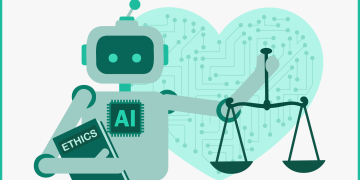
The Battle for Privacy and Ethics: How Can We Balance AI Innovation with Social Responsibility?

July 19, 2025
The Battle for Privacy and Ethics: How Can We Balance AI Innovation with Social Responsibility?

Introduction: Innovation vs. Responsibility—A Growing Tension

As artificial intelligence rapidly evolves in 2025, the tension between technological advancement and social responsibility has never been greater. Powerful models can generate human-like text, analyze private images, imitate voices, and make decisions once reserved for experts. While these breakthroughs bring extraordinary benefits across healthcare, education, and productivity, they also pose serious challenges:

  • User privacy is under threat from surveillance-capable systems and data-hungry models.
  • Algorithmic bias and discrimination risk perpetuating inequality and injustice.
  • Misuse of generative AI in misinformation, impersonation, and deepfakes has become mainstream.
  • Lack of transparency and explainability erodes trust in high-stakes applications.

Balancing the need for continuous innovation with the imperative for ethical, fair, and privacy-preserving AI is one of the defining dilemmas of our time. Let’s explore how key players are responding—and what’s at stake.


1. The Privacy Crisis in the Age of Generative AI

Large models such as GPT-4o, Gemini, and Claude can ingest and generate vast amounts of data, but how that data is collected, stored, and used remains a gray area. Core privacy challenges include:

  • Training data leaks: Many LLMs are trained on scraped content from the web, including personal posts, emails, and copyrighted material.
  • Model inversion attacks: Researchers have shown that it’s possible to extract sensitive information—like names, phone numbers, or medical history—from trained models.
  • Persistent identifiers: Voice, face, and behavior-based AI systems can deanonymize users even when they attempt to stay private.

Users increasingly demand data sovereignty, and companies are being pressured to implement differential privacy, on-device inference, and data deletion capabilities. However, these methods often reduce model performance, raising the question: How much privacy are we willing to trade for smarter AI?


2. Algorithmic Bias: When AI Becomes a Mirror of Inequality

Bias in AI is not new, but it has become more critical as AI systems move into areas like hiring, lending, education, and law enforcement. Common forms of bias include:

  • Training data imbalance: Models trained on mostly Western, English-language, or male-centric data often perform worse on other groups.
  • Labeling bias: Human annotators introduce subjective judgments, especially in classification tasks like hate speech or toxicity detection.
  • Deployment bias: AI systems behave differently in the real world due to cultural, environmental, or systemic factors not captured during development.

Companies like Meta, Google, and OpenAI are investing heavily in bias audits, red teaming, and fairness evaluation. Some firms have introduced bias correction layers or trained models specifically for underserved languages and demographics.

But critics argue these fixes are reactive. To truly solve bias, the industry must shift toward inclusion by design—from dataset creation to architecture decisions to UX implementation.


3. Explainability and Accountability in High-Stakes AI

As AI is increasingly used in critical sectors—medicine, finance, public policy—understanding how it arrives at its decisions becomes essential. However, most modern deep learning systems remain black boxes.

Efforts to improve explainability include:

  • Post-hoc tools: Heatmaps, saliency maps, or feature attribution tools to interpret predictions.
  • Interpretable-by-design models: Symbolic systems or hybrid approaches that combine neural nets with logic trees or rule-based engines.
  • Audit trails and logs: Tracking model decisions for forensics and legal review.

In some regions, like the EU, “right to explanation” laws require that AI decisions affecting individuals (e.g., credit approval) be explainable. Companies that fail to provide clarity risk legal liability and reputational damage.

As a result, interpretable AI is becoming a competitive differentiator, especially in industries with strict compliance needs.


4. The Ethics of AI Agency: When Models Act Autonomously

The emergence of agentic AI systems—AI that can plan, decide, act, and self-correct—has sparked fresh ethical questions:

  • Can an AI agent be held accountable for harm if it executes actions independently?
  • Should AI systems be allowed to autonomously trade, diagnose, litigate, or vote in certain decisions?
  • What kind of value alignment is necessary to ensure their goals remain consistent with human intentions?

Organizations like Anthropic have introduced “constitutional AI”, embedding human values into the training process. OpenAI has deployed system-level guardrails and memory limits for agents that interact with users or the web. Yet, these solutions are early-stage and far from foolproof.

As agentic AI becomes more widespread, we must develop machine ethics frameworks—the equivalent of Asimov’s laws, but legally and technically enforceable in the real world.


5. Regulatory Frameworks and Ethical Governance

Governments are now playing a central role in setting the boundaries for ethical AI. Key examples include:

  • The EU Artificial Intelligence Act, which classifies AI systems by risk and mandates transparency, data quality, and human oversight for high-risk models.
  • The U.S. AI Bill of Rights, offering non-binding principles on algorithmic discrimination, data control, and safety.
  • China’s regulations on generative AI, which mandate watermarking, censorship compliance, and identity verification for chatbot users.
  • Global efforts such as the G7 Hiroshima Code of Conduct and the UN AI Advisory Body, which attempt to standardize ethical norms across borders.

However, regulation often lags innovation. The challenge is building agile, adaptive governance frameworks that evolve with technology—without stifling innovation.


6. Industry Responsibility: From Risk Minimization to Value Creation

Many leading tech firms now recognize that ethics is not just about avoiding lawsuits—it’s a core business priority. Strategies being adopted include:

  • Internal AI ethics boards and external review panels.
  • Model cards and datasheets that disclose capabilities, risks, and limitations.
  • Red-teaming exercises to stress-test models before deployment.
  • Differential access control, where advanced features are gated based on user identity or use case.

There’s also a movement toward open transparency reports, where companies publish summaries of how their AI systems were trained, tested, and monitored. Some even open-source their models for third-party scrutiny.

Done right, ethical responsibility becomes a trust advantage, not a compliance burden.


7. The Role of Civil Society and Users

It’s not just companies and governments—civil society, journalists, academics, and end users play a vital role in AI ethics:

  • NGOs are auditing AI systems for environmental impact, misinformation, and labor exploitation.
  • Academic researchers are pushing for participatory AI design, where marginalized communities help shape the tools that affect them.
  • Consumers are demanding privacy-first alternatives, including on-device LLMs and encrypted AI assistants.
  • Whistleblowers have exposed unethical uses of surveillance AI, biased datasets, and unsafe deployments.

In this broader ecosystem, the ethics of AI must be co-created, not dictated from the top down.


Conclusion: A Balancing Act That Defines the Future

The path forward is not a choice between innovation and ethics—it’s about fusing them. Responsible AI is not the opposite of cutting-edge AI. It is the foundation for AI that is sustainable, inclusive, and trustworthy.

As models grow smarter, so must our frameworks for governing them. The winners in this new era of artificial intelligence will not just be those who build the most powerful models, but those who earn the most trust—from users, regulators, developers, and society at large.

In 2025, the real innovation is not just technical—it’s ethical.

Tags: aiArtificial intelligenceCase studyenterprisemachine learningprofessionResourcetechnologyTools
ShareTweetShare

Related Posts

Application of AI in Drug Therapy
AI News

Application of AI in Drug Therapy

April 28, 2026
The Popularization of AI: Automation of Traditional Jobs and Its Impact on the Labor Market
AI News

The Popularization of AI: Automation of Traditional Jobs and Its Impact on the Labor Market

April 28, 2026
Many Industries Are Adopting AI-Driven Robots to Replace Human Labor
AI News

Many Industries Are Adopting AI-Driven Robots to Replace Human Labor

April 21, 2026
Artificial Intelligence Ethics and Regulations
AI News

Artificial Intelligence Ethics and Regulations

April 21, 2026
Ensuring Fairness and Transparency in AI Decision-Making: A Priority for Companies and Governments
AI News

Ensuring Fairness and Transparency in AI Decision-Making: A Priority for Companies and Governments

April 4, 2026
The Growing Global Debate on AI Ethics and Governance
AI News

The Growing Global Debate on AI Ethics and Governance

April 4, 2026
Leave Comment
  • Trending
  • Comments
  • Latest
How Artificial Intelligence is Achieving Revolutionary Breakthroughs in the Healthcare Industry: What Success Stories Teach Us

How Artificial Intelligence is Achieving Revolutionary Breakthroughs in the Healthcare Industry: What Success Stories Teach Us

July 26, 2025
Deep Learning Simulates Human Brain Signal Processing Pathways Through the Construction of Multi-Layer Neural Networks

Deep Learning Simulates Human Brain Signal Processing Pathways Through the Construction of Multi-Layer Neural Networks

January 14, 2026
From Beginner to Expert: Which AI Platforms Are Best for Beginners? Experts’ Take on Learning Curves and Practical Applications

From Beginner to Expert: Which AI Platforms Are Best for Beginners? Experts’ Take on Learning Curves and Practical Applications

July 23, 2025
AI in the Financial Sector: Which Innovative Strategies Are Driving Digital Transformation?

AI in the Financial Sector: Which Innovative Strategies Are Driving Digital Transformation?

July 26, 2025
How Artificial Intelligence Enhances Diagnostic Accuracy and Transforms Treatment Methods in Healthcare

How Artificial Intelligence Enhances Diagnostic Accuracy and Transforms Treatment Methods in Healthcare

How AI Enhances Customer Experience and Drives Sales Growth in Retail

How AI Enhances Customer Experience and Drives Sales Growth in Retail

How Artificial Intelligence Enables Precise Risk Assessment and Decision-Making

How Artificial Intelligence Enables Precise Risk Assessment and Decision-Making

How AI is Driving the Revolution in Smart Manufacturing and Production Efficiency

How AI is Driving the Revolution in Smart Manufacturing and Production Efficiency

AI Learning Resources and Educational Platforms

AI Learning Resources and Educational Platforms

April 28, 2026
AI Automation and Model Training Tools: Revolutionizing the Future of Artificial Intelligence

AI Automation and Model Training Tools: Revolutionizing the Future of Artificial Intelligence

April 28, 2026
AI-Based Anti-Fraud Systems

AI-Based Anti-Fraud Systems

April 28, 2026
The Application of AI in Retail and E-Commerce

The Application of AI in Retail and E-Commerce

April 28, 2026
AIInsiderUpdates

Our platform is dedicated to delivering comprehensive coverage of AI developments, featuring news, case studies, expert interviews, and valuable resources for professionals and enthusiasts alike.

© 2025 aiinsiderupdates.com. contacts:[email protected]

No Result
View All Result
  • Home
  • AI News
  • Technology Trends
  • Interviews & Opinions
  • Case Studies
  • Tools & Resources

© 2025 aiinsiderupdates.com. contacts:[email protected]

Welcome Back!

Login to your account below

Forgotten Password?

Retrieve your password

Please enter your username or email address to reset your password.

Log In