


















AIInsiderUpdates
  • Home
  • AI News
    Global AI Competition: Dominance in the AI Chip Sector, with NVIDIA Maintaining Its Leading Position

    Global AI Competition: Dominance in the AI Chip Sector, with NVIDIA Maintaining Its Leading Position

    AI Is No Longer Confined to Text Generation: Toward Integrated Capabilities in Vision, Perception, and Embodied Robotics

    AI Is No Longer Confined to Text Generation: Toward Integrated Capabilities in Vision, Perception, and Embodied Robotics

    AI Technology and Its Integration with Traditional Industries as a Key to Enhancing Enterprise Competitiveness

    AI Technology and Its Integration with Traditional Industries as a Key to Enhancing Enterprise Competitiveness

    AI Has Entered the ‘Breaking Wall’ Stage: From Laboratory Development to Large-Scale Industrial Applications

    AI Has Entered the ‘Breaking Wall’ Stage: From Laboratory Development to Large-Scale Industrial Applications

    AI and the Intensifying Competition in the Semiconductor Industry

    AI and the Intensifying Competition in the Semiconductor Industry

    New AI Chips and Heterogeneous Architectures Driving the Computational Power Revolution

    New AI Chips and Heterogeneous Architectures Driving the Computational Power Revolution

  • Technology Trends
    Natural Language Processing: One of the Core Pillars of AI

    Natural Language Processing: One of the Core Pillars of AI

    Deep Learning Simulates Human Brain Signal Processing Pathways Through the Construction of Multi-Layer Neural Networks

    Deep Learning Simulates Human Brain Signal Processing Pathways Through the Construction of Multi-Layer Neural Networks

    Autonomous Driving and Robotics: Continuous Advancements in Perception and Intelligent Decision-Making Capabilities

    Autonomous Driving and Robotics: Continuous Advancements in Perception and Intelligent Decision-Making Capabilities

    AI in Assisting Pathological Image Recognition, Disease Diagnosis, and Personalized Treatment Plans

    AI in Assisting Pathological Image Recognition, Disease Diagnosis, and Personalized Treatment Plans

    NLP Technologies: From Understanding to Generation

    NLP Technologies: From Understanding to Generation

    Self-Supervised Learning, Federated Learning, and Other Emerging Training Methods: Reducing the Dependence on Labeled Data and Improving Model Generalization

    Self-Supervised Learning, Federated Learning, and Other Emerging Training Methods: Reducing the Dependence on Labeled Data and Improving Model Generalization

  • Interviews & Opinions
    Experts Predict That Future AI Data Labeling and Training Will Rely More on Domain Expert Skills Rather Than Fully Synthetic Data

    Experts Predict That Future AI Data Labeling and Training Will Rely More on Domain Expert Skills Rather Than Fully Synthetic Data

    Public Attention on the Immediate Impact of Artificial Intelligence on Employment and Privacy

    Public Attention on the Immediate Impact of Artificial Intelligence on Employment and Privacy

    The Role of AI in Think Tanks and Strategic Research

    The Role of AI in Think Tanks and Strategic Research

    AI Security and Responsible Development: Perspectives and Insights

    AI Security and Responsible Development: Perspectives and Insights

    AI’s Impact on Industry and Employment

    AI’s Impact on Industry and Employment

    Multimodal and the Next-Generation AI Models Breakthroughs

    Multimodal and the Next-Generation AI Models Breakthroughs

  • Case Studies
    BMW Leverages AI + Digital Twin Technology to Simulate Production Processes and Train Models for Defect Detection

    BMW Leverages AI + Digital Twin Technology to Simulate Production Processes and Train Models for Defect Detection

    Traditional Industries Such as Retail and Manufacturing Apply Artificial Intelligence to Predictive Maintenance and Demand Forecasting

    Traditional Industries Such as Retail and Manufacturing Apply Artificial Intelligence to Predictive Maintenance and Demand Forecasting

    Financial Industry: Risk Control and Intelligent Customer Service

    Financial Industry: Risk Control and Intelligent Customer Service

    Retail and E-Commerce: Smart Forecasting and Enhancing User Experience

    Retail and E-Commerce: Smart Forecasting and Enhancing User Experience

    Automated Health Management and Process Optimization

    Automated Health Management and Process Optimization

    Medical Imaging and Diagnostic Assistance

    Medical Imaging and Diagnostic Assistance

  • Tools & Resources
    How to Start Learning AI from Scratch: A Roadmap and Time Plan

    How to Start Learning AI from Scratch: A Roadmap and Time Plan

    Anthropic Claude: A Large Language Model Focused on Model Safety and Conversational Control, Emphasizing “Controllable and Trustworthy” AI Capabilities

    Anthropic Claude: A Large Language Model Focused on Model Safety and Conversational Control, Emphasizing “Controllable and Trustworthy” AI Capabilities

    AI Model Repositories and Open-Source Resources: A Comprehensive Guide

    AI Model Repositories and Open-Source Resources: A Comprehensive Guide

    The Proliferation of Generative AI Models and Platforms in the Market

    The Proliferation of Generative AI Models and Platforms in the Market

    AI Learning Resources and Tutorial Recommendations

    AI Learning Resources and Tutorial Recommendations

    Cloud Services and Training/Inference Platforms

    Cloud Services and Training/Inference Platforms

AIInsiderUpdates
  • Home
  • AI News
    Global AI Competition: Dominance in the AI Chip Sector, with NVIDIA Maintaining Its Leading Position

    Global AI Competition: Dominance in the AI Chip Sector, with NVIDIA Maintaining Its Leading Position

    AI Is No Longer Confined to Text Generation: Toward Integrated Capabilities in Vision, Perception, and Embodied Robotics

    AI Is No Longer Confined to Text Generation: Toward Integrated Capabilities in Vision, Perception, and Embodied Robotics

    AI Technology and Its Integration with Traditional Industries as a Key to Enhancing Enterprise Competitiveness

    AI Technology and Its Integration with Traditional Industries as a Key to Enhancing Enterprise Competitiveness

    AI Has Entered the ‘Breaking Wall’ Stage: From Laboratory Development to Large-Scale Industrial Applications

    AI Has Entered the ‘Breaking Wall’ Stage: From Laboratory Development to Large-Scale Industrial Applications

    AI and the Intensifying Competition in the Semiconductor Industry

    AI and the Intensifying Competition in the Semiconductor Industry

    New AI Chips and Heterogeneous Architectures Driving the Computational Power Revolution

    New AI Chips and Heterogeneous Architectures Driving the Computational Power Revolution

  • Technology Trends
    Natural Language Processing: One of the Core Pillars of AI

    Natural Language Processing: One of the Core Pillars of AI

    Deep Learning Simulates Human Brain Signal Processing Pathways Through the Construction of Multi-Layer Neural Networks

    Deep Learning Simulates Human Brain Signal Processing Pathways Through the Construction of Multi-Layer Neural Networks

    Autonomous Driving and Robotics: Continuous Advancements in Perception and Intelligent Decision-Making Capabilities

    Autonomous Driving and Robotics: Continuous Advancements in Perception and Intelligent Decision-Making Capabilities

    AI in Assisting Pathological Image Recognition, Disease Diagnosis, and Personalized Treatment Plans

    AI in Assisting Pathological Image Recognition, Disease Diagnosis, and Personalized Treatment Plans

    NLP Technologies: From Understanding to Generation

    NLP Technologies: From Understanding to Generation

    Self-Supervised Learning, Federated Learning, and Other Emerging Training Methods: Reducing the Dependence on Labeled Data and Improving Model Generalization

    Self-Supervised Learning, Federated Learning, and Other Emerging Training Methods: Reducing the Dependence on Labeled Data and Improving Model Generalization

  • Interviews & Opinions
    Experts Predict That Future AI Data Labeling and Training Will Rely More on Domain Expert Skills Rather Than Fully Synthetic Data

    Experts Predict That Future AI Data Labeling and Training Will Rely More on Domain Expert Skills Rather Than Fully Synthetic Data

    Public Attention on the Immediate Impact of Artificial Intelligence on Employment and Privacy

    Public Attention on the Immediate Impact of Artificial Intelligence on Employment and Privacy

    The Role of AI in Think Tanks and Strategic Research

    The Role of AI in Think Tanks and Strategic Research

    AI Security and Responsible Development: Perspectives and Insights

    AI Security and Responsible Development: Perspectives and Insights

    AI’s Impact on Industry and Employment

    AI’s Impact on Industry and Employment

    Multimodal and the Next-Generation AI Models Breakthroughs

    Multimodal and the Next-Generation AI Models Breakthroughs

  • Case Studies
    BMW Leverages AI + Digital Twin Technology to Simulate Production Processes and Train Models for Defect Detection

    BMW Leverages AI + Digital Twin Technology to Simulate Production Processes and Train Models for Defect Detection

    Traditional Industries Such as Retail and Manufacturing Apply Artificial Intelligence to Predictive Maintenance and Demand Forecasting

    Traditional Industries Such as Retail and Manufacturing Apply Artificial Intelligence to Predictive Maintenance and Demand Forecasting

    Financial Industry: Risk Control and Intelligent Customer Service

    Financial Industry: Risk Control and Intelligent Customer Service

    Retail and E-Commerce: Smart Forecasting and Enhancing User Experience

    Retail and E-Commerce: Smart Forecasting and Enhancing User Experience

    Automated Health Management and Process Optimization

    Automated Health Management and Process Optimization

    Medical Imaging and Diagnostic Assistance

    Medical Imaging and Diagnostic Assistance

  • Tools & Resources
    How to Start Learning AI from Scratch: A Roadmap and Time Plan

    How to Start Learning AI from Scratch: A Roadmap and Time Plan

    Anthropic Claude: A Large Language Model Focused on Model Safety and Conversational Control, Emphasizing “Controllable and Trustworthy” AI Capabilities

    Anthropic Claude: A Large Language Model Focused on Model Safety and Conversational Control, Emphasizing “Controllable and Trustworthy” AI Capabilities

    AI Model Repositories and Open-Source Resources: A Comprehensive Guide

    AI Model Repositories and Open-Source Resources: A Comprehensive Guide

    The Proliferation of Generative AI Models and Platforms in the Market

    The Proliferation of Generative AI Models and Platforms in the Market

    AI Learning Resources and Tutorial Recommendations

    AI Learning Resources and Tutorial Recommendations

    Cloud Services and Training/Inference Platforms

    Cloud Services and Training/Inference Platforms

AIInsiderUpdates
No Result
View All Result

AI in Space Exploration: Enhancing Missions Beyond Earth

February 20, 2025
AI in Space Exploration: Enhancing Missions Beyond Earth

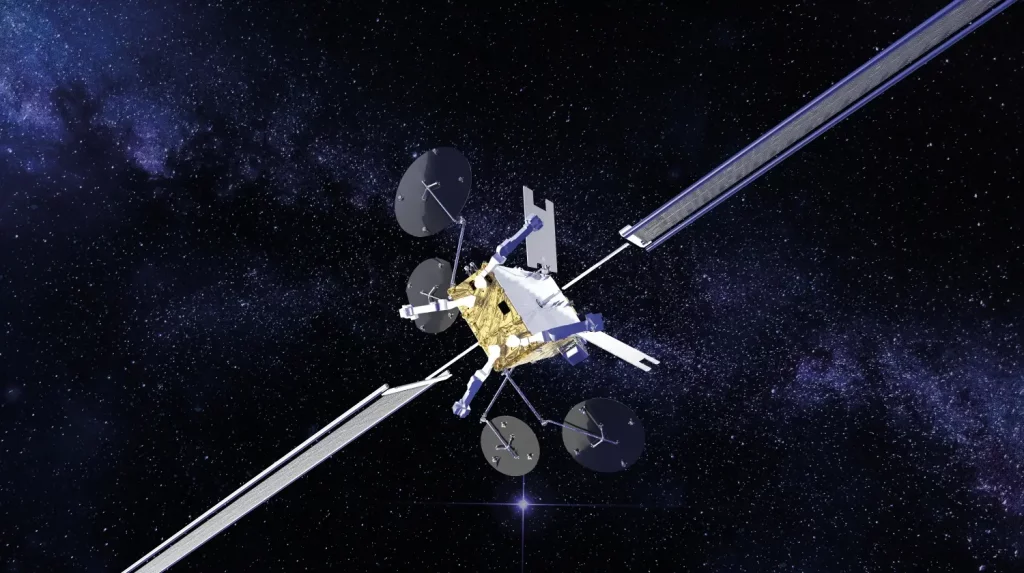
Space exploration has captivated humanity for centuries, inspiring technological innovations and pushing the boundaries of what is possible. The advent of Artificial Intelligence (AI) is now playing a crucial role in accelerating space missions, from studying distant planets to aiding interplanetary exploration. As space agencies and private companies alike embark on more ambitious missions, AI’s ability to process vast amounts of data, make real-time decisions, and optimize space operations is proving to be an indispensable asset. This article delves into the various applications of AI in space exploration, including how AI aids spacecraft navigation, autonomous data analysis, and even the search for life beyond Earth.

AI’s Role in Space Missions: An Overview

Space exploration, particularly missions beyond Earth’s orbit, is complex, costly, and fraught with challenges. The need for autonomous systems that can operate independently of constant human oversight is essential for missions to distant planets, moons, and asteroids. AI allows space agencies to automate many aspects of mission planning, data collection, and operational management, increasing efficiency, safety, and success rates.

AI-powered systems are able to work in environments that are harsh, dangerous, and far from Earth, making it an ideal tool for space exploration. From controlling robotic rovers to analyzing satellite data, AI helps scientists and engineers solve problems, reduce risks, and make better decisions in real-time.

1. Autonomous Navigation and Control of Spacecraft

One of the key challenges in space exploration is ensuring that spacecraft can navigate the vastness of space autonomously. Traditional space missions often require constant communication with ground control, which is not feasible when exploring distant locations like Mars or beyond. AI has proven to be invaluable in enabling spacecraft to navigate autonomously, making real-time decisions based on onboard sensors and environmental data.

a) Autonomous Navigation Systems

AI is used in spacecraft to help with pathfinding, trajectory calculations, and obstacle avoidance. For example, NASA’s Mars rovers, like Perseverance, are equipped with AI algorithms that allow them to navigate the Martian surface autonomously. These rovers use AI-powered systems to analyze images of the terrain, identify potential hazards (such as rocks or cliffs), and choose the safest path forward. This autonomy reduces the need for human intervention and ensures that the mission proceeds efficiently even when communication delays occur.

For interplanetary missions, AI systems can also autonomously control spacecraft propulsion, adjust the craft’s trajectory, and ensure that the spacecraft follows an optimal path while conserving energy. These capabilities are essential when traveling to planets and moons far from Earth, where communication delays can range from minutes to hours.

b) Real-Time Decision-Making in Space

AI allows spacecraft to make real-time decisions based on the data it receives. For instance, AI systems can process incoming data from sensors and adjust operations if unexpected events occur. This decision-making ability is critical for navigating hazardous environments, such as during atmospheric entry, landing, or orbital maneuvers. AI systems can also assess and manage spacecraft health by diagnosing potential system malfunctions or detecting anomalies in real time, which would be difficult for ground control to detect immediately due to communication delays.

2. AI in Space Robotics and Rovers

Space robotics has been a cornerstone of space exploration for decades, allowing scientists to study planets, moons, and other celestial bodies without physically sending humans into these extreme environments. AI plays a significant role in enhancing the capabilities of these robotic explorers, ensuring that they can perform tasks autonomously and make independent decisions based on their surroundings.

a) Robotic Rovers on Mars

The most famous examples of AI-powered robotic systems are the Mars rovers, which have been instrumental in exploring the Martian surface. The latest rover, Perseverance, is equipped with advanced AI algorithms that allow it to analyze its surroundings and make decisions about where to travel and which scientific instruments to use. For example, Perseverance uses AI to identify interesting geological features and collect rock samples for analysis.

AI also plays a role in ensuring the health of these rovers by monitoring system diagnostics, ensuring that the rover’s wheels, cameras, and sensors are functioning properly. AI-powered systems help diagnose and solve problems autonomously, reducing the need for human intervention from Earth.

b) Robotic Arms for Sample Collection

AI is also used to control robotic arms on space stations and other spacecraft. For example, AI-driven robotic arms have been used to collect soil samples from the Moon or Mars, process and analyze samples, or repair satellites and space telescopes. These robotic systems are highly autonomous, able to perform tasks with incredible precision and dexterity, all while minimizing the risk of human error.

3. AI in Space Data Analysis

Space missions generate enormous volumes of data that need to be analyzed quickly to make critical decisions. AI’s ability to process vast amounts of data far exceeds the capacity of traditional methods, allowing scientists to gain insights much faster than ever before.

a) Processing Satellite Imagery

One of the key areas where AI is making an impact is in the analysis of satellite imagery. Satellites orbiting Earth, Mars, and other celestial bodies capture massive amounts of visual and sensor data. AI systems, particularly deep learning models, are used to analyze this imagery, identify patterns, and assist in tasks like mapping terrains, identifying potential water sources, and searching for signs of life.

AI systems can also help process the data collected by telescopes, identifying new celestial bodies, studying stellar formations, and even detecting exoplanets orbiting distant stars. By automating the analysis process, AI is accelerating our understanding of space.

b) Astronomical Data Interpretation

AI is increasingly used to help interpret astronomical data. The vast amount of data collected from space telescopes like the Hubble Space Telescope or the James Webb Space Telescope is too large and complex to be analyzed by humans alone. AI algorithms can assist in detecting patterns, filtering out noise, and identifying interesting anomalies in the data.

For example, AI can be used to identify and classify galaxies, stars, and other celestial objects in large datasets. It can also help detect phenomena such as black holes or supernovae, contributing to our knowledge of the universe.
4. AI in the Search for Extraterrestrial Life

One of the most exciting aspects of space exploration is the search for life beyond Earth. AI is helping researchers analyze the data collected from Mars, the moons of Jupiter and Saturn, and distant exoplanets, searching for signs of microbial life or habitable environments.

a) AI and the Search for Life on Mars

AI-powered systems are playing a crucial role in analyzing the data collected by Mars rovers and orbiters. By examining the chemical composition of rocks, soil samples, and the atmosphere, AI can identify potential signs of past or present life. In particular, AI algorithms help determine which areas of Mars are most likely to harbor microbial life, guiding future missions to promising sites.

b) AI and Exoplanet Discovery

AI is also instrumental in the discovery of exoplanets, planets that orbit stars outside of our solar system. By analyzing light curves from distant stars, AI systems can detect the faint dimming of light caused by a planet passing in front of its host star. This technique, known as the transit method, has led to the discovery of thousands of exoplanets. AI enhances this process by filtering out false positives and identifying the most promising candidates for further study.

5. AI in Space Communications

Space communications are vital for transmitting data between spacecraft and Earth, yet the vast distances involved can lead to significant delays and bandwidth limitations. AI can help optimize communication systems by automatically adjusting transmission settings and managing data flow.

a) Optimizing Data Transmission

AI systems can help prioritize the transmission of critical data, ensuring that essential information is sent back to Earth first. These systems can also compress data, reducing bandwidth usage and optimizing transmission rates. AI can dynamically adjust communication protocols based on the distance and position of spacecraft relative to Earth, improving communication efficiency.

b) Deep Space Communication Networks

In deep space exploration, AI can play a key role in optimizing communication networks. As spacecraft venture further from Earth, communication delays increase, making it more challenging to maintain constant contact. AI can manage and adjust deep space communication networks, ensuring that data is sent efficiently, even across vast distances.

The Future of AI in Space Exploration

AI’s role in space exploration is only just beginning. As missions become more complex and ambitions grow, AI will continue to drive innovation in the space industry. In the future, AI is expected to play a key role in human space travel, resource extraction from asteroids, and the development of autonomous space habitats. The combination of AI and space exploration has the potential to unlock new frontiers, enabling humanity to explore and understand the universe like never before.

Conclusion

Artificial Intelligence is poised to redefine the way we explore and study space. From autonomous navigation of spacecraft to real-time data analysis and the search for extraterrestrial life, AI is helping scientists and engineers achieve new milestones in space exploration. As technology continues to advance, AI will undoubtedly play an even greater role in making humanity’s exploration of the cosmos more efficient, precise, and groundbreaking than ever before.


Tags: AI in AstronomyAI in Space ExplorationAutonomous SpacecraftMars Rovers
ShareTweetShare

Related Posts

Experts Predict That Future AI Data Labeling and Training Will Rely More on Domain Expert Skills Rather Than Fully Synthetic Data
Interviews & Opinions

Experts Predict That Future AI Data Labeling and Training Will Rely More on Domain Expert Skills Rather Than Fully Synthetic Data

January 15, 2026
Global AI Competition: Dominance in the AI Chip Sector, with NVIDIA Maintaining Its Leading Position
AI News

Global AI Competition: Dominance in the AI Chip Sector, with NVIDIA Maintaining Its Leading Position

January 15, 2026
Public Attention on the Immediate Impact of Artificial Intelligence on Employment and Privacy
Interviews & Opinions

Public Attention on the Immediate Impact of Artificial Intelligence on Employment and Privacy

January 14, 2026
AI Is No Longer Confined to Text Generation: Toward Integrated Capabilities in Vision, Perception, and Embodied Robotics
AI News

AI Is No Longer Confined to Text Generation: Toward Integrated Capabilities in Vision, Perception, and Embodied Robotics

January 14, 2026
The Role of AI in Think Tanks and Strategic Research
Interviews & Opinions

The Role of AI in Think Tanks and Strategic Research

January 13, 2026
AI Technology and Its Integration with Traditional Industries as a Key to Enhancing Enterprise Competitiveness
AI News

AI Technology and Its Integration with Traditional Industries as a Key to Enhancing Enterprise Competitiveness

January 13, 2026
Leave Comment
  • Trending
  • Comments
  • Latest
How Artificial Intelligence is Achieving Revolutionary Breakthroughs in the Healthcare Industry: What Success Stories Teach Us

How Artificial Intelligence is Achieving Revolutionary Breakthroughs in the Healthcare Industry: What Success Stories Teach Us

July 26, 2025
AI in the Financial Sector: Which Innovative Strategies Are Driving Digital Transformation?

AI in the Financial Sector: Which Innovative Strategies Are Driving Digital Transformation?

July 26, 2025
From Beginner to Expert: Which AI Platforms Are Best for Beginners? Experts’ Take on Learning Curves and Practical Applications

From Beginner to Expert: Which AI Platforms Are Best for Beginners? Experts’ Take on Learning Curves and Practical Applications

July 23, 2025
How to Find Truly Useful AI Resources Among the Crowd? Experts Share How to Select Efficient and Innovative Tools!

How to Find Truly Useful AI Resources Among the Crowd? Experts Share How to Select Efficient and Innovative Tools!

July 23, 2025
How Artificial Intelligence Enhances Diagnostic Accuracy and Transforms Treatment Methods in Healthcare

How Artificial Intelligence Enhances Diagnostic Accuracy and Transforms Treatment Methods in Healthcare

How AI Enhances Customer Experience and Drives Sales Growth in Retail

How AI Enhances Customer Experience and Drives Sales Growth in Retail

How Artificial Intelligence Enables Precise Risk Assessment and Decision-Making

How Artificial Intelligence Enables Precise Risk Assessment and Decision-Making

How AI is Driving the Revolution in Smart Manufacturing and Production Efficiency

How AI is Driving the Revolution in Smart Manufacturing and Production Efficiency

How to Start Learning AI from Scratch: A Roadmap and Time Plan

How to Start Learning AI from Scratch: A Roadmap and Time Plan

January 15, 2026
BMW Leverages AI + Digital Twin Technology to Simulate Production Processes and Train Models for Defect Detection

BMW Leverages AI + Digital Twin Technology to Simulate Production Processes and Train Models for Defect Detection

January 15, 2026
Experts Predict That Future AI Data Labeling and Training Will Rely More on Domain Expert Skills Rather Than Fully Synthetic Data

Experts Predict That Future AI Data Labeling and Training Will Rely More on Domain Expert Skills Rather Than Fully Synthetic Data

January 15, 2026
Natural Language Processing: One of the Core Pillars of AI

Natural Language Processing: One of the Core Pillars of AI

January 15, 2026
AIInsiderUpdates

Our platform is dedicated to delivering comprehensive coverage of AI developments, featuring news, case studies, expert interviews, and valuable resources for professionals and enthusiasts alike.

© 2025 aiinsiderupdates.com. contacts:[email protected]

No Result
View All Result
  • Home
  • AI News
  • Technology Trends
  • Interviews & Opinions
  • Case Studies
  • Tools & Resources

© 2025 aiinsiderupdates.com. contacts:[email protected]

Welcome Back!

Login to your account below

Forgotten Password?

Retrieve your password

Please enter your username or email address to reset your password.

Log In