





















AIInsiderUpdates
  • Home
  • AI News
    Application of AI in Drug Therapy

    Application of AI in Drug Therapy

    The Popularization of AI: Automation of Traditional Jobs and Its Impact on the Labor Market

    The Popularization of AI: Automation of Traditional Jobs and Its Impact on the Labor Market

    Many Industries Are Adopting AI-Driven Robots to Replace Human Labor

    Many Industries Are Adopting AI-Driven Robots to Replace Human Labor

    Artificial Intelligence Ethics and Regulations

    Artificial Intelligence Ethics and Regulations

    Ensuring Fairness and Transparency in AI Decision-Making: A Priority for Companies and Governments

    Ensuring Fairness and Transparency in AI Decision-Making: A Priority for Companies and Governments

    The Growing Global Debate on AI Ethics and Governance

    The Growing Global Debate on AI Ethics and Governance

  • Technology Trends
    Fine-tuning Large Language Models to Meet Specific Task or Industry Needs: A Key Focus in AI Research

    Fine-tuning Large Language Models to Meet Specific Task or Industry Needs: A Key Focus in AI Research

    The Convergence of Reinforcement Learning and Deep Learning: Driving Innovation Across Multiple Domains

    The Convergence of Reinforcement Learning and Deep Learning: Driving Innovation Across Multiple Domains

    The Transformer Architecture: The Core of Deep Learning

    The Transformer Architecture: The Core of Deep Learning

    Neural Architecture Search: A Revolution in Artificial Intelligence

    Neural Architecture Search: A Revolution in Artificial Intelligence

    Significant Advances in Self-Supervised Learning (SSL) Methods in Deep Learning

    Significant Advances in Self-Supervised Learning (SSL) Methods in Deep Learning

    Breakthroughs in Deep Learning and Neural Networks: Revolutionizing the Future of AI

    Breakthroughs in Deep Learning and Neural Networks: Revolutionizing the Future of AI

  • Interviews & Opinions
    AI May Replace Some Low-Skill, Repetitive Jobs, but It Will Also Create New Types of Jobs

    AI May Replace Some Low-Skill, Repetitive Jobs, but It Will Also Create New Types of Jobs

    The Future of AI Systems: Why Explainability Should Be a Core Feature

    The Future of AI Systems: Why Explainability Should Be a Core Feature

    AI and Automation Will Take on More of the Heavy Lifting

    AI and Automation Will Take on More of the Heavy Lifting

    As AI Technology Continues to Evolve, Ethical Issues Are Becoming More Prominent

    As AI Technology Continues to Evolve, Ethical Issues Are Becoming More Prominent

    AI Fairness: Addressing Bias and Promoting Equity in Artificial Intelligence

    AI Fairness: Addressing Bias and Promoting Equity in Artificial Intelligence

    The Impact of AI on the Labor Market: A Critical Examination

    The Impact of AI on the Labor Market: A Critical Examination

  • Case Studies
    AI-Based Anti-Fraud Systems

    AI-Based Anti-Fraud Systems

    The Application of AI in Retail and E-Commerce

    The Application of AI in Retail and E-Commerce

    The Application of AI in the Financial Industry

    The Application of AI in the Financial Industry

    The Application of AI in Medical Imaging: A Significant Advancement

    The Application of AI in Medical Imaging: A Significant Advancement

    AI Significantly Enhancing Disease Diagnosis Efficiency and Accuracy

    AI Significantly Enhancing Disease Diagnosis Efficiency and Accuracy

    The Application of AI in Healthcare: Revolutionizing Medicine and Patient Care

    The Application of AI in Healthcare: Revolutionizing Medicine and Patient Care

  • Tools & Resources
    AI Learning Resources and Educational Platforms

    AI Learning Resources and Educational Platforms

    AI Automation and Model Training Tools: Revolutionizing the Future of Artificial Intelligence

    AI Automation and Model Training Tools: Revolutionizing the Future of Artificial Intelligence

    Keras: Making AI Development Easier While Supporting Complex Model Designs

    Keras: Making AI Development Easier While Supporting Complex Model Designs

    PyTorch: A Flexible and Debug-Friendly Deep Learning Framework

    PyTorch: A Flexible and Debug-Friendly Deep Learning Framework

    AutoAI Tools Enable Developers to Reduce Manual Model Tuning Workload

    AutoAI Tools Enable Developers to Reduce Manual Model Tuning Workload

    AI Development Platforms and Frameworks

    AI Development Platforms and Frameworks

AIInsiderUpdates
  • Home
  • AI News
    Application of AI in Drug Therapy

    Application of AI in Drug Therapy

    The Popularization of AI: Automation of Traditional Jobs and Its Impact on the Labor Market

    The Popularization of AI: Automation of Traditional Jobs and Its Impact on the Labor Market

    Many Industries Are Adopting AI-Driven Robots to Replace Human Labor

    Many Industries Are Adopting AI-Driven Robots to Replace Human Labor

    Artificial Intelligence Ethics and Regulations

    Artificial Intelligence Ethics and Regulations

    Ensuring Fairness and Transparency in AI Decision-Making: A Priority for Companies and Governments

    Ensuring Fairness and Transparency in AI Decision-Making: A Priority for Companies and Governments

    The Growing Global Debate on AI Ethics and Governance

    The Growing Global Debate on AI Ethics and Governance

  • Technology Trends
    Fine-tuning Large Language Models to Meet Specific Task or Industry Needs: A Key Focus in AI Research

    Fine-tuning Large Language Models to Meet Specific Task or Industry Needs: A Key Focus in AI Research

    The Convergence of Reinforcement Learning and Deep Learning: Driving Innovation Across Multiple Domains

    The Convergence of Reinforcement Learning and Deep Learning: Driving Innovation Across Multiple Domains

    The Transformer Architecture: The Core of Deep Learning

    The Transformer Architecture: The Core of Deep Learning

    Neural Architecture Search: A Revolution in Artificial Intelligence

    Neural Architecture Search: A Revolution in Artificial Intelligence

    Significant Advances in Self-Supervised Learning (SSL) Methods in Deep Learning

    Significant Advances in Self-Supervised Learning (SSL) Methods in Deep Learning

    Breakthroughs in Deep Learning and Neural Networks: Revolutionizing the Future of AI

    Breakthroughs in Deep Learning and Neural Networks: Revolutionizing the Future of AI

  • Interviews & Opinions
    AI May Replace Some Low-Skill, Repetitive Jobs, but It Will Also Create New Types of Jobs

    AI May Replace Some Low-Skill, Repetitive Jobs, but It Will Also Create New Types of Jobs

    The Future of AI Systems: Why Explainability Should Be a Core Feature

    The Future of AI Systems: Why Explainability Should Be a Core Feature

    AI and Automation Will Take on More of the Heavy Lifting

    AI and Automation Will Take on More of the Heavy Lifting

    As AI Technology Continues to Evolve, Ethical Issues Are Becoming More Prominent

    As AI Technology Continues to Evolve, Ethical Issues Are Becoming More Prominent

    AI Fairness: Addressing Bias and Promoting Equity in Artificial Intelligence

    AI Fairness: Addressing Bias and Promoting Equity in Artificial Intelligence

    The Impact of AI on the Labor Market: A Critical Examination

    The Impact of AI on the Labor Market: A Critical Examination

  • Case Studies
    AI-Based Anti-Fraud Systems

    AI-Based Anti-Fraud Systems

    The Application of AI in Retail and E-Commerce

    The Application of AI in Retail and E-Commerce

    The Application of AI in the Financial Industry

    The Application of AI in the Financial Industry

    The Application of AI in Medical Imaging: A Significant Advancement

    The Application of AI in Medical Imaging: A Significant Advancement

    AI Significantly Enhancing Disease Diagnosis Efficiency and Accuracy

    AI Significantly Enhancing Disease Diagnosis Efficiency and Accuracy

    The Application of AI in Healthcare: Revolutionizing Medicine and Patient Care

    The Application of AI in Healthcare: Revolutionizing Medicine and Patient Care

  • Tools & Resources
    AI Learning Resources and Educational Platforms

    AI Learning Resources and Educational Platforms

    AI Automation and Model Training Tools: Revolutionizing the Future of Artificial Intelligence

    AI Automation and Model Training Tools: Revolutionizing the Future of Artificial Intelligence

    Keras: Making AI Development Easier While Supporting Complex Model Designs

    Keras: Making AI Development Easier While Supporting Complex Model Designs

    PyTorch: A Flexible and Debug-Friendly Deep Learning Framework

    PyTorch: A Flexible and Debug-Friendly Deep Learning Framework

    AutoAI Tools Enable Developers to Reduce Manual Model Tuning Workload

    AutoAI Tools Enable Developers to Reduce Manual Model Tuning Workload

    AI Development Platforms and Frameworks

    AI Development Platforms and Frameworks

AIInsiderUpdates
No Result
View All Result

Is AI Finally Ready to Revolutionize Healthcare?

February 19, 2025
Is AI Finally Ready to Revolutionize Healthcare?

AI Applications in Diagnostics, Patient Care, and Medical Research

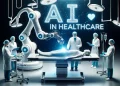
The healthcare industry is experiencing a major transformation thanks to the rise of artificial intelligence (AI). Once seen as a futuristic concept, AI is now making a tangible impact on healthcare by improving diagnostics, patient care, and medical research. Through its ability to analyze vast amounts of data and recognize patterns that might be missed by human doctors, AI is accelerating the pace of medical advancements and enabling more personalized treatments.

AI in Diagnostics

One of the most promising applications of AI in healthcare is in medical diagnostics. AI-powered algorithms can analyze medical images, such as X-rays, CT scans, and MRIs, with a level of precision that rivals or even surpasses that of human radiologists. Convolutional Neural Networks (CNNs), a type of deep learning model, are particularly effective in processing visual data. These algorithms can detect abnormalities in medical images, such as tumors, fractures, or lesions, often at an early stage when they are more treatable.

AI has proven to be particularly valuable in the early detection of diseases like cancer. For example, AI algorithms trained on thousands of mammogram images can identify signs of breast cancer earlier than traditional methods. Similarly, AI systems have been developed to detect lung cancer by analyzing chest X-rays and CT scans. The ability of AI to analyze large datasets quickly and with high accuracy means that healthcare providers can catch diseases earlier, improve patient outcomes, and ultimately save lives.

Beyond medical imaging, AI is also being used in genetic testing and laboratory diagnostics. By analyzing patient samples and genetic data, AI can identify genetic mutations or predict an individual’s risk for developing certain conditions, enabling earlier intervention and preventive care. For example, AI models are being trained to identify genetic markers linked to diseases like Alzheimer’s or cardiovascular conditions, offering the potential for tailored treatment plans based on an individual’s genetic profile.

AI in Patient Care

AI is not only transforming diagnostics but is also revolutionizing patient care. One of the key ways in which AI is improving patient care is through predictive analytics. By analyzing patient data, including medical history, vital signs, and lifestyle factors, AI can predict which patients are at risk of developing specific health conditions, such as heart attacks or strokes. This allows doctors to intervene proactively and implement preventive measures before a condition worsens.

AI-powered virtual assistants are also playing a growing role in patient care. These systems can help patients manage their health by providing reminders for medications, offering guidance on lifestyle changes, and even answering medical questions. Virtual health assistants can be particularly helpful for patients with chronic conditions who need ongoing monitoring and support. For example, AI-driven apps and devices can track blood glucose levels in diabetic patients and provide real-time recommendations based on the data.

In addition, AI has the potential to improve the patient experience by reducing wait times and streamlining administrative processes. Machine learning algorithms can optimize hospital scheduling, ensuring that patients are seen in a timely manner. AI-powered chatbots are also being used to assist patients with appointment scheduling, medical inquiries, and insurance claims, improving the efficiency of healthcare systems and making care more accessible.

AI in Medical Research

In the realm of medical research, AI is accelerating drug discovery, clinical trials, and disease modeling. One of the most exciting prospects of AI in healthcare is its potential to revolutionize the drug development process. Traditionally, discovering new drugs is a lengthy and expensive process that involves screening thousands of compounds to identify potential candidates. AI, however, can significantly shorten this timeline by analyzing large datasets of molecular information and identifying patterns that human researchers might overlook. Machine learning algorithms are being used to predict the effectiveness of new drug compounds, enabling pharmaceutical companies to focus on the most promising candidates.

AI is also playing a key role in precision medicine, where treatments are tailored to the individual characteristics of each patient. Through the analysis of genetic, environmental, and lifestyle data, AI can identify the most effective treatment options for specific patients. For example, AI can analyze the genetic makeup of a patient’s cancer cells and identify targeted therapies that are more likely to be effective based on the patient’s unique genetic profile. This personalized approach to medicine not only improves the chances of successful treatment but also reduces the risk of adverse side effects.

In addition to drug discovery, AI is helping to advance clinical trials by identifying suitable candidates for trials, predicting patient outcomes, and analyzing trial data more efficiently. AI algorithms can sift through vast amounts of patient records to identify individuals who meet the specific criteria for a clinical trial, making the recruitment process faster and more accurate. Furthermore, AI can continuously monitor the progress of clinical trials, identifying trends and potential issues in real time.

Exploring AI’s Potential to Enhance Precision Medicine

One of the most exciting possibilities that AI offers in healthcare is the advancement of precision medicine. Precision medicine is an approach that takes into account individual differences in patients’ genes, environments, and lifestyles to tailor treatments specifically for each person. AI has the potential to revolutionize precision medicine by analyzing vast datasets of genetic, clinical, and environmental information to identify the most effective treatments for each individual.

AI can help in the development of precision therapies by identifying genetic mutations or biomarkers that are linked to specific diseases. For example, AI algorithms can analyze genetic data to identify the mutations that cause certain cancers or neurological disorders, leading to more targeted therapies that directly address the root causes of these conditions. This has the potential to increase the efficacy of treatments and reduce side effects, as the treatment is specifically designed for the patient’s genetic makeup.

Moreover, AI can help predict how patients will respond to different treatments based on their genetic profiles and other factors. For example, AI algorithms can analyze data from clinical trials to predict which patients are most likely to benefit from a particular drug, allowing for more personalized treatment plans. This could significantly reduce the trial-and-error approach often associated with traditional medicine and lead to faster, more effective treatments.

AI’s ability to analyze large datasets from electronic health records (EHRs) and other sources also allows for a more comprehensive understanding of individual patients. By integrating data from various sources, including genetic information, medical history, and lifestyle factors, AI can create a more holistic picture of a patient’s health. This enables healthcare providers to develop more personalized and precise treatment plans that consider all aspects of the patient’s health.

Conclusion

AI is undoubtedly making waves in the healthcare industry, offering innovative solutions to long-standing challenges in diagnostics, patient care, and medical research. From detecting diseases earlier and more accurately to personalizing treatments and advancing drug discovery, AI is transforming the way healthcare is delivered. Precision medicine, powered by AI, promises to further enhance patient care by tailoring treatments to the individual, ensuring the right therapy for the right person at the right time.

While there are still hurdles to overcome, such as data privacy concerns, regulatory challenges, and ensuring AI systems are transparent and ethical, the potential of AI in healthcare is immense. We are only beginning to scratch the surface of what AI can achieve in medicine, and as the technology continues to evolve, it will undoubtedly play an increasingly central role in improving health outcomes worldwide. AI is not just ready to revolutionize healthcare—it is already doing so.

Tags: AI healthcare applicationsprecision medicinetechnology
ShareTweetShare

Related Posts

Fine-tuning Large Language Models to Meet Specific Task or Industry Needs: A Key Focus in AI Research
Technology Trends

Fine-tuning Large Language Models to Meet Specific Task or Industry Needs: A Key Focus in AI Research

April 28, 2026
The Convergence of Reinforcement Learning and Deep Learning: Driving Innovation Across Multiple Domains
Technology Trends

The Convergence of Reinforcement Learning and Deep Learning: Driving Innovation Across Multiple Domains

April 28, 2026
Application of AI in Drug Therapy
AI News

Application of AI in Drug Therapy

April 28, 2026
The Popularization of AI: Automation of Traditional Jobs and Its Impact on the Labor Market
AI News

The Popularization of AI: Automation of Traditional Jobs and Its Impact on the Labor Market

April 28, 2026
The Transformer Architecture: The Core of Deep Learning
Technology Trends

The Transformer Architecture: The Core of Deep Learning

April 21, 2026
Neural Architecture Search: A Revolution in Artificial Intelligence
Technology Trends

Neural Architecture Search: A Revolution in Artificial Intelligence

April 21, 2026
Leave Comment
  • Trending
  • Comments
  • Latest
How Artificial Intelligence is Achieving Revolutionary Breakthroughs in the Healthcare Industry: What Success Stories Teach Us

How Artificial Intelligence is Achieving Revolutionary Breakthroughs in the Healthcare Industry: What Success Stories Teach Us

July 26, 2025
Deep Learning Simulates Human Brain Signal Processing Pathways Through the Construction of Multi-Layer Neural Networks

Deep Learning Simulates Human Brain Signal Processing Pathways Through the Construction of Multi-Layer Neural Networks

January 14, 2026
From Beginner to Expert: Which AI Platforms Are Best for Beginners? Experts’ Take on Learning Curves and Practical Applications

From Beginner to Expert: Which AI Platforms Are Best for Beginners? Experts’ Take on Learning Curves and Practical Applications

July 23, 2025
AI in the Financial Sector: Which Innovative Strategies Are Driving Digital Transformation?

AI in the Financial Sector: Which Innovative Strategies Are Driving Digital Transformation?

July 26, 2025
How Artificial Intelligence Enhances Diagnostic Accuracy and Transforms Treatment Methods in Healthcare

How Artificial Intelligence Enhances Diagnostic Accuracy and Transforms Treatment Methods in Healthcare

How AI Enhances Customer Experience and Drives Sales Growth in Retail

How AI Enhances Customer Experience and Drives Sales Growth in Retail

How Artificial Intelligence Enables Precise Risk Assessment and Decision-Making

How Artificial Intelligence Enables Precise Risk Assessment and Decision-Making

How AI is Driving the Revolution in Smart Manufacturing and Production Efficiency

How AI is Driving the Revolution in Smart Manufacturing and Production Efficiency

AI Learning Resources and Educational Platforms

AI Learning Resources and Educational Platforms

April 28, 2026
AI Automation and Model Training Tools: Revolutionizing the Future of Artificial Intelligence

AI Automation and Model Training Tools: Revolutionizing the Future of Artificial Intelligence

April 28, 2026
AI-Based Anti-Fraud Systems

AI-Based Anti-Fraud Systems

April 28, 2026
The Application of AI in Retail and E-Commerce

The Application of AI in Retail and E-Commerce

April 28, 2026
AIInsiderUpdates

Our platform is dedicated to delivering comprehensive coverage of AI developments, featuring news, case studies, expert interviews, and valuable resources for professionals and enthusiasts alike.

© 2025 aiinsiderupdates.com. contacts:[email protected]

No Result
View All Result
  • Home
  • AI News
  • Technology Trends
  • Interviews & Opinions
  • Case Studies
  • Tools & Resources

© 2025 aiinsiderupdates.com. contacts:[email protected]

Welcome Back!

Login to your account below

Forgotten Password?

Retrieve your password

Please enter your username or email address to reset your password.

Log In