























Introduction
Artificial Intelligence (AI) has rapidly transformed from a futuristic concept into a pervasive technology influencing virtually every sector. Today, industry experts not only assess AI’s current impact but also speculate on its future trajectory, weighing technological possibilities, societal implications, economic influence, and ethical challenges. This article synthesizes insights from AI researchers, industry leaders, and policy analysts to provide a comprehensive overview of expert judgments on AI’s future, highlighting both anticipated innovations and potential risks.
1. Current State of AI
1.1 AI Adoption Across Industries
AI is no longer confined to research labs; it has become integral to healthcare, finance, manufacturing, transportation, education, and entertainment. For instance:
- Healthcare: AI-driven diagnostic tools, predictive analytics, and personalized treatment algorithms improve patient outcomes and operational efficiency.
- Finance: AI enhances fraud detection, market analysis, automated trading, and risk management.
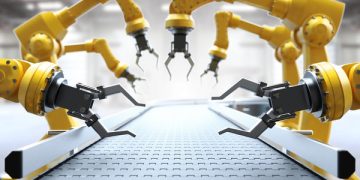
- Manufacturing: Intelligent robotics and predictive maintenance optimize production lines, reduce downtime, and minimize costs.
- Transportation: Autonomous vehicles and traffic management systems leverage AI for safer and more efficient mobility.
Experts agree that this broad adoption reflects a maturity in both AI technologies and their practical applications, providing a stable foundation for future innovations.
1.2 AI Capabilities and Limitations
Modern AI excels at tasks involving pattern recognition, natural language understanding, and decision-making within constrained domains. However, experts note several limitations:
- Contextual Understanding: AI often lacks deep understanding of nuanced context, sarcasm, or cultural differences.
- Data Dependence: Performance is heavily reliant on the availability and quality of training data.
- Generalization: Current AI systems struggle with tasks outside their training distribution, highlighting the gap between narrow AI and general intelligence.
These limitations frame much of the expert discourse on AI’s future, driving research agendas aimed at creating more flexible, reliable, and context-aware systems.
2. Expert Judgments on AI’s Future
2.1 Technological Advancements
Experts anticipate continued breakthroughs in several AI subfields:
2.1.1 Artificial General Intelligence (AGI)
While current AI systems are predominantly narrow AI, experts predict gradual progress toward AGI—machines capable of learning and reasoning across diverse tasks. Industry leaders caution that AGI remains a long-term goal requiring innovations in learning efficiency, reasoning, and cognitive modeling.
2.1.2 Multimodal AI
Future AI systems are expected to integrate multiple data modalities, combining text, images, audio, and video for richer understanding and interaction. Multimodal AI will enhance applications in virtual assistants, robotics, creative content generation, and human-computer collaboration.
2.1.3 Explainable and Trustworthy AI
As AI becomes embedded in critical decision-making, transparency and interpretability are paramount. Experts forecast the rise of explainable AI (XAI) frameworks that allow humans to understand AI reasoning processes, facilitating ethical deployment and regulatory compliance.
2.2 Economic and Industrial Implications
Experts predict that AI will continue to reshape global economies and industries:
- Labor Market Transformation: Automation may displace certain repetitive roles while creating new opportunities in AI development, maintenance, and oversight. Experts emphasize reskilling and education to mitigate workforce disruptions.
- Economic Productivity: AI-driven optimization in logistics, manufacturing, and energy management is expected to generate substantial productivity gains, potentially contributing trillions in economic value.
- Entrepreneurship and Innovation: AI lowers barriers to entry for startups in areas like predictive analytics, healthcare diagnostics, and financial services, fostering new business models and ecosystems.
While optimistic about AI’s economic potential, experts also caution that equitable distribution of AI-driven wealth remains a critical societal challenge.
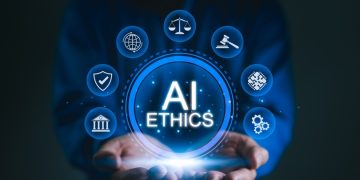
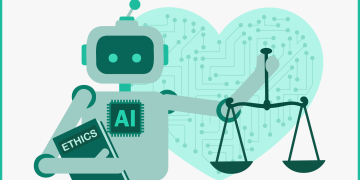
2.3 Societal and Ethical Considerations
Experts underscore that AI’s future is intertwined with ethical, regulatory, and societal factors:
2.3.1 Bias and Fairness
Bias in AI models reflects historical inequities in data. Experts advocate for proactive mitigation strategies, including diverse training datasets, fairness-aware algorithms, and continuous bias auditing.
2.3.2 Privacy and Security
As AI systems increasingly process sensitive personal data, privacy protection and cybersecurity become essential. Emerging trends include differential privacy, federated learning, and decentralized AI architectures to enhance security while maintaining utility.
2.3.3 Regulation and Governance
Industry leaders predict a future where AI governance frameworks balance innovation with accountability. This includes:
- International collaboration on AI safety standards.
- Legal frameworks addressing liability in autonomous systems.
- Regulatory sandboxes for testing AI applications under controlled conditions.
These measures aim to align technological advancement with societal values and legal norms.
3. Trend Predictions from Industry Experts
3.1 Short-Term (1–5 Years)
Experts expect incremental yet significant advancements in AI capabilities and deployment:
- Enhanced NLP Models: Improved understanding of context, sentiment, and domain-specific language will boost virtual assistants and customer service automation.
- Edge AI Adoption: Processing AI tasks locally on devices (smartphones, IoT sensors) reduces latency and enhances privacy.
- AI-Augmented Human Decision-Making: Tools that support humans in research, healthcare diagnostics, and financial forecasting will become mainstream.
Short-term trends indicate a focus on improving reliability, efficiency, and accessibility of AI systems without radical departures from existing technologies.
3.2 Medium-Term (5–10 Years)
By the medium term, experts anticipate transformative changes across industries and society:
- Autonomous Systems: Self-driving vehicles, drones, and robotics will operate more safely and autonomously in complex real-world environments.
- Personalized AI Experiences: AI will provide hyper-personalized content, education, and healthcare services tailored to individual needs.
- Global AI Integration: AI technologies will become integral to national infrastructure, finance, education, and urban planning, shaping societal norms and behaviors.
These projections assume continued investments in AI research, computing infrastructure, and global collaboration.
3.3 Long-Term (10+ Years)
The long-term future of AI is more speculative but widely discussed among experts:
- Artificial General Intelligence: Achieving AGI could revolutionize science, engineering, and creativity, enabling machines to reason, learn, and innovate at human or superhuman levels.
- Human-AI Symbiosis: Experts foresee collaborative intelligence, where humans and AI co-create knowledge, solve complex problems, and augment cognitive capabilities.
- Ethical Societies: Governance frameworks, societal norms, and technological design may evolve to ensure AI benefits humanity broadly while minimizing risks.
Long-term predictions emphasize cautious optimism, balancing unprecedented opportunities with profound ethical responsibilities.
4. Emerging Themes in Expert Discourse
4.1 Democratization of AI
Experts stress the importance of democratizing AI, making tools accessible to diverse communities, startups, and academic institutions. Open-source AI frameworks and cloud-based AI services reduce barriers to entry, accelerating innovation globally.
4.2 Sustainability and Energy Efficiency
The energy demands of large AI models are substantial. Experts predict that sustainable AI practices—including model compression, energy-efficient hardware, and green data centers—will become standard requirements for future development.
4.3 Cross-Disciplinary Collaboration
AI innovation increasingly relies on collaboration among computer scientists, cognitive psychologists, ethicists, sociologists, and domain experts. Experts emphasize that interdisciplinary approaches are essential to develop AI that is both capable and aligned with societal needs.
5. Expert Recommendations for Stakeholders
5.1 For Policymakers
- Establish clear AI regulations that balance innovation and safety.
- Encourage ethical AI research and funding for low-resource languages and domains.
- Facilitate international cooperation on AI standards and accountability.
5.2 For Industry Leaders
- Invest in explainable AI to foster trust and adoption.
- Prioritize workforce reskilling and employee transition programs.
- Monitor AI applications for bias, security risks, and unintended consequences.
5.3 For Researchers
- Focus on human-centered AI designs that enhance collaboration.
- Explore multimodal, few-shot, and zero-shot learning techniques.
- Investigate energy-efficient architectures and sustainable AI practices.
6. Challenges and Risks
Despite optimism, experts highlight significant risks that could shape AI’s trajectory:
- Technological Misalignment: AI systems may behave unpredictably if poorly designed or misaligned with human values.
- Geopolitical Tensions: Competing national AI strategies could lead to technological arms races.
- Socioeconomic Disruption: Rapid automation may exacerbate inequality without proactive measures.
- Ethical Dilemmas: Autonomous systems raise complex moral questions in healthcare, defense, and decision-making.
Addressing these challenges will require coordinated efforts among governments, industry, academia, and civil society.
7. Conclusion
Industry experts collectively judge that AI’s future is simultaneously promising and complex. Technologically, AI is poised for rapid evolution, moving from narrow intelligence toward multimodal and potentially general intelligence. Economically, AI promises unprecedented productivity gains and innovation opportunities, while socially and ethically, it presents challenges that must be proactively managed.
Experts predict a future in which AI is deeply embedded across industries, enhancing human capabilities, transforming workflows, and enabling innovative services. However, they emphasize that this future will only be beneficial if guided by ethical principles, transparent governance, and sustainable practices. As AI continues to advance, the collaboration between humans and intelligent machines will define the next era of technological progress, economic growth, and societal development.
By synthesizing expert insights, this article provides a roadmap for understanding AI’s trajectory, emphasizing that careful planning, interdisciplinary collaboration, and ethical foresight are essential for a future where AI serves as a force for inclusive and sustainable progress