



























AIInsiderUpdates
  • Home
  • AI News
    Global AI Competition: Dominance in the AI Chip Sector, with NVIDIA Maintaining Its Leading Position

    Global AI Competition: Dominance in the AI Chip Sector, with NVIDIA Maintaining Its Leading Position

    AI Is No Longer Confined to Text Generation: Toward Integrated Capabilities in Vision, Perception, and Embodied Robotics

    AI Is No Longer Confined to Text Generation: Toward Integrated Capabilities in Vision, Perception, and Embodied Robotics

    AI Technology and Its Integration with Traditional Industries as a Key to Enhancing Enterprise Competitiveness

    AI Technology and Its Integration with Traditional Industries as a Key to Enhancing Enterprise Competitiveness

    AI Has Entered the ‘Breaking Wall’ Stage: From Laboratory Development to Large-Scale Industrial Applications

    AI Has Entered the ‘Breaking Wall’ Stage: From Laboratory Development to Large-Scale Industrial Applications

    AI and the Intensifying Competition in the Semiconductor Industry

    AI and the Intensifying Competition in the Semiconductor Industry

    New AI Chips and Heterogeneous Architectures Driving the Computational Power Revolution

    New AI Chips and Heterogeneous Architectures Driving the Computational Power Revolution

  • Technology Trends
    Natural Language Processing: One of the Core Pillars of AI

    Natural Language Processing: One of the Core Pillars of AI

    Deep Learning Simulates Human Brain Signal Processing Pathways Through the Construction of Multi-Layer Neural Networks

    Deep Learning Simulates Human Brain Signal Processing Pathways Through the Construction of Multi-Layer Neural Networks

    Autonomous Driving and Robotics: Continuous Advancements in Perception and Intelligent Decision-Making Capabilities

    Autonomous Driving and Robotics: Continuous Advancements in Perception and Intelligent Decision-Making Capabilities

    AI in Assisting Pathological Image Recognition, Disease Diagnosis, and Personalized Treatment Plans

    AI in Assisting Pathological Image Recognition, Disease Diagnosis, and Personalized Treatment Plans

    NLP Technologies: From Understanding to Generation

    NLP Technologies: From Understanding to Generation

    Self-Supervised Learning, Federated Learning, and Other Emerging Training Methods: Reducing the Dependence on Labeled Data and Improving Model Generalization

    Self-Supervised Learning, Federated Learning, and Other Emerging Training Methods: Reducing the Dependence on Labeled Data and Improving Model Generalization

  • Interviews & Opinions
    Experts Predict That Future AI Data Labeling and Training Will Rely More on Domain Expert Skills Rather Than Fully Synthetic Data

    Experts Predict That Future AI Data Labeling and Training Will Rely More on Domain Expert Skills Rather Than Fully Synthetic Data

    Public Attention on the Immediate Impact of Artificial Intelligence on Employment and Privacy

    Public Attention on the Immediate Impact of Artificial Intelligence on Employment and Privacy

    The Role of AI in Think Tanks and Strategic Research

    The Role of AI in Think Tanks and Strategic Research

    AI Security and Responsible Development: Perspectives and Insights

    AI Security and Responsible Development: Perspectives and Insights

    AI’s Impact on Industry and Employment

    AI’s Impact on Industry and Employment

    Multimodal and the Next-Generation AI Models Breakthroughs

    Multimodal and the Next-Generation AI Models Breakthroughs

  • Case Studies
    BMW Leverages AI + Digital Twin Technology to Simulate Production Processes and Train Models for Defect Detection

    BMW Leverages AI + Digital Twin Technology to Simulate Production Processes and Train Models for Defect Detection

    Traditional Industries Such as Retail and Manufacturing Apply Artificial Intelligence to Predictive Maintenance and Demand Forecasting

    Traditional Industries Such as Retail and Manufacturing Apply Artificial Intelligence to Predictive Maintenance and Demand Forecasting

    Financial Industry: Risk Control and Intelligent Customer Service

    Financial Industry: Risk Control and Intelligent Customer Service

    Retail and E-Commerce: Smart Forecasting and Enhancing User Experience

    Retail and E-Commerce: Smart Forecasting and Enhancing User Experience

    Automated Health Management and Process Optimization

    Automated Health Management and Process Optimization

    Medical Imaging and Diagnostic Assistance

    Medical Imaging and Diagnostic Assistance

  • Tools & Resources
    How to Start Learning AI from Scratch: A Roadmap and Time Plan

    How to Start Learning AI from Scratch: A Roadmap and Time Plan

    Anthropic Claude: A Large Language Model Focused on Model Safety and Conversational Control, Emphasizing “Controllable and Trustworthy” AI Capabilities

    Anthropic Claude: A Large Language Model Focused on Model Safety and Conversational Control, Emphasizing “Controllable and Trustworthy” AI Capabilities

    AI Model Repositories and Open-Source Resources: A Comprehensive Guide

    AI Model Repositories and Open-Source Resources: A Comprehensive Guide

    The Proliferation of Generative AI Models and Platforms in the Market

    The Proliferation of Generative AI Models and Platforms in the Market

    AI Learning Resources and Tutorial Recommendations

    AI Learning Resources and Tutorial Recommendations

    Cloud Services and Training/Inference Platforms

    Cloud Services and Training/Inference Platforms

AIInsiderUpdates
  • Home
  • AI News
    Global AI Competition: Dominance in the AI Chip Sector, with NVIDIA Maintaining Its Leading Position

    Global AI Competition: Dominance in the AI Chip Sector, with NVIDIA Maintaining Its Leading Position

    AI Is No Longer Confined to Text Generation: Toward Integrated Capabilities in Vision, Perception, and Embodied Robotics

    AI Is No Longer Confined to Text Generation: Toward Integrated Capabilities in Vision, Perception, and Embodied Robotics

    AI Technology and Its Integration with Traditional Industries as a Key to Enhancing Enterprise Competitiveness

    AI Technology and Its Integration with Traditional Industries as a Key to Enhancing Enterprise Competitiveness

    AI Has Entered the ‘Breaking Wall’ Stage: From Laboratory Development to Large-Scale Industrial Applications

    AI Has Entered the ‘Breaking Wall’ Stage: From Laboratory Development to Large-Scale Industrial Applications

    AI and the Intensifying Competition in the Semiconductor Industry

    AI and the Intensifying Competition in the Semiconductor Industry

    New AI Chips and Heterogeneous Architectures Driving the Computational Power Revolution

    New AI Chips and Heterogeneous Architectures Driving the Computational Power Revolution

  • Technology Trends
    Natural Language Processing: One of the Core Pillars of AI

    Natural Language Processing: One of the Core Pillars of AI

    Deep Learning Simulates Human Brain Signal Processing Pathways Through the Construction of Multi-Layer Neural Networks

    Deep Learning Simulates Human Brain Signal Processing Pathways Through the Construction of Multi-Layer Neural Networks

    Autonomous Driving and Robotics: Continuous Advancements in Perception and Intelligent Decision-Making Capabilities

    Autonomous Driving and Robotics: Continuous Advancements in Perception and Intelligent Decision-Making Capabilities

    AI in Assisting Pathological Image Recognition, Disease Diagnosis, and Personalized Treatment Plans

    AI in Assisting Pathological Image Recognition, Disease Diagnosis, and Personalized Treatment Plans

    NLP Technologies: From Understanding to Generation

    NLP Technologies: From Understanding to Generation

    Self-Supervised Learning, Federated Learning, and Other Emerging Training Methods: Reducing the Dependence on Labeled Data and Improving Model Generalization

    Self-Supervised Learning, Federated Learning, and Other Emerging Training Methods: Reducing the Dependence on Labeled Data and Improving Model Generalization

  • Interviews & Opinions
    Experts Predict That Future AI Data Labeling and Training Will Rely More on Domain Expert Skills Rather Than Fully Synthetic Data

    Experts Predict That Future AI Data Labeling and Training Will Rely More on Domain Expert Skills Rather Than Fully Synthetic Data

    Public Attention on the Immediate Impact of Artificial Intelligence on Employment and Privacy

    Public Attention on the Immediate Impact of Artificial Intelligence on Employment and Privacy

    The Role of AI in Think Tanks and Strategic Research

    The Role of AI in Think Tanks and Strategic Research

    AI Security and Responsible Development: Perspectives and Insights

    AI Security and Responsible Development: Perspectives and Insights

    AI’s Impact on Industry and Employment

    AI’s Impact on Industry and Employment

    Multimodal and the Next-Generation AI Models Breakthroughs

    Multimodal and the Next-Generation AI Models Breakthroughs

  • Case Studies
    BMW Leverages AI + Digital Twin Technology to Simulate Production Processes and Train Models for Defect Detection

    BMW Leverages AI + Digital Twin Technology to Simulate Production Processes and Train Models for Defect Detection

    Traditional Industries Such as Retail and Manufacturing Apply Artificial Intelligence to Predictive Maintenance and Demand Forecasting

    Traditional Industries Such as Retail and Manufacturing Apply Artificial Intelligence to Predictive Maintenance and Demand Forecasting

    Financial Industry: Risk Control and Intelligent Customer Service

    Financial Industry: Risk Control and Intelligent Customer Service

    Retail and E-Commerce: Smart Forecasting and Enhancing User Experience

    Retail and E-Commerce: Smart Forecasting and Enhancing User Experience

    Automated Health Management and Process Optimization

    Automated Health Management and Process Optimization

    Medical Imaging and Diagnostic Assistance

    Medical Imaging and Diagnostic Assistance

  • Tools & Resources
    How to Start Learning AI from Scratch: A Roadmap and Time Plan

    How to Start Learning AI from Scratch: A Roadmap and Time Plan

    Anthropic Claude: A Large Language Model Focused on Model Safety and Conversational Control, Emphasizing “Controllable and Trustworthy” AI Capabilities

    Anthropic Claude: A Large Language Model Focused on Model Safety and Conversational Control, Emphasizing “Controllable and Trustworthy” AI Capabilities

    AI Model Repositories and Open-Source Resources: A Comprehensive Guide

    AI Model Repositories and Open-Source Resources: A Comprehensive Guide

    The Proliferation of Generative AI Models and Platforms in the Market

    The Proliferation of Generative AI Models and Platforms in the Market

    AI Learning Resources and Tutorial Recommendations

    AI Learning Resources and Tutorial Recommendations

    Cloud Services and Training/Inference Platforms

    Cloud Services and Training/Inference Platforms

AIInsiderUpdates
No Result
View All Result

Artificial Intelligence Technology Trends – A Comprehensive Analysis

January 6, 2026
Artificial Intelligence Technology Trends – A Comprehensive Analysis

Introduction

Artificial intelligence (AI) has transitioned from a niche area of computer science to a foundational technology reshaping virtually every industry. From powering consumer applications like voice assistants and personalized recommendations to enabling complex scientific discovery and autonomous systems, AI’s influence continues to expand at an unprecedented pace.

This article explores the overall trends in artificial intelligence technology — providing an in‑depth, professional, and forward‑looking perspective. We will examine technological developments, ecosystem shifts, deployment patterns, ethical considerations, and emerging paradigms that define the current and future AI landscape.

Through structured sections and enriched analysis, this comprehensive piece aims to be both informative and accessible to technology professionals, researchers, policymakers, and business leaders.


1. The Evolution of Artificial Intelligence

1.1 Historical Context

Artificial intelligence has a rich history dating back to the mid‑20th century:

  • 1950s–1960s: Foundational work by pioneers such as Alan Turing and John McCarthy laid the groundwork for symbolic AI and early computational reasoning.
  • 1970s–1980s: Rule‑based expert systems dominated, enabling practical applications in diagnostics and decision support — though limited by scalability.
  • 1990s–2000s: With increased computational power and data availability, machine learning algorithms (e.g., support vector machines, decision trees) gained prominence.
  • 2010s: The rise of deep learning — powered by neural networks and GPU acceleration — delivered dramatic improvements in perception tasks, earning breakthroughs in computer vision and natural language processing (NLP).

Today, AI is defined not by a single technique but by a diverse suite of methods that enable systems to perceive, reason, learn, and act.

1.2 The Shift to Data‑Driven Intelligence

Modern AI is fundamentally data‑driven. The availability of large datasets, combined with advanced computational infrastructure, has enabled neural networks to extract complex patterns beyond human engineering. This shift has accelerated innovation across industries and has redefined expectations for automation and predictive capabilities.


2. Core Technological Trends in AI

2.1 Large‑Scale Neural Networks and Foundation Models

One of the most significant trends in recent years has been the rise of large‑scale neural networks, often referred to as foundation models. These models — exemplified by large language models (LLMs), multi‑modal transformers, and generative systems — are trained on vast corpora of text, images, and structured data.

Key characteristics include:

  • Scale: Models with billions or trillions of parameters.
  • Transferability: Ability to adapt to multiple downstream tasks with minimal fine‑tuning.
  • Multi‑modal capabilities: Integration of text, vision, audio, and other data types within a unified architecture.

LLMs and foundation models have enabled dramatic improvements in natural language understanding and generation, powering applications such as automated writing, real‑time translation, code generation, and interactive conversational agents.

2.2 Generative AI and Creative Intelligence

Generative AI refers to systems that can produce original content — such as images, audio, design artifacts, and synthetic data — rather than merely classify or predict. Generative models include:

  • Generative Adversarial Networks (GANs)
  • Variational Autoencoders (VAEs)
  • Diffusion models
  • Transformers trained for generation

Generative AI has unlocked new creativity in domains such as:

  • Design and art — generating high‑fidelity images or concept prototypes.
  • Content production — text, video synthesis, voice cloning.
  • Scientific simulation — creating realistic simulations for materials research or drug discovery.

The ability to generate novel outputs with coherence and semantic richness represents a qualitative leap in AI capabilities.

2.3 Edge AI and Distributed Intelligence

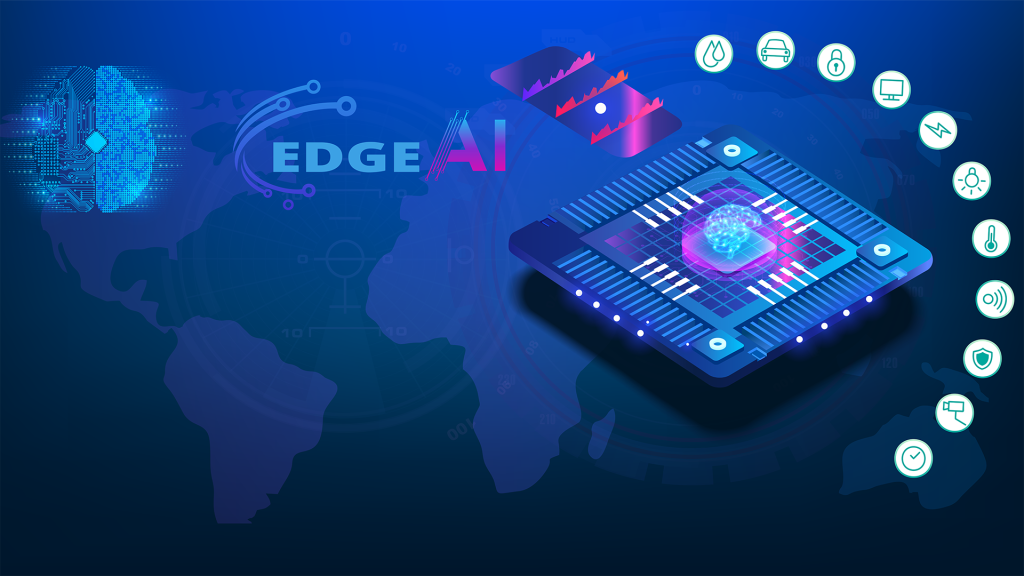
While early AI workloads were processed in centralized data centers, there is a growing trend toward edge AI, where inference and some learning are executed on devices at the network edge — such as smartphones, IoT sensors, autonomous vehicles, and industrial machines.

Benefits of edge AI include:

  • Low latency: Real‑time responsiveness without round‑trip delays to remote servers.
  • Privacy preservation: Data remains on local devices, reducing exposure.
  • Bandwidth efficiency: Limiting data transfer to essential updates.

Emerging frameworks for distributed and federated learning enable collaborative model training across decentralized devices without direct data sharing, further enhancing privacy and scalability.

2.4 Neuro‑Symbolic and Hybrid AI

A notable trend is the blending of symbolic reasoning with neural learning — often termed neuro‑symbolic AI. Traditional neural networks excel at pattern recognition but struggle with explicit reasoning or logic. Symbolic AI systems, conversely, handle rule‑based inference well but lack robust pattern understanding.

Hybrid AI architectures seek to combine:

  • Neural perception and representation learning
  • Symbolic reasoning and knowledge graphs
  • Constraint‑based decision logic

This fusion aims to deliver systems that are both intelligent and interpretable, capable of reasoning about structure, causality, and rules — which is especially critical for safety‑sensitive applications.

2.5 Reinforcement Learning and Autonomous Agents

Reinforcement learning (RL) has gained prominence, particularly in domains requiring sequential decision‑making and exploration. Reinforcement agents learn by interacting with environments and receiving feedback in the form of rewards.

Applications include:

  • Game playing at superhuman levels
  • Autonomous robotics
  • Resource optimization
  • Real‑time strategy planning

Advanced RL algorithms now underpin autonomous systems, enabling them to adapt policies in dynamic and uncertain environments.

3. Infrastructure and Computational Trends

3.1 Specialized AI Hardware

The performance demands of modern AI — especially deep networks and large models — have led to the development of specialized hardware accelerators optimized for tensor operations and parallel processing.

Key hardware trends include:

  • GPUs (Graphics Processing Units): Continual evolution with tensor acceleration features.
  • TPUs (Tensor Processing Units): Custom ASICs designed for matrix math at scale.
  • AI‑specific chips: Emerging from startups and major manufacturers (e.g., custom silicon optimized for sparse computation or low‑precision arithmetic).
  • Neuromorphic hardware: Inspired by biological neural systems, aiming to reduce energy consumption through event‑driven processing.

Hardware trends emphasize efficiency, scalability, and heterogeneous computing, where multiple specialized units collaborate to execute complex AI workloads.

3.2 High‑Performance Computing (HPC) and AI Supercomputers

Large‑scale AI training — particularly for foundation models — requires supercomputer‑class infrastructure. AI supercomputers integrate thousands of accelerators with high‑bandwidth interconnects and distributed storage systems.

These systems are optimized for:

  • Parallel training and model sharding
  • High throughput data pipelines
  • Fault tolerance and elasticity

AI supercomputers serve as essential platforms for both research institutions and industrial R&D labs working on cutting‑edge AI innovations.

3.3 Software Stacks and Framework Ecosystems

A robust software ecosystem underpins AI development. Leading frameworks — such as TensorFlow, PyTorch, and JAX — provide flexible APIs for defining and training models.

Other essential components include:

  • Compiler optimizations
  • Model serving and deployment platforms
  • Performance profiling and debugging tools
  • Automated machine learning (AutoML) suites

Open‑source libraries continue to accelerate innovation by democratizing access to state‑of‑the‑art algorithms and best practices.


4. Deployment Patterns and Industry Adoption

4.1 Enterprise Integration and AI‑First Transformation

AI is central to the digital transformation strategies of enterprises across:

  • Financial services
  • Healthcare
  • Retail and logistics
  • Manufacturing
  • Energy and utilities

Key enterprise use cases include:

  • Predictive analytics
  • Process automation with robotic process automation (RPA)
  • Customer experience enhancement
  • Risk modeling and fraud detection

Organizations are embedding AI at every layer of digital operations, shifting toward AI‑first business models that prioritize intelligent automation and data‑driven decision‑making.

4.2 Democratization of AI Through Cloud Platforms

Cloud providers have made AI resources widely accessible through managed services and pay‑as‑you‑go compute. This democratization enables organizations of all sizes to:

  • Train and deploy models
  • Leverage pre‑built AI services (e.g., speech recognition, translation)
  • Tap into scalable infrastructure without major capital expenditure

Cloud AI services continue to lower the barrier for adoption and experimentation.

4.3 Vertical‑Specific AI Solutions

Industry‑specific AI applications are emerging at scale:

  • Healthcare: AI for medical imaging, drug discovery, personalized treatment recommendations.
  • Automotive: AI for perception, prediction, and control in autonomous driving systems.
  • Retail: Dynamic pricing, inventory optimization, customer segmentation.
  • Telecommunications: Network optimization, predictive maintenance, service personalization.

Verticalized AI solutions often integrate domain knowledge with machine learning models to deliver higher accuracy and business value.


5. Ethical, Legal, and Governance Considerations

5.1 Explainability and Interpretability

As AI systems influence critical decisions, the demand for explainable AI (XAI) grows. Stakeholders — including regulators and end‑users — require visibility into how models arrive at conclusions, particularly in:

  • Healthcare diagnoses
  • Credit scoring
  • Legal or regulatory compliance

Research into interpretability aims to uncover methods that provide human‑understandable rationales for model predictions.

5.2 Fairness and Bias Mitigation

AI systems can inadvertently perpetuate bias present in historical data. Ensuring fairness requires:

  • Diverse and representative training datasets
  • Bias detection and mitigation methodologies
  • Continuous monitoring for disparate impacts

Frameworks and evaluation metrics are being standardized to assess and reduce algorithmic discrimination.

5.3 Data Privacy and Protection

Privacy risks arise when AI models are trained on personal or sensitive information. Techniques to protect data include:

  • Differential privacy
  • Federated learning
  • Secure multi‑party computation

Regulatory frameworks — such as GDPR and emerging AI safety laws — also influence how data is collected, stored, and used in AI pipelines.

5.4 Safety and Robustness

AI systems deployed in safety‑critical domains must withstand uncertainties and adversarial conditions. Research into robustness addresses:

  • Reliability under input perturbations
  • Resistance to adversarial attacks
  • Assurance of consistent performance

Standards bodies and certification frameworks are emerging to assess AI safety systematically.

5.5 Governance and Accountability

AI governance encompasses policies, processes, and oversight mechanisms that ensure responsible development and use. Effective governance frameworks define:

  • Roles and responsibilities
  • Validation and audit procedures
  • Ethical guidelines and compliance checks

Organizations are establishing internal AI ethics boards and engaging cross‑disciplinary expertise to steward AI initiatives responsibly.


6. Societal and Economic Impact

6.1 Labor Market Transformation

AI will reshape job markets through automation and augmentation. While AI can increase productivity and create new classes of work, it also raises concerns about displacement in routine tasks.

Key workforce trends include:

  • Growth in AI‑augmented roles (e.g., AI trainers, data curators)
  • Increased demand for AI literacy across disciplines
  • Need for reskilling and upskilling initiatives

Effective public policy and education strategies are required to ensure equitable access to opportunities.

6.2 Innovation and Creativity Enhancement

AI augments human creativity across fields such as design, music, writing, and scientific exploration. Rather than replacing human ingenuity, these technologies can serve as collaborative partners — enabling accelerated ideation and experimentation.

6.3 Global Competitiveness and Geopolitical Dynamics

AI leadership has become a strategic priority for nations seeking technological and economic competitiveness. Investments in research, infrastructure, and talent development are shaping global innovation ecosystems.

International collaboration — as well as competition — will influence standards, norms, and AI governance frameworks.


7. Emerging Paradigms and Future Outlook

7.1 Continual and Lifelong Learning

Traditional AI systems are trained on fixed datasets and lack adaptability to changing environments. Continual learning aims to enable models that learn incrementally over time without catastrophic forgetting.

Such capabilities are vital for agents operating in dynamic real‑world contexts.

7.2 Neural Architecture Search and AutoML

Automated machine learning (AutoML) and neural architecture search (NAS) seek to automate the discovery of optimal model designs. These approaches reduce reliance on expert intuition and accelerate innovation cycles.

7.3 Responsible AI and Societal Alignment

Future AI development increasingly emphasizes societal alignment — ensuring systems reflect human values, ethical norms, and long‑term well‑being. Collaborative research between technologists, ethicists, social scientists, and policymakers drives this trend.

7.4 AI and Quantum Computing Synergies

Quantum computing holds potential as a future computational substrate for AI. While still nascent, research explores:

  • Quantum‑accelerated machine learning algorithms
  • Hybrid quantum‑classical systems
  • Quantum optimization for model training

Progress in this space may unlock new frontiers of computational capability.

7.5 Human‑AI Collaboration Interfaces

Emerging interfaces aim to deepen human‑AI collaboration, including:

  • Natural language interaction with AI systems
  • Augmented reality (AR)/virtual reality (VR) with AI augmentation
  • Emotion‑aware or context‑aware intelligent assistants

These interfaces promise more intuitive and powerful ways for humans to leverage AI capabilities.


Conclusion

Artificial intelligence is not a static technology but a dynamic and rapidly evolving ecosystem of methods, tools, applications, and societal implications. From scalable neural architectures and generative models to decentralized AI and ethical governance frameworks, the trends highlighted in this article reflect a maturing discipline that is deepening its integration into every aspect of human endeavor.

AI’s trajectory combines technical innovation with responsibility and ethical stewardship. Understanding and anticipating these trends empowers organizations, researchers, and policymakers to harness AI’s transformative potential while navigating associated risks.

As we continue into the next decade of AI progress, the collaboration between humans and intelligent machines will redefine productivity, creativity, and the very nature of technological empowerment.


Tags: AI in edge computing infographicArtificial intelligenceTechnology Trends
ShareTweetShare

Related Posts

Natural Language Processing: One of the Core Pillars of AI
Technology Trends

Natural Language Processing: One of the Core Pillars of AI

January 15, 2026
Deep Learning Simulates Human Brain Signal Processing Pathways Through the Construction of Multi-Layer Neural Networks
Technology Trends

Deep Learning Simulates Human Brain Signal Processing Pathways Through the Construction of Multi-Layer Neural Networks

January 14, 2026
Autonomous Driving and Robotics: Continuous Advancements in Perception and Intelligent Decision-Making Capabilities
Technology Trends

Autonomous Driving and Robotics: Continuous Advancements in Perception and Intelligent Decision-Making Capabilities

January 13, 2026
AI in Assisting Pathological Image Recognition, Disease Diagnosis, and Personalized Treatment Plans
Technology Trends

AI in Assisting Pathological Image Recognition, Disease Diagnosis, and Personalized Treatment Plans

January 12, 2026
NLP Technologies: From Understanding to Generation
Technology Trends

NLP Technologies: From Understanding to Generation

January 11, 2026
Self-Supervised Learning, Federated Learning, and Other Emerging Training Methods: Reducing the Dependence on Labeled Data and Improving Model Generalization
Technology Trends

Self-Supervised Learning, Federated Learning, and Other Emerging Training Methods: Reducing the Dependence on Labeled Data and Improving Model Generalization

January 10, 2026
Leave Comment
  • Trending
  • Comments
  • Latest
How Artificial Intelligence is Achieving Revolutionary Breakthroughs in the Healthcare Industry: What Success Stories Teach Us

How Artificial Intelligence is Achieving Revolutionary Breakthroughs in the Healthcare Industry: What Success Stories Teach Us

July 26, 2025
AI in the Financial Sector: Which Innovative Strategies Are Driving Digital Transformation?

AI in the Financial Sector: Which Innovative Strategies Are Driving Digital Transformation?

July 26, 2025
From Beginner to Expert: Which AI Platforms Are Best for Beginners? Experts’ Take on Learning Curves and Practical Applications

From Beginner to Expert: Which AI Platforms Are Best for Beginners? Experts’ Take on Learning Curves and Practical Applications

July 23, 2025
How to Find Truly Useful AI Resources Among the Crowd? Experts Share How to Select Efficient and Innovative Tools!

How to Find Truly Useful AI Resources Among the Crowd? Experts Share How to Select Efficient and Innovative Tools!

July 23, 2025
How Artificial Intelligence Enhances Diagnostic Accuracy and Transforms Treatment Methods in Healthcare

How Artificial Intelligence Enhances Diagnostic Accuracy and Transforms Treatment Methods in Healthcare

How AI Enhances Customer Experience and Drives Sales Growth in Retail

How AI Enhances Customer Experience and Drives Sales Growth in Retail

How Artificial Intelligence Enables Precise Risk Assessment and Decision-Making

How Artificial Intelligence Enables Precise Risk Assessment and Decision-Making

How AI is Driving the Revolution in Smart Manufacturing and Production Efficiency

How AI is Driving the Revolution in Smart Manufacturing and Production Efficiency

How to Start Learning AI from Scratch: A Roadmap and Time Plan

How to Start Learning AI from Scratch: A Roadmap and Time Plan

January 15, 2026
BMW Leverages AI + Digital Twin Technology to Simulate Production Processes and Train Models for Defect Detection

BMW Leverages AI + Digital Twin Technology to Simulate Production Processes and Train Models for Defect Detection

January 15, 2026
Experts Predict That Future AI Data Labeling and Training Will Rely More on Domain Expert Skills Rather Than Fully Synthetic Data

Experts Predict That Future AI Data Labeling and Training Will Rely More on Domain Expert Skills Rather Than Fully Synthetic Data

January 15, 2026
Natural Language Processing: One of the Core Pillars of AI

Natural Language Processing: One of the Core Pillars of AI

January 15, 2026
AIInsiderUpdates

Our platform is dedicated to delivering comprehensive coverage of AI developments, featuring news, case studies, expert interviews, and valuable resources for professionals and enthusiasts alike.

© 2025 aiinsiderupdates.com. contacts:[email protected]

No Result
View All Result
  • Home
  • AI News
  • Technology Trends
  • Interviews & Opinions
  • Case Studies
  • Tools & Resources

© 2025 aiinsiderupdates.com. contacts:[email protected]

Welcome Back!

Login to your account below

Forgotten Password?

Retrieve your password

Please enter your username or email address to reset your password.

Log In