


























AIInsiderUpdates
  • Home
  • AI News
    Leveraging AI to Analyze Customer Purchase Behavior: Optimizing Inventory and Supply Chain Management in Retail

    Leveraging AI to Analyze Customer Purchase Behavior: Optimizing Inventory and Supply Chain Management in Retail

    The Expanding Application of AI Technology in the Financial Industry

    The Expanding Application of AI Technology in the Financial Industry

    AI Applications Make Vehicles Safer in More Complex Environments

    AI Applications Make Vehicles Safer in More Complex Environments

    AI Technology Applications as the Core Driver of Progress

    AI Technology Applications as the Core Driver of Progress

    AI Applications in Autonomous Driving and Transportation

    AI Applications in Autonomous Driving and Transportation

    How AI Can Create Customized Treatment Plans Based on Personal Genetic Data and Health Records, Advancing Precision Medicine

    How AI Can Create Customized Treatment Plans Based on Personal Genetic Data and Health Records, Advancing Precision Medicine

  • Technology Trends
    Reinforcement Learning in Complex Decision-Making: Applications and Insights

    Reinforcement Learning in Complex Decision-Making: Applications and Insights

    The Fusion of Augmented Reality and Natural Language Processing

    The Fusion of Augmented Reality and Natural Language Processing

    AI: Analyzing Both Image and Speech Data to Provide More Accurate Services

    AI: Analyzing Both Image and Speech Data to Provide More Accurate Services

    AI Can Generate More Than Just Text and Images: The Creation of Music, Videos, and Other Multimedia Content

    AI Can Generate More Than Just Text and Images: The Creation of Music, Videos, and Other Multimedia Content

    Multimodal Learning: Combining Diverse Data Types for Enhanced AI Perception

    Multimodal Learning: Combining Diverse Data Types for Enhanced AI Perception

    Generative AI: Mimicking Human Creativity to Generate New Content

    Generative AI: Mimicking Human Creativity to Generate New Content

  • Interviews & Opinions
    AI Security and How to Effectively Regulate It: A Global Imperative

    AI Security and How to Effectively Regulate It: A Global Imperative

    AI Ethics Framework: Ensuring Responsible AI Development and Deployment

    AI Ethics Framework: Ensuring Responsible AI Development and Deployment

    The Rapid Development of AI and Its Impact on the Global Labor Market

    The Rapid Development of AI and Its Impact on the Global Labor Market

    Global Frameworks for AI Regulation: Ensuring Ethical Application and Minimizing Negative Impact on Society

    Global Frameworks for AI Regulation: Ensuring Ethical Application and Minimizing Negative Impact on Society

    Ensuring Diversity and Representativeness in AI Development to Avoid Reinforcing Social Inequality

    Ensuring Diversity and Representativeness in AI Development to Avoid Reinforcing Social Inequality

    Transforming Education and Retraining the Workforce

    Transforming Education and Retraining the Workforce

  • Case Studies
    Manufacturing: A Crucial Battlefield for AI Technology Implementation

    Manufacturing: A Crucial Battlefield for AI Technology Implementation

    Credit Scoring Optimization: Enhancing Accuracy, Fairness, and Accessibility in Financial Systems

    Credit Scoring Optimization: Enhancing Accuracy, Fairness, and Accessibility in Financial Systems

    The Application of AI in Retail and E-Commerce

    The Application of AI in Retail and E-Commerce

    The Application of AI in Finance: Balancing Accuracy and Compliance

    The Application of AI in Finance: Balancing Accuracy and Compliance

    Transparent and Explainable Models are Crucial for Financial Institutions to Meet Regulatory Requirements

    Transparent and Explainable Models are Crucial for Financial Institutions to Meet Regulatory Requirements

    BlueDot AI System in Predicting COVID-19 Spread and Supporting Public Health Decisions

    BlueDot AI System in Predicting COVID-19 Spread and Supporting Public Health Decisions

  • Tools & Resources
    AI-Driven Natural Language Processing Tools

    AI-Driven Natural Language Processing Tools

    The Rise of Low-Code and No-Code Development Platforms in the Age of AI Technology

    The Rise of Low-Code and No-Code Development Platforms in the Age of AI Technology

    Simplifying AI Development Platforms and Tools

    Simplifying AI Development Platforms and Tools

    AWS: Excellence in Big Data Processing and Model Training

    AWS: Excellence in Big Data Processing and Model Training

    Google Cloud AI: A Comprehensive Range of AI Services from Machine Learning to Natural Language Processing and Visual Recognition

    Google Cloud AI: A Comprehensive Range of AI Services from Machine Learning to Natural Language Processing and Visual Recognition

    Google Cloud AutoML: Empowering Non-Experts to Train and Deploy Machine Learning Models

    Google Cloud AutoML: Empowering Non-Experts to Train and Deploy Machine Learning Models

AIInsiderUpdates
  • Home
  • AI News
    Leveraging AI to Analyze Customer Purchase Behavior: Optimizing Inventory and Supply Chain Management in Retail

    Leveraging AI to Analyze Customer Purchase Behavior: Optimizing Inventory and Supply Chain Management in Retail

    The Expanding Application of AI Technology in the Financial Industry

    The Expanding Application of AI Technology in the Financial Industry

    AI Applications Make Vehicles Safer in More Complex Environments

    AI Applications Make Vehicles Safer in More Complex Environments

    AI Technology Applications as the Core Driver of Progress

    AI Technology Applications as the Core Driver of Progress

    AI Applications in Autonomous Driving and Transportation

    AI Applications in Autonomous Driving and Transportation

    How AI Can Create Customized Treatment Plans Based on Personal Genetic Data and Health Records, Advancing Precision Medicine

    How AI Can Create Customized Treatment Plans Based on Personal Genetic Data and Health Records, Advancing Precision Medicine

  • Technology Trends
    Reinforcement Learning in Complex Decision-Making: Applications and Insights

    Reinforcement Learning in Complex Decision-Making: Applications and Insights

    The Fusion of Augmented Reality and Natural Language Processing

    The Fusion of Augmented Reality and Natural Language Processing

    AI: Analyzing Both Image and Speech Data to Provide More Accurate Services

    AI: Analyzing Both Image and Speech Data to Provide More Accurate Services

    AI Can Generate More Than Just Text and Images: The Creation of Music, Videos, and Other Multimedia Content

    AI Can Generate More Than Just Text and Images: The Creation of Music, Videos, and Other Multimedia Content

    Multimodal Learning: Combining Diverse Data Types for Enhanced AI Perception

    Multimodal Learning: Combining Diverse Data Types for Enhanced AI Perception

    Generative AI: Mimicking Human Creativity to Generate New Content

    Generative AI: Mimicking Human Creativity to Generate New Content

  • Interviews & Opinions
    AI Security and How to Effectively Regulate It: A Global Imperative

    AI Security and How to Effectively Regulate It: A Global Imperative

    AI Ethics Framework: Ensuring Responsible AI Development and Deployment

    AI Ethics Framework: Ensuring Responsible AI Development and Deployment

    The Rapid Development of AI and Its Impact on the Global Labor Market

    The Rapid Development of AI and Its Impact on the Global Labor Market

    Global Frameworks for AI Regulation: Ensuring Ethical Application and Minimizing Negative Impact on Society

    Global Frameworks for AI Regulation: Ensuring Ethical Application and Minimizing Negative Impact on Society

    Ensuring Diversity and Representativeness in AI Development to Avoid Reinforcing Social Inequality

    Ensuring Diversity and Representativeness in AI Development to Avoid Reinforcing Social Inequality

    Transforming Education and Retraining the Workforce

    Transforming Education and Retraining the Workforce

  • Case Studies
    Manufacturing: A Crucial Battlefield for AI Technology Implementation

    Manufacturing: A Crucial Battlefield for AI Technology Implementation

    Credit Scoring Optimization: Enhancing Accuracy, Fairness, and Accessibility in Financial Systems

    Credit Scoring Optimization: Enhancing Accuracy, Fairness, and Accessibility in Financial Systems

    The Application of AI in Retail and E-Commerce

    The Application of AI in Retail and E-Commerce

    The Application of AI in Finance: Balancing Accuracy and Compliance

    The Application of AI in Finance: Balancing Accuracy and Compliance

    Transparent and Explainable Models are Crucial for Financial Institutions to Meet Regulatory Requirements

    Transparent and Explainable Models are Crucial for Financial Institutions to Meet Regulatory Requirements

    BlueDot AI System in Predicting COVID-19 Spread and Supporting Public Health Decisions

    BlueDot AI System in Predicting COVID-19 Spread and Supporting Public Health Decisions

  • Tools & Resources
    AI-Driven Natural Language Processing Tools

    AI-Driven Natural Language Processing Tools

    The Rise of Low-Code and No-Code Development Platforms in the Age of AI Technology

    The Rise of Low-Code and No-Code Development Platforms in the Age of AI Technology

    Simplifying AI Development Platforms and Tools

    Simplifying AI Development Platforms and Tools

    AWS: Excellence in Big Data Processing and Model Training

    AWS: Excellence in Big Data Processing and Model Training

    Google Cloud AI: A Comprehensive Range of AI Services from Machine Learning to Natural Language Processing and Visual Recognition

    Google Cloud AI: A Comprehensive Range of AI Services from Machine Learning to Natural Language Processing and Visual Recognition

    Google Cloud AutoML: Empowering Non-Experts to Train and Deploy Machine Learning Models

    Google Cloud AutoML: Empowering Non-Experts to Train and Deploy Machine Learning Models

AIInsiderUpdates
No Result
View All Result

Manufacturing: A Crucial Battlefield for AI Technology Implementation

December 11, 2025
Manufacturing: A Crucial Battlefield for AI Technology Implementation

Introduction

The manufacturing sector is undergoing a profound transformation with the advent of artificial intelligence (AI) technologies. AI is no longer a futuristic concept; it is a powerful tool that is being integrated into factories, supply chains, and production lines worldwide. As industries face increasing pressure to improve productivity, reduce costs, and innovate, AI offers transformative capabilities that optimize operations and unlock new possibilities in manufacturing.

AI is revolutionizing key aspects of manufacturing—from predictive maintenance and process optimization to smart automation and quality control. This article explores the critical role of AI in manufacturing, how it is reshaping the industry, and the challenges and opportunities it presents for businesses seeking to implement AI-driven solutions.


1. The Role of AI in Modern Manufacturing

AI’s application in manufacturing is broad, spanning numerous functions that contribute to efficiency, safety, and quality. As AI technologies become more sophisticated, their integration into manufacturing processes has proven to be a game-changer.

1.1 Predictive Maintenance

One of the most significant ways AI is revolutionizing manufacturing is through predictive maintenance. Traditionally, manufacturing companies have relied on scheduled maintenance or reactive repairs when equipment breaks down. However, these methods are often inefficient and costly. AI-powered predictive maintenance uses machine learning algorithms to analyze data from sensors embedded in machinery. By monitoring equipment health in real-time, AI can predict when a machine is likely to fail and recommend proactive maintenance before problems occur.

  • Benefits: Predictive maintenance helps manufacturers avoid costly downtime, reduce repair expenses, and increase the overall lifespan of machinery.
  • Example: Companies like General Electric and Siemens are already using AI to monitor the condition of their industrial equipment, minimizing failures and improving production efficiency.

Predictive maintenance is transforming asset management in manufacturing by shifting the approach from time-based maintenance to condition-based maintenance, which is much more efficient and cost-effective.

1.2 Process Optimization and Quality Control

AI algorithms can also be used to optimize manufacturing processes, ensuring that each step of the production line is as efficient as possible. In process optimization, AI analyzes historical data, real-time inputs, and performance metrics to fine-tune production parameters such as temperature, pressure, and speed to maximize output and minimize waste.

In the realm of quality control, AI plays a vital role in improving product consistency and minimizing defects. Traditional quality inspection methods often rely on human workers, which can be prone to fatigue, error, or bias. AI, particularly in the form of computer vision, can analyze products at high speed and with incredible accuracy to detect defects or inconsistencies that may be missed by human inspectors.

  • Benefits: AI-driven quality control systems can detect minute defects, optimize material use, and ensure higher consistency, leading to superior product quality and fewer returns or rework.

By utilizing real-time data and machine learning, AI helps manufacturers continuously improve production quality, reduce scrap, and enhance the overall effectiveness of the production line.

1.3 Smart Factories and Automation

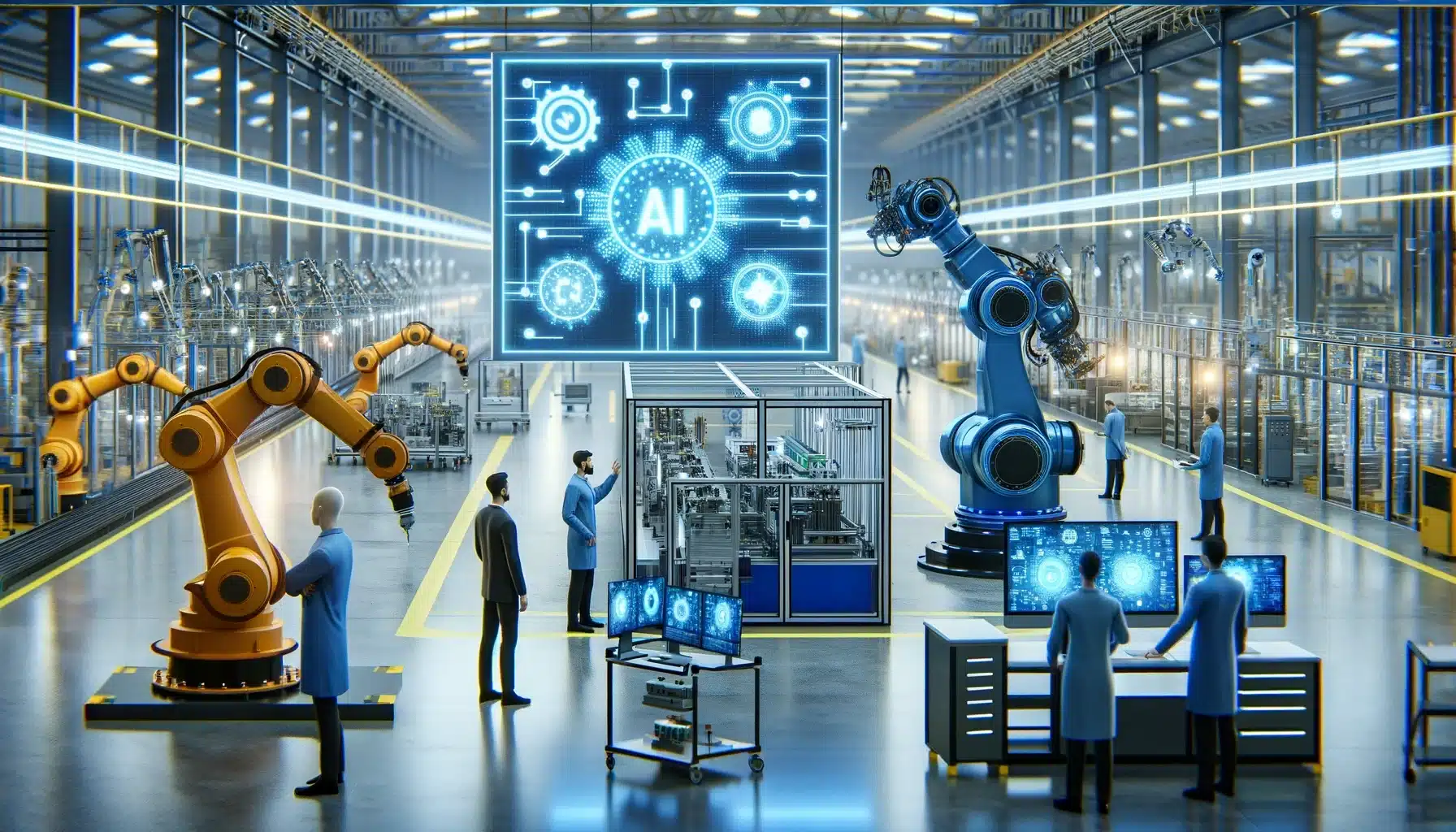
The vision of the smart factory has long been the ultimate goal for manufacturers looking to fully leverage AI. Smart factories are equipped with interconnected machines, devices, and systems that communicate with each other in real-time, creating a highly automated and intelligent production environment.

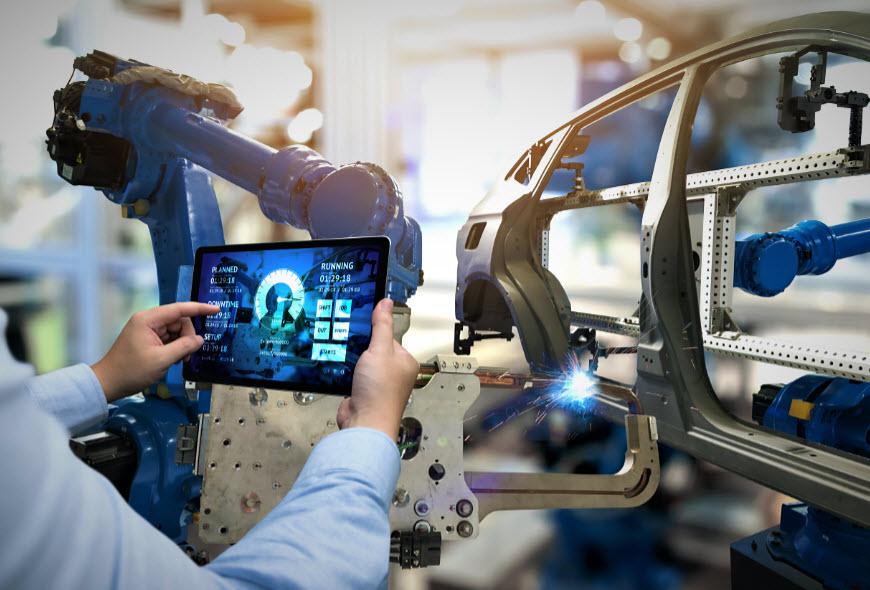
AI enables greater levels of automation in manufacturing processes by replacing manual labor with robots and intelligent machines. These robots can perform repetitive, hazardous, or precise tasks with high efficiency and little human intervention. Additionally, AI allows machines to learn and adapt to changes in the production environment, improving their performance over time.

  • Example: Tesla’s factory in Fremont, California, integrates AI-powered robots in their production line, enabling rapid assembly and high levels of customization with minimal human intervention.

In a smart factory, AI can monitor and control the entire production process, adjusting workflows, ensuring proper inventory management, and optimizing supply chains.

1.4 Supply Chain Optimization

AI also plays a crucial role in the optimization of supply chains, an area of manufacturing that directly impacts both cost efficiency and customer satisfaction. By using AI to analyze vast amounts of data—from supplier lead times to demand forecasting—manufacturers can optimize their supply chains to ensure timely production and delivery of goods.

  • AI Applications: AI algorithms can predict demand more accurately, improve inventory management, and recommend optimal order quantities and shipment routes. This reduces the risk of overstocking or stockouts, minimizes shipping costs, and improves customer satisfaction.
  • Example: Companies like Amazon and Toyota use AI-powered supply chain optimization tools to streamline their logistics and ensure the efficient movement of goods.

Supply chain management has become a key area where AI contributes not only to cost savings but also to improving customer service by ensuring that products are delivered on time and in the right quantities.


2. The Advantages of Implementing AI in Manufacturing

AI offers numerous advantages for manufacturers who choose to adopt and integrate it into their operations. These benefits can be realized across various areas, including operational efficiency, cost savings, and increased competitiveness.

2.1 Increased Efficiency and Productivity

AI technologies enhance productivity by automating repetitive and time-consuming tasks, enabling workers to focus on higher-value activities. AI systems can analyze data in real time, allowing manufacturers to optimize production processes, monitor equipment performance, and adjust parameters for maximum efficiency.

  • Example: AI-driven robots are used in factories to assemble products, package goods, and perform quality control, significantly reducing the time needed for manual labor.

The increased automation enabled by AI means that factories can produce more goods in less time, improving overall productivity and reducing production costs.

2.2 Cost Reduction and Resource Optimization

By using AI to predict maintenance needs, manufacturers can reduce the likelihood of costly downtime caused by equipment failures. AI also helps optimize resource allocation by analyzing production data and determining the most efficient use of materials, machinery, and labor.

  • Example: In industries such as steel production, AI can optimize energy consumption, reduce waste, and lower emissions, resulting in cost savings and a smaller environmental footprint.

AI also allows manufacturers to optimize inventory management, reducing the need for large stockpiles and lowering warehousing costs. This improves cash flow and ensures that capital is used more efficiently.

2.3 Enhanced Safety and Risk Management

Manufacturing environments are often dangerous, with workers exposed to heavy machinery, hazardous materials, and complex operations. AI can help improve safety by monitoring work environments and detecting potential risks before they lead to accidents.

  • Example: AI-powered safety systems can monitor worker movements, detect safety hazards, and alert operators about equipment malfunctions that may cause accidents or harm.

Moreover, AI-driven systems can identify risks in production processes and recommend corrective actions to prevent accidents, making workplaces safer for employees.

2.4 Customization and Flexibility

AI offers manufacturers the ability to produce customized products in a cost-effective manner. With the help of AI, companies can use flexible production lines that adjust in real-time to meet customer demand, enabling mass customization.

  • Example: Companies like Nike have integrated AI into their manufacturing process to produce personalized sneakers based on individual customer preferences, without sacrificing speed or cost-effectiveness.

As consumer preferences increasingly shift toward personalized products, AI enables manufacturers to respond quickly and efficiently to changing market demands.

3. Challenges in Implementing AI in Manufacturing

While AI holds immense potential for transforming manufacturing, its implementation is not without challenges. Manufacturers face several obstacles when adopting AI, including technical, organizational, and financial barriers.

3.1 Data Quality and Availability

AI relies on data to function, and for AI models to work effectively, they need access to high-quality, accurate, and abundant data. However, many manufacturers struggle with fragmented, inconsistent, or incomplete data, which can undermine the effectiveness of AI applications.

  • Challenge: Ensuring that data is collected from various sources, standardized, and structured in a way that AI algorithms can process is a significant hurdle for many manufacturers.

Addressing these data-related issues requires investments in data infrastructure, sensor technology, and data governance practices to ensure the accuracy and consistency of data flowing through AI systems.

3.2 High Initial Costs and ROI Uncertainty

The initial investment in AI technologies can be high, especially for small and medium-sized enterprises (SMEs) in manufacturing. From purchasing AI software to upgrading machinery and training employees, the upfront costs can be significant.

  • Challenge: Manufacturers must carefully evaluate the potential return on investment (ROI) of AI systems, taking into account long-term benefits such as reduced maintenance costs, improved productivity, and enhanced product quality.

In many cases, the financial outlay for AI integration may not produce immediate results, which can deter some businesses from adopting the technology.

3.3 Workforce Adaptation and Skills Gap

The widespread adoption of AI also requires a shift in the workforce. AI and automation systems can replace certain manual tasks, but they also require highly skilled workers to operate, maintain, and optimize these technologies. Ensuring that employees have the necessary skills to work with AI systems is crucial.

  • Challenge: Manufacturers may struggle to find workers with the expertise needed to manage and troubleshoot AI systems, leading to a skills gap.

To overcome this challenge, companies must invest in training and development programs to upskill their workforce and foster a culture of collaboration between human workers and AI-powered machines.


4. The Future of AI in Manufacturing

As AI technology continues to evolve, its applications in manufacturing will become even more advanced and widespread. Several key trends indicate where the industry is headed:

  • Edge AI: With the increasing use of edge computing, AI algorithms will be deployed directly on factory floors, enabling faster decision-making and real-time optimization without the need for cloud connectivity.
  • Collaborative Robotics (Cobots): AI-powered robots will work alongside human workers, enhancing productivity and safety by performing tasks that complement human abilities.
  • AI-Driven Sustainability: AI will continue to help manufacturers reduce waste, optimize energy use, and lower emissions, driving the industry’s push toward sustainability.
  • Autonomous Supply Chains: AI will enable the development of fully autonomous supply chains, from demand forecasting to delivery, making manufacturing operations more efficient and responsive.

Conclusion

AI is not just a passing trend in the manufacturing industry; it is a transformative technology that is reshaping how products are designed, produced, and delivered. By embracing AI, manufacturers can improve efficiency, reduce costs, enhance product quality, and adapt to changing market demands. However, realizing the full potential of AI requires overcoming technical, financial, and organizational challenges, as well as a commitment to investing in data, infrastructure, and workforce skills.

The future of manufacturing is undeniably intertwined with the development and implementation of AI. By harnessing the power of AI, manufacturers can position themselves for long-term success in an increasingly competitive and technology-driven global market.


Tags: AI TechnologyCase StudiesManufacturing
ShareTweetShare

Related Posts

Credit Scoring Optimization: Enhancing Accuracy, Fairness, and Accessibility in Financial Systems
Case Studies

Credit Scoring Optimization: Enhancing Accuracy, Fairness, and Accessibility in Financial Systems

December 10, 2025
The Application of AI in Retail and E-Commerce
Case Studies

The Application of AI in Retail and E-Commerce

December 9, 2025
The Application of AI in Finance: Balancing Accuracy and Compliance
Case Studies

The Application of AI in Finance: Balancing Accuracy and Compliance

December 8, 2025
Transparent and Explainable Models are Crucial for Financial Institutions to Meet Regulatory Requirements
Case Studies

Transparent and Explainable Models are Crucial for Financial Institutions to Meet Regulatory Requirements

December 7, 2025
BlueDot AI System in Predicting COVID-19 Spread and Supporting Public Health Decisions
Case Studies

BlueDot AI System in Predicting COVID-19 Spread and Supporting Public Health Decisions

December 6, 2025
Using AI to Analyze Client Risk Preferences for Personalized Asset Allocation
Case Studies

Using AI to Analyze Client Risk Preferences for Personalized Asset Allocation

December 5, 2025
Leave Comment
  • Trending
  • Comments
  • Latest
How Artificial Intelligence is Achieving Revolutionary Breakthroughs in the Healthcare Industry: What Success Stories Teach Us

How Artificial Intelligence is Achieving Revolutionary Breakthroughs in the Healthcare Industry: What Success Stories Teach Us

July 26, 2025
AI in the Financial Sector: Which Innovative Strategies Are Driving Digital Transformation?

AI in the Financial Sector: Which Innovative Strategies Are Driving Digital Transformation?

July 26, 2025
From Beginner to Expert: Which AI Platforms Are Best for Beginners? Experts’ Take on Learning Curves and Practical Applications

From Beginner to Expert: Which AI Platforms Are Best for Beginners? Experts’ Take on Learning Curves and Practical Applications

July 23, 2025
How to Find Truly Useful AI Resources Among the Crowd? Experts Share How to Select Efficient and Innovative Tools!

How to Find Truly Useful AI Resources Among the Crowd? Experts Share How to Select Efficient and Innovative Tools!

July 23, 2025
How Artificial Intelligence Enhances Diagnostic Accuracy and Transforms Treatment Methods in Healthcare

How Artificial Intelligence Enhances Diagnostic Accuracy and Transforms Treatment Methods in Healthcare

How AI Enhances Customer Experience and Drives Sales Growth in Retail

How AI Enhances Customer Experience and Drives Sales Growth in Retail

How Artificial Intelligence Enables Precise Risk Assessment and Decision-Making

How Artificial Intelligence Enables Precise Risk Assessment and Decision-Making

How AI is Driving the Revolution in Smart Manufacturing and Production Efficiency

How AI is Driving the Revolution in Smart Manufacturing and Production Efficiency

AI-Driven Natural Language Processing Tools

AI-Driven Natural Language Processing Tools

December 11, 2025
Manufacturing: A Crucial Battlefield for AI Technology Implementation

Manufacturing: A Crucial Battlefield for AI Technology Implementation

December 11, 2025
AI Security and How to Effectively Regulate It: A Global Imperative

AI Security and How to Effectively Regulate It: A Global Imperative

December 11, 2025
Reinforcement Learning in Complex Decision-Making: Applications and Insights

Reinforcement Learning in Complex Decision-Making: Applications and Insights

December 11, 2025
AIInsiderUpdates

Our platform is dedicated to delivering comprehensive coverage of AI developments, featuring news, case studies, expert interviews, and valuable resources for professionals and enthusiasts alike.

© 2025 aiinsiderupdates.com. contacts:[email protected]

No Result
View All Result
  • Home
  • AI News
  • Technology Trends
  • Interviews & Opinions
  • Case Studies
  • Tools & Resources

© 2025 aiinsiderupdates.com. contacts:[email protected]

Welcome Back!

Login to your account below

Forgotten Password?

Retrieve your password

Please enter your username or email address to reset your password.

Log In