
















Introduction
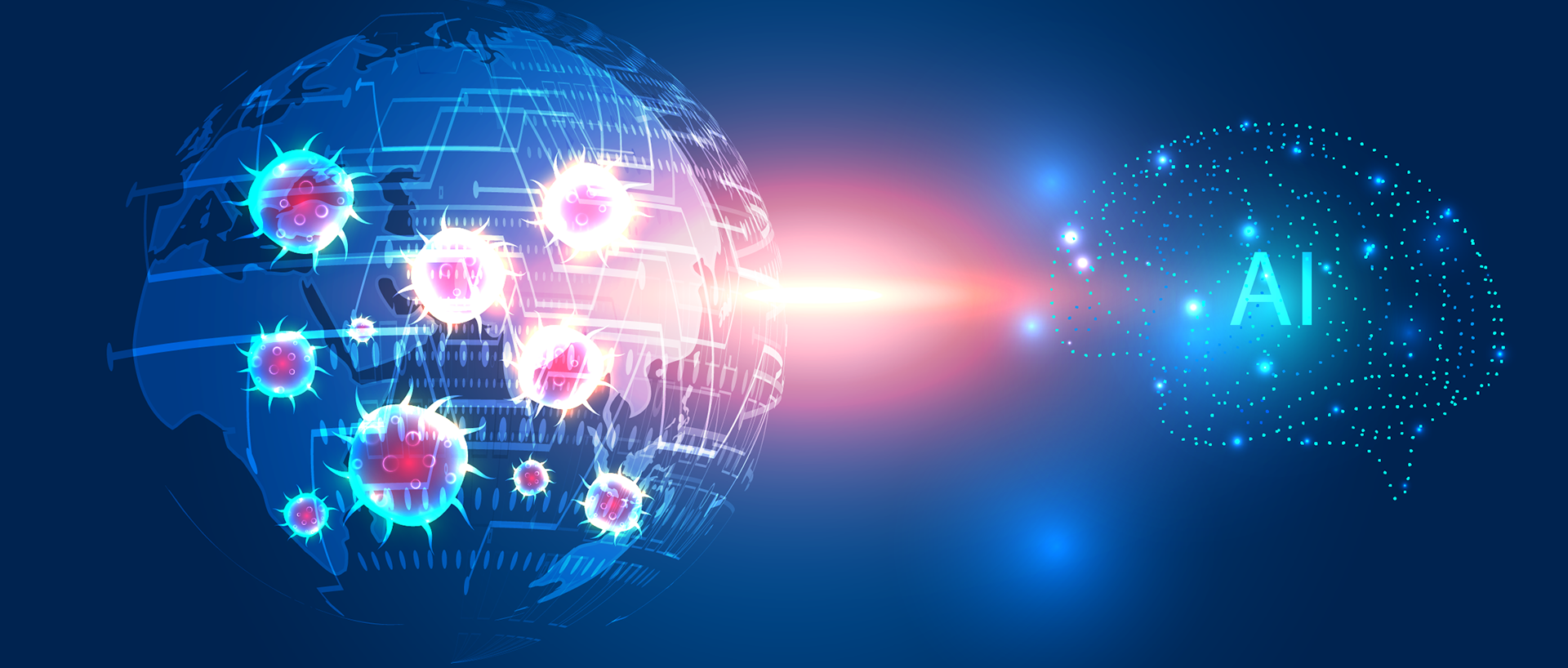
In the early days of the COVID-19 pandemic, the world faced a rapidly evolving crisis that required timely and accurate information to guide public health responses. Amid the uncertainty and chaos, BlueDot, an AI-powered platform, stood out for its ability to predict the spread of the virus and help public health officials make data-driven decisions. Using a combination of data analysis, machine learning, and epidemiological modeling, BlueDot was one of the first to identify the potential global spread of COVID-19 and provided critical insights that contributed to early pandemic responses.
This article explores how the BlueDot AI system leveraged big data and AI algorithms to predict the trajectory of COVID-19, its role in guiding public health decisions, and the broader implications for the future of epidemic forecasting. We will also examine the strengths and challenges of using AI in the context of infectious disease prediction, and how these technologies are shaping the future of public health.
What is BlueDot AI?
BlueDot is a Canadian-based technology company that specializes in using AI and data analytics to monitor global health threats, including emerging infectious diseases. Founded in 2013 by Dr. Kamran Khan, an infectious disease physician and scientist, BlueDot developed an AI-driven platform that uses multiple data sources to track and predict disease outbreaks. The company’s focus is on providing early warnings about the potential spread of infectious diseases and helping public health organizations prepare for and mitigate these threats.
The core of BlueDot’s approach lies in its ability to integrate big data from a variety of sources, including:
- News reports: Real-time news coverage of disease outbreaks worldwide.
- Satellite data: Data on human mobility patterns, such as flight travel and transportation routes.
- Healthcare data: Information on reported cases of illness and disease outbreaks.
- Scientific literature: Research papers, medical journals, and studies that may offer insights into emerging pathogens.
By processing and analyzing these data sources using machine learning and natural language processing (NLP) algorithms, BlueDot is able to generate epidemic forecasts and provide early warnings about potential outbreaks.
BlueDot’s Role in Early COVID-19 Detection
In December 2019, BlueDot made headlines for being one of the first organizations to identify the outbreak of a novel pneumonia-like illness in Wuhan, China. By using its AI system to scan a range of sources—including Chinese health reports and news articles—BlueDot was able to detect the early signs of the outbreak before it was widely recognized by other global health organizations.
Key Predictive Capabilities of BlueDot
- Early Detection: BlueDot’s AI system is designed to detect early warning signs of disease outbreaks by analyzing a combination of data sources. For COVID-19, it tracked reports from the World Health Organization (WHO), Chinese health authorities, and social media reports to identify unusual patterns of illness in Wuhan. The platform recognized the significance of the emerging outbreak and flagged it as a potential global health threat.
- Geospatial Analysis: One of BlueDot’s key strengths is its ability to analyze the movement of people around the world. The AI system incorporated data on air travel patterns, identifying cities and countries that had direct flights to and from Wuhan. This allowed BlueDot to predict the potential spread of the virus to other parts of Asia, Europe, and North America, well before the virus was officially confirmed in those locations.
- Real-time Disease Mapping: BlueDot’s system was able to update in real-time as new information became available. By analyzing symptom reports, health data, and mobility patterns, the system created interactive maps that displayed the spread of the virus across the globe. This real-time mapping was crucial for public health officials to identify potential hotspots and plan responses accordingly.
- Predicting Disease Impact: BlueDot’s AI platform was able to not only detect the outbreak but also estimate its potential severity and impact. By analyzing trends in transmission and healthcare responses, BlueDot’s system provided predictions about the future course of the outbreak, helping public health authorities anticipate surges in cases and prepare healthcare systems for the expected impact.
Early Warning and Risk Assessment
In January 2020, BlueDot issued a detailed warning about the potential global spread of COVID-19. The platform’s predictions were based on an analysis of patterns in human movement, global interconnectedness, and initial reports of the virus. At a time when many public health officials were still focused on the outbreak in China, BlueDot’s early alert system identified several high-risk areas, including Thailand, South Korea, Japan, and the United States. This early warning allowed governments and health organizations to prepare for the spread of the virus before it became widespread in other countries.

The Role of BlueDot in Public Health Decision Making
The ability to predict the spread of infectious diseases and assess risks in real-time is vital for making informed public health decisions. BlueDot’s AI system provided critical data that helped governments, public health organizations, and healthcare providers plan and implement responses to COVID-19.
1. Informing Travel Restrictions
One of the key public health measures to slow the spread of COVID-19 was the implementation of travel restrictions and border closures. BlueDot’s analysis of global air travel patterns allowed authorities to identify countries at high risk of importing the virus. This data was crucial in implementing early travel bans to limit the spread of the virus across borders. By using BlueDot’s predictions, countries could take a more targeted approach to travel restrictions, focusing on high-risk regions instead of blanket bans on all international travel.
2. Guiding Resource Allocation
BlueDot’s epidemic forecasting capabilities also played a role in resource allocation. Predicting where the virus would spread allowed health organizations to allocate medical supplies, such as ventilators, PPE (Personal Protective Equipment), and hospital beds, to areas likely to experience surges in COVID-19 cases. Early predictions about hospital capacity and healthcare demand helped minimize the strain on the healthcare system and improve the management of critical resources.
3. Supporting Risk Communication
Clear and accurate communication is vital during a health crisis. BlueDot’s system helped public health organizations provide timely updates about the status of the pandemic. By offering real-time data and forecasts, BlueDot allowed authorities to share information with the public, including projections about how the virus might spread in specific regions and when peaks might occur. This helped to manage public expectations and reduce panic, while also emphasizing the importance of social distancing and quarantine measures.
4. Enhancing Global Cooperation
The global nature of the COVID-19 pandemic required coordinated action from governments, international organizations, and health authorities. BlueDot’s AI-driven insights facilitated better cooperation between countries by providing a shared understanding of the risks and potential hotspots. By providing early warnings to international health organizations such as the WHO and the Centers for Disease Control and Prevention (CDC), BlueDot helped enhance global surveillance efforts and preparedness for the spread of the virus.
Challenges and Limitations of BlueDot’s Approach
While BlueDot’s AI system was instrumental in predicting and tracking the COVID-19 pandemic, there were several challenges and limitations that arose during the course of the outbreak.
1. Data Quality and Accuracy
AI models, including BlueDot’s system, rely heavily on the quality and accuracy of the data they process. In the early days of the COVID-19 outbreak, data from China and other countries was incomplete, inconsistent, or unreliable, making it challenging to predict the virus’s spread with full certainty. In some cases, underreporting or delays in reporting skewed the data, leading to gaps in forecasting.
2. Uncertainty and Evolving Data
The unpredictability of the pandemic, with its constantly evolving nature, presented challenges for BlueDot’s system. As new variants of the virus emerged, it became increasingly difficult to forecast future trends with complete accuracy. In particular, the emergence of the Delta and Omicron variants introduced additional complexity into the modeling, as these variants exhibited different transmission dynamics and response to public health measures.
3. Ethical Considerations and Privacy
The use of big data and AI in public health decision-making raises concerns about data privacy and ethical considerations. BlueDot’s platform relies on large datasets that include information on human mobility and healthcare trends. Protecting the privacy of individuals while still leveraging this data for public health purposes remains a challenge. Additionally, the use of AI in decision-making raises questions about accountability, transparency, and bias in predictions.
The Future of Epidemic Forecasting and AI in Public Health
The success of BlueDot in predicting the COVID-19 outbreak demonstrates the potential of AI to revolutionize epidemic forecasting and public health decision-making. However, there are still challenges to overcome, particularly in terms of data quality, ethical considerations, and ensuring equitable access to predictive tools.
As technology continues to evolve, the future of epidemic forecasting will likely involve more advanced AI systems that can predict the spread of diseases with even greater accuracy. The integration of genomic data, wearable devices, and real-time health monitoring will enable more precise predictions, while the continued development of AI will improve the ability to forecast emerging health threats before they reach pandemic levels.
In conclusion, the BlueDot AI system has demonstrated the power of data analytics and machine learning in shaping public health responses to infectious diseases. As we look ahead, the lessons learned from COVID-19 will likely inform the development of more robust, proactive approaches to managing global health threats.