




























AIInsiderUpdates
  • Home
  • AI News
    Leveraging AI to Analyze Customer Purchase Behavior: Optimizing Inventory and Supply Chain Management in Retail

    Leveraging AI to Analyze Customer Purchase Behavior: Optimizing Inventory and Supply Chain Management in Retail

    The Expanding Application of AI Technology in the Financial Industry

    The Expanding Application of AI Technology in the Financial Industry

    AI Applications Make Vehicles Safer in More Complex Environments

    AI Applications Make Vehicles Safer in More Complex Environments

    AI Technology Applications as the Core Driver of Progress

    AI Technology Applications as the Core Driver of Progress

    AI Applications in Autonomous Driving and Transportation

    AI Applications in Autonomous Driving and Transportation

    How AI Can Create Customized Treatment Plans Based on Personal Genetic Data and Health Records, Advancing Precision Medicine

    How AI Can Create Customized Treatment Plans Based on Personal Genetic Data and Health Records, Advancing Precision Medicine

  • Technology Trends
    Reinforcement Learning in Complex Decision-Making: Applications and Insights

    Reinforcement Learning in Complex Decision-Making: Applications and Insights

    The Fusion of Augmented Reality and Natural Language Processing

    The Fusion of Augmented Reality and Natural Language Processing

    AI: Analyzing Both Image and Speech Data to Provide More Accurate Services

    AI: Analyzing Both Image and Speech Data to Provide More Accurate Services

    AI Can Generate More Than Just Text and Images: The Creation of Music, Videos, and Other Multimedia Content

    AI Can Generate More Than Just Text and Images: The Creation of Music, Videos, and Other Multimedia Content

    Multimodal Learning: Combining Diverse Data Types for Enhanced AI Perception

    Multimodal Learning: Combining Diverse Data Types for Enhanced AI Perception

    Generative AI: Mimicking Human Creativity to Generate New Content

    Generative AI: Mimicking Human Creativity to Generate New Content

  • Interviews & Opinions
    AI Security and How to Effectively Regulate It: A Global Imperative

    AI Security and How to Effectively Regulate It: A Global Imperative

    AI Ethics Framework: Ensuring Responsible AI Development and Deployment

    AI Ethics Framework: Ensuring Responsible AI Development and Deployment

    The Rapid Development of AI and Its Impact on the Global Labor Market

    The Rapid Development of AI and Its Impact on the Global Labor Market

    Global Frameworks for AI Regulation: Ensuring Ethical Application and Minimizing Negative Impact on Society

    Global Frameworks for AI Regulation: Ensuring Ethical Application and Minimizing Negative Impact on Society

    Ensuring Diversity and Representativeness in AI Development to Avoid Reinforcing Social Inequality

    Ensuring Diversity and Representativeness in AI Development to Avoid Reinforcing Social Inequality

    Transforming Education and Retraining the Workforce

    Transforming Education and Retraining the Workforce

  • Case Studies
    Manufacturing: A Crucial Battlefield for AI Technology Implementation

    Manufacturing: A Crucial Battlefield for AI Technology Implementation

    Credit Scoring Optimization: Enhancing Accuracy, Fairness, and Accessibility in Financial Systems

    Credit Scoring Optimization: Enhancing Accuracy, Fairness, and Accessibility in Financial Systems

    The Application of AI in Retail and E-Commerce

    The Application of AI in Retail and E-Commerce

    The Application of AI in Finance: Balancing Accuracy and Compliance

    The Application of AI in Finance: Balancing Accuracy and Compliance

    Transparent and Explainable Models are Crucial for Financial Institutions to Meet Regulatory Requirements

    Transparent and Explainable Models are Crucial for Financial Institutions to Meet Regulatory Requirements

    BlueDot AI System in Predicting COVID-19 Spread and Supporting Public Health Decisions

    BlueDot AI System in Predicting COVID-19 Spread and Supporting Public Health Decisions

  • Tools & Resources
    AI-Driven Natural Language Processing Tools

    AI-Driven Natural Language Processing Tools

    The Rise of Low-Code and No-Code Development Platforms in the Age of AI Technology

    The Rise of Low-Code and No-Code Development Platforms in the Age of AI Technology

    Simplifying AI Development Platforms and Tools

    Simplifying AI Development Platforms and Tools

    AWS: Excellence in Big Data Processing and Model Training

    AWS: Excellence in Big Data Processing and Model Training

    Google Cloud AI: A Comprehensive Range of AI Services from Machine Learning to Natural Language Processing and Visual Recognition

    Google Cloud AI: A Comprehensive Range of AI Services from Machine Learning to Natural Language Processing and Visual Recognition

    Google Cloud AutoML: Empowering Non-Experts to Train and Deploy Machine Learning Models

    Google Cloud AutoML: Empowering Non-Experts to Train and Deploy Machine Learning Models

AIInsiderUpdates
  • Home
  • AI News
    Leveraging AI to Analyze Customer Purchase Behavior: Optimizing Inventory and Supply Chain Management in Retail

    Leveraging AI to Analyze Customer Purchase Behavior: Optimizing Inventory and Supply Chain Management in Retail

    The Expanding Application of AI Technology in the Financial Industry

    The Expanding Application of AI Technology in the Financial Industry

    AI Applications Make Vehicles Safer in More Complex Environments

    AI Applications Make Vehicles Safer in More Complex Environments

    AI Technology Applications as the Core Driver of Progress

    AI Technology Applications as the Core Driver of Progress

    AI Applications in Autonomous Driving and Transportation

    AI Applications in Autonomous Driving and Transportation

    How AI Can Create Customized Treatment Plans Based on Personal Genetic Data and Health Records, Advancing Precision Medicine

    How AI Can Create Customized Treatment Plans Based on Personal Genetic Data and Health Records, Advancing Precision Medicine

  • Technology Trends
    Reinforcement Learning in Complex Decision-Making: Applications and Insights

    Reinforcement Learning in Complex Decision-Making: Applications and Insights

    The Fusion of Augmented Reality and Natural Language Processing

    The Fusion of Augmented Reality and Natural Language Processing

    AI: Analyzing Both Image and Speech Data to Provide More Accurate Services

    AI: Analyzing Both Image and Speech Data to Provide More Accurate Services

    AI Can Generate More Than Just Text and Images: The Creation of Music, Videos, and Other Multimedia Content

    AI Can Generate More Than Just Text and Images: The Creation of Music, Videos, and Other Multimedia Content

    Multimodal Learning: Combining Diverse Data Types for Enhanced AI Perception

    Multimodal Learning: Combining Diverse Data Types for Enhanced AI Perception

    Generative AI: Mimicking Human Creativity to Generate New Content

    Generative AI: Mimicking Human Creativity to Generate New Content

  • Interviews & Opinions
    AI Security and How to Effectively Regulate It: A Global Imperative

    AI Security and How to Effectively Regulate It: A Global Imperative

    AI Ethics Framework: Ensuring Responsible AI Development and Deployment

    AI Ethics Framework: Ensuring Responsible AI Development and Deployment

    The Rapid Development of AI and Its Impact on the Global Labor Market

    The Rapid Development of AI and Its Impact on the Global Labor Market

    Global Frameworks for AI Regulation: Ensuring Ethical Application and Minimizing Negative Impact on Society

    Global Frameworks for AI Regulation: Ensuring Ethical Application and Minimizing Negative Impact on Society

    Ensuring Diversity and Representativeness in AI Development to Avoid Reinforcing Social Inequality

    Ensuring Diversity and Representativeness in AI Development to Avoid Reinforcing Social Inequality

    Transforming Education and Retraining the Workforce

    Transforming Education and Retraining the Workforce

  • Case Studies
    Manufacturing: A Crucial Battlefield for AI Technology Implementation

    Manufacturing: A Crucial Battlefield for AI Technology Implementation

    Credit Scoring Optimization: Enhancing Accuracy, Fairness, and Accessibility in Financial Systems

    Credit Scoring Optimization: Enhancing Accuracy, Fairness, and Accessibility in Financial Systems

    The Application of AI in Retail and E-Commerce

    The Application of AI in Retail and E-Commerce

    The Application of AI in Finance: Balancing Accuracy and Compliance

    The Application of AI in Finance: Balancing Accuracy and Compliance

    Transparent and Explainable Models are Crucial for Financial Institutions to Meet Regulatory Requirements

    Transparent and Explainable Models are Crucial for Financial Institutions to Meet Regulatory Requirements

    BlueDot AI System in Predicting COVID-19 Spread and Supporting Public Health Decisions

    BlueDot AI System in Predicting COVID-19 Spread and Supporting Public Health Decisions

  • Tools & Resources
    AI-Driven Natural Language Processing Tools

    AI-Driven Natural Language Processing Tools

    The Rise of Low-Code and No-Code Development Platforms in the Age of AI Technology

    The Rise of Low-Code and No-Code Development Platforms in the Age of AI Technology

    Simplifying AI Development Platforms and Tools

    Simplifying AI Development Platforms and Tools

    AWS: Excellence in Big Data Processing and Model Training

    AWS: Excellence in Big Data Processing and Model Training

    Google Cloud AI: A Comprehensive Range of AI Services from Machine Learning to Natural Language Processing and Visual Recognition

    Google Cloud AI: A Comprehensive Range of AI Services from Machine Learning to Natural Language Processing and Visual Recognition

    Google Cloud AutoML: Empowering Non-Experts to Train and Deploy Machine Learning Models

    Google Cloud AutoML: Empowering Non-Experts to Train and Deploy Machine Learning Models

AIInsiderUpdates
No Result
View All Result

Can AI Optimize Supply Chain Management and Improve Efficiency in the Logistics Industry?

February 19, 2025
Can AI Optimize Supply Chain Management and Improve Efficiency in the Logistics Industry?

Introduction:

The logistics and supply chain industry has long been the backbone of global commerce, responsible for the efficient movement of goods from suppliers to consumers. However, the industry has faced significant challenges, including increasing demand for faster deliveries, rising operational costs, supply chain disruptions, and inefficiencies in managing vast amounts of data. In recent years, Artificial Intelligence (AI) has emerged as a transformative force, offering solutions to these long-standing problems.

AI’s potential to optimize supply chain management and improve efficiency is particularly crucial as global trade becomes more interconnected, consumer expectations rise, and businesses strive for operational excellence. From predictive analytics and route optimization to autonomous vehicles and inventory management, AI technologies are revolutionizing logistics, offering new ways to streamline operations, reduce costs, and improve decision-making processes.

In this article, we will explore how AI can optimize various aspects of supply chain management, enhance logistics operations, and address the challenges currently faced by the industry. We will also examine real-world applications, potential benefits, and challenges that must be overcome for AI to reach its full potential in logistics.


1. AI’s Role in Supply Chain Optimization

AI’s role in optimizing supply chain management revolves around improving decision-making, increasing efficiency, and mitigating risks. Supply chains have become highly complex, with numerous moving parts and vast amounts of data to track. AI helps make sense of this complexity by offering powerful tools for analysis and decision support.

1.1 AI-Powered Predictive Analytics

One of the most significant ways AI optimizes supply chain management is through predictive analytics. AI systems analyze historical data, market trends, and external factors to forecast demand and predict potential supply chain disruptions.

  • Demand Forecasting: AI algorithms can predict future demand for products by analyzing historical sales data, seasonality, economic conditions, and consumer behavior. This helps businesses optimize inventory levels, reduce stockouts, and minimize excess inventory, ultimately improving cash flow and reducing waste.
  • Supply Chain Risk Management: By analyzing data from a wide range of sources, AI can predict potential disruptions in the supply chain, such as natural disasters, political instability, or supply shortages. Early warnings allow businesses to take preventive measures to mitigate these risks.

1.2 AI in Inventory and Warehouse Management

AI has the ability to transform how inventory is managed, significantly reducing inefficiencies that arise from overstocking, stockouts, or underutilization of warehouse space.

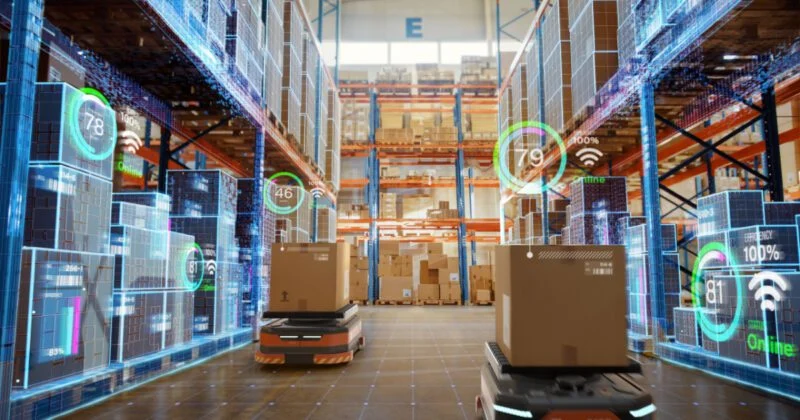
  • Smart Inventory Management: AI algorithms can track inventory levels in real-time, using data from sensors and RFID tags. This allows for the automatic reordering of goods based on preset thresholds, ensuring that businesses maintain optimal stock levels.
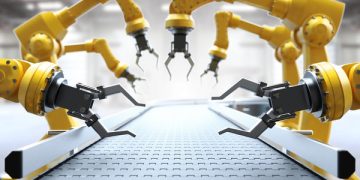
  • Warehouse Automation: AI-driven robots and automated systems are increasingly used to improve the efficiency of warehouse operations. These systems handle tasks such as picking, sorting, and packaging, reducing the reliance on manual labor and minimizing human error.

1.3 Real-Time Data Analysis and Decision Making

AI technologies such as machine learning and natural language processing (NLP) can analyze vast amounts of real-time data generated by logistics operations. This helps supply chain managers make faster and more accurate decisions.

  • Fleet Management: AI algorithms can analyze data from GPS trackers, sensors, and traffic reports to optimize delivery routes for drivers. By considering factors such as weather conditions, traffic patterns, and delivery time windows, AI can recommend the most efficient routes, reducing fuel consumption and improving delivery times.
  • Dynamic Pricing and Procurement: AI can optimize pricing strategies by analyzing factors such as demand fluctuations, market prices, and competitor pricing. This ensures that procurement decisions are made based on the most accurate and up-to-date information.

2. AI in Logistics Operations: Enhancing Efficiency

AI has a broad range of applications in logistics that significantly contribute to optimizing supply chain operations, from reducing transportation costs to improving customer satisfaction.

2.1 AI for Route Optimization

  • Route Planning: AI systems can optimize delivery routes by considering variables such as traffic congestion, road conditions, weather forecasts, and time of day. This ensures that goods are delivered as quickly and efficiently as possible, reducing delays and fuel costs.
  • Last-Mile Delivery Optimization: The last-mile delivery segment is often the most time-consuming and expensive part of the logistics process. AI can optimize last-mile delivery routes by analyzing urban traffic patterns and customer delivery preferences, improving efficiency and reducing delivery costs.

2.2 Autonomous Vehicles and Drones

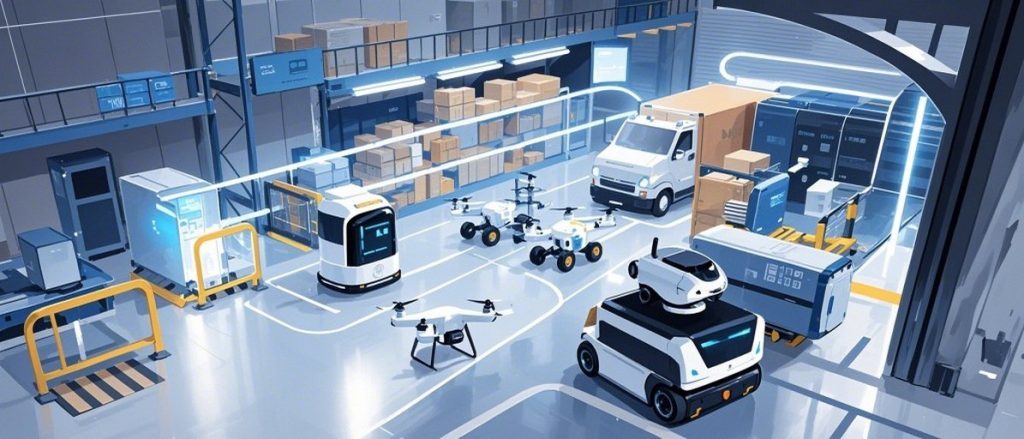
Autonomous vehicles, including trucks and drones, have the potential to revolutionize the logistics industry by reducing human labor and increasing efficiency in both the transportation and delivery stages.

  • Self-Driving Trucks: AI-powered trucks equipped with sensors and navigation systems can drive autonomously, eliminating the need for human drivers and reducing the risk of accidents. These trucks can operate 24/7, reducing delivery times and lowering labor costs.
  • Drones for Delivery: AI-powered drones are increasingly used for the delivery of small packages, especially in urban areas. Drones can navigate traffic and deliver goods directly to customers’ doorsteps, cutting down on transportation costs and delivery time.

2.3 AI in Demand and Supply Matching

AI can help logistics companies efficiently match supply with demand by using algorithms that consider factors such as regional demand fluctuations, seasonal trends, and transportation capacity.

  • Supply Chain Synchronization: AI systems can synchronize supply and demand by dynamically adjusting inventory and transportation capacity. This ensures that goods are delivered on time and at the right location, reducing stockouts and missed delivery windows.
3. Real-World Applications of AI in Logistics and Supply Chain

Several companies have successfully implemented AI technologies in their logistics operations, demonstrating the potential of AI to enhance supply chain efficiency and improve overall business performance.

3.1 Amazon: AI and Robotics in Fulfillment Centers

Amazon has long been at the forefront of integrating AI into its logistics operations. The company uses AI-powered robots and automated systems in its fulfillment centers to pick and sort products more efficiently than human workers could.

  • Robotic Process Automation (RPA): Amazon uses AI-powered robots to move products around its warehouses, improving the speed and accuracy of order fulfillment. These robots work alongside human workers to optimize the sorting and shipping of products.
  • AI for Demand Forecasting and Inventory Management: Amazon leverages AI to predict demand and adjust inventory levels across its global network of fulfillment centers. This allows the company to ensure that products are always available for customers and minimizes excess inventory.

3.2 UPS: Route Optimization and Predictive Maintenance

UPS has embraced AI to optimize its delivery routes and improve the efficiency of its global logistics network.

  • ORION (On-Road Integrated Optimization and Navigation): ORION is UPS’s AI-driven route optimization system, which analyzes data from GPS, traffic, and historical delivery patterns to determine the most efficient delivery routes for drivers.
  • AI for Predictive Maintenance: UPS uses AI to monitor the health of its fleet and predict when maintenance is required, helping to prevent breakdowns and reduce vehicle downtime.

3.3 DHL: AI for Warehouse Automation

DHL, a global leader in logistics, has adopted AI technologies to improve efficiency in its warehouses.

  • AI-Powered Warehouse Robots: DHL uses AI-driven robots in its warehouses to automate the process of picking and sorting packages. These robots use machine learning to identify and handle packages, reducing the need for manual labor.
  • AI for Supply Chain Optimization: DHL uses AI to track and analyze data from its supply chain, helping to identify inefficiencies and optimize inventory management.

4. Challenges and Limitations of AI in Logistics

While AI offers significant benefits for the logistics industry, its implementation is not without challenges.

4.1 Data Quality and Integration

AI systems rely on vast amounts of data to make accurate predictions and decisions. However, many logistics companies struggle with data integration and ensuring the quality of the data they collect.

  • Data Silos: Many logistics companies operate with fragmented data systems, making it difficult to access and analyze data across the entire supply chain. AI requires seamless data integration to function effectively.
  • Data Accuracy: AI algorithms are only as good as the data they are trained on. Inaccurate or incomplete data can lead to poor decision-making and reduced efficiency.

4.2 Cost of Implementation

Implementing AI technologies requires significant upfront investment in hardware, software, and employee training. Smaller logistics companies may find it challenging to adopt AI due to these costs.

  • ROI Considerations: While AI can lead to long-term cost savings, the initial investment can be prohibitive for some companies. Logistics firms need to weigh the potential return on investment before committing to AI adoption.

4.3 Resistance to Change

Some organizations may resist adopting AI due to concerns about job displacement or the fear of relying too heavily on automated systems. Overcoming resistance to change and ensuring that employees are adequately trained is critical to successful AI adoption.


5. The Future of AI in Logistics

The future of AI in logistics is filled with promise. As AI technologies continue to evolve, they will further enhance the efficiency and sustainability of supply chain management.

5.1 AI and the Circular Economy

AI can help companies implement more sustainable practices by optimizing the use of resources and reducing waste. AI can improve recycling efforts, extend product lifecycles, and facilitate the efficient use of raw materials.

5.2 The Role of AI in Sustainability

AI technologies can help logistics companies reduce their carbon footprint by optimizing transportation routes, reducing fuel consumption, and streamlining supply chain processes. As sustainability becomes increasingly important, AI will play a crucial role in helping the logistics industry meet its environmental goals.

5.3 The Rise of AI-Driven Smart Ports

Smart ports that use AI to optimize logistics operations, automate cargo handling, and reduce congestion are already being developed. In the future, AI will play a central role in managing global trade routes and ensuring the efficient movement of goods across borders.


Conclusion

AI has the potential to significantly optimize supply chain management and improve efficiency in the logistics industry. From predictive analytics and route optimization to warehouse automation and autonomous vehicles, AI technologies are transforming how goods are moved and managed. While challenges such as data quality, implementation costs, and resistance to change exist, the benefits of AI in logistics are undeniable. As technology continues to advance, the future of logistics will increasingly be driven by AI, offering opportunities for greater efficiency, sustainability, and competitiveness.


Tags: aiArtificial intelligenceCase studyprofessiontechnology
ShareTweetShare

Related Posts

Manufacturing: A Crucial Battlefield for AI Technology Implementation
Case Studies

Manufacturing: A Crucial Battlefield for AI Technology Implementation

December 11, 2025
Leveraging AI to Analyze Customer Purchase Behavior: Optimizing Inventory and Supply Chain Management in Retail
AI News

Leveraging AI to Analyze Customer Purchase Behavior: Optimizing Inventory and Supply Chain Management in Retail

December 11, 2025
Credit Scoring Optimization: Enhancing Accuracy, Fairness, and Accessibility in Financial Systems
Case Studies

Credit Scoring Optimization: Enhancing Accuracy, Fairness, and Accessibility in Financial Systems

December 10, 2025
The Expanding Application of AI Technology in the Financial Industry
AI News

The Expanding Application of AI Technology in the Financial Industry

December 10, 2025
The Application of AI in Retail and E-Commerce
Case Studies

The Application of AI in Retail and E-Commerce

December 9, 2025
AI Applications Make Vehicles Safer in More Complex Environments
AI News

AI Applications Make Vehicles Safer in More Complex Environments

December 9, 2025
Leave Comment
  • Trending
  • Comments
  • Latest
How Artificial Intelligence is Achieving Revolutionary Breakthroughs in the Healthcare Industry: What Success Stories Teach Us

How Artificial Intelligence is Achieving Revolutionary Breakthroughs in the Healthcare Industry: What Success Stories Teach Us

July 26, 2025
AI in the Financial Sector: Which Innovative Strategies Are Driving Digital Transformation?

AI in the Financial Sector: Which Innovative Strategies Are Driving Digital Transformation?

July 26, 2025
From Beginner to Expert: Which AI Platforms Are Best for Beginners? Experts’ Take on Learning Curves and Practical Applications

From Beginner to Expert: Which AI Platforms Are Best for Beginners? Experts’ Take on Learning Curves and Practical Applications

July 23, 2025
How to Find Truly Useful AI Resources Among the Crowd? Experts Share How to Select Efficient and Innovative Tools!

How to Find Truly Useful AI Resources Among the Crowd? Experts Share How to Select Efficient and Innovative Tools!

July 23, 2025
How Artificial Intelligence Enhances Diagnostic Accuracy and Transforms Treatment Methods in Healthcare

How Artificial Intelligence Enhances Diagnostic Accuracy and Transforms Treatment Methods in Healthcare

How AI Enhances Customer Experience and Drives Sales Growth in Retail

How AI Enhances Customer Experience and Drives Sales Growth in Retail

How Artificial Intelligence Enables Precise Risk Assessment and Decision-Making

How Artificial Intelligence Enables Precise Risk Assessment and Decision-Making

How AI is Driving the Revolution in Smart Manufacturing and Production Efficiency

How AI is Driving the Revolution in Smart Manufacturing and Production Efficiency

AI-Driven Natural Language Processing Tools

AI-Driven Natural Language Processing Tools

December 11, 2025
Manufacturing: A Crucial Battlefield for AI Technology Implementation

Manufacturing: A Crucial Battlefield for AI Technology Implementation

December 11, 2025
AI Security and How to Effectively Regulate It: A Global Imperative

AI Security and How to Effectively Regulate It: A Global Imperative

December 11, 2025
Reinforcement Learning in Complex Decision-Making: Applications and Insights

Reinforcement Learning in Complex Decision-Making: Applications and Insights

December 11, 2025
AIInsiderUpdates

Our platform is dedicated to delivering comprehensive coverage of AI developments, featuring news, case studies, expert interviews, and valuable resources for professionals and enthusiasts alike.

© 2025 aiinsiderupdates.com. contacts:[email protected]

No Result
View All Result
  • Home
  • AI News
  • Technology Trends
  • Interviews & Opinions
  • Case Studies
  • Tools & Resources

© 2025 aiinsiderupdates.com. contacts:[email protected]

Welcome Back!

Login to your account below

Forgotten Password?

Retrieve your password

Please enter your username or email address to reset your password.

Log In