





















AIInsiderUpdates
  • Home
  • AI News
    Global Regulatory Frameworks for AI: Progressing Towards Security, Ethics, Accountability, and Data Protection

    Global Regulatory Frameworks for AI: Progressing Towards Security, Ethics, Accountability, and Data Protection

    International Collaboration: A Key Driver for AI Technology Standards and Ecosystem Development

    International Collaboration: A Key Driver for AI Technology Standards and Ecosystem Development

    Industry-Leading AI Companies and Cloud Service Providers

    Industry-Leading AI Companies and Cloud Service Providers

    An Increasing Number of Enterprises Integrating AI into Core Strategy

    An Increasing Number of Enterprises Integrating AI into Core Strategy

    Large Model Providers and Enterprises in Speech & NLP Continue Expanding Application Scenarios

    Large Model Providers and Enterprises in Speech & NLP Continue Expanding Application Scenarios

    Breakthrough Advances in AI for Complex Perception and Reasoning Tasks

    Breakthrough Advances in AI for Complex Perception and Reasoning Tasks

  • Technology Trends
    AI Explainability and Ethics: Balancing Transparency, Accountability, and Trust in AI Systems

    AI Explainability and Ethics: Balancing Transparency, Accountability, and Trust in AI Systems

    Multimodal AI: Revolutionizing Data Integration and Understanding

    Multimodal AI: Revolutionizing Data Integration and Understanding

    Smart Manufacturing and Industrial AI

    Smart Manufacturing and Industrial AI

    Multilingual Understanding and Generation, Especially in Non-English Language Contexts: A Global Innovation Frontier

    Multilingual Understanding and Generation, Especially in Non-English Language Contexts: A Global Innovation Frontier

    AI Systems Are No Longer Limited to Single Inputs: The Rise of Multimodal AI

    AI Systems Are No Longer Limited to Single Inputs: The Rise of Multimodal AI

    Optimizing Transformer and Self-Attention Architectures to Enhance Model Expressiveness

    Optimizing Transformer and Self-Attention Architectures to Enhance Model Expressiveness

  • Interviews & Opinions
    Human-Machine Collaboration and Trend Prediction: The Future of Work and Decision-Making

    Human-Machine Collaboration and Trend Prediction: The Future of Work and Decision-Making

    Despite AI Automation Enhancements, Human Contribution Remains Unmatched in Data Creation and Cultural Context Understanding

    Despite AI Automation Enhancements, Human Contribution Remains Unmatched in Data Creation and Cultural Context Understanding

    Investment Bubbles and Risk Management: Diverging Perspectives

    Investment Bubbles and Risk Management: Diverging Perspectives

    CEO Perspectives on AI Data Contribution and the Role of Humans

    CEO Perspectives on AI Data Contribution and the Role of Humans

    Differences Between Academic and Public Perspectives on AI: Bridging the Gap

    Differences Between Academic and Public Perspectives on AI: Bridging the Gap

    AI Technology is No Longer Just a Tool: It Has Become a Core Component of Enterprise Competitiveness

    AI Technology is No Longer Just a Tool: It Has Become a Core Component of Enterprise Competitiveness

  • Case Studies
    Multidimensional Applications of AI in the Digital Transformation of Manufacturing

    Multidimensional Applications of AI in the Digital Transformation of Manufacturing

    AI Customer Service Bots and Smart Advisors: Helping Banks Reduce Human Customer Support Costs While Enhancing Response Efficiency, User Engagement, and Satisfaction

    AI Customer Service Bots and Smart Advisors: Helping Banks Reduce Human Customer Support Costs While Enhancing Response Efficiency, User Engagement, and Satisfaction

    Personalized Recommendation and Inventory Optimization

    Personalized Recommendation and Inventory Optimization

    How Retailers Use AI Models to Predict Sales Trends and Optimize Inventory Levels

    How Retailers Use AI Models to Predict Sales Trends and Optimize Inventory Levels

    AI Not Only Enhances Diagnostic Capabilities but Also Significantly Improves Backend Healthcare Services

    AI Not Only Enhances Diagnostic Capabilities but Also Significantly Improves Backend Healthcare Services

    AI in Manufacturing: Achieving Significant Cost Savings and Efficiency Improvements

    AI in Manufacturing: Achieving Significant Cost Savings and Efficiency Improvements

  • Tools & Resources
    Real-World Testing and Efficiency Evaluation of Emerging Technological Trends

    Real-World Testing and Efficiency Evaluation of Emerging Technological Trends

    Auxiliary AI Toolset: Enhancing Productivity, Innovation, and Problem Solving Across Industries

    Auxiliary AI Toolset: Enhancing Productivity, Innovation, and Problem Solving Across Industries

    Dataset Preprocessing and Labeling Strategies: A Resource Guide

    Dataset Preprocessing and Labeling Strategies: A Resource Guide

    Recommended Open Source Model Trade-Off Strategies

    Recommended Open Source Model Trade-Off Strategies

    Practical Roadmap: End-to-End Experience from Model Training to Deployment

    Practical Roadmap: End-to-End Experience from Model Training to Deployment

    Scalability and Performance Optimization: Insights and Best Practices

    Scalability and Performance Optimization: Insights and Best Practices

AIInsiderUpdates
  • Home
  • AI News
    Global Regulatory Frameworks for AI: Progressing Towards Security, Ethics, Accountability, and Data Protection

    Global Regulatory Frameworks for AI: Progressing Towards Security, Ethics, Accountability, and Data Protection

    International Collaboration: A Key Driver for AI Technology Standards and Ecosystem Development

    International Collaboration: A Key Driver for AI Technology Standards and Ecosystem Development

    Industry-Leading AI Companies and Cloud Service Providers

    Industry-Leading AI Companies and Cloud Service Providers

    An Increasing Number of Enterprises Integrating AI into Core Strategy

    An Increasing Number of Enterprises Integrating AI into Core Strategy

    Large Model Providers and Enterprises in Speech & NLP Continue Expanding Application Scenarios

    Large Model Providers and Enterprises in Speech & NLP Continue Expanding Application Scenarios

    Breakthrough Advances in AI for Complex Perception and Reasoning Tasks

    Breakthrough Advances in AI for Complex Perception and Reasoning Tasks

  • Technology Trends
    AI Explainability and Ethics: Balancing Transparency, Accountability, and Trust in AI Systems

    AI Explainability and Ethics: Balancing Transparency, Accountability, and Trust in AI Systems

    Multimodal AI: Revolutionizing Data Integration and Understanding

    Multimodal AI: Revolutionizing Data Integration and Understanding

    Smart Manufacturing and Industrial AI

    Smart Manufacturing and Industrial AI

    Multilingual Understanding and Generation, Especially in Non-English Language Contexts: A Global Innovation Frontier

    Multilingual Understanding and Generation, Especially in Non-English Language Contexts: A Global Innovation Frontier

    AI Systems Are No Longer Limited to Single Inputs: The Rise of Multimodal AI

    AI Systems Are No Longer Limited to Single Inputs: The Rise of Multimodal AI

    Optimizing Transformer and Self-Attention Architectures to Enhance Model Expressiveness

    Optimizing Transformer and Self-Attention Architectures to Enhance Model Expressiveness

  • Interviews & Opinions
    Human-Machine Collaboration and Trend Prediction: The Future of Work and Decision-Making

    Human-Machine Collaboration and Trend Prediction: The Future of Work and Decision-Making

    Despite AI Automation Enhancements, Human Contribution Remains Unmatched in Data Creation and Cultural Context Understanding

    Despite AI Automation Enhancements, Human Contribution Remains Unmatched in Data Creation and Cultural Context Understanding

    Investment Bubbles and Risk Management: Diverging Perspectives

    Investment Bubbles and Risk Management: Diverging Perspectives

    CEO Perspectives on AI Data Contribution and the Role of Humans

    CEO Perspectives on AI Data Contribution and the Role of Humans

    Differences Between Academic and Public Perspectives on AI: Bridging the Gap

    Differences Between Academic and Public Perspectives on AI: Bridging the Gap

    AI Technology is No Longer Just a Tool: It Has Become a Core Component of Enterprise Competitiveness

    AI Technology is No Longer Just a Tool: It Has Become a Core Component of Enterprise Competitiveness

  • Case Studies
    Multidimensional Applications of AI in the Digital Transformation of Manufacturing

    Multidimensional Applications of AI in the Digital Transformation of Manufacturing

    AI Customer Service Bots and Smart Advisors: Helping Banks Reduce Human Customer Support Costs While Enhancing Response Efficiency, User Engagement, and Satisfaction

    AI Customer Service Bots and Smart Advisors: Helping Banks Reduce Human Customer Support Costs While Enhancing Response Efficiency, User Engagement, and Satisfaction

    Personalized Recommendation and Inventory Optimization

    Personalized Recommendation and Inventory Optimization

    How Retailers Use AI Models to Predict Sales Trends and Optimize Inventory Levels

    How Retailers Use AI Models to Predict Sales Trends and Optimize Inventory Levels

    AI Not Only Enhances Diagnostic Capabilities but Also Significantly Improves Backend Healthcare Services

    AI Not Only Enhances Diagnostic Capabilities but Also Significantly Improves Backend Healthcare Services

    AI in Manufacturing: Achieving Significant Cost Savings and Efficiency Improvements

    AI in Manufacturing: Achieving Significant Cost Savings and Efficiency Improvements

  • Tools & Resources
    Real-World Testing and Efficiency Evaluation of Emerging Technological Trends

    Real-World Testing and Efficiency Evaluation of Emerging Technological Trends

    Auxiliary AI Toolset: Enhancing Productivity, Innovation, and Problem Solving Across Industries

    Auxiliary AI Toolset: Enhancing Productivity, Innovation, and Problem Solving Across Industries

    Dataset Preprocessing and Labeling Strategies: A Resource Guide

    Dataset Preprocessing and Labeling Strategies: A Resource Guide

    Recommended Open Source Model Trade-Off Strategies

    Recommended Open Source Model Trade-Off Strategies

    Practical Roadmap: End-to-End Experience from Model Training to Deployment

    Practical Roadmap: End-to-End Experience from Model Training to Deployment

    Scalability and Performance Optimization: Insights and Best Practices

    Scalability and Performance Optimization: Insights and Best Practices

AIInsiderUpdates
No Result
View All Result

AI-Created Artworks, Novels, and Advertising Copy: Enhancing Production Efficiency and Driving Innovation in the Creative Industries

November 26, 2025
AI-Created Artworks, Novels, and Advertising Copy: Enhancing Production Efficiency and Driving Innovation in the Creative Industries

Introduction

The rapid advancement of artificial intelligence (AI) technologies has had a transformative effect across many industries, but perhaps none more so than in the creative sectors. From AI-generated art to novels and advertising copy, the potential of AI to revolutionize how creative content is produced is unprecedented. What was once thought to be the exclusive domain of human artists, writers, and marketers is now being augmented, and sometimes even replaced, by sophisticated machine learning algorithms. This transformation is reshaping the creative industries, not only by enhancing production efficiency but also by fostering a new wave of innovation.

This article delves into how AI is influencing the creation of artworks, novels, and advertising content, examining both the benefits and challenges of this paradigm shift. We will explore the ways AI is being integrated into the creative process, its impact on productivity, the creative possibilities it opens up, and the ethical considerations that accompany its use.


1. AI in the Creation of Artworks: Revolutionizing Visual Creativity

The Emergence of AI in Art

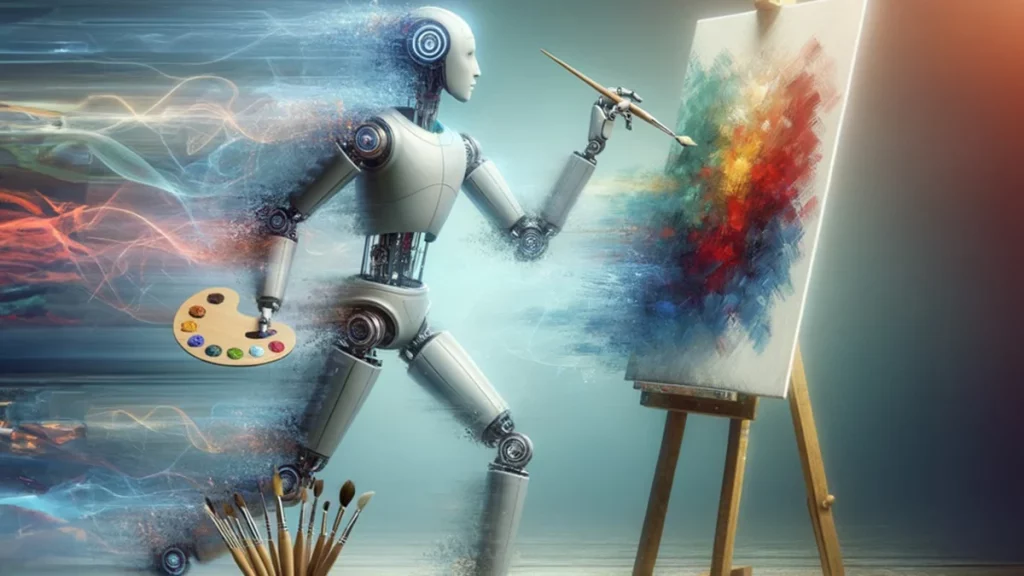
Artificial intelligence has made significant inroads into the world of visual art. Machine learning algorithms, particularly Generative Adversarial Networks (GANs) and neural networks, have been developed to generate visually compelling and often surreal art pieces. These AI systems learn from vast databases of art, mimicking styles, techniques, and even inventing entirely new forms of visual expression.

One of the first notable instances of AI-generated art was the creation of “Portrait of Edmond de Belamy” by the Paris-based art collective Obvious. This painting, created using a GAN, was auctioned at Christie’s for over $432,000 in 2018, sparking widespread interest in AI as a legitimate tool for artistic creation.

Enhancing Artistic Expression

AI-generated art is not just about replicating existing styles or forms. Many artists use AI as a co-creator, enhancing their own creativity with the unique outputs produced by AI algorithms. By providing an endless array of possibilities—whether through abstract patterns, unique color palettes, or imaginative combinations of objects and textures—AI can push human artists to explore new avenues of expression that were previously unimaginable.

Impact on the Art Industry

While some critics argue that AI-generated art lacks the emotional depth and intentionality of human-created art, many recognize its potential for innovation. The introduction of AI as a creative partner allows artists to focus more on conceptualization and less on technical execution, leading to a shift in how art is both created and perceived. Furthermore, AI-generated works are democratizing access to art creation, allowing anyone with the right tools to produce high-quality visual content, regardless of their traditional artistic skills.

Moreover, AI art is being used in various applications, from gallery exhibitions to digital marketing and entertainment, expanding the scope of its influence across industries.


2. AI in Literature: Writing the Future of Storytelling

AI-Generated Novels: The Intersection of Technology and Narrative

Artificial intelligence has also entered the literary world, with several AI-driven tools capable of writing novels, short stories, and poetry. These tools are powered by advanced natural language processing (NLP) models, such as OpenAI’s GPT-3, which can generate coherent, contextually aware, and engaging narratives. Writers and publishers are increasingly using AI not just as a tool to aid the writing process but as a partner in creativity.

The potential of AI-generated literature is vast. AI can generate stories based on a wide range of inputs, from specific themes or genres to character development and plot arcs. Some AI models are even capable of mimicking the style of famous authors, creating works that seem indistinguishable from human-written content. This ability is transforming the way content is produced and consumed in the publishing industry.

Boosting Productivity in Writing

In publishing, the integration of AI tools allows for higher productivity. Writers can use AI to overcome writer’s block, suggest improvements in style and tone, or even generate entire drafts. For instance, tools like Sudowrite and Grammarly are helping authors by generating ideas, enhancing sentence structures, and providing stylistic suggestions in real-time.

Moreover, AI is being used to automate content generation for more formulaic writing tasks, such as news articles, technical manuals, and product descriptions, freeing up human writers to focus on more complex and creative endeavors. In fiction writing, AI is often used to create plot outlines, suggest new storylines, and provide inspiration for character development.

Exploring New Narrative Forms

AI is also expanding the boundaries of narrative creation. One notable example is the use of AI in interactive fiction, where the narrative is shaped in real-time based on the reader’s choices. AI allows for the creation of stories with an almost infinite number of variations, creating highly personalized experiences. Such technology is pushing the limits of how stories are told and experienced, inviting readers into a new era of dynamic, interactive narratives.

3. AI in Advertising: Revolutionizing Marketing and Copywriting

AI-Generated Advertising Copy: Efficiency and Personalization

In advertising, AI is dramatically changing the way brands approach creative content generation. From catchy headlines to full-length advertisements, AI tools are enabling marketers to create persuasive, personalized, and highly engaging content at scale. Platforms like Jasper AI and Copy.ai can generate ad copy that resonates with target audiences based on detailed demographic data and market research.

The ability of AI to analyze consumer preferences, behaviors, and past interactions allows it to generate hyper-targeted advertising copy. By processing vast amounts of data, AI can identify patterns and trends that may not be immediately apparent to human marketers. This data-driven approach enables brands to craft messages that speak directly to consumer desires, thereby improving conversion rates and customer engagement.

Enhancing Creativity in Marketing

While AI excels at optimizing efficiency and personalization, it is also becoming a creative partner in the advertising industry. Marketers are using AI to test multiple iterations of ad copy, experiment with different formats and styles, and predict which messages are most likely to resonate with their audience. This continuous optimization process not only speeds up the creative cycle but also allows for more effective marketing campaigns.

Moreover, AI-generated content can adapt in real-time to the preferences of users. For example, personalized ads can be dynamically adjusted based on a user’s browsing history or location, ensuring that the message is always relevant and timely. This flexibility enables marketers to create tailored experiences that drive better results.

AI-Driven Visuals and Branding

AI is also playing a significant role in the creation of visual assets for advertising campaigns. Generative AI tools like DALL·E can create unique images based on textual descriptions, which is particularly useful in crafting compelling visuals for ads. These tools are being used to design logos, social media posts, banners, and even entire promotional videos, all while maintaining consistency with brand identity.

Additionally, AI-powered design tools like Canva’s Magic Design allow brands to quickly generate professional-quality marketing materials, reducing the time and cost associated with traditional design processes.


4. The Future of AI in the Creative Industries

The Collaborative Future of Human and AI Creativity

As AI continues to evolve, it is becoming increasingly clear that the future of creativity will be a collaborative one, where human intuition and emotional intelligence merge with AI’s computational power. While AI may not fully replace human creativity, it can amplify it, allowing artists, writers, and marketers to produce work that is more innovative and impactful.

In the coming years, we can expect to see more AI tools that enable real-time collaboration between human creators and AI systems, enhancing the creative process and reducing the barriers to innovation. AI may also democratize creativity by making advanced creative tools more accessible to people without formal training, leading to an explosion of diverse and unique content.

Ethical Considerations and Challenges

However, the rise of AI in the creative industries also raises ethical concerns. One of the biggest issues is the question of authorship and intellectual property. As AI creates content, who owns the rights to the work? Is it the creator who fed the data to the AI, the AI itself, or the company that developed the AI? These questions are still largely unanswered and will require careful consideration as AI becomes more integrated into creative workflows.

Additionally, there are concerns about the potential for AI to perpetuate biases in content creation. If AI systems are trained on biased datasets, they may produce content that reflects or amplifies these biases. It is essential that AI in the creative industries be used responsibly, with proper oversight to ensure that the content it generates is ethical, inclusive, and free from harmful stereotypes.


Conclusion

Artificial intelligence is undeniably reshaping the landscape of the creative industries. From generating artworks and novels to crafting personalized advertising campaigns, AI is revolutionizing how content is produced, enhancing both creativity and efficiency. While challenges remain, particularly around ethics and intellectual property, the opportunities AI presents are immense.

As the boundaries of AI-generated creativity continue to expand, it is crucial for both creators and industry professionals to embrace this technology as a tool for collaboration, rather than replacement. The future of creativity is one where human ingenuity and AI-powered innovation work in tandem, creating richer, more dynamic content and experiences for audiences around the world.


Tags: AI-CreatedCreativeTechnology Trends
ShareTweetShare

Related Posts

AI Explainability and Ethics: Balancing Transparency, Accountability, and Trust in AI Systems
Technology Trends

AI Explainability and Ethics: Balancing Transparency, Accountability, and Trust in AI Systems

January 21, 2026
Multimodal AI: Revolutionizing Data Integration and Understanding
Technology Trends

Multimodal AI: Revolutionizing Data Integration and Understanding

January 20, 2026
Smart Manufacturing and Industrial AI
Technology Trends

Smart Manufacturing and Industrial AI

January 19, 2026
Multilingual Understanding and Generation, Especially in Non-English Language Contexts: A Global Innovation Frontier
Technology Trends

Multilingual Understanding and Generation, Especially in Non-English Language Contexts: A Global Innovation Frontier

January 18, 2026
AI Systems Are No Longer Limited to Single Inputs: The Rise of Multimodal AI
Technology Trends

AI Systems Are No Longer Limited to Single Inputs: The Rise of Multimodal AI

January 17, 2026
Optimizing Transformer and Self-Attention Architectures to Enhance Model Expressiveness
Technology Trends

Optimizing Transformer and Self-Attention Architectures to Enhance Model Expressiveness

January 16, 2026
Leave Comment
  • Trending
  • Comments
  • Latest
How Artificial Intelligence is Achieving Revolutionary Breakthroughs in the Healthcare Industry: What Success Stories Teach Us

How Artificial Intelligence is Achieving Revolutionary Breakthroughs in the Healthcare Industry: What Success Stories Teach Us

July 26, 2025
AI in the Financial Sector: Which Innovative Strategies Are Driving Digital Transformation?

AI in the Financial Sector: Which Innovative Strategies Are Driving Digital Transformation?

July 26, 2025
From Beginner to Expert: Which AI Platforms Are Best for Beginners? Experts’ Take on Learning Curves and Practical Applications

From Beginner to Expert: Which AI Platforms Are Best for Beginners? Experts’ Take on Learning Curves and Practical Applications

July 23, 2025
How to Find Truly Useful AI Resources Among the Crowd? Experts Share How to Select Efficient and Innovative Tools!

How to Find Truly Useful AI Resources Among the Crowd? Experts Share How to Select Efficient and Innovative Tools!

July 23, 2025
How Artificial Intelligence Enhances Diagnostic Accuracy and Transforms Treatment Methods in Healthcare

How Artificial Intelligence Enhances Diagnostic Accuracy and Transforms Treatment Methods in Healthcare

How AI Enhances Customer Experience and Drives Sales Growth in Retail

How AI Enhances Customer Experience and Drives Sales Growth in Retail

How Artificial Intelligence Enables Precise Risk Assessment and Decision-Making

How Artificial Intelligence Enables Precise Risk Assessment and Decision-Making

How AI is Driving the Revolution in Smart Manufacturing and Production Efficiency

How AI is Driving the Revolution in Smart Manufacturing and Production Efficiency

Real-World Testing and Efficiency Evaluation of Emerging Technological Trends

Real-World Testing and Efficiency Evaluation of Emerging Technological Trends

January 21, 2026
Multidimensional Applications of AI in the Digital Transformation of Manufacturing

Multidimensional Applications of AI in the Digital Transformation of Manufacturing

January 21, 2026
Human-Machine Collaboration and Trend Prediction: The Future of Work and Decision-Making

Human-Machine Collaboration and Trend Prediction: The Future of Work and Decision-Making

January 21, 2026
AI Explainability and Ethics: Balancing Transparency, Accountability, and Trust in AI Systems

AI Explainability and Ethics: Balancing Transparency, Accountability, and Trust in AI Systems

January 21, 2026
AIInsiderUpdates

Our platform is dedicated to delivering comprehensive coverage of AI developments, featuring news, case studies, expert interviews, and valuable resources for professionals and enthusiasts alike.

© 2025 aiinsiderupdates.com. contacts:[email protected]

No Result
View All Result
  • Home
  • AI News
  • Technology Trends
  • Interviews & Opinions
  • Case Studies
  • Tools & Resources

© 2025 aiinsiderupdates.com. contacts:[email protected]

Welcome Back!

Login to your account below

Forgotten Password?

Retrieve your password

Please enter your username or email address to reset your password.

Log In