



























AIInsiderUpdates
  • Home
  • AI News
    Global Regulatory Frameworks for AI: Progressing Towards Security, Ethics, Accountability, and Data Protection

    Global Regulatory Frameworks for AI: Progressing Towards Security, Ethics, Accountability, and Data Protection

    International Collaboration: A Key Driver for AI Technology Standards and Ecosystem Development

    International Collaboration: A Key Driver for AI Technology Standards and Ecosystem Development

    Industry-Leading AI Companies and Cloud Service Providers

    Industry-Leading AI Companies and Cloud Service Providers

    An Increasing Number of Enterprises Integrating AI into Core Strategy

    An Increasing Number of Enterprises Integrating AI into Core Strategy

    Large Model Providers and Enterprises in Speech & NLP Continue Expanding Application Scenarios

    Large Model Providers and Enterprises in Speech & NLP Continue Expanding Application Scenarios

    Breakthrough Advances in AI for Complex Perception and Reasoning Tasks

    Breakthrough Advances in AI for Complex Perception and Reasoning Tasks

  • Technology Trends
    AI Explainability and Ethics: Balancing Transparency, Accountability, and Trust in AI Systems

    AI Explainability and Ethics: Balancing Transparency, Accountability, and Trust in AI Systems

    Multimodal AI: Revolutionizing Data Integration and Understanding

    Multimodal AI: Revolutionizing Data Integration and Understanding

    Smart Manufacturing and Industrial AI

    Smart Manufacturing and Industrial AI

    Multilingual Understanding and Generation, Especially in Non-English Language Contexts: A Global Innovation Frontier

    Multilingual Understanding and Generation, Especially in Non-English Language Contexts: A Global Innovation Frontier

    AI Systems Are No Longer Limited to Single Inputs: The Rise of Multimodal AI

    AI Systems Are No Longer Limited to Single Inputs: The Rise of Multimodal AI

    Optimizing Transformer and Self-Attention Architectures to Enhance Model Expressiveness

    Optimizing Transformer and Self-Attention Architectures to Enhance Model Expressiveness

  • Interviews & Opinions
    Human-Machine Collaboration and Trend Prediction: The Future of Work and Decision-Making

    Human-Machine Collaboration and Trend Prediction: The Future of Work and Decision-Making

    Despite AI Automation Enhancements, Human Contribution Remains Unmatched in Data Creation and Cultural Context Understanding

    Despite AI Automation Enhancements, Human Contribution Remains Unmatched in Data Creation and Cultural Context Understanding

    Investment Bubbles and Risk Management: Diverging Perspectives

    Investment Bubbles and Risk Management: Diverging Perspectives

    CEO Perspectives on AI Data Contribution and the Role of Humans

    CEO Perspectives on AI Data Contribution and the Role of Humans

    Differences Between Academic and Public Perspectives on AI: Bridging the Gap

    Differences Between Academic and Public Perspectives on AI: Bridging the Gap

    AI Technology is No Longer Just a Tool: It Has Become a Core Component of Enterprise Competitiveness

    AI Technology is No Longer Just a Tool: It Has Become a Core Component of Enterprise Competitiveness

  • Case Studies
    Multidimensional Applications of AI in the Digital Transformation of Manufacturing

    Multidimensional Applications of AI in the Digital Transformation of Manufacturing

    AI Customer Service Bots and Smart Advisors: Helping Banks Reduce Human Customer Support Costs While Enhancing Response Efficiency, User Engagement, and Satisfaction

    AI Customer Service Bots and Smart Advisors: Helping Banks Reduce Human Customer Support Costs While Enhancing Response Efficiency, User Engagement, and Satisfaction

    Personalized Recommendation and Inventory Optimization

    Personalized Recommendation and Inventory Optimization

    How Retailers Use AI Models to Predict Sales Trends and Optimize Inventory Levels

    How Retailers Use AI Models to Predict Sales Trends and Optimize Inventory Levels

    AI Not Only Enhances Diagnostic Capabilities but Also Significantly Improves Backend Healthcare Services

    AI Not Only Enhances Diagnostic Capabilities but Also Significantly Improves Backend Healthcare Services

    AI in Manufacturing: Achieving Significant Cost Savings and Efficiency Improvements

    AI in Manufacturing: Achieving Significant Cost Savings and Efficiency Improvements

  • Tools & Resources
    Real-World Testing and Efficiency Evaluation of Emerging Technological Trends

    Real-World Testing and Efficiency Evaluation of Emerging Technological Trends

    Auxiliary AI Toolset: Enhancing Productivity, Innovation, and Problem Solving Across Industries

    Auxiliary AI Toolset: Enhancing Productivity, Innovation, and Problem Solving Across Industries

    Dataset Preprocessing and Labeling Strategies: A Resource Guide

    Dataset Preprocessing and Labeling Strategies: A Resource Guide

    Recommended Open Source Model Trade-Off Strategies

    Recommended Open Source Model Trade-Off Strategies

    Practical Roadmap: End-to-End Experience from Model Training to Deployment

    Practical Roadmap: End-to-End Experience from Model Training to Deployment

    Scalability and Performance Optimization: Insights and Best Practices

    Scalability and Performance Optimization: Insights and Best Practices

AIInsiderUpdates
  • Home
  • AI News
    Global Regulatory Frameworks for AI: Progressing Towards Security, Ethics, Accountability, and Data Protection

    Global Regulatory Frameworks for AI: Progressing Towards Security, Ethics, Accountability, and Data Protection

    International Collaboration: A Key Driver for AI Technology Standards and Ecosystem Development

    International Collaboration: A Key Driver for AI Technology Standards and Ecosystem Development

    Industry-Leading AI Companies and Cloud Service Providers

    Industry-Leading AI Companies and Cloud Service Providers

    An Increasing Number of Enterprises Integrating AI into Core Strategy

    An Increasing Number of Enterprises Integrating AI into Core Strategy

    Large Model Providers and Enterprises in Speech & NLP Continue Expanding Application Scenarios

    Large Model Providers and Enterprises in Speech & NLP Continue Expanding Application Scenarios

    Breakthrough Advances in AI for Complex Perception and Reasoning Tasks

    Breakthrough Advances in AI for Complex Perception and Reasoning Tasks

  • Technology Trends
    AI Explainability and Ethics: Balancing Transparency, Accountability, and Trust in AI Systems

    AI Explainability and Ethics: Balancing Transparency, Accountability, and Trust in AI Systems

    Multimodal AI: Revolutionizing Data Integration and Understanding

    Multimodal AI: Revolutionizing Data Integration and Understanding

    Smart Manufacturing and Industrial AI

    Smart Manufacturing and Industrial AI

    Multilingual Understanding and Generation, Especially in Non-English Language Contexts: A Global Innovation Frontier

    Multilingual Understanding and Generation, Especially in Non-English Language Contexts: A Global Innovation Frontier

    AI Systems Are No Longer Limited to Single Inputs: The Rise of Multimodal AI

    AI Systems Are No Longer Limited to Single Inputs: The Rise of Multimodal AI

    Optimizing Transformer and Self-Attention Architectures to Enhance Model Expressiveness

    Optimizing Transformer and Self-Attention Architectures to Enhance Model Expressiveness

  • Interviews & Opinions
    Human-Machine Collaboration and Trend Prediction: The Future of Work and Decision-Making

    Human-Machine Collaboration and Trend Prediction: The Future of Work and Decision-Making

    Despite AI Automation Enhancements, Human Contribution Remains Unmatched in Data Creation and Cultural Context Understanding

    Despite AI Automation Enhancements, Human Contribution Remains Unmatched in Data Creation and Cultural Context Understanding

    Investment Bubbles and Risk Management: Diverging Perspectives

    Investment Bubbles and Risk Management: Diverging Perspectives

    CEO Perspectives on AI Data Contribution and the Role of Humans

    CEO Perspectives on AI Data Contribution and the Role of Humans

    Differences Between Academic and Public Perspectives on AI: Bridging the Gap

    Differences Between Academic and Public Perspectives on AI: Bridging the Gap

    AI Technology is No Longer Just a Tool: It Has Become a Core Component of Enterprise Competitiveness

    AI Technology is No Longer Just a Tool: It Has Become a Core Component of Enterprise Competitiveness

  • Case Studies
    Multidimensional Applications of AI in the Digital Transformation of Manufacturing

    Multidimensional Applications of AI in the Digital Transformation of Manufacturing

    AI Customer Service Bots and Smart Advisors: Helping Banks Reduce Human Customer Support Costs While Enhancing Response Efficiency, User Engagement, and Satisfaction

    AI Customer Service Bots and Smart Advisors: Helping Banks Reduce Human Customer Support Costs While Enhancing Response Efficiency, User Engagement, and Satisfaction

    Personalized Recommendation and Inventory Optimization

    Personalized Recommendation and Inventory Optimization

    How Retailers Use AI Models to Predict Sales Trends and Optimize Inventory Levels

    How Retailers Use AI Models to Predict Sales Trends and Optimize Inventory Levels

    AI Not Only Enhances Diagnostic Capabilities but Also Significantly Improves Backend Healthcare Services

    AI Not Only Enhances Diagnostic Capabilities but Also Significantly Improves Backend Healthcare Services

    AI in Manufacturing: Achieving Significant Cost Savings and Efficiency Improvements

    AI in Manufacturing: Achieving Significant Cost Savings and Efficiency Improvements

  • Tools & Resources
    Real-World Testing and Efficiency Evaluation of Emerging Technological Trends

    Real-World Testing and Efficiency Evaluation of Emerging Technological Trends

    Auxiliary AI Toolset: Enhancing Productivity, Innovation, and Problem Solving Across Industries

    Auxiliary AI Toolset: Enhancing Productivity, Innovation, and Problem Solving Across Industries

    Dataset Preprocessing and Labeling Strategies: A Resource Guide

    Dataset Preprocessing and Labeling Strategies: A Resource Guide

    Recommended Open Source Model Trade-Off Strategies

    Recommended Open Source Model Trade-Off Strategies

    Practical Roadmap: End-to-End Experience from Model Training to Deployment

    Practical Roadmap: End-to-End Experience from Model Training to Deployment

    Scalability and Performance Optimization: Insights and Best Practices

    Scalability and Performance Optimization: Insights and Best Practices

AIInsiderUpdates
No Result
View All Result

How Successful AI Use Cases Are Reshaping Manufacturing Production Processes

June 25, 2025
How Successful AI Use Cases Are Reshaping Manufacturing Production Processes

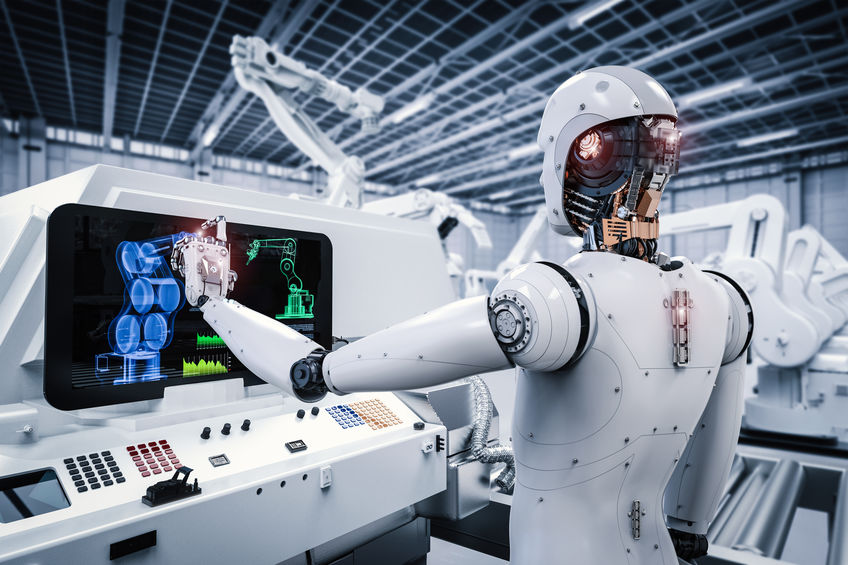
3d rendering robot working with monitor in factory

Artificial Intelligence (AI) is no longer a peripheral experiment in manufacturing—it has become a strategic pillar for leading factories worldwide. From predictive maintenance to quality inspection, AI technologies are being integrated into core production processes, delivering measurable gains in efficiency, accuracy, and flexibility. This article explores several successful real-world AI applications in manufacturing and how they are fundamentally transforming the way goods are produced.


1. Predictive Maintenance: Reducing Downtime and Cost

One of the most impactful applications of AI in manufacturing is predictive maintenance. Rather than relying on scheduled inspections or reacting to equipment failures, AI-powered systems monitor machine health in real time and predict when components will fail—allowing for proactive intervention.

Case Example: Siemens

Siemens has implemented AI-based predictive maintenance in its gas turbine production. By analyzing sensor data across thousands of machines, their system identifies early signs of wear and potential failure. This not only reduces unplanned downtime but also extends equipment life and lowers maintenance costs.

Impact:

  • Downtime reduced by 20–30%
  • Maintenance cost savings of up to 15%
  • Higher overall equipment effectiveness (OEE)

2. AI-Powered Quality Inspection: Enhancing Accuracy and Speed

Traditional visual inspection systems are limited in their ability to adapt to product variations or subtle defects. AI, particularly computer vision and deep learning, allows for dynamic, accurate, and scalable quality control processes.

Case Example: Landing AI & Foxconn

Landing AI collaborated with Foxconn, one of the world’s largest electronics manufacturers, to deploy machine vision systems for detecting microscopic defects in components. Unlike traditional systems, their AI models continuously learn and improve, even when defect examples are limited.

Impact:

  • Inspection accuracy increased by over 90%
  • Reduction in false positives and unnecessary rework
  • Consistent inspection standards across global facilities

3. Supply Chain Optimization: Smarter Forecasting and Logistics

AI is being used to optimize manufacturing supply chains through better demand forecasting, inventory management, and logistics planning. These systems learn from historical data and real-time inputs (weather, geopolitics, market trends) to make accurate predictions and reduce risk.

Case Example: Bosch

Bosch uses AI to create intelligent supply chain networks. Their systems can forecast component demand across markets, identify supply risks early, and adjust procurement strategies automatically. This AI-driven approach has helped the company navigate disruptions such as the global semiconductor shortage.

Impact:

  • Improved inventory turnover rates
  • Reduced supply chain disruption time
  • Higher customer fulfillment accuracy

4. Process Optimization and Energy Efficiency

AI can simulate and analyze manufacturing processes to identify inefficiencies and optimize production parameters. This is especially valuable in energy-intensive industries such as steel, chemicals, and automotive.

Case Example: General Electric (GE) – Digital Twin Technology

GE uses AI-enabled digital twins—virtual replicas of physical assets—to simulate production lines and optimize operations in real time. At one of its manufacturing plants, GE reduced energy consumption by simulating thousands of process scenarios using AI.

Impact:

  • Up to 10% energy savings
  • Reduced process variability
  • Faster time-to-market for product iterations

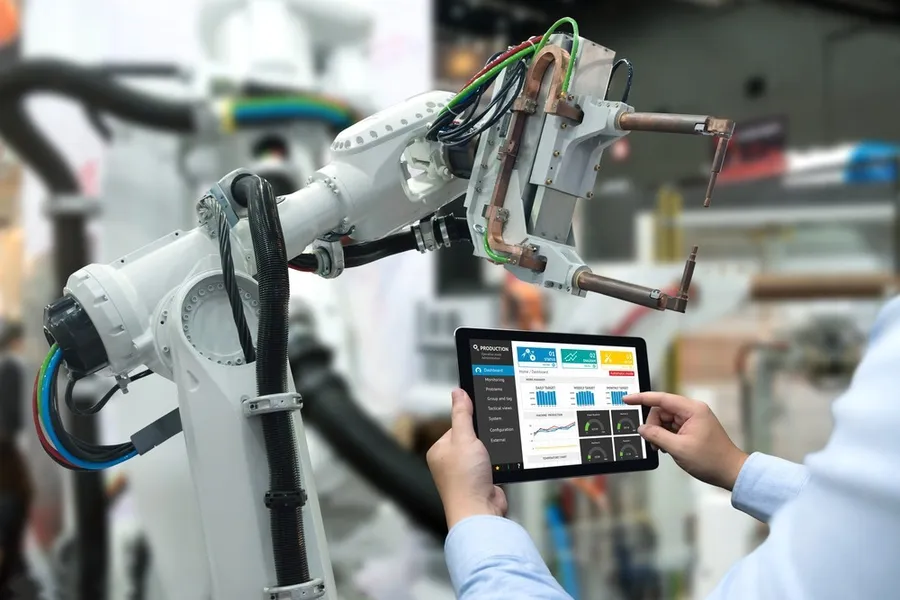
5. Robotics and Autonomous Systems in Smart Factories

Robots have long been used in manufacturing, but AI now allows them to operate more flexibly and collaboratively. These smart robots can adapt to changing environments, work safely alongside humans, and learn tasks without hard programming.

Case Example: BMW Group

BMW uses AI-powered robots to assist with assembly tasks in its Munich and Spartanburg plants. The robots collaborate with human workers in final assembly, using AI to detect and adjust to human movements, part variations, and assembly conditions.

Impact:

  • Increased throughput in final assembly lines
  • Enhanced worker safety and ergonomics
  • Faster changeover and product customization
6. Mass Customization Through AI

Consumers are demanding more customization, and AI is enabling manufacturers to deliver tailored products without sacrificing efficiency. AI systems analyze customer data and production capabilities in real time to dynamically adjust production.

Case Example: Adidas – Speedfactory

Adidas’s now-retired “Speedfactory” project used AI-driven automation and robotics to produce customized footwear at high speed. The initiative showed that AI can drastically reduce design-to-shelf cycles and enable near-shore production.

Impact:

  • Shoe production lead time reduced by 66%
  • Increased capacity for small-batch, on-demand manufacturing
  • Valuable lessons for integrating AI in product personalization

7. Natural Language Processing for Workflow Automation

AI is also being used to automate communication within manufacturing processes. NLP systems can interpret maintenance reports, process documentation, and operator feedback to identify systemic issues or optimize workflows.

Case Example: Honeywell

Honeywell uses AI-driven knowledge management systems that analyze technicians’ notes, service tickets, and manuals. The system suggests solutions to problems or routes them to the appropriate experts, shortening downtime and improving knowledge sharing.

Impact:

  • Faster resolution of technical issues
  • Enhanced operational learning across global teams
  • Improved consistency in problem diagnosis

Key Lessons from These Use Cases

The most successful AI applications in manufacturing share several common factors:

  • Integration with existing systems: AI doesn’t work in isolation—it thrives when integrated with ERP, MES, and IoT infrastructure.
  • Real-time data availability: High-quality, real-time sensor and operations data are essential for effective AI performance.
  • Human-AI collaboration: AI augments—not replaces—human expertise, particularly in complex decision-making.
  • Scalability and adaptability: The best AI solutions are flexible enough to learn from new inputs and scale across sites.

Challenges to Address

While the potential of AI in manufacturing is vast, several challenges must be addressed:

  • Data silos: Many factories lack centralized, clean, and standardized data across departments.
  • Change management: Workforce resistance and lack of digital skills can hinder adoption.
  • Cybersecurity risks: Connecting AI and IoT introduces new vulnerabilities in production environments.
  • Ethical concerns: As AI makes more decisions, governance around transparency and accountability is critical.

Conclusion: A New Era of Intelligent Manufacturing

The manufacturing industry is entering a new era, where AI plays a central role in improving efficiency, agility, and innovation. The use cases outlined above prove that AI is not just about automation—it’s about transformational intelligence, enabling manufacturers to produce smarter, faster, and more sustainably.

As more companies adopt AI at scale, the competitive advantage will no longer lie in access to technology alone—but in how intelligently it is implemented and integrated into operations. For forward-thinking manufacturers, AI is not just a tool—it is a strategic asset reshaping the future of production.


Tags: aiArtificial intelligenceCase StudiesCase studymachine learningManufacturing industryprofessionResourcetechnologyTools
ShareTweetShare

Related Posts

Multidimensional Applications of AI in the Digital Transformation of Manufacturing
Case Studies

Multidimensional Applications of AI in the Digital Transformation of Manufacturing

January 21, 2026
AI Customer Service Bots and Smart Advisors: Helping Banks Reduce Human Customer Support Costs While Enhancing Response Efficiency, User Engagement, and Satisfaction
Case Studies

AI Customer Service Bots and Smart Advisors: Helping Banks Reduce Human Customer Support Costs While Enhancing Response Efficiency, User Engagement, and Satisfaction

January 20, 2026
Personalized Recommendation and Inventory Optimization
Case Studies

Personalized Recommendation and Inventory Optimization

January 19, 2026
How Retailers Use AI Models to Predict Sales Trends and Optimize Inventory Levels
Case Studies

How Retailers Use AI Models to Predict Sales Trends and Optimize Inventory Levels

January 18, 2026
AI Not Only Enhances Diagnostic Capabilities but Also Significantly Improves Backend Healthcare Services
Case Studies

AI Not Only Enhances Diagnostic Capabilities but Also Significantly Improves Backend Healthcare Services

January 17, 2026
AI in Manufacturing: Achieving Significant Cost Savings and Efficiency Improvements
Case Studies

AI in Manufacturing: Achieving Significant Cost Savings and Efficiency Improvements

January 16, 2026
Leave Comment
  • Trending
  • Comments
  • Latest
How Artificial Intelligence is Achieving Revolutionary Breakthroughs in the Healthcare Industry: What Success Stories Teach Us

How Artificial Intelligence is Achieving Revolutionary Breakthroughs in the Healthcare Industry: What Success Stories Teach Us

July 26, 2025
AI in the Financial Sector: Which Innovative Strategies Are Driving Digital Transformation?

AI in the Financial Sector: Which Innovative Strategies Are Driving Digital Transformation?

July 26, 2025
From Beginner to Expert: Which AI Platforms Are Best for Beginners? Experts’ Take on Learning Curves and Practical Applications

From Beginner to Expert: Which AI Platforms Are Best for Beginners? Experts’ Take on Learning Curves and Practical Applications

July 23, 2025
How to Find Truly Useful AI Resources Among the Crowd? Experts Share How to Select Efficient and Innovative Tools!

How to Find Truly Useful AI Resources Among the Crowd? Experts Share How to Select Efficient and Innovative Tools!

July 23, 2025
How Artificial Intelligence Enhances Diagnostic Accuracy and Transforms Treatment Methods in Healthcare

How Artificial Intelligence Enhances Diagnostic Accuracy and Transforms Treatment Methods in Healthcare

How AI Enhances Customer Experience and Drives Sales Growth in Retail

How AI Enhances Customer Experience and Drives Sales Growth in Retail

How Artificial Intelligence Enables Precise Risk Assessment and Decision-Making

How Artificial Intelligence Enables Precise Risk Assessment and Decision-Making

How AI is Driving the Revolution in Smart Manufacturing and Production Efficiency

How AI is Driving the Revolution in Smart Manufacturing and Production Efficiency

Real-World Testing and Efficiency Evaluation of Emerging Technological Trends

Real-World Testing and Efficiency Evaluation of Emerging Technological Trends

January 21, 2026
Multidimensional Applications of AI in the Digital Transformation of Manufacturing

Multidimensional Applications of AI in the Digital Transformation of Manufacturing

January 21, 2026
Human-Machine Collaboration and Trend Prediction: The Future of Work and Decision-Making

Human-Machine Collaboration and Trend Prediction: The Future of Work and Decision-Making

January 21, 2026
AI Explainability and Ethics: Balancing Transparency, Accountability, and Trust in AI Systems

AI Explainability and Ethics: Balancing Transparency, Accountability, and Trust in AI Systems

January 21, 2026
AIInsiderUpdates

Our platform is dedicated to delivering comprehensive coverage of AI developments, featuring news, case studies, expert interviews, and valuable resources for professionals and enthusiasts alike.

© 2025 aiinsiderupdates.com. contacts:[email protected]

No Result
View All Result
  • Home
  • AI News
  • Technology Trends
  • Interviews & Opinions
  • Case Studies
  • Tools & Resources

© 2025 aiinsiderupdates.com. contacts:[email protected]

Welcome Back!

Login to your account below

Forgotten Password?

Retrieve your password

Please enter your username or email address to reset your password.

Log In