





















AIInsiderUpdates
  • Home
  • AI News
    Global AI Competition: Dominance in the AI Chip Sector, with NVIDIA Maintaining Its Leading Position

    Global AI Competition: Dominance in the AI Chip Sector, with NVIDIA Maintaining Its Leading Position

    AI Is No Longer Confined to Text Generation: Toward Integrated Capabilities in Vision, Perception, and Embodied Robotics

    AI Is No Longer Confined to Text Generation: Toward Integrated Capabilities in Vision, Perception, and Embodied Robotics

    AI Technology and Its Integration with Traditional Industries as a Key to Enhancing Enterprise Competitiveness

    AI Technology and Its Integration with Traditional Industries as a Key to Enhancing Enterprise Competitiveness

    AI Has Entered the ‘Breaking Wall’ Stage: From Laboratory Development to Large-Scale Industrial Applications

    AI Has Entered the ‘Breaking Wall’ Stage: From Laboratory Development to Large-Scale Industrial Applications

    AI and the Intensifying Competition in the Semiconductor Industry

    AI and the Intensifying Competition in the Semiconductor Industry

    New AI Chips and Heterogeneous Architectures Driving the Computational Power Revolution

    New AI Chips and Heterogeneous Architectures Driving the Computational Power Revolution

  • Technology Trends
    Natural Language Processing: One of the Core Pillars of AI

    Natural Language Processing: One of the Core Pillars of AI

    Deep Learning Simulates Human Brain Signal Processing Pathways Through the Construction of Multi-Layer Neural Networks

    Deep Learning Simulates Human Brain Signal Processing Pathways Through the Construction of Multi-Layer Neural Networks

    Autonomous Driving and Robotics: Continuous Advancements in Perception and Intelligent Decision-Making Capabilities

    Autonomous Driving and Robotics: Continuous Advancements in Perception and Intelligent Decision-Making Capabilities

    AI in Assisting Pathological Image Recognition, Disease Diagnosis, and Personalized Treatment Plans

    AI in Assisting Pathological Image Recognition, Disease Diagnosis, and Personalized Treatment Plans

    NLP Technologies: From Understanding to Generation

    NLP Technologies: From Understanding to Generation

    Self-Supervised Learning, Federated Learning, and Other Emerging Training Methods: Reducing the Dependence on Labeled Data and Improving Model Generalization

    Self-Supervised Learning, Federated Learning, and Other Emerging Training Methods: Reducing the Dependence on Labeled Data and Improving Model Generalization

  • Interviews & Opinions
    Experts Predict That Future AI Data Labeling and Training Will Rely More on Domain Expert Skills Rather Than Fully Synthetic Data

    Experts Predict That Future AI Data Labeling and Training Will Rely More on Domain Expert Skills Rather Than Fully Synthetic Data

    Public Attention on the Immediate Impact of Artificial Intelligence on Employment and Privacy

    Public Attention on the Immediate Impact of Artificial Intelligence on Employment and Privacy

    The Role of AI in Think Tanks and Strategic Research

    The Role of AI in Think Tanks and Strategic Research

    AI Security and Responsible Development: Perspectives and Insights

    AI Security and Responsible Development: Perspectives and Insights

    AI’s Impact on Industry and Employment

    AI’s Impact on Industry and Employment

    Multimodal and the Next-Generation AI Models Breakthroughs

    Multimodal and the Next-Generation AI Models Breakthroughs

  • Case Studies
    BMW Leverages AI + Digital Twin Technology to Simulate Production Processes and Train Models for Defect Detection

    BMW Leverages AI + Digital Twin Technology to Simulate Production Processes and Train Models for Defect Detection

    Traditional Industries Such as Retail and Manufacturing Apply Artificial Intelligence to Predictive Maintenance and Demand Forecasting

    Traditional Industries Such as Retail and Manufacturing Apply Artificial Intelligence to Predictive Maintenance and Demand Forecasting

    Financial Industry: Risk Control and Intelligent Customer Service

    Financial Industry: Risk Control and Intelligent Customer Service

    Retail and E-Commerce: Smart Forecasting and Enhancing User Experience

    Retail and E-Commerce: Smart Forecasting and Enhancing User Experience

    Automated Health Management and Process Optimization

    Automated Health Management and Process Optimization

    Medical Imaging and Diagnostic Assistance

    Medical Imaging and Diagnostic Assistance

  • Tools & Resources
    How to Start Learning AI from Scratch: A Roadmap and Time Plan

    How to Start Learning AI from Scratch: A Roadmap and Time Plan

    Anthropic Claude: A Large Language Model Focused on Model Safety and Conversational Control, Emphasizing “Controllable and Trustworthy” AI Capabilities

    Anthropic Claude: A Large Language Model Focused on Model Safety and Conversational Control, Emphasizing “Controllable and Trustworthy” AI Capabilities

    AI Model Repositories and Open-Source Resources: A Comprehensive Guide

    AI Model Repositories and Open-Source Resources: A Comprehensive Guide

    The Proliferation of Generative AI Models and Platforms in the Market

    The Proliferation of Generative AI Models and Platforms in the Market

    AI Learning Resources and Tutorial Recommendations

    AI Learning Resources and Tutorial Recommendations

    Cloud Services and Training/Inference Platforms

    Cloud Services and Training/Inference Platforms

AIInsiderUpdates
  • Home
  • AI News
    Global AI Competition: Dominance in the AI Chip Sector, with NVIDIA Maintaining Its Leading Position

    Global AI Competition: Dominance in the AI Chip Sector, with NVIDIA Maintaining Its Leading Position

    AI Is No Longer Confined to Text Generation: Toward Integrated Capabilities in Vision, Perception, and Embodied Robotics

    AI Is No Longer Confined to Text Generation: Toward Integrated Capabilities in Vision, Perception, and Embodied Robotics

    AI Technology and Its Integration with Traditional Industries as a Key to Enhancing Enterprise Competitiveness

    AI Technology and Its Integration with Traditional Industries as a Key to Enhancing Enterprise Competitiveness

    AI Has Entered the ‘Breaking Wall’ Stage: From Laboratory Development to Large-Scale Industrial Applications

    AI Has Entered the ‘Breaking Wall’ Stage: From Laboratory Development to Large-Scale Industrial Applications

    AI and the Intensifying Competition in the Semiconductor Industry

    AI and the Intensifying Competition in the Semiconductor Industry

    New AI Chips and Heterogeneous Architectures Driving the Computational Power Revolution

    New AI Chips and Heterogeneous Architectures Driving the Computational Power Revolution

  • Technology Trends
    Natural Language Processing: One of the Core Pillars of AI

    Natural Language Processing: One of the Core Pillars of AI

    Deep Learning Simulates Human Brain Signal Processing Pathways Through the Construction of Multi-Layer Neural Networks

    Deep Learning Simulates Human Brain Signal Processing Pathways Through the Construction of Multi-Layer Neural Networks

    Autonomous Driving and Robotics: Continuous Advancements in Perception and Intelligent Decision-Making Capabilities

    Autonomous Driving and Robotics: Continuous Advancements in Perception and Intelligent Decision-Making Capabilities

    AI in Assisting Pathological Image Recognition, Disease Diagnosis, and Personalized Treatment Plans

    AI in Assisting Pathological Image Recognition, Disease Diagnosis, and Personalized Treatment Plans

    NLP Technologies: From Understanding to Generation

    NLP Technologies: From Understanding to Generation

    Self-Supervised Learning, Federated Learning, and Other Emerging Training Methods: Reducing the Dependence on Labeled Data and Improving Model Generalization

    Self-Supervised Learning, Federated Learning, and Other Emerging Training Methods: Reducing the Dependence on Labeled Data and Improving Model Generalization

  • Interviews & Opinions
    Experts Predict That Future AI Data Labeling and Training Will Rely More on Domain Expert Skills Rather Than Fully Synthetic Data

    Experts Predict That Future AI Data Labeling and Training Will Rely More on Domain Expert Skills Rather Than Fully Synthetic Data

    Public Attention on the Immediate Impact of Artificial Intelligence on Employment and Privacy

    Public Attention on the Immediate Impact of Artificial Intelligence on Employment and Privacy

    The Role of AI in Think Tanks and Strategic Research

    The Role of AI in Think Tanks and Strategic Research

    AI Security and Responsible Development: Perspectives and Insights

    AI Security and Responsible Development: Perspectives and Insights

    AI’s Impact on Industry and Employment

    AI’s Impact on Industry and Employment

    Multimodal and the Next-Generation AI Models Breakthroughs

    Multimodal and the Next-Generation AI Models Breakthroughs

  • Case Studies
    BMW Leverages AI + Digital Twin Technology to Simulate Production Processes and Train Models for Defect Detection

    BMW Leverages AI + Digital Twin Technology to Simulate Production Processes and Train Models for Defect Detection

    Traditional Industries Such as Retail and Manufacturing Apply Artificial Intelligence to Predictive Maintenance and Demand Forecasting

    Traditional Industries Such as Retail and Manufacturing Apply Artificial Intelligence to Predictive Maintenance and Demand Forecasting

    Financial Industry: Risk Control and Intelligent Customer Service

    Financial Industry: Risk Control and Intelligent Customer Service

    Retail and E-Commerce: Smart Forecasting and Enhancing User Experience

    Retail and E-Commerce: Smart Forecasting and Enhancing User Experience

    Automated Health Management and Process Optimization

    Automated Health Management and Process Optimization

    Medical Imaging and Diagnostic Assistance

    Medical Imaging and Diagnostic Assistance

  • Tools & Resources
    How to Start Learning AI from Scratch: A Roadmap and Time Plan

    How to Start Learning AI from Scratch: A Roadmap and Time Plan

    Anthropic Claude: A Large Language Model Focused on Model Safety and Conversational Control, Emphasizing “Controllable and Trustworthy” AI Capabilities

    Anthropic Claude: A Large Language Model Focused on Model Safety and Conversational Control, Emphasizing “Controllable and Trustworthy” AI Capabilities

    AI Model Repositories and Open-Source Resources: A Comprehensive Guide

    AI Model Repositories and Open-Source Resources: A Comprehensive Guide

    The Proliferation of Generative AI Models and Platforms in the Market

    The Proliferation of Generative AI Models and Platforms in the Market

    AI Learning Resources and Tutorial Recommendations

    AI Learning Resources and Tutorial Recommendations

    Cloud Services and Training/Inference Platforms

    Cloud Services and Training/Inference Platforms

AIInsiderUpdates
No Result
View All Result

AI-Powered Education: Future or Fantasy?

February 23, 2025
AI-Powered Education: Future or Fantasy?

Artificial Intelligence (AI) has become one of the most transformative technologies in recent years, with its potential to revolutionize a wide array of industries. Among the sectors poised for significant disruption is education. With the promise of personalized learning, intelligent tutoring, and data-driven insights, AI has the potential to address longstanding challenges in the education system. However, the integration of AI into classrooms raises several complex questions, including the potential for teacher replacement, the ethical implications of data privacy, and the overall impact on the educational experience.

In this article, we will explore these issues by delving into the perspectives of educators, technologists, and policymakers. Together, we will assess how AI can genuinely improve education while addressing key challenges and considering the future of educational systems in the age of artificial intelligence.

Personalized Learning: The Holy Grail of Education?

Personalized learning, in which educational content and experiences are tailored to the individual needs, strengths, and weaknesses of each student, has long been seen as the ultimate goal in education. AI technologies are making personalized learning a reality by offering adaptive learning platforms that can assess a student’s progress in real-time and adjust the content accordingly.

AI-powered platforms such as intelligent tutoring systems (ITS) and learning management systems (LMS) use algorithms to track student performance, identify learning gaps, and provide customized resources. For instance, platforms like DreamBox, Squirrel AI, and Knewton utilize data analytics to create adaptive learning paths that help students move at their own pace, ensuring they master foundational concepts before advancing to more complex topics.

Proponents argue that this level of personalization can lead to better outcomes, particularly for students with learning disabilities or those in under-resourced schools. By tailoring instruction to individual needs, AI can ensure that no student is left behind. Moreover, it can allow teachers to focus on more creative and higher-level tasks, such as fostering critical thinking and emotional intelligence, rather than spending time on rote instruction.

However, detractors raise concerns about the over-reliance on AI systems, pointing out that while AI can deliver personalized content, it may lack the human touch that is critical in developing social and emotional skills. Furthermore, relying on AI-driven personalization may lead to an overemphasis on efficiency at the cost of holistic education, reducing students to data points and neglecting the emotional and psychological aspects of learning.

AI in Classrooms: Assistants, Not Replacements?

One of the most heated debates surrounding AI in education is the fear of teacher replacement. The introduction of AI technologies, such as chatbots, virtual tutors, and automated grading systems, has sparked concerns that AI could eventually replace human teachers altogether. After all, if AI can tutor students, grade assignments, and even engage in meaningful conversations, what need is there for human educators?

While it is true that AI has the potential to automate certain tasks traditionally performed by teachers, such as grading and providing feedback, most experts agree that AI should be seen as a tool to assist teachers rather than replace them. AI can relieve educators of repetitive administrative tasks, enabling them to focus on more impactful and creative aspects of teaching, such as fostering collaboration, engaging with students’ emotional needs, and adapting to each student’s learning style.

Moreover, AI-powered systems can help teachers by providing real-time data on student performance, identifying students who are struggling and suggesting targeted interventions. This can enable teachers to make informed decisions and offer more effective support. AI-driven platforms can also facilitate differentiated instruction, ensuring that all students, regardless of ability, receive the appropriate level of challenge and support.

In short, AI is unlikely to replace teachers but can enhance their ability to deliver personalized, meaningful education. Teachers will continue to play a critical role in guiding students, providing emotional support, and promoting social learning—areas where AI cannot yet replicate human expertise.

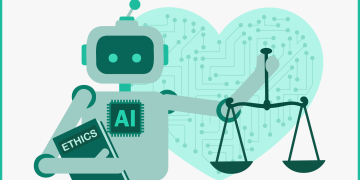
Ethical Considerations: Data Privacy and Algorithmic Bias

As AI becomes more integrated into educational systems, one of the most pressing concerns is the issue of data privacy. AI-powered learning platforms collect vast amounts of data about students’ performance, behavior, and even personal information. This data is crucial for personalizing learning experiences and improving educational outcomes. However, it also raises significant ethical concerns regarding the collection, storage, and use of this data.

Data privacy laws, such as the Family Educational Rights and Privacy Act (FERPA) in the United States, provide some protection for students’ personal information. However, with the rapid expansion of AI tools in education, there is growing concern that these laws may not be sufficient to address the complexities of modern data collection and use.

For instance, how secure is student data when stored on AI platforms? Who has access to it, and how can students and parents ensure their privacy is protected? These questions are of paramount importance, especially considering that AI systems often require access to sensitive data, including academic records, behavioral data, and even health information. If mishandled, this data could be vulnerable to breaches, misuse, or exploitation.

Another ethical issue arises from the potential for algorithmic bias in AI systems. AI algorithms are only as good as the data they are trained on, and if that data is biased, the AI’s decisions and recommendations will be biased as well. For example, if an AI system is trained on data that reflects historical inequalities, such as lower achievement scores among certain demographic groups, the system may reinforce these biases, further disadvantaging students who are already at risk.

Educational institutions must ensure that AI systems are transparent and accountable, with built-in safeguards to mitigate the risks of bias and ensure fairness. Additionally, AI developers must work closely with educators, policymakers, and privacy experts to design systems that respect students’ rights and promote equity.

The Future of Educational Systems: A Harmonious Blend of Humans and AI

While AI holds great promise in reshaping education, its integration into educational systems must be approached thoughtfully and cautiously. The future of education will likely involve a harmonious blend of human educators and AI tools, working together to create more efficient, personalized, and inclusive learning environments.

Policymakers, educators, and technologists will need to collaborate to create frameworks that ensure AI technologies are used ethically and effectively. This will involve addressing issues such as data privacy, algorithmic transparency, and teacher training. Furthermore, educational systems must be flexible enough to adapt to the rapid pace of technological change, ensuring that students are prepared for the challenges and opportunities of a world increasingly shaped by AI.

AI-powered education has the potential to democratize learning, making high-quality, personalized education accessible to more students around the world. However, it is essential to strike a balance between innovation and ethical considerations to ensure that AI truly enhances, rather than diminishes, the educational experience.

Conclusion: Embracing AI for Education’s Future

AI’s potential to transform education is vast and exciting. Personalized learning, smarter classrooms, and data-driven insights have the power to make education more tailored and effective. However, the technology also comes with its own set of challenges, particularly in areas like teacher roles, data privacy, and algorithmic bias. As we look to the future, it is clear that AI is not a substitute for human educators but a tool that can empower them to be more effective, creative, and responsive to the needs of their students. By addressing the ethical considerations and collaborating across sectors, we can ensure that AI plays a positive role in shaping the educational experiences of tomorrow.


Tags: AI in Educationintelligent tutoringpersonalized learningteacher replacement
ShareTweetShare

Related Posts

Experts Predict That Future AI Data Labeling and Training Will Rely More on Domain Expert Skills Rather Than Fully Synthetic Data
Interviews & Opinions

Experts Predict That Future AI Data Labeling and Training Will Rely More on Domain Expert Skills Rather Than Fully Synthetic Data

January 15, 2026
Global AI Competition: Dominance in the AI Chip Sector, with NVIDIA Maintaining Its Leading Position
AI News

Global AI Competition: Dominance in the AI Chip Sector, with NVIDIA Maintaining Its Leading Position

January 15, 2026
Public Attention on the Immediate Impact of Artificial Intelligence on Employment and Privacy
Interviews & Opinions

Public Attention on the Immediate Impact of Artificial Intelligence on Employment and Privacy

January 14, 2026
AI Is No Longer Confined to Text Generation: Toward Integrated Capabilities in Vision, Perception, and Embodied Robotics
AI News

AI Is No Longer Confined to Text Generation: Toward Integrated Capabilities in Vision, Perception, and Embodied Robotics

January 14, 2026
The Role of AI in Think Tanks and Strategic Research
Interviews & Opinions

The Role of AI in Think Tanks and Strategic Research

January 13, 2026
AI Technology and Its Integration with Traditional Industries as a Key to Enhancing Enterprise Competitiveness
AI News

AI Technology and Its Integration with Traditional Industries as a Key to Enhancing Enterprise Competitiveness

January 13, 2026
Leave Comment
  • Trending
  • Comments
  • Latest
How Artificial Intelligence is Achieving Revolutionary Breakthroughs in the Healthcare Industry: What Success Stories Teach Us

How Artificial Intelligence is Achieving Revolutionary Breakthroughs in the Healthcare Industry: What Success Stories Teach Us

July 26, 2025
AI in the Financial Sector: Which Innovative Strategies Are Driving Digital Transformation?

AI in the Financial Sector: Which Innovative Strategies Are Driving Digital Transformation?

July 26, 2025
From Beginner to Expert: Which AI Platforms Are Best for Beginners? Experts’ Take on Learning Curves and Practical Applications

From Beginner to Expert: Which AI Platforms Are Best for Beginners? Experts’ Take on Learning Curves and Practical Applications

July 23, 2025
How to Find Truly Useful AI Resources Among the Crowd? Experts Share How to Select Efficient and Innovative Tools!

How to Find Truly Useful AI Resources Among the Crowd? Experts Share How to Select Efficient and Innovative Tools!

July 23, 2025
How Artificial Intelligence Enhances Diagnostic Accuracy and Transforms Treatment Methods in Healthcare

How Artificial Intelligence Enhances Diagnostic Accuracy and Transforms Treatment Methods in Healthcare

How AI Enhances Customer Experience and Drives Sales Growth in Retail

How AI Enhances Customer Experience and Drives Sales Growth in Retail

How Artificial Intelligence Enables Precise Risk Assessment and Decision-Making

How Artificial Intelligence Enables Precise Risk Assessment and Decision-Making

How AI is Driving the Revolution in Smart Manufacturing and Production Efficiency

How AI is Driving the Revolution in Smart Manufacturing and Production Efficiency

How to Start Learning AI from Scratch: A Roadmap and Time Plan

How to Start Learning AI from Scratch: A Roadmap and Time Plan

January 15, 2026
BMW Leverages AI + Digital Twin Technology to Simulate Production Processes and Train Models for Defect Detection

BMW Leverages AI + Digital Twin Technology to Simulate Production Processes and Train Models for Defect Detection

January 15, 2026
Experts Predict That Future AI Data Labeling and Training Will Rely More on Domain Expert Skills Rather Than Fully Synthetic Data

Experts Predict That Future AI Data Labeling and Training Will Rely More on Domain Expert Skills Rather Than Fully Synthetic Data

January 15, 2026
Natural Language Processing: One of the Core Pillars of AI

Natural Language Processing: One of the Core Pillars of AI

January 15, 2026
AIInsiderUpdates

Our platform is dedicated to delivering comprehensive coverage of AI developments, featuring news, case studies, expert interviews, and valuable resources for professionals and enthusiasts alike.

© 2025 aiinsiderupdates.com. contacts:[email protected]

No Result
View All Result
  • Home
  • AI News
  • Technology Trends
  • Interviews & Opinions
  • Case Studies
  • Tools & Resources

© 2025 aiinsiderupdates.com. contacts:[email protected]

Welcome Back!

Login to your account below

Forgotten Password?

Retrieve your password

Please enter your username or email address to reset your password.

Log In