
















AIInsiderUpdates
  • Home
  • AI News
    Global AI Competition: Dominance in the AI Chip Sector, with NVIDIA Maintaining Its Leading Position

    Global AI Competition: Dominance in the AI Chip Sector, with NVIDIA Maintaining Its Leading Position

    AI Is No Longer Confined to Text Generation: Toward Integrated Capabilities in Vision, Perception, and Embodied Robotics

    AI Is No Longer Confined to Text Generation: Toward Integrated Capabilities in Vision, Perception, and Embodied Robotics

    AI Technology and Its Integration with Traditional Industries as a Key to Enhancing Enterprise Competitiveness

    AI Technology and Its Integration with Traditional Industries as a Key to Enhancing Enterprise Competitiveness

    AI Has Entered the ‘Breaking Wall’ Stage: From Laboratory Development to Large-Scale Industrial Applications

    AI Has Entered the ‘Breaking Wall’ Stage: From Laboratory Development to Large-Scale Industrial Applications

    AI and the Intensifying Competition in the Semiconductor Industry

    AI and the Intensifying Competition in the Semiconductor Industry

    New AI Chips and Heterogeneous Architectures Driving the Computational Power Revolution

    New AI Chips and Heterogeneous Architectures Driving the Computational Power Revolution

  • Technology Trends
    Natural Language Processing: One of the Core Pillars of AI

    Natural Language Processing: One of the Core Pillars of AI

    Deep Learning Simulates Human Brain Signal Processing Pathways Through the Construction of Multi-Layer Neural Networks

    Deep Learning Simulates Human Brain Signal Processing Pathways Through the Construction of Multi-Layer Neural Networks

    Autonomous Driving and Robotics: Continuous Advancements in Perception and Intelligent Decision-Making Capabilities

    Autonomous Driving and Robotics: Continuous Advancements in Perception and Intelligent Decision-Making Capabilities

    AI in Assisting Pathological Image Recognition, Disease Diagnosis, and Personalized Treatment Plans

    AI in Assisting Pathological Image Recognition, Disease Diagnosis, and Personalized Treatment Plans

    NLP Technologies: From Understanding to Generation

    NLP Technologies: From Understanding to Generation

    Self-Supervised Learning, Federated Learning, and Other Emerging Training Methods: Reducing the Dependence on Labeled Data and Improving Model Generalization

    Self-Supervised Learning, Federated Learning, and Other Emerging Training Methods: Reducing the Dependence on Labeled Data and Improving Model Generalization

  • Interviews & Opinions
    Experts Predict That Future AI Data Labeling and Training Will Rely More on Domain Expert Skills Rather Than Fully Synthetic Data

    Experts Predict That Future AI Data Labeling and Training Will Rely More on Domain Expert Skills Rather Than Fully Synthetic Data

    Public Attention on the Immediate Impact of Artificial Intelligence on Employment and Privacy

    Public Attention on the Immediate Impact of Artificial Intelligence on Employment and Privacy

    The Role of AI in Think Tanks and Strategic Research

    The Role of AI in Think Tanks and Strategic Research

    AI Security and Responsible Development: Perspectives and Insights

    AI Security and Responsible Development: Perspectives and Insights

    AI’s Impact on Industry and Employment

    AI’s Impact on Industry and Employment

    Multimodal and the Next-Generation AI Models Breakthroughs

    Multimodal and the Next-Generation AI Models Breakthroughs

  • Case Studies
    BMW Leverages AI + Digital Twin Technology to Simulate Production Processes and Train Models for Defect Detection

    BMW Leverages AI + Digital Twin Technology to Simulate Production Processes and Train Models for Defect Detection

    Traditional Industries Such as Retail and Manufacturing Apply Artificial Intelligence to Predictive Maintenance and Demand Forecasting

    Traditional Industries Such as Retail and Manufacturing Apply Artificial Intelligence to Predictive Maintenance and Demand Forecasting

    Financial Industry: Risk Control and Intelligent Customer Service

    Financial Industry: Risk Control and Intelligent Customer Service

    Retail and E-Commerce: Smart Forecasting and Enhancing User Experience

    Retail and E-Commerce: Smart Forecasting and Enhancing User Experience

    Automated Health Management and Process Optimization

    Automated Health Management and Process Optimization

    Medical Imaging and Diagnostic Assistance

    Medical Imaging and Diagnostic Assistance

  • Tools & Resources
    How to Start Learning AI from Scratch: A Roadmap and Time Plan

    How to Start Learning AI from Scratch: A Roadmap and Time Plan

    Anthropic Claude: A Large Language Model Focused on Model Safety and Conversational Control, Emphasizing “Controllable and Trustworthy” AI Capabilities

    Anthropic Claude: A Large Language Model Focused on Model Safety and Conversational Control, Emphasizing “Controllable and Trustworthy” AI Capabilities

    AI Model Repositories and Open-Source Resources: A Comprehensive Guide

    AI Model Repositories and Open-Source Resources: A Comprehensive Guide

    The Proliferation of Generative AI Models and Platforms in the Market

    The Proliferation of Generative AI Models and Platforms in the Market

    AI Learning Resources and Tutorial Recommendations

    AI Learning Resources and Tutorial Recommendations

    Cloud Services and Training/Inference Platforms

    Cloud Services and Training/Inference Platforms

AIInsiderUpdates
  • Home
  • AI News
    Global AI Competition: Dominance in the AI Chip Sector, with NVIDIA Maintaining Its Leading Position

    Global AI Competition: Dominance in the AI Chip Sector, with NVIDIA Maintaining Its Leading Position

    AI Is No Longer Confined to Text Generation: Toward Integrated Capabilities in Vision, Perception, and Embodied Robotics

    AI Is No Longer Confined to Text Generation: Toward Integrated Capabilities in Vision, Perception, and Embodied Robotics

    AI Technology and Its Integration with Traditional Industries as a Key to Enhancing Enterprise Competitiveness

    AI Technology and Its Integration with Traditional Industries as a Key to Enhancing Enterprise Competitiveness

    AI Has Entered the ‘Breaking Wall’ Stage: From Laboratory Development to Large-Scale Industrial Applications

    AI Has Entered the ‘Breaking Wall’ Stage: From Laboratory Development to Large-Scale Industrial Applications

    AI and the Intensifying Competition in the Semiconductor Industry

    AI and the Intensifying Competition in the Semiconductor Industry

    New AI Chips and Heterogeneous Architectures Driving the Computational Power Revolution

    New AI Chips and Heterogeneous Architectures Driving the Computational Power Revolution

  • Technology Trends
    Natural Language Processing: One of the Core Pillars of AI

    Natural Language Processing: One of the Core Pillars of AI

    Deep Learning Simulates Human Brain Signal Processing Pathways Through the Construction of Multi-Layer Neural Networks

    Deep Learning Simulates Human Brain Signal Processing Pathways Through the Construction of Multi-Layer Neural Networks

    Autonomous Driving and Robotics: Continuous Advancements in Perception and Intelligent Decision-Making Capabilities

    Autonomous Driving and Robotics: Continuous Advancements in Perception and Intelligent Decision-Making Capabilities

    AI in Assisting Pathological Image Recognition, Disease Diagnosis, and Personalized Treatment Plans

    AI in Assisting Pathological Image Recognition, Disease Diagnosis, and Personalized Treatment Plans

    NLP Technologies: From Understanding to Generation

    NLP Technologies: From Understanding to Generation

    Self-Supervised Learning, Federated Learning, and Other Emerging Training Methods: Reducing the Dependence on Labeled Data and Improving Model Generalization

    Self-Supervised Learning, Federated Learning, and Other Emerging Training Methods: Reducing the Dependence on Labeled Data and Improving Model Generalization

  • Interviews & Opinions
    Experts Predict That Future AI Data Labeling and Training Will Rely More on Domain Expert Skills Rather Than Fully Synthetic Data

    Experts Predict That Future AI Data Labeling and Training Will Rely More on Domain Expert Skills Rather Than Fully Synthetic Data

    Public Attention on the Immediate Impact of Artificial Intelligence on Employment and Privacy

    Public Attention on the Immediate Impact of Artificial Intelligence on Employment and Privacy

    The Role of AI in Think Tanks and Strategic Research

    The Role of AI in Think Tanks and Strategic Research

    AI Security and Responsible Development: Perspectives and Insights

    AI Security and Responsible Development: Perspectives and Insights

    AI’s Impact on Industry and Employment

    AI’s Impact on Industry and Employment

    Multimodal and the Next-Generation AI Models Breakthroughs

    Multimodal and the Next-Generation AI Models Breakthroughs

  • Case Studies
    BMW Leverages AI + Digital Twin Technology to Simulate Production Processes and Train Models for Defect Detection

    BMW Leverages AI + Digital Twin Technology to Simulate Production Processes and Train Models for Defect Detection

    Traditional Industries Such as Retail and Manufacturing Apply Artificial Intelligence to Predictive Maintenance and Demand Forecasting

    Traditional Industries Such as Retail and Manufacturing Apply Artificial Intelligence to Predictive Maintenance and Demand Forecasting

    Financial Industry: Risk Control and Intelligent Customer Service

    Financial Industry: Risk Control and Intelligent Customer Service

    Retail and E-Commerce: Smart Forecasting and Enhancing User Experience

    Retail and E-Commerce: Smart Forecasting and Enhancing User Experience

    Automated Health Management and Process Optimization

    Automated Health Management and Process Optimization

    Medical Imaging and Diagnostic Assistance

    Medical Imaging and Diagnostic Assistance

  • Tools & Resources
    How to Start Learning AI from Scratch: A Roadmap and Time Plan

    How to Start Learning AI from Scratch: A Roadmap and Time Plan

    Anthropic Claude: A Large Language Model Focused on Model Safety and Conversational Control, Emphasizing “Controllable and Trustworthy” AI Capabilities

    Anthropic Claude: A Large Language Model Focused on Model Safety and Conversational Control, Emphasizing “Controllable and Trustworthy” AI Capabilities

    AI Model Repositories and Open-Source Resources: A Comprehensive Guide

    AI Model Repositories and Open-Source Resources: A Comprehensive Guide

    The Proliferation of Generative AI Models and Platforms in the Market

    The Proliferation of Generative AI Models and Platforms in the Market

    AI Learning Resources and Tutorial Recommendations

    AI Learning Resources and Tutorial Recommendations

    Cloud Services and Training/Inference Platforms

    Cloud Services and Training/Inference Platforms

AIInsiderUpdates
No Result
View All Result

The Future of AI in Space Exploration: Autonomous Missions and Data Analysis

March 6, 2025
The Future of AI in Space Exploration: Autonomous Missions and Data Analysis

Space exploration has always been a symbol of human curiosity and ingenuity. From the earliest efforts to reach the Moon to the recent advances in interplanetary exploration, humanity’s drive to understand the cosmos has been central to the scientific journey. However, as space exploration becomes more ambitious and extends farther into the unknown reaches of space, the complexities involved—such as the vast distances, limited communication, and extreme environments—necessitate the use of advanced technologies. Among the most promising of these technologies is artificial intelligence (AI), which is poised to revolutionize space missions, particularly in areas like autonomous operations, data analysis, and extraterrestrial research. This article explores how AI is shaping the future of space exploration and how it can enhance our understanding of space.

1. The Role of AI in Autonomous Space Missions

One of the most significant challenges in space exploration is the vast distance between Earth and other celestial bodies. Communication delays can range from several minutes to over 20 minutes one-way, making real-time control of spacecraft and rovers nearly impossible. This communication lag can impede mission success, especially when rapid decision-making is required.

a) Autonomous Rovers and Landers

AI technologies are already being applied to enhance the autonomy of spacecraft, rovers, and landers used in space missions. NASA’s Perseverance rover, for instance, is equipped with AI-based autonomous navigation systems that allow it to select its own path on the surface of Mars. The rover uses onboard AI to analyze its environment, avoid obstacles, and make decisions about the best course of action without waiting for instructions from Earth.

As space exploration progresses, future missions are expected to feature even more advanced AI-driven systems that can operate entirely autonomously. These systems will allow spacecraft to explore distant planets, moons, and asteroids without relying on constant human input, enabling more efficient and effective exploration. In addition, AI-powered autonomous systems can be used for tasks such as resource gathering, sample collection, and even constructing habitats on other planets, all without direct human supervision.

b) Autonomous Spacecraft for Deep Space Exploration

For missions beyond the Moon and Mars, such as those aimed at exploring the outer planets and their moons, spacecraft will need to operate autonomously. The distances involved, combined with the challenges of transmitting large amounts of data across vast expanses of space, necessitate AI-powered systems that can handle navigation, decision-making, and data processing without waiting for commands from Earth.

For example, spacecraft that venture into the asteroid belt or beyond will face long communication delays, requiring them to make their own decisions in real-time. AI systems will allow these spacecraft to optimize their paths, respond to unexpected challenges, and conduct experiments or observations autonomously.

2. AI in Spacecraft Navigation and Trajectory Optimization

Space missions, particularly those exploring distant planets or asteroids, involve highly complex trajectories that must be precisely calculated. Traditional navigation systems rely heavily on human oversight and periodic adjustments, which are costly and time-consuming. AI has the potential to enhance spacecraft navigation by enabling real-time trajectory optimization.

a) Machine Learning for Trajectory Prediction

Machine learning (ML) algorithms can be used to predict and optimize spacecraft trajectories based on a variety of factors such as gravitational forces, planetary alignment, and environmental conditions. By analyzing past mission data and current space conditions, AI can suggest adjustments to the spacecraft’s trajectory to ensure more efficient travel and a higher chance of mission success.

Future missions to distant exoplanets or even the exploration of comets and asteroids will require AI systems that can adapt to unpredictable variables and make real-time course corrections, allowing missions to remain on track even when unforeseen obstacles or conditions arise.

b) AI for Autonomous Docking

Another area where AI will play a crucial role is in autonomous docking. Docking spacecraft to a space station or satellite has traditionally required human intervention, but with the help of AI, this process can be automated. AI-powered systems can assess the proximity, speed, and orientation of both the spacecraft and the target station, then adjust the spacecraft’s position for safe and precise docking.
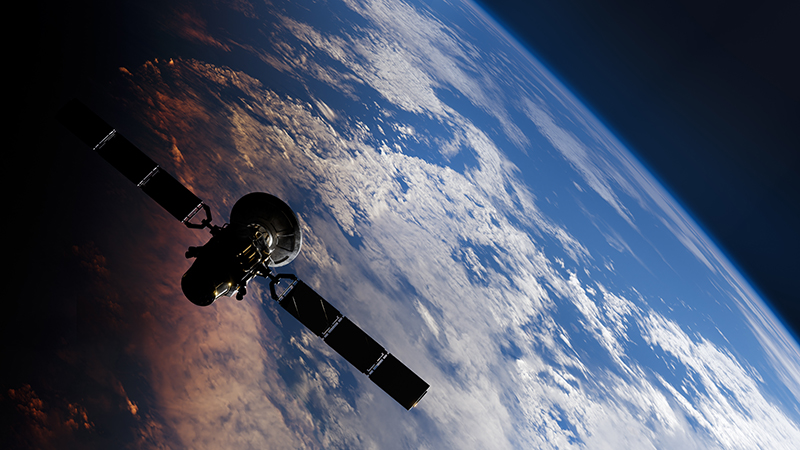
Satellite in Space, and earth,3D illustration. Elements of this image furnished by NASA.

3. AI for Space Data Analysis: Harnessing the Power of Big Data

Space exploration generates an immense amount of data, ranging from images and sensor readings to environmental measurements and scientific observations. Traditionally, data analysis has been conducted on Earth, but the sheer volume and complexity of the data collected from space missions require faster, more efficient methods of processing and interpretation.

a) Machine Learning for Data Processing

AI, particularly machine learning algorithms, can accelerate the processing and analysis of space data. By training machine learning models on vast datasets, AI systems can quickly identify patterns, detect anomalies, and extract meaningful insights. This capability is especially important for missions involving large amounts of data, such as astronomical surveys, planetary exploration, and climate studies of distant planets.

For example, AI can be used to analyze the data from telescopes and space observatories to identify new stars, planets, and galaxies. These AI systems can sift through the enormous volume of data captured by space telescopes, pinpointing objects of interest and alerting researchers to new discoveries. This speeds up the process of data interpretation and allows scientists to focus on the most promising leads.

b) AI in Image Recognition for Planetary Research

AI can also be used to enhance image recognition, a critical component of planetary exploration. For instance, rovers and orbiters that capture high-resolution images of planetary surfaces rely on AI to process these images and identify key features such as geological formations, signs of water, and potential landing sites for future missions.

AI algorithms can analyze images faster than human scientists, enabling quicker decision-making and allowing missions to make the most of their limited exploration time. AI can also assist in automating the process of mapping terrain, identifying areas of scientific interest, and guiding the rover to these locations autonomously.

4. AI for Extraterrestrial Research: Searching for Life Beyond Earth

The search for extraterrestrial life is one of the most intriguing goals of space exploration. AI is playing a significant role in this endeavor by analyzing environmental data from distant planets and moons, looking for signs of habitability or potential life.

a) AI in Analyzing Habitable Environments

AI systems can be used to analyze the conditions of distant planets and moons to assess their potential for supporting life. For example, by examining atmospheric data from planets in the “habitable zone” of their stars, AI can identify signs of water vapor, methane, or oxygen—key indicators of possible life. AI algorithms can quickly process vast amounts of data from telescopes, satellite missions, and probes to determine which planets are the most promising for further investigation.

b) AI for Astrobiology Research

AI can also assist in astrobiology research by analyzing the conditions necessary for life and identifying locations in space that might harbor microbial life or other forms of life. AI-based models can simulate different environmental conditions on other planets and predict the likelihood of life existing in those environments, enabling scientists to prioritize missions and focus their resources on the most promising candidates.

5. The Future of AI in Interplanetary and Interstellar Exploration

As humanity looks to expand its presence in space, the role of AI in future space exploration will only continue to grow. AI will be crucial for missions beyond Mars, including those targeting moons like Europa, Titan, and Enceladus, and eventually interstellar exploration.

a) AI for Long-Duration Missions

AI will be essential for long-duration missions that last for years or even decades. Spacecraft traveling to the outer solar system or to interstellar destinations like Proxima Centauri will require AI systems to manage autonomous operations, optimize resources, and respond to unforeseen challenges. These systems will also enable efficient data collection and transmission, ensuring that valuable scientific information is preserved and shared with Earth.

b) The Role of AI in Colonization Efforts

Looking further ahead, AI will also play a vital role in supporting humanity’s efforts to colonize other planets. AI systems will assist in constructing habitats, managing resources, and ensuring the safety and well-being of astronauts on long-term missions. AI-driven robots will be essential for performing tasks such as mining, building infrastructure, and even conducting scientific research on other worlds.

Conclusion: AI in Space Exploration—A New Era of Discovery

Artificial intelligence is fundamentally changing the way we approach space exploration. From autonomous missions and intelligent data analysis to the search for extraterrestrial life and interstellar travel, AI is enabling new levels of efficiency, autonomy, and insight in space research. As we continue to push the boundaries of space exploration, AI will be indispensable in helping us explore deeper, travel farther, and make more groundbreaking discoveries.


Tags: AI for data analysisAI in Space Explorationautonomous space missionsmachine learning in space
ShareTweetShare

Related Posts

Natural Language Processing: One of the Core Pillars of AI
Technology Trends

Natural Language Processing: One of the Core Pillars of AI

January 15, 2026
Global AI Competition: Dominance in the AI Chip Sector, with NVIDIA Maintaining Its Leading Position
AI News

Global AI Competition: Dominance in the AI Chip Sector, with NVIDIA Maintaining Its Leading Position

January 15, 2026
Deep Learning Simulates Human Brain Signal Processing Pathways Through the Construction of Multi-Layer Neural Networks
Technology Trends

Deep Learning Simulates Human Brain Signal Processing Pathways Through the Construction of Multi-Layer Neural Networks

January 14, 2026
AI Is No Longer Confined to Text Generation: Toward Integrated Capabilities in Vision, Perception, and Embodied Robotics
AI News

AI Is No Longer Confined to Text Generation: Toward Integrated Capabilities in Vision, Perception, and Embodied Robotics

January 14, 2026
Autonomous Driving and Robotics: Continuous Advancements in Perception and Intelligent Decision-Making Capabilities
Technology Trends

Autonomous Driving and Robotics: Continuous Advancements in Perception and Intelligent Decision-Making Capabilities

January 13, 2026
AI Technology and Its Integration with Traditional Industries as a Key to Enhancing Enterprise Competitiveness
AI News

AI Technology and Its Integration with Traditional Industries as a Key to Enhancing Enterprise Competitiveness

January 13, 2026
Leave Comment
  • Trending
  • Comments
  • Latest
How Artificial Intelligence is Achieving Revolutionary Breakthroughs in the Healthcare Industry: What Success Stories Teach Us

How Artificial Intelligence is Achieving Revolutionary Breakthroughs in the Healthcare Industry: What Success Stories Teach Us

July 26, 2025
AI in the Financial Sector: Which Innovative Strategies Are Driving Digital Transformation?

AI in the Financial Sector: Which Innovative Strategies Are Driving Digital Transformation?

July 26, 2025
From Beginner to Expert: Which AI Platforms Are Best for Beginners? Experts’ Take on Learning Curves and Practical Applications

From Beginner to Expert: Which AI Platforms Are Best for Beginners? Experts’ Take on Learning Curves and Practical Applications

July 23, 2025
How to Find Truly Useful AI Resources Among the Crowd? Experts Share How to Select Efficient and Innovative Tools!

How to Find Truly Useful AI Resources Among the Crowd? Experts Share How to Select Efficient and Innovative Tools!

July 23, 2025
How Artificial Intelligence Enhances Diagnostic Accuracy and Transforms Treatment Methods in Healthcare

How Artificial Intelligence Enhances Diagnostic Accuracy and Transforms Treatment Methods in Healthcare

How AI Enhances Customer Experience and Drives Sales Growth in Retail

How AI Enhances Customer Experience and Drives Sales Growth in Retail

How Artificial Intelligence Enables Precise Risk Assessment and Decision-Making

How Artificial Intelligence Enables Precise Risk Assessment and Decision-Making

How AI is Driving the Revolution in Smart Manufacturing and Production Efficiency

How AI is Driving the Revolution in Smart Manufacturing and Production Efficiency

How to Start Learning AI from Scratch: A Roadmap and Time Plan

How to Start Learning AI from Scratch: A Roadmap and Time Plan

January 15, 2026
BMW Leverages AI + Digital Twin Technology to Simulate Production Processes and Train Models for Defect Detection

BMW Leverages AI + Digital Twin Technology to Simulate Production Processes and Train Models for Defect Detection

January 15, 2026
Experts Predict That Future AI Data Labeling and Training Will Rely More on Domain Expert Skills Rather Than Fully Synthetic Data

Experts Predict That Future AI Data Labeling and Training Will Rely More on Domain Expert Skills Rather Than Fully Synthetic Data

January 15, 2026
Natural Language Processing: One of the Core Pillars of AI

Natural Language Processing: One of the Core Pillars of AI

January 15, 2026
AIInsiderUpdates

Our platform is dedicated to delivering comprehensive coverage of AI developments, featuring news, case studies, expert interviews, and valuable resources for professionals and enthusiasts alike.

© 2025 aiinsiderupdates.com. contacts:[email protected]

No Result
View All Result
  • Home
  • AI News
  • Technology Trends
  • Interviews & Opinions
  • Case Studies
  • Tools & Resources

© 2025 aiinsiderupdates.com. contacts:[email protected]

Welcome Back!

Login to your account below

Forgotten Password?

Retrieve your password

Please enter your username or email address to reset your password.

Log In