



























AIInsiderUpdates
  • Home
  • AI News
    Global Regulatory Frameworks for AI: Progressing Towards Security, Ethics, Accountability, and Data Protection

    Global Regulatory Frameworks for AI: Progressing Towards Security, Ethics, Accountability, and Data Protection

    International Collaboration: A Key Driver for AI Technology Standards and Ecosystem Development

    International Collaboration: A Key Driver for AI Technology Standards and Ecosystem Development

    Industry-Leading AI Companies and Cloud Service Providers

    Industry-Leading AI Companies and Cloud Service Providers

    An Increasing Number of Enterprises Integrating AI into Core Strategy

    An Increasing Number of Enterprises Integrating AI into Core Strategy

    Large Model Providers and Enterprises in Speech & NLP Continue Expanding Application Scenarios

    Large Model Providers and Enterprises in Speech & NLP Continue Expanding Application Scenarios

    Breakthrough Advances in AI for Complex Perception and Reasoning Tasks

    Breakthrough Advances in AI for Complex Perception and Reasoning Tasks

  • Technology Trends
    AI Explainability and Ethics: Balancing Transparency, Accountability, and Trust in AI Systems

    AI Explainability and Ethics: Balancing Transparency, Accountability, and Trust in AI Systems

    Multimodal AI: Revolutionizing Data Integration and Understanding

    Multimodal AI: Revolutionizing Data Integration and Understanding

    Smart Manufacturing and Industrial AI

    Smart Manufacturing and Industrial AI

    Multilingual Understanding and Generation, Especially in Non-English Language Contexts: A Global Innovation Frontier

    Multilingual Understanding and Generation, Especially in Non-English Language Contexts: A Global Innovation Frontier

    AI Systems Are No Longer Limited to Single Inputs: The Rise of Multimodal AI

    AI Systems Are No Longer Limited to Single Inputs: The Rise of Multimodal AI

    Optimizing Transformer and Self-Attention Architectures to Enhance Model Expressiveness

    Optimizing Transformer and Self-Attention Architectures to Enhance Model Expressiveness

  • Interviews & Opinions
    Human-Machine Collaboration and Trend Prediction: The Future of Work and Decision-Making

    Human-Machine Collaboration and Trend Prediction: The Future of Work and Decision-Making

    Despite AI Automation Enhancements, Human Contribution Remains Unmatched in Data Creation and Cultural Context Understanding

    Despite AI Automation Enhancements, Human Contribution Remains Unmatched in Data Creation and Cultural Context Understanding

    Investment Bubbles and Risk Management: Diverging Perspectives

    Investment Bubbles and Risk Management: Diverging Perspectives

    CEO Perspectives on AI Data Contribution and the Role of Humans

    CEO Perspectives on AI Data Contribution and the Role of Humans

    Differences Between Academic and Public Perspectives on AI: Bridging the Gap

    Differences Between Academic and Public Perspectives on AI: Bridging the Gap

    AI Technology is No Longer Just a Tool: It Has Become a Core Component of Enterprise Competitiveness

    AI Technology is No Longer Just a Tool: It Has Become a Core Component of Enterprise Competitiveness

  • Case Studies
    Multidimensional Applications of AI in the Digital Transformation of Manufacturing

    Multidimensional Applications of AI in the Digital Transformation of Manufacturing

    AI Customer Service Bots and Smart Advisors: Helping Banks Reduce Human Customer Support Costs While Enhancing Response Efficiency, User Engagement, and Satisfaction

    AI Customer Service Bots and Smart Advisors: Helping Banks Reduce Human Customer Support Costs While Enhancing Response Efficiency, User Engagement, and Satisfaction

    Personalized Recommendation and Inventory Optimization

    Personalized Recommendation and Inventory Optimization

    How Retailers Use AI Models to Predict Sales Trends and Optimize Inventory Levels

    How Retailers Use AI Models to Predict Sales Trends and Optimize Inventory Levels

    AI Not Only Enhances Diagnostic Capabilities but Also Significantly Improves Backend Healthcare Services

    AI Not Only Enhances Diagnostic Capabilities but Also Significantly Improves Backend Healthcare Services

    AI in Manufacturing: Achieving Significant Cost Savings and Efficiency Improvements

    AI in Manufacturing: Achieving Significant Cost Savings and Efficiency Improvements

  • Tools & Resources
    Real-World Testing and Efficiency Evaluation of Emerging Technological Trends

    Real-World Testing and Efficiency Evaluation of Emerging Technological Trends

    Auxiliary AI Toolset: Enhancing Productivity, Innovation, and Problem Solving Across Industries

    Auxiliary AI Toolset: Enhancing Productivity, Innovation, and Problem Solving Across Industries

    Dataset Preprocessing and Labeling Strategies: A Resource Guide

    Dataset Preprocessing and Labeling Strategies: A Resource Guide

    Recommended Open Source Model Trade-Off Strategies

    Recommended Open Source Model Trade-Off Strategies

    Practical Roadmap: End-to-End Experience from Model Training to Deployment

    Practical Roadmap: End-to-End Experience from Model Training to Deployment

    Scalability and Performance Optimization: Insights and Best Practices

    Scalability and Performance Optimization: Insights and Best Practices

AIInsiderUpdates
  • Home
  • AI News
    Global Regulatory Frameworks for AI: Progressing Towards Security, Ethics, Accountability, and Data Protection

    Global Regulatory Frameworks for AI: Progressing Towards Security, Ethics, Accountability, and Data Protection

    International Collaboration: A Key Driver for AI Technology Standards and Ecosystem Development

    International Collaboration: A Key Driver for AI Technology Standards and Ecosystem Development

    Industry-Leading AI Companies and Cloud Service Providers

    Industry-Leading AI Companies and Cloud Service Providers

    An Increasing Number of Enterprises Integrating AI into Core Strategy

    An Increasing Number of Enterprises Integrating AI into Core Strategy

    Large Model Providers and Enterprises in Speech & NLP Continue Expanding Application Scenarios

    Large Model Providers and Enterprises in Speech & NLP Continue Expanding Application Scenarios

    Breakthrough Advances in AI for Complex Perception and Reasoning Tasks

    Breakthrough Advances in AI for Complex Perception and Reasoning Tasks

  • Technology Trends
    AI Explainability and Ethics: Balancing Transparency, Accountability, and Trust in AI Systems

    AI Explainability and Ethics: Balancing Transparency, Accountability, and Trust in AI Systems

    Multimodal AI: Revolutionizing Data Integration and Understanding

    Multimodal AI: Revolutionizing Data Integration and Understanding

    Smart Manufacturing and Industrial AI

    Smart Manufacturing and Industrial AI

    Multilingual Understanding and Generation, Especially in Non-English Language Contexts: A Global Innovation Frontier

    Multilingual Understanding and Generation, Especially in Non-English Language Contexts: A Global Innovation Frontier

    AI Systems Are No Longer Limited to Single Inputs: The Rise of Multimodal AI

    AI Systems Are No Longer Limited to Single Inputs: The Rise of Multimodal AI

    Optimizing Transformer and Self-Attention Architectures to Enhance Model Expressiveness

    Optimizing Transformer and Self-Attention Architectures to Enhance Model Expressiveness

  • Interviews & Opinions
    Human-Machine Collaboration and Trend Prediction: The Future of Work and Decision-Making

    Human-Machine Collaboration and Trend Prediction: The Future of Work and Decision-Making

    Despite AI Automation Enhancements, Human Contribution Remains Unmatched in Data Creation and Cultural Context Understanding

    Despite AI Automation Enhancements, Human Contribution Remains Unmatched in Data Creation and Cultural Context Understanding

    Investment Bubbles and Risk Management: Diverging Perspectives

    Investment Bubbles and Risk Management: Diverging Perspectives

    CEO Perspectives on AI Data Contribution and the Role of Humans

    CEO Perspectives on AI Data Contribution and the Role of Humans

    Differences Between Academic and Public Perspectives on AI: Bridging the Gap

    Differences Between Academic and Public Perspectives on AI: Bridging the Gap

    AI Technology is No Longer Just a Tool: It Has Become a Core Component of Enterprise Competitiveness

    AI Technology is No Longer Just a Tool: It Has Become a Core Component of Enterprise Competitiveness

  • Case Studies
    Multidimensional Applications of AI in the Digital Transformation of Manufacturing

    Multidimensional Applications of AI in the Digital Transformation of Manufacturing

    AI Customer Service Bots and Smart Advisors: Helping Banks Reduce Human Customer Support Costs While Enhancing Response Efficiency, User Engagement, and Satisfaction

    AI Customer Service Bots and Smart Advisors: Helping Banks Reduce Human Customer Support Costs While Enhancing Response Efficiency, User Engagement, and Satisfaction

    Personalized Recommendation and Inventory Optimization

    Personalized Recommendation and Inventory Optimization

    How Retailers Use AI Models to Predict Sales Trends and Optimize Inventory Levels

    How Retailers Use AI Models to Predict Sales Trends and Optimize Inventory Levels

    AI Not Only Enhances Diagnostic Capabilities but Also Significantly Improves Backend Healthcare Services

    AI Not Only Enhances Diagnostic Capabilities but Also Significantly Improves Backend Healthcare Services

    AI in Manufacturing: Achieving Significant Cost Savings and Efficiency Improvements

    AI in Manufacturing: Achieving Significant Cost Savings and Efficiency Improvements

  • Tools & Resources
    Real-World Testing and Efficiency Evaluation of Emerging Technological Trends

    Real-World Testing and Efficiency Evaluation of Emerging Technological Trends

    Auxiliary AI Toolset: Enhancing Productivity, Innovation, and Problem Solving Across Industries

    Auxiliary AI Toolset: Enhancing Productivity, Innovation, and Problem Solving Across Industries

    Dataset Preprocessing and Labeling Strategies: A Resource Guide

    Dataset Preprocessing and Labeling Strategies: A Resource Guide

    Recommended Open Source Model Trade-Off Strategies

    Recommended Open Source Model Trade-Off Strategies

    Practical Roadmap: End-to-End Experience from Model Training to Deployment

    Practical Roadmap: End-to-End Experience from Model Training to Deployment

    Scalability and Performance Optimization: Insights and Best Practices

    Scalability and Performance Optimization: Insights and Best Practices

AIInsiderUpdates
No Result
View All Result

AI in Edge Computing: Bringing Intelligence Closer to the Data Source

February 25, 2025
AI in Edge Computing: Bringing Intelligence Closer to the Data Source

The combination of Artificial Intelligence (AI) and Edge Computing is revolutionizing how data is processed and analyzed. By enabling intelligent decision-making closer to the data source, this fusion is transforming industries ranging from healthcare and manufacturing to autonomous vehicles and smart cities. The marriage of AI with edge computing not only enhances real-time data processing but also improves efficiency, reduces latency, and supports the growing demand for data-driven insights. This article delves into the importance of AI in edge computing, exploring its applications, benefits, and challenges in various sectors.

1. Understanding Edge Computing and AI Integration

Edge computing is the practice of processing data locally, at or near the source, rather than relying on centralized cloud servers. This approach allows devices to process and analyze data in real-time without the need for constant communication with a distant data center, which can introduce delays.

When AI is integrated with edge computing, machine learning models and algorithms are deployed on edge devices—such as sensors, cameras, and IoT devices—rather than sending raw data to the cloud for processing. This local processing enables faster decision-making, lower latency, and the ability to handle large volumes of data more efficiently. Edge AI brings intelligence to the “edge” of networks, allowing systems to function autonomously or in near-real-time, even without a reliable or constant internet connection.

2. Benefits of AI in Edge Computing

AI integration with edge computing offers numerous benefits, especially in applications where low latency and real-time data analysis are crucial. These advantages include:

a) Reduced Latency and Faster Decision-Making

By processing data at the source, edge AI eliminates the need to transmit information to centralized data centers, which can result in significant latency. In time-sensitive applications such as autonomous vehicles or healthcare monitoring, delays in decision-making could have serious consequences. By enabling faster decision-making at the edge, AI allows for immediate responses to real-world events.

b) Bandwidth Efficiency and Cost Reduction

Sending raw data to the cloud can consume substantial bandwidth and result in high transmission costs, especially when dealing with large datasets. With AI processing occurring locally, only relevant data or insights are sent to the cloud, optimizing bandwidth usage and lowering communication costs.

c) Improved Data Privacy and Security

Sensitive data can be kept secure when it is processed locally rather than transmitted to distant cloud servers. By analyzing data at the edge, AI enhances data privacy, as personal or confidential information does not need to leave the premises, reducing the risk of breaches and unauthorized access.

d) Scalability and Flexibility

Edge computing with AI allows for highly scalable systems. Organizations can deploy intelligent edge devices across vast geographical areas without the need for extensive centralized infrastructure. Each device is capable of functioning independently, which provides flexibility in scaling operations and enables deployment in remote or hard-to-reach locations.

3. Key Applications of AI in Edge Computing

AI in edge computing is being applied in various industries, revolutionizing how real-time data is processed and decision-making is conducted. Below are some key areas where AI and edge computing are making a significant impact:

a) Autonomous Vehicles

Autonomous vehicles rely heavily on real-time data to navigate their environments safely. Cameras, LiDAR sensors, and radar systems generate massive amounts of data that must be processed quickly to avoid accidents or obstacles. Edge AI allows these vehicles to process data locally, enabling instant decision-making, such as detecting pedestrians, recognizing road signs, and predicting the movement of other vehicles. By minimizing the need for cloud communication, edge computing ensures that autonomous vehicles can operate with minimal latency, increasing safety and efficiency.

b) Healthcare and Remote Monitoring

In healthcare, AI-enabled edge devices can monitor patients’ vital signs, such as heart rate, blood pressure, and oxygen levels, in real-time. Wearable devices and remote sensors equipped with AI algorithms can analyze this data on the spot, providing immediate feedback or alerts if a patient’s condition worsens. This is particularly valuable in critical care settings, where timely intervention can be the difference between life and death. Moreover, by processing data locally, edge computing reduces the risk of transmitting sensitive health information to remote servers, enhancing privacy and security.

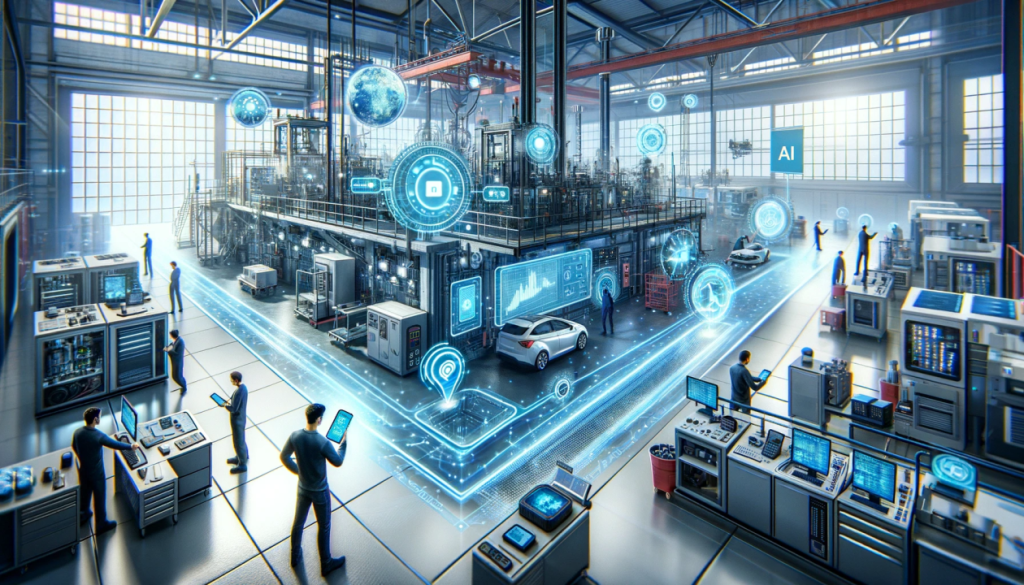
c) Industrial IoT and Predictive Maintenance

Edge AI plays a crucial role in industrial automation by enabling predictive maintenance and real-time monitoring of machinery. Sensors embedded in equipment can collect data on temperature, vibrations, and wear and tear. AI models running at the edge can analyze this data to predict potential failures before they happen, allowing maintenance teams to address issues proactively, reducing downtime and improving operational efficiency. The ability to process data locally also ensures that critical systems continue to function even when connectivity to the central cloud is temporarily lost.

d) Smart Cities and Infrastructure

Edge AI is transforming the concept of smart cities by enabling real-time data analysis from sensors embedded in urban infrastructure. These sensors monitor traffic flow, air quality, energy usage, and more. AI running on edge devices can analyze this data on the fly and take immediate actions, such as adjusting traffic signals to prevent congestion or triggering alarms in case of environmental hazards. In emergency situations, edge AI can support autonomous systems to act instantly, ensuring faster responses to threats like fires, accidents, or natural disasters.

e) Retail and Customer Experience

AI-powered edge devices are being used in retail to enhance customer experience and improve operational efficiency. For example, cameras equipped with computer vision can track customer behavior in stores and optimize product placements based on real-time analysis. AI-enabled kiosks or checkout systems can also provide personalized recommendations and facilitate quicker purchases. Edge AI helps retailers respond to customer actions instantly, creating a more seamless and efficient shopping experience.
4. Challenges of AI in Edge Computing

While the integration of AI with edge computing offers tremendous potential, there are several challenges that organizations must overcome to fully realize its benefits:

a) Limited Computing Power

Edge devices, such as sensors and IoT devices, typically have limited processing power and storage capacity compared to cloud-based data centers. Deploying complex AI models on these devices may be challenging due to hardware limitations. However, advances in hardware and lightweight AI models are gradually making it possible to run sophisticated algorithms on edge devices with minimal computational overhead.

b) Data Synchronization and Integration

Although edge AI allows for local data processing, the need for data synchronization and integration with central systems still remains. In some cases, it may be necessary to send aggregated data or insights to the cloud for further analysis or decision-making. Ensuring that the data remains consistent across edge and cloud systems can be a complex task, particularly in real-time applications where discrepancies between systems could cause errors.

c) Security and Privacy Concerns

While edge computing can enhance data privacy by keeping sensitive information on-site, it also introduces security challenges. Edge devices are often deployed in remote locations, making them vulnerable to physical tampering or cyberattacks. Ensuring the security of these devices and the data they process requires robust encryption methods, regular updates, and continuous monitoring.

d) Managing Distributed Systems

With AI deployed across a distributed network of edge devices, managing and monitoring these systems becomes more complicated. Ensuring that each device operates optimally, updating AI models, and troubleshooting issues remotely are tasks that require advanced tools and infrastructure.

5. The Future of AI and Edge Computing

As AI and edge computing continue to evolve, the potential applications will expand even further. Future developments include:

a) Advanced AI Models for Edge Devices

The future of AI in edge computing will involve the development of more efficient AI models that can run on resource-constrained devices. Research into optimizing AI algorithms for edge devices, such as federated learning and model compression, will enable even more advanced real-time processing and decision-making at the edge.

b) 5G and Edge Computing Integration

The rollout of 5G networks will further enhance the capabilities of edge computing. With faster, more reliable connections, edge devices will be able to handle more complex tasks and communicate with other devices and cloud systems in real-time. The combination of AI, edge computing, and 5G will unlock new possibilities for applications such as autonomous driving, smart manufacturing, and immersive augmented reality (AR) experiences.

c) Autonomous Edge Devices

The ultimate goal of AI in edge computing is to create fully autonomous systems that can function independently, without relying on central servers or human intervention. Future edge devices equipped with advanced AI models will be capable of performing highly complex tasks, such as making real-time decisions in dynamic environments or optimizing entire industrial processes autonomously.

6. Conclusion

AI in edge computing represents a paradigm shift in how data is processed and analyzed. By bringing intelligence closer to the source, this combination enables faster decision-making, reduced latency, and more efficient resource utilization across various industries. Whether in autonomous vehicles, healthcare, industrial IoT, or smart cities, the fusion of AI and edge computing is driving innovation and improving real-time operations. As challenges such as limited processing power and security concerns are addressed, the future of AI-powered edge computing holds even greater promise for transforming the way we interact with technology.


Tags: aiAutonomous Vehiclesedge computingIoTReal-Time Data Processing
ShareTweetShare

Related Posts

AI Explainability and Ethics: Balancing Transparency, Accountability, and Trust in AI Systems
Technology Trends

AI Explainability and Ethics: Balancing Transparency, Accountability, and Trust in AI Systems

January 21, 2026
Global Regulatory Frameworks for AI: Progressing Towards Security, Ethics, Accountability, and Data Protection
AI News

Global Regulatory Frameworks for AI: Progressing Towards Security, Ethics, Accountability, and Data Protection

January 21, 2026
Multimodal AI: Revolutionizing Data Integration and Understanding
Technology Trends

Multimodal AI: Revolutionizing Data Integration and Understanding

January 20, 2026
International Collaboration: A Key Driver for AI Technology Standards and Ecosystem Development
AI News

International Collaboration: A Key Driver for AI Technology Standards and Ecosystem Development

January 20, 2026
Smart Manufacturing and Industrial AI
Technology Trends

Smart Manufacturing and Industrial AI

January 19, 2026
Industry-Leading AI Companies and Cloud Service Providers
AI News

Industry-Leading AI Companies and Cloud Service Providers

January 19, 2026
Leave Comment
  • Trending
  • Comments
  • Latest
How Artificial Intelligence is Achieving Revolutionary Breakthroughs in the Healthcare Industry: What Success Stories Teach Us

How Artificial Intelligence is Achieving Revolutionary Breakthroughs in the Healthcare Industry: What Success Stories Teach Us

July 26, 2025
AI in the Financial Sector: Which Innovative Strategies Are Driving Digital Transformation?

AI in the Financial Sector: Which Innovative Strategies Are Driving Digital Transformation?

July 26, 2025
From Beginner to Expert: Which AI Platforms Are Best for Beginners? Experts’ Take on Learning Curves and Practical Applications

From Beginner to Expert: Which AI Platforms Are Best for Beginners? Experts’ Take on Learning Curves and Practical Applications

July 23, 2025
How to Find Truly Useful AI Resources Among the Crowd? Experts Share How to Select Efficient and Innovative Tools!

How to Find Truly Useful AI Resources Among the Crowd? Experts Share How to Select Efficient and Innovative Tools!

July 23, 2025
How Artificial Intelligence Enhances Diagnostic Accuracy and Transforms Treatment Methods in Healthcare

How Artificial Intelligence Enhances Diagnostic Accuracy and Transforms Treatment Methods in Healthcare

How AI Enhances Customer Experience and Drives Sales Growth in Retail

How AI Enhances Customer Experience and Drives Sales Growth in Retail

How Artificial Intelligence Enables Precise Risk Assessment and Decision-Making

How Artificial Intelligence Enables Precise Risk Assessment and Decision-Making

How AI is Driving the Revolution in Smart Manufacturing and Production Efficiency

How AI is Driving the Revolution in Smart Manufacturing and Production Efficiency

Real-World Testing and Efficiency Evaluation of Emerging Technological Trends

Real-World Testing and Efficiency Evaluation of Emerging Technological Trends

January 21, 2026
Multidimensional Applications of AI in the Digital Transformation of Manufacturing

Multidimensional Applications of AI in the Digital Transformation of Manufacturing

January 21, 2026
Human-Machine Collaboration and Trend Prediction: The Future of Work and Decision-Making

Human-Machine Collaboration and Trend Prediction: The Future of Work and Decision-Making

January 21, 2026
AI Explainability and Ethics: Balancing Transparency, Accountability, and Trust in AI Systems

AI Explainability and Ethics: Balancing Transparency, Accountability, and Trust in AI Systems

January 21, 2026
AIInsiderUpdates

Our platform is dedicated to delivering comprehensive coverage of AI developments, featuring news, case studies, expert interviews, and valuable resources for professionals and enthusiasts alike.

© 2025 aiinsiderupdates.com. contacts:[email protected]

No Result
View All Result
  • Home
  • AI News
  • Technology Trends
  • Interviews & Opinions
  • Case Studies
  • Tools & Resources

© 2025 aiinsiderupdates.com. contacts:[email protected]

Welcome Back!

Login to your account below

Forgotten Password?

Retrieve your password

Please enter your username or email address to reset your password.

Log In