




















Introduction
The manufacturing industry is undergoing a monumental transformation driven by the rapid advancement of Artificial Intelligence (AI). As part of Industry 4.0, AI technologies are at the heart of the digital transformation in manufacturing, reshaping traditional processes, optimizing production, enhancing efficiency, and creating new avenues for innovation. AI’s ability to process vast amounts of data, learn from patterns, and make predictive decisions is unlocking potential that was previously unimaginable, allowing manufacturers to move beyond automation into the realm of smart factories and intelligent systems.
This article explores the multidimensional applications of AI in manufacturing, highlighting how AI is being integrated into various stages of the production process. From predictive maintenance and quality control to supply chain optimization and product design, AI is becoming an indispensable tool for manufacturers seeking to enhance productivity, reduce costs, and stay competitive in an increasingly complex and dynamic global market.
AI in Manufacturing: A Key Enabler of Digital Transformation
1. Industry 4.0 and the Role of AI
The term Industry 4.0 refers to the fourth industrial revolution, characterized by the integration of smart technologies such as AI, Internet of Things (IoT), big data, cloud computing, and cyber-physical systems into manufacturing processes. Unlike previous industrial revolutions that focused on automation and mechanization, Industry 4.0 is defined by the digitalization of manufacturing operations, where machines and systems are interconnected and capable of making decisions in real-time.
AI plays a crucial role in this transformation by providing the intelligence needed to interpret and analyze data, optimize processes, and enable autonomous decision-making. With AI, manufacturers can gain deeper insights into their operations, improve supply chain efficiency, reduce production downtime, and create customized products on demand.
The rise of AI-driven manufacturing systems is opening up a new era of innovation and efficiency. AI is not just transforming the tools and machines used in production; it is also revolutionizing the way companies think about manufacturing strategy, operations management, and customer relationships.
Key Applications of AI in Manufacturing
1. Predictive Maintenance
One of the most impactful applications of AI in manufacturing is predictive maintenance. Traditional maintenance methods, which rely on scheduled inspections or reactive repairs, are often inefficient and costly. AI-powered predictive maintenance changes this by using data from sensors embedded in machinery to predict when a piece of equipment is likely to fail, allowing maintenance to be scheduled only when needed, rather than at fixed intervals.
AI systems analyze vast amounts of operational data, such as temperature, vibration, and pressure readings, to detect anomalies that could indicate potential equipment failure. Machine learning algorithms continuously learn from this data, improving their ability to predict failures with greater accuracy over time. As a result, manufacturers can reduce downtime, extend the lifespan of equipment, and optimize maintenance schedules.
Key benefits of AI in predictive maintenance include:
- Reduced unplanned downtime by predicting failures before they occur.
- Cost savings by minimizing the need for emergency repairs.
- Extended asset lifespan by ensuring timely and efficient maintenance.
2. Quality Control and Defect Detection
Maintaining consistent product quality is a fundamental goal in manufacturing, and AI is playing a pivotal role in enhancing quality control. Traditionally, quality control involved manual inspections or automated systems that relied on pre-set rules. However, these methods often miss subtle defects or anomalies that could affect product quality.
AI-powered quality control systems use computer vision, machine learning, and deep learning techniques to analyze products during the manufacturing process in real-time. Cameras and sensors capture detailed images of products, and AI algorithms compare them against reference models to identify defects, inconsistencies, or deviations from quality standards.
AI systems can:
- Automatically detect defects in products with higher accuracy than human inspectors.
- Perform real-time analysis, reducing the need for post-production quality checks.
- Reduce human error and enhance consistency in quality control.
With AI, manufacturers can ensure that products meet the highest quality standards and reduce the risk of defective products reaching the market.
3. Supply Chain Optimization
The global supply chain is a critical component of modern manufacturing, and AI is transforming how supply chains are managed. Traditional supply chain management relies on historical data and simple forecasting models to predict demand and plan inventory. However, these approaches are often reactive and unable to account for the complex, dynamic nature of modern supply chains.
AI-powered systems, on the other hand, enable real-time supply chain optimization by analyzing data from multiple sources, including sales trends, inventory levels, shipping schedules, and market conditions. Machine learning algorithms can identify patterns, predict fluctuations in demand, and recommend the most efficient ways to allocate resources, manage inventory, and optimize logistics.
Key benefits of AI in supply chain optimization include:
- Improved demand forecasting, reducing overstocking or stockouts.
- Dynamic inventory management, ensuring that production lines are supplied with the right materials at the right time.
- Optimization of logistics, reducing transportation costs and delays.
With AI, manufacturers can create more agile, efficient, and cost-effective supply chains that are better equipped to respond to changing market conditions.
4. Smart Manufacturing and Automation
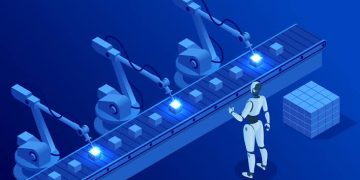
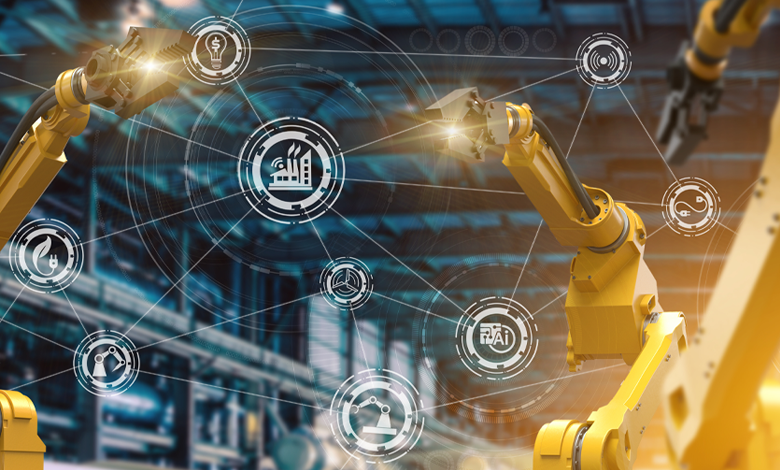
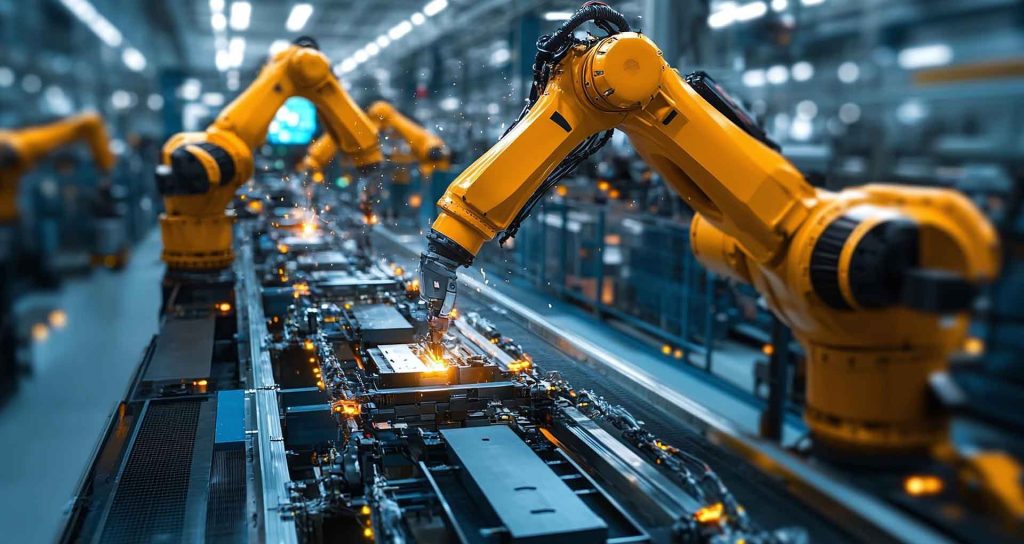
AI is revolutionizing the concept of smart manufacturing, where machines and systems communicate with each other to perform tasks autonomously and efficiently. Through the integration of AI, IoT, and robotics, manufacturers can create fully automated production environments that are capable of adjusting in real-time to changes in demand, product specifications, and environmental conditions.
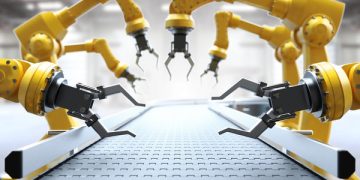
Robotic Process Automation (RPA), powered by AI, enables the automation of repetitive, high-volume tasks such as assembly, packaging, and material handling. These systems can work alongside human workers, performing tasks that are physically demanding or dangerous while leaving more complex tasks to human operators.
Smart manufacturing systems are:
- Self-optimizing, adjusting production schedules and workflows based on real-time data.
- Collaborative, allowing robots and humans to work together safely and efficiently.
- Flexible, enabling the rapid production of customized products on demand.
By integrating AI into manufacturing processes, companies can achieve higher production speeds, greater flexibility, and lower operational costs.
5. Product Design and Customization
AI is also having a transformative effect on product design and customization. Traditionally, product design was a lengthy process that involved extensive prototyping and testing. AI, however, allows manufacturers to create customized products more efficiently by analyzing customer data, predicting trends, and generating optimized design solutions.
Through generative design algorithms, AI can create product designs based on specific parameters such as material constraints, performance requirements, and manufacturing limitations. These designs can then be tested and refined using simulation models. This process speeds up product development and enables companies to offer more personalized products to customers.
In addition, AI can be used to:
- Automate design iterations, improving product development speed.
- Enhance collaboration between designers and engineers through AI-driven tools.
- Create bespoke products tailored to individual customer needs.
By leveraging AI in product design, manufacturers can respond more quickly to changing consumer preferences and deliver high-quality, customized products.
6. Energy Management and Sustainability
In the modern manufacturing landscape, sustainability is a key concern, and AI is helping manufacturers reduce their environmental footprint. AI-powered energy management systems can optimize energy usage by analyzing real-time data on energy consumption, production schedules, and environmental conditions.
AI systems can:
- Predict energy demand and adjust production schedules to reduce energy consumption during peak times.
- Optimize heating, cooling, and lighting in manufacturing facilities to minimize energy waste.
- Reduce emissions by optimizing production processes and improving the efficiency of machinery.
By integrating AI into sustainability efforts, manufacturers can lower operational costs, reduce waste, and contribute to a greener, more sustainable future.
Challenges and Considerations in Implementing AI in Manufacturing
While the benefits of AI in manufacturing are clear, there are several challenges and considerations that companies must address to successfully integrate AI into their operations:
1. Data Security and Privacy
The integration of AI into manufacturing processes often involves the collection and analysis of sensitive data, including operational data, intellectual property, and customer information. Ensuring that this data is secure and protected from cyber threats is essential.
2. Skill Gaps and Workforce Adaptation
The adoption of AI technologies in manufacturing requires a skilled workforce capable of understanding and managing these complex systems. Companies must invest in training programs to upskill employees and ensure they can work alongside AI-powered systems.
3. High Initial Investment
Implementing AI technologies often requires significant upfront investment in hardware, software, and infrastructure. While the long-term benefits are substantial, smaller manufacturers may face financial challenges in adopting these technologies.
4. Integration with Existing Systems
Integrating AI with legacy manufacturing systems can be challenging. Manufacturers must ensure that AI solutions can work seamlessly with existing processes, machines, and software platforms.
The Future of AI in Manufacturing
As AI continues to evolve, its applications in manufacturing will become even more sophisticated. The next wave of innovation will likely involve even deeper integration of AI, machine learning, and advanced robotics to create fully autonomous, self-optimizing factories. These “smart factories” will not only improve efficiency but also enhance product quality, flexibility, and customization.
Furthermore, the rise of 5G networks and edge computing will enable faster data processing and real-time decision-making, paving the way for more agile and responsive manufacturing environments. AI will also play a critical role in enabling circular economy practices by optimizing resource usage and reducing waste throughout the production cycle.
Conclusion
AI is at the forefront of the digital transformation of manufacturing, enabling companies to optimize production, reduce costs, and increase sustainability. From predictive maintenance and quality control to supply chain optimization and smart manufacturing, AI’s impact is far-reaching and multifaceted. As manufacturing continues to evolve, AI will remain a key enabler, allowing companies to innovate faster and stay competitive in an increasingly complex global marketplace.
By leveraging AI’s capabilities, manufacturers can achieve higher levels of productivity, greater flexibility, and more customized products, ushering in a new era of manufacturing excellence. The future of manufacturing is smart, agile, and data-driven, and AI will continue to be its guiding force.