













Abstract
The integration of Artificial Intelligence (AI) and Digital Twin technology is revolutionizing manufacturing, and BMW, a global leader in the automotive industry, is at the forefront of this transformation. By simulating production processes and training AI models to detect product defects, BMW has significantly enhanced its manufacturing efficiency, quality control, and overall production performance. This article explores the key technologies behind BMW’s innovative approach, the benefits of AI and Digital Twin integration in the automotive industry, and the specific methods employed to simulate complex production workflows and detect defects in real-time. Furthermore, we will analyze how these advanced technologies are shaping the future of manufacturing, not only for BMW but for the automotive industry as a whole.
1. Introduction: The Intersection of AI and Digital Twin Technology in Modern Manufacturing
1.1 The Rise of AI and Digital Twin in Industry 4.0
As part of the ongoing digital transformation, manufacturing industries are increasingly adopting advanced technologies to streamline operations, enhance product quality, and achieve greater efficiency. One such combination is the integration of Artificial Intelligence (AI) and Digital Twin technology, both of which have been gaining significant traction in the automotive sector.
AI involves the creation of intelligent algorithms and models that can analyze large datasets, make decisions, and improve autonomously. In manufacturing, AI’s ability to process complex data enables smarter decision-making across all stages of production.
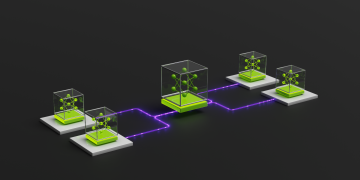
Meanwhile, a Digital Twin is a virtual replica of a physical asset, system, or process, which can be used for simulation, analysis, and optimization. This digital model allows real-time monitoring, diagnostics, and testing without the need to directly interact with physical systems, leading to greater agility and precision in operations.
The convergence of these technologies enables a level of precision and adaptability that was previously unattainable in traditional manufacturing. BMW, one of the world’s leading automotive manufacturers, has embraced this combination to optimize its production processes, detect defects early, and ensure the highest levels of quality control.
1.2 BMW’s Commitment to Innovation and Technology
BMW has long been recognized for its commitment to technological innovation, particularly in the area of manufacturing. The company has been an early adopter of Industry 4.0 principles, integrating smart systems, robotics, and AI into its production facilities. By leveraging AI and Digital Twin technology, BMW aims to enhance its manufacturing capabilities, reduce costs, and improve product quality while maintaining the high-performance standards the brand is known for.
BMW’s approach combines digital models of its manufacturing processes with AI-based defect detection systems. This combination not only improves the efficiency of production but also ensures that defects are detected earlier in the process, reducing the need for costly post-production repairs and reworks.
2. Understanding AI and Digital Twin Technology
2.1 What is AI and How Does It Fit into Manufacturing?
AI refers to a set of technologies designed to simulate human intelligence. These technologies can be classified into various subfields, including machine learning (ML), natural language processing (NLP), computer vision, and robotics. In manufacturing, AI models are typically used for:
- Predictive Maintenance: Using data to predict when machines are likely to fail, allowing for preventive maintenance and minimizing downtime.
- Quality Control: Identifying defects in products, materials, or production processes by analyzing sensor data, images, and other inputs.
- Supply Chain Optimization: Enhancing decision-making across the supply chain to ensure materials are sourced efficiently and products are delivered on time.
- Production Scheduling: Optimizing production lines to ensure resources are utilized efficiently.
For BMW, AI plays a central role in automating complex tasks and improving decision-making through machine learning algorithms that learn from vast amounts of data generated throughout the production process.
2.2 What is Digital Twin Technology?
A Digital Twin is a virtual representation of a physical object or system, created using real-time data and simulations. This digital replica mirrors the behavior and performance of the actual system, offering insights into its operational state and helping to predict future performance.
In manufacturing, Digital Twins are used to:
- Simulate Production Processes: Create digital models of production lines to visualize workflows, identify bottlenecks, and test improvements without disrupting the actual production environment.
- Monitor Equipment Health: Continuously track the status of machines and equipment through sensors, enabling real-time monitoring of wear and tear, efficiency, and operational health.
- Optimize Systems: Run simulations to determine optimal configurations, configurations for minimizing downtime, reducing waste, and improving overall efficiency.
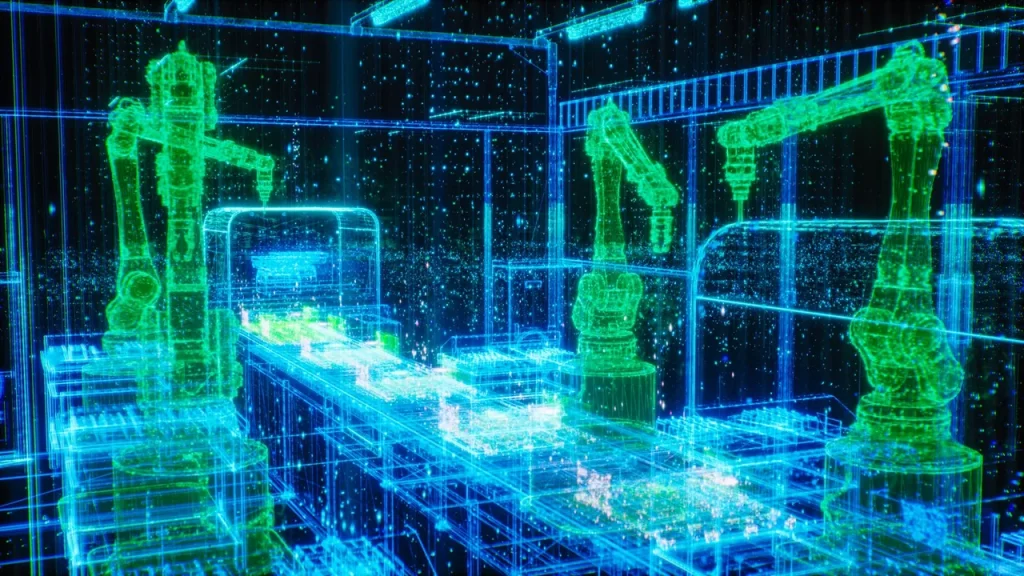
BMW employs Digital Twin technology to simulate the entire vehicle production process, from assembly lines to quality control checks. This digital approach allows for real-time tracking of production workflows, enhancing both decision-making and operational efficiency.
3. BMW’s Application of AI and Digital Twin for Production Simulation
3.1 Simulating Production Processes: A Virtual Model of the Manufacturing Floor
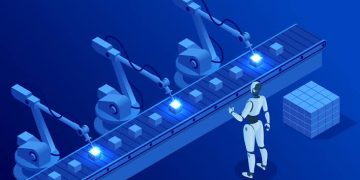
BMW utilizes Digital Twin technology to create virtual models of its manufacturing facilities and production processes. These digital replicas serve as live simulations of physical production lines, which are constantly updated with real-time data from sensors and other monitoring systems on the shop floor. By linking physical processes with their virtual counterparts, BMW can:
- Optimize Workflows: Visualize the production process in real-time, identifying bottlenecks, inefficiencies, and areas where productivity could be improved.
- Predict Production Outcomes: Run simulations to predict how changes in the production process will affect overall outcomes, such as throughput, resource utilization, and time to market.
- Ensure System Compatibility: Validate that new equipment, robots, or production techniques are compatible with existing systems before being implemented on the actual production line.
This ability to simulate various production scenarios allows BMW to identify potential issues before they impact production, reducing costly downtime and improving overall operational efficiency.
3.2 Training AI Models to Detect Product Defects
Defect detection is another critical area where AI is being integrated into BMW’s manufacturing processes. Traditionally, defect detection required human inspectors to manually review products, a process that was not only time-consuming but also prone to human error. By using AI and computer vision, BMW has automated the inspection process, allowing its models to identify defects in products during various stages of production.
BMW’s AI-based defect detection system is trained on vast datasets consisting of images and sensor data from the production line. By analyzing these datasets, the AI models learn to detect subtle defects, such as scratches, dents, or alignment issues, with much greater accuracy and speed than human inspectors.
Key benefits of this AI-driven approach include:
- Early Detection: Identifying defects early in the production process, allowing for prompt corrective actions before products are shipped or assembled.
- Scalability: AI models can be scaled across the entire production line, enabling consistent and reliable defect detection at a high volume.
- Reduced Human Error: Automated defect detection minimizes the variability and subjectivity inherent in human inspection, ensuring consistent quality control.
Moreover, as the AI models are exposed to more data and trained continuously, their performance improves over time, making defect detection even more accurate.
3.3 The Role of Digital Twin in Quality Assurance
Digital Twin technology also plays an important role in quality assurance at BMW. By continuously collecting and analyzing data from production lines, the Digital Twin provides a comprehensive view of the manufacturing process and the condition of individual components. This enables:
- Real-Time Quality Monitoring: Constant monitoring of products and components as they move through the production line, ensuring that quality standards are met at every stage.
- Virtual Testing and Validation: Testing and validating new products or production techniques in the virtual environment of the Digital Twin before physical implementation, ensuring that they meet quality criteria.
- Data-Driven Decisions: Using data from the Digital Twin to inform decisions about quality control adjustments, such as machine recalibration or process optimization.
By incorporating both AI and Digital Twin technology into its quality assurance framework, BMW can not only detect defects more effectively but also enhance the overall consistency and reliability of its production processes.
4. The Future of AI and Digital Twin Technology in BMW’s Manufacturing
4.1 Enhanced Automation and Productivity
As BMW continues to implement AI and Digital Twin technologies, the company aims to further automate its production lines, reducing reliance on manual processes and increasing overall productivity. AI-driven systems will enable BMW to not only optimize individual production tasks but also improve coordination across the entire supply chain.
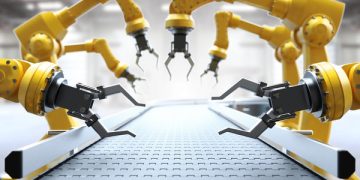
In the future, autonomous robots powered by AI and informed by real-time Digital Twin models will likely play an even more significant role in BMW’s manufacturing facilities. These robots can perform tasks like assembly, part insertion, and even defect detection with minimal human intervention, further enhancing the efficiency and scalability of the production process.
4.2 Predictive Maintenance and Operational Efficiency
BMW is also expanding its use of AI and Digital Twin technologies to enable predictive maintenance across its factories. By monitoring the condition of machinery and equipment through sensors, Digital Twins can predict when a piece of equipment is likely to fail, allowing for timely interventions. This reduces unplanned downtime, lowers maintenance costs, and increases the overall lifespan of factory assets.
4.3 Integration of Advanced Materials and Customization
In the future, BMW may use AI and Digital Twin technology to create more sophisticated simulations of materials and manufacturing processes, allowing for advanced material testing and product customization. AI models could help simulate the behavior of new materials, ensuring that they meet performance and durability requirements before they are used in production.
Furthermore, AI and Digital Twin systems will play a significant role in customizing products to meet individual consumer preferences. By analyzing customer data, AI could suggest design or feature changes that improve customer satisfaction and enhance the driving experience.
5. Conclusion
BMW’s innovative use of AI and Digital Twin technology in its manufacturing processes represents a significant leap forward in the automotive industry. By simulating production workflows and using AI models to detect product defects, BMW not only enhances its operational efficiency but also ensures that its products meet the highest quality standards.
As the integration of AI and Digital Twin technology becomes more widespread, the automotive industry will continue to evolve toward more intelligent, automated, and responsive production systems. BMW’s adoption of these technologies sets a high benchmark for the industry and provides valuable insights into how AI and Digital Twin technology can transform manufacturing across various sectors. The future of manufacturing is smart, data-driven, and increasingly reliant on intelligent digital systems to drive innovation, efficiency, and quality.