




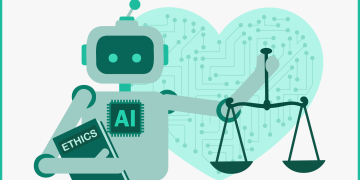

























Introduction: The Dual-Edged Sword of Artificial Intelligence
Artificial Intelligence (AI) has undeniably become a cornerstone of modern technological progress. With its ability to analyze vast amounts of data, learn from patterns, and automate complex processes, AI is revolutionizing a variety of industries, from healthcare and transportation to finance and entertainment. However, as the development of AI accelerates, so do the risks associated with its unchecked implementation.
AI security and responsible development are emerging as critical areas of concern. While AI has the potential to create immense benefits for society, without proper safeguards, the technology could pose significant risks to privacy, safety, and even the very integrity of the systems we rely on. As AI becomes more deeply embedded in critical systems, it is crucial to address the challenges associated with its deployment—ensuring that these systems remain secure, ethical, and transparent.
This article explores the perspectives on AI security and responsible development, focusing on the importance of safe practices, ethical guidelines, regulatory frameworks, and the role of governance in shaping the future of AI.
1. AI Security: The Critical Need for Protection
1.1 Defining AI Security
AI security refers to the measures and practices aimed at ensuring the integrity, confidentiality, and availability of AI systems. The rapid proliferation of AI technologies across various domains—such as autonomous vehicles, medical systems, and financial platforms—means that a failure in security can have serious consequences, including financial loss, reputational damage, and even physical harm.
AI systems, particularly those based on machine learning (ML) algorithms, are inherently complex and involve multiple layers of computation and data processing. This complexity introduces new security vulnerabilities that require specific attention. Some of the primary concerns include:
- Adversarial Attacks: These are deliberate attempts to mislead AI models through carefully crafted inputs designed to exploit vulnerabilities in the system. For example, adversarial attacks could mislead an autonomous vehicle’s image recognition system into misidentifying pedestrians as objects, potentially leading to accidents.
- Data Poisoning: A significant risk in machine learning is the intentional manipulation of the training data, a tactic known as data poisoning. Malicious actors can inject erroneous or biased data into training datasets, which could skew the AI model’s learning process, resulting in flawed predictions or biased outcomes.
- Model Inversion: In some cases, attackers may reverse-engineer a trained model to extract sensitive information used in its creation. For example, in a medical context, model inversion could reveal confidential patient data embedded in the AI’s decision-making process.
1.2 The Growing Complexity of AI Security
AI systems’ complexity often results in heightened security risks. As these systems are increasingly integrated into critical infrastructure—like healthcare, transportation, and finance—the stakes for security become significantly higher. Here are some of the key challenges AI security faces:
- Complex Attack Surfaces: AI systems involve multiple layers of technology, including algorithms, sensors, data pipelines, and communication networks. This multi-layered nature creates an expansive attack surface, making it more difficult to secure AI systems from every possible point of entry.
- Dynamic Adaptability: Unlike traditional software systems, AI models can evolve based on the data they process. Machine learning models continuously adapt and refine their predictions based on new input data, which means that security vulnerabilities can emerge unpredictably.
- Lack of Standardization: Despite the growing importance of AI, there is still a lack of standardized security practices across the industry. This leads to inconsistent implementations of AI security, making it difficult to create universal best practices or frameworks for securing AI systems.
1.3 Ensuring Robust AI Security
To mitigate the risks associated with AI security, several strategies can be adopted:
- Adversarial Training: One way to combat adversarial attacks is by incorporating adversarial examples into the training process. By exposing AI models to data specifically designed to challenge their decision-making capabilities, these models can learn to recognize and resist attacks.
- Data Integrity Controls: Data poisoning can be mitigated by implementing rigorous data validation techniques, ensuring that the datasets used for training AI models are accurate, reliable, and free from malicious manipulation.
- Encryption and Privacy-Preserving Techniques: Securing sensitive data is paramount, and AI models must be designed with robust encryption methods to ensure that personal and private data remains confidential. Additionally, differential privacy techniques can be used to allow AI models to learn from data without exposing individual data points.
2. Responsible Development of AI: Ensuring Ethical Guidelines and Transparency
2.1 The Ethical Dilemmas in AI
As AI systems are deployed across an increasing number of domains, ethical considerations have moved to the forefront of the conversation. The questions around AI ethics encompass not only how AI systems behave but also how they are designed, trained, and deployed. Here are some core ethical issues:
- Bias and Fairness: One of the most pressing ethical concerns with AI is bias. AI systems are only as good as the data they are trained on. If this data is biased—whether because of historical inequality, underrepresentation, or societal discrimination—the AI systems that learn from it can perpetuate or even exacerbate those biases. This has profound implications in areas such as hiring, law enforcement, and healthcare.
- Accountability: When an AI system makes a mistake, it is not always clear who is to blame. Should the responsibility fall on the developers who created the system, the users who deployed it, or the AI itself? This lack of clear accountability creates challenges in addressing errors and injustices caused by AI systems.
- Privacy Concerns: AI systems often rely on vast amounts of personal data to function. For instance, AI-driven healthcare systems may require sensitive health information, while AI-based recommendation engines use personal preferences and behavior patterns. This raises concerns about privacy, data misuse, and surveillance.
2.2 Principles for Responsible AI Development
To ensure that AI is developed in a responsible and ethical manner, several core principles must guide its creation and deployment:
- Transparency: AI systems should be transparent, meaning that users and stakeholders should be able to understand how the systems make decisions. This is particularly important in high-stakes areas such as criminal justice or healthcare. Explainable AI (XAI) is an emerging field that focuses on creating models whose decisions can be easily interpreted and understood by humans.
- Fairness: AI should be designed to be fair and unbiased, ensuring that the outputs of AI systems do not disproportionately harm any particular group or individual. Fairness audits and diverse datasets are essential in achieving this goal.
- Accountability and Liability: Developers and organizations must ensure clear accountability for AI systems. They must also be prepared to assume responsibility for the actions of their AI models, including addressing any errors, biases, or harm caused by the system.
- Privacy by Design: Privacy should be a foundational principle in the development of AI. This involves not only securing the data used by AI systems but also ensuring that systems are designed to protect individual privacy through techniques like anonymization and data minimization.

3. Governance and Regulation: Safeguarding AI’s Future
3.1 The Need for Governance in AI
Governance plays a vital role in ensuring the responsible development and deployment of AI technologies. As AI continues to evolve, it is essential that governments, corporations, and international bodies work together to establish a clear and enforceable set of guidelines and regulations.
- Ethical Standards: Global and national organizations must establish common ethical standards that guide the development of AI. For instance, the European Union’s AI Act provides a regulatory framework that categorizes AI systems based on risk, ensuring that high-risk AI systems undergo more stringent regulatory scrutiny.
- Cross-Border Cooperation: AI is a global phenomenon, and its development and governance require cooperation across borders. Establishing global standards for AI development and use will help prevent unethical or unsafe practices from emerging in any region.
- AI Auditing: Governments and independent third parties should establish mechanisms for auditing AI systems. Regular AI audits can ensure that systems are operating as intended and that they remain in compliance with ethical and regulatory standards.
3.2 Policy Recommendations for Ethical AI
To navigate the complex landscape of AI development and ensure its ethical use, the following policy recommendations are crucial:
- Regulatory Frameworks: Governments should develop and enforce regulations that ensure AI is used ethically and securely. This could include implementing requirements for transparency, accountability, and fairness in AI systems.
- Public Awareness: As AI continues to evolve, it is important to educate the public on the implications of AI technologies. Raising awareness about potential risks and ethical considerations can help people make informed decisions about their interactions with AI.
- AI Impact Assessments: Prior to deploying AI systems, organizations should conduct thorough impact assessments to evaluate the potential risks and ethical considerations involved. This process should involve stakeholder consultations, including input from the communities affected by AI systems.
4. The Future of AI Security and Responsible Development
4.1 Building a Secure and Transparent AI Ecosystem
The future of AI security and responsible development hinges on the creation of a secure, transparent, and ethically grounded ecosystem. As AI continues to evolve, so too must the strategies for securing these systems, ensuring that they remain trustworthy and beneficial for society.
- Collaborative Efforts: The future of AI will rely heavily on collaboration across various sectors—governments, private corporations, academia, and civil society. A multi-stakeholder approach is necessary to address the complex issues surrounding AI security, fairness, and accountability.
- Technological Innovations: Innovations in areas such as blockchain for transparency and differential privacy for data protection will help create more secure AI systems. Furthermore, AI explainability and AI ethics guidelines will play an essential role in addressing societal concerns about the technology.
4.2 Embracing the Responsible Future of AI
As AI becomes an integral part of our future, it is crucial that society embraces a responsible approach to its development. By prioritizing security, ethical design, and governance, we can ensure that AI serves as a force for good, benefiting humanity while minimizing the risks.
Conclusion
AI has the potential to revolutionize industries, solve complex problems, and improve quality of life. However, with great power comes great responsibility. The development of secure, ethical, and accountable AI systems is essential to ensure that these technologies contribute positively to society. By addressing security risks, adhering to ethical guidelines, and implementing robust governance structures, we can create a future where AI empowers rather than harms humanity.