












Introduction: AI as a Transformative Force
Artificial intelligence (AI) has emerged as one of the most transformative technologies of the 21st century, reshaping industries, economies, and the global labor market. From manufacturing and logistics to healthcare, finance, and creative sectors, AI technologies are redefining the way work is performed and how value is created.
While AI promises unprecedented efficiency, productivity, and innovation, it also raises concerns about job displacement, skills gaps, and social inequalities. Understanding AI’s impact requires a comprehensive analysis of technological adoption, industry dynamics, and workforce adaptation strategies.
This article explores how AI is transforming industries, its influence on employment patterns, potential risks and benefits, and strategies for equipping the workforce for an AI-driven economy.
1. AI in Industry: Transformation Across Sectors
1.1 Manufacturing and Automation
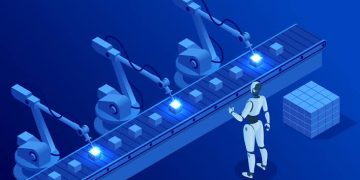
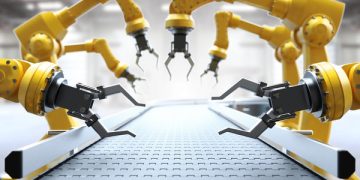
Manufacturing has historically been at the forefront of technological disruption, from the Industrial Revolution to the automation era. AI enhances this transformation through:
- Robotics and intelligent automation: AI-powered robots perform repetitive tasks with precision and adaptability, improving production speed and quality.
- Predictive maintenance: Machine learning models analyze sensor data to anticipate equipment failures, reducing downtime and operational costs.
- Supply chain optimization: AI algorithms optimize inventory, logistics, and production planning to respond dynamically to market demand.
These technologies are reshaping the labor structure, shifting demand from routine manual labor to technical supervision, programming, and process optimization roles.
1.2 Healthcare and Life Sciences
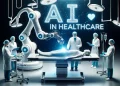
AI is revolutionizing healthcare by enabling:
- Medical image analysis: Deep learning models detect anomalies in X-rays, MRIs, and CT scans with accuracy comparable to human specialists.
- Drug discovery: AI accelerates compound screening and predicts molecular interactions, significantly reducing R&D timelines.
- Predictive analytics: Patient data is used to anticipate disease progression, optimize treatment plans, and personalize care.
This transformation requires skilled healthcare professionals capable of integrating AI tools into clinical workflows while maintaining human oversight.
1.3 Finance and Banking
In finance, AI enhances:
- Fraud detection: Machine learning identifies unusual transaction patterns in real-time.
- Algorithmic trading: AI systems analyze vast market datasets to optimize investment strategies.
- Customer service: AI chatbots and virtual assistants handle routine inquiries, freeing human employees for complex financial advice.
The shift emphasizes analytical, strategic, and client-focused roles, reducing the need for repetitive transactional positions.
1.4 Retail, Logistics, and E-Commerce
AI technologies are reshaping consumer industries through:
- Personalized recommendations: Machine learning analyzes user behavior to enhance marketing effectiveness.
- Warehouse automation: Autonomous vehicles and robotic arms streamline inventory management.
- Demand forecasting: AI predicts sales trends to optimize stock levels and reduce waste.
Retail and logistics workers are increasingly required to manage AI systems, analyze data, and coordinate automated operations.
1.5 Creative and Knowledge Industries
AI’s generative capabilities are expanding into creative domains:
- Content generation: AI can draft articles, marketing copy, music, and video content.
- Design assistance: Tools like AI-powered CAD systems accelerate product design and prototyping.
- Legal and administrative tasks: AI automates contract analysis, legal research, and document management.
This introduces hybrid roles where human creativity is augmented by AI-generated insights, redefining traditional knowledge work.
2. Employment Impacts: Opportunities and Disruptions
2.1 Job Displacement Concerns
AI adoption inevitably leads to automation of routine, repetitive tasks, impacting roles such as:
- Factory assembly line workers
- Data entry clerks and administrative staff
- Customer service agents performing scripted interactions
Research suggests that highly automatable tasks could see significant reduction, especially in sectors relying on structured, predictable workflows.
2.2 Job Creation and Transformation
While some roles are displaced, AI also generates new opportunities:
- AI engineers, data scientists, and machine learning specialists
- AI ethics and compliance officers
- Human-AI collaboration managers overseeing hybrid workflows
Moreover, many existing roles are transformed rather than eliminated, requiring workers to adapt skills and leverage AI tools to enhance productivity.
2.3 The Skills Gap
AI adoption exposes a skills mismatch:
- High demand for technical, analytical, and problem-solving skills
- Insufficient supply of trained professionals in emerging AI disciplines
- Need for digital literacy and adaptability across all industries
Addressing this gap requires investment in education, reskilling programs, and lifelong learning initiatives to prepare workers for an AI-driven economy.
3. Economic Implications of AI Adoption
3.1 Productivity and Growth
AI has the potential to boost productivity across sectors, resulting in:
- Reduced operational costs
- Faster innovation cycles
- Enhanced global competitiveness
McKinsey estimates that AI could contribute $13 trillion to global GDP by 2030, driven by both labor augmentation and automation.
3.2 Income Inequality Risks
AI’s economic benefits are unevenly distributed:
- High-skill workers and AI innovators capture disproportionate gains
- Low-skill workers face higher risks of displacement and wage stagnation
- Regional disparities emerge depending on AI adoption rates and industrial infrastructure
Policies supporting inclusive AI deployment, equitable training programs, and social safety nets are essential to mitigate these risks.
3.3 Industrial Restructuring
AI accelerates industry consolidation and restructuring:
- Companies leveraging AI gain competitive advantages in efficiency and innovation
- Traditional firms may struggle to adapt, leading to market exits or mergers
- Small and medium enterprises face both challenges and opportunities depending on AI accessibility
This restructuring reshapes employment landscapes, urban development, and regional economic priorities.
4. Societal Implications and Workforce Adaptation
4.1 Reskilling and Lifelong Learning
AI adoption necessitates a shift toward continuous learning:
- Governments and companies must invest in vocational training and digital literacy programs
- Workers need skills in AI-human collaboration, data literacy, and problem-solving
- Educational institutions must integrate AI knowledge across curricula
4.2 Human-AI Collaboration
Rather than replacing humans entirely, AI often augments human work:
- Doctors use AI for diagnostics but retain decision-making authority
- Engineers leverage AI for simulation and design while applying domain expertise
- Customer support agents rely on AI chatbots to handle repetitive queries, focusing on complex interactions
This hybrid model maximizes productivity while preserving human judgment, creativity, and empathy.
4.3 Ethical and Regulatory Considerations
AI’s impact on employment raises ethical and regulatory challenges:
- Ensuring fair labor transitions for displaced workers
- Preventing bias in AI-powered decision-making in hiring and promotions
- Protecting data privacy and transparency in AI workforce management
Balanced regulation ensures that AI adoption promotes societal benefits without exacerbating inequalities.
5. Global Perspectives on AI and Employment
5.1 Developed Economies
In developed nations:
- AI adoption is rapid in high-tech industries and service sectors
- Workforce challenges center on upskilling white-collar and technical workers
- Governments invest in AI innovation hubs, research, and workforce training programs
5.2 Emerging Economies
In emerging economies:
- AI adoption may accelerate manufacturing efficiency and digital services
- Job displacement risk is higher for manual labor and routine service roles
- Investment in education, infrastructure, and AI accessibility is critical for inclusive growth
5.3 Global Talent Competition
AI-driven economic growth has intensified competition for global AI talent, influencing migration patterns, talent acquisition strategies, and international collaboration.
6. Strategies for Maximizing AI Benefits
6.1 Workforce-Centric AI Deployment
Companies should adopt human-centered AI strategies:
- Integrating AI to augment human capabilities rather than replace them
- Offering training programs and career pathways for affected employees
- Creating roles focused on AI oversight, ethics, and system maintenance
6.2 Policy and Government Initiatives
Governments play a critical role in shaping AI’s employment impact:
- Supporting reskilling and upskilling programs
- Providing incentives for AI adoption that complements human labor
- Implementing social safety nets for displaced workers
6.3 Collaboration Between Industry, Academia, and Government
Maximizing AI’s benefits requires multi-stakeholder cooperation:
- Academic institutions provide research, curriculum development, and skill training
- Industry develops practical applications, AI infrastructure, and workforce transition plans
- Governments regulate ethics, equity, and safety, ensuring fair deployment
This holistic approach ensures sustainable AI adoption that balances productivity gains with social welfare.
Conclusion
Artificial intelligence is fundamentally reshaping industries and the employment landscape. While AI promises increased productivity, efficiency, and innovation, it also challenges traditional work structures, raises ethical considerations, and creates skills gaps.
The net impact of AI on employment will depend on:
- How industries integrate AI technologies responsibly
- The ability of workers to reskill and adapt
- The effectiveness of policy frameworks and educational programs
AI is not merely a replacement technology—it is a tool for augmenting human potential, driving economic growth, and creating new opportunities. By proactively managing workforce transitions, promoting education, and fostering human-AI collaboration, societies can ensure that the benefits of AI are inclusive, equitable, and sustainable.
The future of work is not AI versus humans—it is AI with humans, working together to unlock unprecedented productivity, creativity, and societal value.