


























Introduction
Natural Language Processing (NLP), a subfield of artificial intelligence (AI) focused on the interaction between humans and computers using natural language, has undergone remarkable transformations over the past few decades. From the early rule-based systems of the 1950s to today’s advanced neural networks and large language models, NLP has reached a stage where maturity and innovation coexist, driving both academic research and industrial applications. This article explores the historical evolution of NLP, the technological breakthroughs marking its current maturity, ongoing innovative trends, and the challenges and opportunities that lie ahead.
1. Historical Context of NLP
1.1 Early Rule-Based Systems
The origins of NLP trace back to attempts at machine translation in the 1950s. Pioneers such as Alan Turing speculated on the possibility of intelligent machines capable of understanding language. Early systems relied heavily on hand-crafted linguistic rules and dictionaries. For example, the Georgetown-IBM experiment in 1954 demonstrated basic Russian-to-English translation using only 60 rules. While impressive for its time, these systems were limited by scalability issues and an inability to generalize beyond predefined rules.
1.2 Statistical Approaches
The 1980s and 1990s marked a paradigm shift from deterministic rule-based methods to statistical models. Techniques such as n-gram models and Hidden Markov Models (HMMs) leveraged large corpora to estimate the probability of word sequences, allowing systems to make predictions based on patterns observed in real language data. This transition enabled more robust speech recognition, part-of-speech tagging, and basic machine translation, laying the foundation for data-driven NLP.
1.3 Emergence of Machine Learning
Machine learning introduced adaptability and the ability to improve performance as more data became available. Algorithms such as Support Vector Machines (SVMs), Maximum Entropy models, and Conditional Random Fields (CRFs) became standard tools for tasks like named entity recognition, sentiment analysis, and text classification. By incorporating statistical learning with linguistic features, NLP models became more accurate and capable of handling diverse language phenomena.
2. Current Stage of Maturity
2.1 Deep Learning and Neural Networks
The past decade has witnessed the most transformative advances in NLP. Deep learning, particularly through recurrent neural networks (RNNs), convolutional neural networks (CNNs), and attention-based models, has revolutionized how machines understand and generate language. These models can learn complex hierarchical representations of text, capturing syntax, semantics, and context with unprecedented accuracy.
2.2 Transformer Architectures
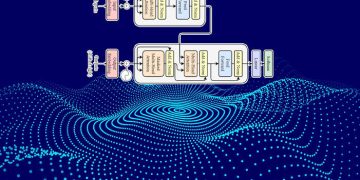
The introduction of the transformer architecture in 2017, popularized by models such as BERT (Bidirectional Encoder Representations from Transformers) and GPT (Generative Pre-trained Transformer), marked a significant leap in NLP capabilities. Transformers excel at modeling long-range dependencies in text, supporting tasks like question answering, summarization, translation, and even creative content generation. Unlike earlier sequential models, transformers can process entire sequences in parallel, dramatically improving computational efficiency and scalability.
2.3 Pretrained Language Models
Pretrained language models have become the cornerstone of modern NLP. By pretraining on massive corpora, models capture general linguistic knowledge, which can then be fine-tuned for specific tasks. This approach reduces the need for task-specific data and accelerates model deployment. Techniques like masked language modeling and next-token prediction have enabled unprecedented performance in benchmarks such as GLUE, SuperGLUE, and SQuAD.
3. Innovations Driving NLP Forward
3.1 Multimodal NLP
A growing trend in NLP is integrating text with other modalities, such as images, audio, and video, to create richer representations of information. Multimodal models can perform tasks like image captioning, video summarization, and speech-to-text translation with higher accuracy. By bridging the gap between different data types, NLP systems are becoming more versatile and closer to human-like understanding.
3.2 Few-Shot and Zero-Shot Learning
Traditional supervised learning requires large annotated datasets, which are expensive and time-consuming to create. Few-shot and zero-shot learning techniques allow models to generalize from limited examples or even without task-specific training. These capabilities are particularly valuable for low-resource languages or specialized domains, expanding NLP’s applicability globally.
3.3 Conversational AI and Chatbots
Conversational AI has advanced significantly with the development of large-scale language models. Modern chatbots and virtual assistants can maintain context across extended dialogues, understand nuanced user intent, and generate human-like responses. The integration of reinforcement learning and user feedback loops enables continuous improvement in dialogue quality.
3.4 Ethical and Responsible NLP
Innovation in NLP is not purely technological; it also encompasses ethical considerations. As language models become more powerful, issues such as bias, misinformation, privacy, and model interpretability gain prominence. Researchers and practitioners are developing frameworks for responsible AI deployment, including fairness auditing, bias mitigation, and explainable AI techniques, ensuring NLP technologies benefit society equitably.

4. Applications Across Industries
4.1 Healthcare
NLP is transforming healthcare by extracting actionable insights from clinical notes, medical literature, and patient-reported data. Applications include automated diagnosis support, drug discovery, patient sentiment analysis, and predictive modeling of disease progression. By converting unstructured text into structured knowledge, NLP enhances decision-making and operational efficiency.
4.2 Finance
Financial institutions leverage NLP to analyze market sentiment, detect fraudulent transactions, automate customer service, and generate reports. Techniques such as sentiment analysis, named entity recognition, and event extraction enable timely insights from news articles, earnings calls, and regulatory filings.
4.3 Education and E-Learning
Educational technologies benefit from NLP through intelligent tutoring systems, automated grading, personalized content recommendation, and language learning tools. NLP facilitates the evaluation of student writing, identifies knowledge gaps, and adapts instructional content to individual learning styles.
4.4 Media and Entertainment
In media, NLP powers content recommendation, summarization, automated subtitling, and trend analysis. For gaming and virtual environments, NLP contributes to more immersive interactive experiences through natural dialogue with AI-driven characters.
5. Challenges and Future Directions
5.1 Data Limitations and Bias
Despite large datasets, NLP systems often exhibit biases reflecting societal prejudices present in the training data. Mitigating these biases remains a key challenge, requiring innovative data curation, fairness-aware learning algorithms, and transparency in model decision-making.
5.2 Model Efficiency and Sustainability
State-of-the-art models are increasingly computationally intensive, raising concerns about energy consumption and environmental impact. Research into model compression, distillation, and more efficient architectures seeks to balance performance with sustainability.
5.3 Low-Resource and Multilingual NLP
Most advanced NLP research focuses on high-resource languages like English, leaving many languages underserved. Expanding NLP capabilities to low-resource languages involves data augmentation, transfer learning, and unsupervised methods, promoting inclusivity and global accessibility.
5.4 Human-AI Collaboration
The future of NLP lies in augmenting human intelligence rather than replacing it. Systems that assist humans in writing, research, decision-making, and creativity will become central to education, industry, and daily life. Human-AI collaboration requires models that are interpretable, trustworthy, and aligned with human values.
6. Conclusion
Natural Language Processing has reached a stage of both maturity and innovation, combining decades of linguistic research, statistical learning, and neural network breakthroughs. Its current achievements—transformer architectures, pretrained models, conversational AI, and multimodal systems—demonstrate not only technological sophistication but also broad societal impact. Looking forward, the field must balance rapid innovation with ethical responsibility, sustainability, and inclusivity. NLP’s trajectory suggests a future where machines understand, generate, and interact with human language in ways that are increasingly seamless, intelligent, and context-aware.
The integration of NLP into everyday life, industry, and research indicates a transformative potential unmatched in the history of computing. With continued innovation, NLP is not merely a technological milestone but a foundational pillar for the next generation of human-computer interaction.