
















Artificial intelligence (AI) has experienced a remarkable evolution over the past decade. Early AI systems were specialized, focusing on singular tasks such as image recognition, speech recognition, or text generation. Among these, generative AI has emerged as a particularly transformative force, enabling machines to produce content—text, images, audio, and even code—with increasing sophistication. However, the limitations of single-modal AI have catalyzed the development of multimodal AI and, more recently, embodied intelligence, which integrates perception, action, and reasoning in physical or simulated environments. This article examines the trajectory from single-modal generative AI to multimodal systems and embodied intelligence, providing a detailed exploration of technological innovations, applications, challenges, and future prospects.
1. Introduction: The Generative AI Revolution
Generative AI refers to AI systems capable of creating new content based on learned patterns from existing data. Its rise has been fueled by deep learning architectures, particularly transformer models, and vast datasets:
- Text Generation: Large language models (LLMs) such as GPT-4 have transformed writing, summarization, translation, and conversational AI.
- Image Generation: Models like DALL·E and Stable Diffusion allow users to produce high-quality visuals from textual prompts.
- Audio and Music: AI can generate realistic speech, voice clones, and musical compositions.
The success of single-modal generative AI demonstrates the power of deep learning, but it also highlights inherent limitations:
- Modality Confinement: Models excel only within a single modality, lacking cross-domain understanding.
- Contextual Limitations: Single-modal AI often struggles with multi-step reasoning and context integration across sensory inputs.
- Interaction Constraints: AI cannot directly interact with the physical world, limiting its practical autonomy.
These limitations have spurred research into multimodal AI, where models can process and synthesize information across multiple input types, and embodied intelligence, where AI can perceive, reason, and act in dynamic environments.
2. Single-Modal Generative AI: Foundations and Capabilities
2.1 Text-Based Generative Models
- Transformer Architecture: Introduced by Vaswani et al., transformers enable attention mechanisms that allow models to capture long-range dependencies in text.
- Large Language Models (LLMs): LLMs, trained on massive corpora, excel at tasks including question answering, summarization, translation, and code generation.
- Applications: Chatbots, automated content creation, virtual assistants, and code generation platforms like OpenAI Codex.
2.2 Image Generation
- Diffusion Models: Techniques such as denoising diffusion probabilistic models (DDPMs) allow generation of photorealistic images.
- Generative Adversarial Networks (GANs): GANs use competing neural networks to produce high-fidelity images and videos.
- Applications: Digital art, advertising content, synthetic media generation, and simulation environments for training AI.
2.3 Audio and Speech Generation
- Text-to-Speech (TTS): AI can convert written text into natural-sounding speech, supporting accessibility, virtual assistants, and entertainment.
- Music Generation: AI models like OpenAI Jukebox compose original music tracks in specific styles.
- Applications: Audiobooks, voice assistants, podcast production, and interactive gaming.
While these single-modal systems demonstrate remarkable performance, they operate independently of other sensory modalities and lack grounding in the physical or social world.
3. Multimodal AI: Bridging Modalities
3.1 Definition and Motivation
Multimodal AI integrates multiple types of input—text, images, audio, video, and sometimes sensor data—allowing models to reason across domains. Multimodal AI addresses the shortcomings of single-modal systems:
- Enables cross-modal understanding and synthesis (e.g., generating images from text prompts).
- Supports more robust reasoning by leveraging complementary information from multiple sensory sources.
- Facilitates human-like perception by combining visual, auditory, and linguistic cues.
3.2 Key Architectures
- Vision-Language Models (VLMs):
- Examples: CLIP, Flamingo.
- Capabilities: Align textual descriptions with images for retrieval, captioning, and generation.
- Audio-Visual Models:
- Combine speech recognition with lip-reading, emotion detection, and video understanding.
- Applications: Video summarization, enhanced virtual assistants, real-time translation.
- Text-Image-Audio Integration:
- Large-scale multimodal transformers can process and generate content that spans multiple modalities.
- Example: Generative AI producing videos from textual scripts or combining music with imagery.
3.3 Applications of Multimodal AI
- Content Creation: AI can produce synchronized media, such as illustrated books, videos with voiceovers, or interactive learning materials.
- Healthcare: Multimodal AI combines medical images, patient notes, and sensor data for diagnosis and prognosis.
- Autonomous Systems: Integrating visual, auditory, and textual data enables self-driving cars, robots, and drones to make safer decisions.

4. Embodied Intelligence: AI in the Physical World
4.1 Concept and Significance
Embodied intelligence refers to AI systems that perceive, act, and learn within a physical or simulated environment. Unlike single-modal or multimodal AI, embodied agents interact with their surroundings, making decisions that influence real-world outcomes.
Key Characteristics:
- Perception-Action Loops: AI continuously perceives the environment and adjusts actions.
- Goal-Oriented Behavior: Embodied AI pursues objectives autonomously, optimizing performance based on feedback.
- Learning from Interaction: Reinforcement learning and imitation learning allow agents to improve through experience.
4.2 Core Technologies
- Robotics and Sensors: Robots equipped with cameras, LiDAR, tactile sensors, and accelerometers perceive the world and respond dynamically.
- Reinforcement Learning (RL): Enables agents to learn optimal behaviors by trial-and-error interactions with the environment.
- Simulation Environments: Tools like OpenAI Gym, Habitat, and Isaac Gym provide safe virtual spaces to train embodied agents.
- Human-AI Interaction: Collaborative robots (cobots) and AI assistants can interact naturally with humans in shared environments.
4.3 Applications
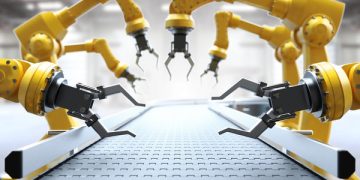
- Industrial Automation: Robots navigate complex factories, handle materials, and optimize assembly lines.
- Healthcare and Assistive Robotics: AI-powered prosthetics, surgical robots, and elder-care assistants enhance quality of life.
- Exploration and Disaster Response: Drones, rovers, and underwater vehicles perform tasks in hazardous or inaccessible environments.
- Education and Entertainment: AI avatars and interactive learning companions respond to gestures, speech, and emotional cues.
5. From Generative AI to Embodied Intelligence: Integration Pathways
The evolution from single-modal generative AI to embodied intelligence follows several integration pathways:
5.1 Multimodal Generative Models as Cognitive Foundations
- Multimodal AI enables richer world models by combining vision, language, and audio.
- These models serve as knowledge bases for embodied agents, providing contextual understanding for actions.
5.2 Reinforcement Learning Meets Generative AI
- Generative models can propose solutions or strategies in simulated environments.
- RL refines these strategies through trial-and-error, creating adaptive, goal-directed behavior.
5.3 Human-in-the-Loop Systems
- Human feedback guides generative and embodied models, enhancing safety, ethical alignment, and performance.
- Example: Fine-tuning language-based agents for safe instructions to robots.
5.4 Real-World Deployment Challenges
- Perception Gap: Translating virtual multimodal understanding into real-world physical interaction.
- Data Scarcity: Embodied agents require large datasets from sensors and interactions.
- Computational Demand: Training multimodal and embodied models is resource-intensive.
- Safety and Ethics: Autonomous agents must operate safely in dynamic, human-populated environments.
6. Case Studies
6.1 OpenAI’s GPT-4 Multimodal Capabilities
- GPT-4 can process both text and image inputs, demonstrating reasoning that combines modalities.
- Applications include problem-solving, education, and creative content generation.
6.2 Boston Dynamics’ Spot Robot
- Embodied AI navigates physical spaces autonomously using vision, lidar, and proprioception.
- Applied in industrial inspections, remote monitoring, and disaster scenarios.
6.3 AI-Assisted Healthcare Robotics
- Surgical robots integrate patient imaging, textual data, and sensor feedback to perform precise interventions.
- Embodied AI reduces human error and enhances surgical outcomes.
6.4 Autonomous Vehicles
- Tesla, Waymo, and other autonomous systems combine multimodal perception (camera, radar, lidar) with reinforcement learning for navigation and safety.
- These systems highlight the integration of multimodal AI and embodied intelligence in dynamic environments.
7. Future Directions
- Generalized Multimodal Agents: AI capable of understanding and interacting with multiple modalities seamlessly.
- Ethical and Explainable Embodied AI: Transparent decision-making in robots and autonomous systems.
- Hybrid Human-AI Teams: AI agents collaborating with humans in workplaces, healthcare, and education.
- AI for Physical-Digital Convergence: Embodied AI bridging online simulations and real-world actions in manufacturing, logistics, and entertainment.
- Energy-Efficient and Scalable Models: Optimizing computational requirements for multimodal and embodied AI deployment.
8. Conclusion
The progression from single-modal generative AI to multimodal systems and embodied intelligence represents a paradigm shift in artificial intelligence. Single-modal generative models demonstrated the potential for autonomous content creation, yet their limitations catalyzed the development of multimodal AI, which integrates diverse sensory inputs for more robust reasoning. Embodied intelligence extends this capability into the physical world, enabling AI agents to perceive, act, and learn within dynamic environments.
The convergence of these technologies promises transformative applications across industry, healthcare, education, exploration, and everyday life. While challenges remain—ranging from computational complexity to ethical considerations—the path forward involves hybrid systems, human-AI collaboration, and scalable, safe, and explainable models. The future of AI lies not only in generating content or analyzing data but in understanding, interacting with, and shaping the world itself.