























Artificial intelligence (AI) has become one of the most transformative technologies of the 21st century, impacting industries, governments, and societies on a global scale. From automating routine tasks to enabling complex decision-making and driving innovation, AI applications are expanding across sectors at an unprecedented pace. In this article, we explore the diverse and rich use cases of AI around the world, examining how enterprises, governments, and individuals leverage AI to enhance efficiency, solve problems, and create new opportunities. We also consider the challenges, ethical considerations, and future directions for AI adoption on a global scale.
1. AI in Healthcare: Revolutionizing Diagnosis and Treatment
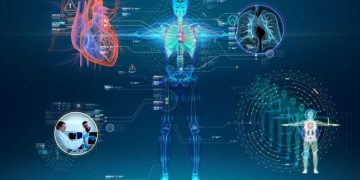
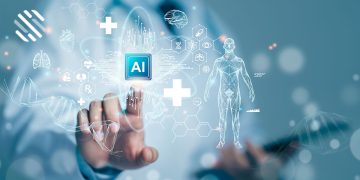
AI has profoundly impacted healthcare systems worldwide, enabling faster, more accurate, and personalized medical care. Key applications include:
- Medical Imaging and Diagnostics: AI algorithms analyze X-rays, MRIs, and CT scans with remarkable accuracy, often outperforming human radiologists in detecting diseases such as cancer, pneumonia, and neurological disorders. For instance, Google Health’s AI model for breast cancer screening has demonstrated significant improvements in early detection rates.
- Predictive Analytics for Patient Care: AI models can predict disease progression, patient readmission, and treatment outcomes based on historical data, helping clinicians develop proactive care plans.
- Drug Discovery and Development: AI accelerates the identification of potential drug compounds, predicts molecular interactions, and optimizes clinical trial design, reducing the time and cost required to bring new medications to market.
- Virtual Health Assistants: Chatbots and AI-powered platforms assist patients with symptom checking, appointment scheduling, and personalized health recommendations, improving accessibility in regions with limited medical personnel.
Experts believe AI will continue to enhance healthcare by integrating genomic data, wearable devices, and real-time patient monitoring, ultimately moving towards fully personalized medicine.
2. AI in Finance: Enhancing Decision-Making and Security
The financial sector has embraced AI to streamline operations, improve risk management, and enhance customer experiences. Prominent AI applications include:
- Fraud Detection: AI systems analyze transaction patterns to detect anomalies and prevent financial fraud in real time. Banks and fintech companies rely on machine learning models to identify suspicious activity faster than traditional methods.
- Algorithmic Trading: AI-powered trading algorithms analyze market data, news, and economic indicators to execute trades at optimal times, maximizing profits while minimizing risks.
- Credit Scoring and Lending: AI models assess creditworthiness using alternative data sources, allowing financial institutions to expand lending to previously underserved populations.
- Customer Service Automation: AI chatbots and voice assistants handle routine inquiries, account management, and financial guidance, improving efficiency and client satisfaction.
Globally, financial institutions are investing heavily in AI-driven risk management and compliance tools, recognizing the dual benefits of efficiency and enhanced security.
3. AI in Manufacturing: Driving Efficiency and Innovation
Manufacturing has been transformed by AI, especially in smart factories and Industry 4.0 initiatives. Key use cases include:
- Predictive Maintenance: AI algorithms analyze sensor data from machinery to predict failures before they occur, reducing downtime and maintenance costs.
- Supply Chain Optimization: AI predicts demand, manages inventory, and optimizes logistics, ensuring that products are delivered efficiently while minimizing waste.
- Quality Control and Defect Detection: Computer vision systems automatically inspect products on production lines, identifying defects with high accuracy.
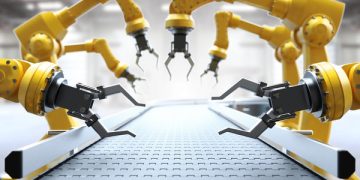
- Robotics and Automation: AI-powered robots collaborate with human workers in assembly, packaging, and material handling, increasing productivity and safety.
Global manufacturers, from automotive giants in Germany to electronics factories in China, are increasingly adopting AI-driven solutions to stay competitive in a rapidly evolving market.
4. AI in Agriculture: Smart Farming and Sustainable Practices
AI is enabling a revolution in agriculture, improving crop yields, resource management, and sustainability. Key applications include:
- Precision Farming: AI analyzes soil conditions, weather data, and crop health to optimize planting schedules, irrigation, and fertilization, maximizing yield while conserving resources.
- Disease and Pest Detection: Computer vision systems identify crop diseases and pest infestations early, enabling targeted interventions and reducing pesticide usage.
- Supply Chain and Market Forecasting: AI predicts demand and market trends, helping farmers make informed decisions about harvest timing and pricing.
- Autonomous Farming Equipment: AI-driven tractors, drones, and harvesters perform tasks efficiently, reducing labor dependency and improving productivity.
Countries like the Netherlands, Brazil, and India are pioneering AI-driven agricultural initiatives, demonstrating that technology can support both food security and environmental sustainability.
5. AI in Retail: Personalized Experiences and Operational Efficiency
The retail sector is leveraging AI to enhance customer experience, optimize operations, and increase revenue. Key use cases include:
- Personalized Recommendations: AI analyzes consumer behavior to deliver personalized product recommendations, boosting sales and customer satisfaction.
- Inventory Management: AI predicts demand, monitors stock levels, and automates replenishment, reducing overstock and stockouts.
- Visual Search and Smart Shopping: Computer vision allows consumers to search for products using images, while AI-powered virtual fitting rooms enhance online shopping experiences.
- Pricing Optimization: Machine learning models adjust pricing dynamically based on demand, competition, and seasonal trends.
Retail giants in North America, Europe, and Asia are adopting AI to stay competitive, improve operational efficiency, and meet evolving customer expectations.
6. AI in Transportation and Logistics: Autonomous Systems and Efficiency
Transportation and logistics are rapidly adopting AI to improve safety, efficiency, and decision-making. Key applications include:
- Autonomous Vehicles: AI powers self-driving cars, trucks, and drones, aiming to reduce accidents, optimize routes, and enhance delivery efficiency.
- Traffic and Route Optimization: AI analyzes traffic patterns and predicts congestion, helping logistics providers and urban planners optimize routes and reduce fuel consumption.
- Predictive Maintenance: Similar to manufacturing, AI predicts maintenance needs for vehicles, reducing breakdowns and operational disruptions.
- Supply Chain Automation: AI forecasts demand, schedules shipments, and manages warehouse operations, ensuring timely delivery and reducing operational costs.
Countries such as the United States, China, and Germany are leading the deployment of AI in transportation, combining autonomous technology with smart city initiatives.
7. AI in Energy: Optimizing Production and Sustainability
Energy production and distribution benefit significantly from AI, particularly in renewable energy integration and grid management:
- Smart Grid Management: AI predicts energy demand and supply fluctuations, optimizing distribution and minimizing outages.
- Renewable Energy Forecasting: AI models forecast solar, wind, and hydroelectric power generation, enabling better integration with traditional energy sources.
- Energy Efficiency in Buildings: AI monitors energy consumption in real time, optimizing heating, cooling, and lighting systems.
- Predictive Maintenance of Infrastructure: AI monitors energy infrastructure, detecting anomalies in turbines, transformers, and pipelines before failures occur.
Global energy providers are increasingly using AI to reduce costs, enhance sustainability, and improve energy reliability.
8. AI in Education: Personalized Learning and Administration
Education is evolving through AI, which personalizes learning, supports teachers, and improves administrative efficiency:
- Adaptive Learning Platforms: AI tailors educational content to individual student needs, helping learners progress at their own pace.
- Intelligent Tutoring Systems: AI tutors provide real-time feedback, answer questions, and support students in mastering complex concepts.
- Administrative Automation: AI automates grading, attendance tracking, and scheduling, freeing educators to focus on teaching.
- Predictive Analytics for Student Success: AI identifies students at risk of falling behind, enabling timely intervention and support.
Countries worldwide, from the United States to South Korea, are integrating AI into educational systems, making learning more effective and equitable.
9. AI in Government and Public Services
Governments are increasingly adopting AI to improve public services, policy-making, and citizen engagement:
- Public Health Monitoring: AI tracks disease outbreaks, predicts pandemics, and optimizes resource allocation for healthcare services.
- Smart City Initiatives: AI manages urban infrastructure, traffic flow, waste management, and energy efficiency.
- Fraud Detection in Public Services: AI identifies irregularities in social welfare, tax, and regulatory systems, ensuring transparency and accountability.
- Policy Modeling and Simulation: Governments use AI to simulate policy impacts, assess risks, and make informed decisions.
Countries like Singapore, Estonia, and Canada are leveraging AI to enhance governance, efficiency, and citizen engagement.
10. Ethical Considerations and Challenges
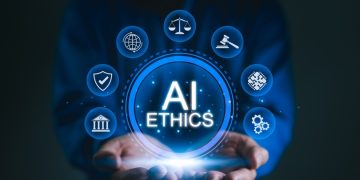
While AI presents transformative opportunities, global adoption also brings challenges:
- Bias and Fairness: AI models may reflect biases present in training data, potentially leading to unfair outcomes in hiring, lending, and criminal justice.
- Privacy and Data Protection: AI relies on vast datasets, raising concerns about data privacy and surveillance.
- Regulation and Governance: Countries are developing regulatory frameworks to ensure ethical AI use while fostering innovation.
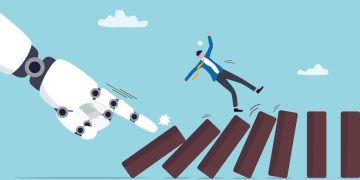
- Job Displacement: Automation may disrupt traditional employment, requiring reskilling and workforce adaptation.
Addressing these challenges requires international collaboration, responsible AI development, and proactive governance strategies.
11. Future Directions and Global Collaboration
Looking forward, AI is expected to expand in scope, sophistication, and impact:
- Cross-Border AI Research and Collaboration: Global partnerships will accelerate innovation, sharing best practices, and tackling complex problems such as climate change and pandemics.
- AI for Sustainable Development Goals (SDGs): AI applications in healthcare, education, energy, and agriculture will help achieve UN SDGs.
- Human-Centric AI: The focus will shift toward AI that augments human capabilities, prioritizes ethics, and enhances societal well-being.
- Integration with Emerging Technologies: AI will converge with quantum computing, blockchain, IoT, and 5G, creating unprecedented capabilities and global opportunities.
Experts anticipate that AI will continue to redefine industries, enhance productivity, and shape societies worldwide, with responsible implementation serving as a key determinant of long-term success.
Conclusion
The global landscape of AI applications is diverse, dynamic, and rapidly expanding. From healthcare and finance to agriculture, education, energy, and public governance, AI is enabling efficiency, innovation, and informed decision-making. However, its adoption also brings ethical, regulatory, and societal challenges that require careful consideration.
As AI continues to evolve, countries and enterprises that embrace collaboration, responsible implementation, and human-centric design will reap the greatest benefits. The richness of AI use cases globally demonstrates not only its technological potential but also its transformative capacity to address complex challenges, improve quality of life, and drive sustainable growth.