























AIInsiderUpdates
  • Home
  • AI News
    AI Technology Applications as the Core Driver of Progress

    AI Technology Applications as the Core Driver of Progress

    AI Applications in Autonomous Driving and Transportation

    AI Applications in Autonomous Driving and Transportation

    How AI Can Create Customized Treatment Plans Based on Personal Genetic Data and Health Records, Advancing Precision Medicine

    How AI Can Create Customized Treatment Plans Based on Personal Genetic Data and Health Records, Advancing Precision Medicine

    AI Models in Medicine: Accelerating Medical Research and Clinical Applications

    AI Models in Medicine: Accelerating Medical Research and Clinical Applications

    As Artificial Intelligence Rapidly Develops, AI Ethics and Regulatory Issues Become a Global Focus

    As Artificial Intelligence Rapidly Develops, AI Ethics and Regulatory Issues Become a Global Focus

    The Growing Role of Artificial Intelligence in Healthcare: Disease Diagnosis, Drug Development, and Personalized Medicine

    The Growing Role of Artificial Intelligence in Healthcare: Disease Diagnosis, Drug Development, and Personalized Medicine

  • Technology Trends
    AI Can Generate More Than Just Text and Images: The Creation of Music, Videos, and Other Multimedia Content

    AI Can Generate More Than Just Text and Images: The Creation of Music, Videos, and Other Multimedia Content

    Multimodal Learning: Combining Diverse Data Types for Enhanced AI Perception

    Multimodal Learning: Combining Diverse Data Types for Enhanced AI Perception

    Generative AI: Mimicking Human Creativity to Generate New Content

    Generative AI: Mimicking Human Creativity to Generate New Content

    Self-Supervised Learning: The Next Big Breakthrough in Deep Learning

    Self-Supervised Learning: The Next Big Breakthrough in Deep Learning

    Multimodal Learning: The Future of AI and Deep Learning

    Multimodal Learning: The Future of AI and Deep Learning

    Reducing Dependency on Manually Labeled Data: A Game Changer for Training AI Models

    Reducing Dependency on Manually Labeled Data: A Game Changer for Training AI Models

  • Interviews & Opinions
    Global Frameworks for AI Regulation: Ensuring Ethical Application and Minimizing Negative Impact on Society

    Global Frameworks for AI Regulation: Ensuring Ethical Application and Minimizing Negative Impact on Society

    Ensuring Diversity and Representativeness in AI Development to Avoid Reinforcing Social Inequality

    Ensuring Diversity and Representativeness in AI Development to Avoid Reinforcing Social Inequality

    Transforming Education and Retraining the Workforce

    Transforming Education and Retraining the Workforce

    Human-AI Collaboration: Fei-Fei Li’s Vision of Enhancing Productivity and Creativity Together, Not Simply “Replacing” Humans

    Human-AI Collaboration: Fei-Fei Li’s Vision of Enhancing Productivity and Creativity Together, Not Simply “Replacing” Humans

    AI Algorithm Bias and Injustice: One of the Biggest Challenges Today

    AI Algorithm Bias and Injustice: One of the Biggest Challenges Today

    Ensuring Fairness, Transparency, and Compliance in AI Systems: A Global Imperative

    Ensuring Fairness, Transparency, and Compliance in AI Systems: A Global Imperative

  • Case Studies
    The Application of AI in Finance: Balancing Accuracy and Compliance

    The Application of AI in Finance: Balancing Accuracy and Compliance

    Transparent and Explainable Models are Crucial for Financial Institutions to Meet Regulatory Requirements

    Transparent and Explainable Models are Crucial for Financial Institutions to Meet Regulatory Requirements

    BlueDot AI System in Predicting COVID-19 Spread and Supporting Public Health Decisions

    BlueDot AI System in Predicting COVID-19 Spread and Supporting Public Health Decisions

    Using AI to Analyze Client Risk Preferences for Personalized Asset Allocation

    Using AI to Analyze Client Risk Preferences for Personalized Asset Allocation

    Personalized Medicine: The Future of Healthcare

    Personalized Medicine: The Future of Healthcare

    Risk Management and Fraud Detection: Harnessing Technology for Secure Financial Systems

    Risk Management and Fraud Detection: Harnessing Technology for Secure Financial Systems

  • Tools & Resources
    AWS: Excellence in Big Data Processing and Model Training

    AWS: Excellence in Big Data Processing and Model Training

    Google Cloud AI: A Comprehensive Range of AI Services from Machine Learning to Natural Language Processing and Visual Recognition

    Google Cloud AI: A Comprehensive Range of AI Services from Machine Learning to Natural Language Processing and Visual Recognition

    Google Cloud AutoML: Empowering Non-Experts to Train and Deploy Machine Learning Models

    Google Cloud AutoML: Empowering Non-Experts to Train and Deploy Machine Learning Models

    The Widespread Adoption of Open Source AI Tools and Frameworks Globally, and Their Role as a Preferred Resource for AI Researchers and Developers

    The Widespread Adoption of Open Source AI Tools and Frameworks Globally, and Their Role as a Preferred Resource for AI Researchers and Developers

    The Integration of AI and Cloud Computing: A New Era in Technological Advancements

    The Integration of AI and Cloud Computing: A New Era in Technological Advancements

    AWS Offers a Comprehensive Suite of AI Tools and Services

    AWS Offers a Comprehensive Suite of AI Tools and Services

AIInsiderUpdates
  • Home
  • AI News
    AI Technology Applications as the Core Driver of Progress

    AI Technology Applications as the Core Driver of Progress

    AI Applications in Autonomous Driving and Transportation

    AI Applications in Autonomous Driving and Transportation

    How AI Can Create Customized Treatment Plans Based on Personal Genetic Data and Health Records, Advancing Precision Medicine

    How AI Can Create Customized Treatment Plans Based on Personal Genetic Data and Health Records, Advancing Precision Medicine

    AI Models in Medicine: Accelerating Medical Research and Clinical Applications

    AI Models in Medicine: Accelerating Medical Research and Clinical Applications

    As Artificial Intelligence Rapidly Develops, AI Ethics and Regulatory Issues Become a Global Focus

    As Artificial Intelligence Rapidly Develops, AI Ethics and Regulatory Issues Become a Global Focus

    The Growing Role of Artificial Intelligence in Healthcare: Disease Diagnosis, Drug Development, and Personalized Medicine

    The Growing Role of Artificial Intelligence in Healthcare: Disease Diagnosis, Drug Development, and Personalized Medicine

  • Technology Trends
    AI Can Generate More Than Just Text and Images: The Creation of Music, Videos, and Other Multimedia Content

    AI Can Generate More Than Just Text and Images: The Creation of Music, Videos, and Other Multimedia Content

    Multimodal Learning: Combining Diverse Data Types for Enhanced AI Perception

    Multimodal Learning: Combining Diverse Data Types for Enhanced AI Perception

    Generative AI: Mimicking Human Creativity to Generate New Content

    Generative AI: Mimicking Human Creativity to Generate New Content

    Self-Supervised Learning: The Next Big Breakthrough in Deep Learning

    Self-Supervised Learning: The Next Big Breakthrough in Deep Learning

    Multimodal Learning: The Future of AI and Deep Learning

    Multimodal Learning: The Future of AI and Deep Learning

    Reducing Dependency on Manually Labeled Data: A Game Changer for Training AI Models

    Reducing Dependency on Manually Labeled Data: A Game Changer for Training AI Models

  • Interviews & Opinions
    Global Frameworks for AI Regulation: Ensuring Ethical Application and Minimizing Negative Impact on Society

    Global Frameworks for AI Regulation: Ensuring Ethical Application and Minimizing Negative Impact on Society

    Ensuring Diversity and Representativeness in AI Development to Avoid Reinforcing Social Inequality

    Ensuring Diversity and Representativeness in AI Development to Avoid Reinforcing Social Inequality

    Transforming Education and Retraining the Workforce

    Transforming Education and Retraining the Workforce

    Human-AI Collaboration: Fei-Fei Li’s Vision of Enhancing Productivity and Creativity Together, Not Simply “Replacing” Humans

    Human-AI Collaboration: Fei-Fei Li’s Vision of Enhancing Productivity and Creativity Together, Not Simply “Replacing” Humans

    AI Algorithm Bias and Injustice: One of the Biggest Challenges Today

    AI Algorithm Bias and Injustice: One of the Biggest Challenges Today

    Ensuring Fairness, Transparency, and Compliance in AI Systems: A Global Imperative

    Ensuring Fairness, Transparency, and Compliance in AI Systems: A Global Imperative

  • Case Studies
    The Application of AI in Finance: Balancing Accuracy and Compliance

    The Application of AI in Finance: Balancing Accuracy and Compliance

    Transparent and Explainable Models are Crucial for Financial Institutions to Meet Regulatory Requirements

    Transparent and Explainable Models are Crucial for Financial Institutions to Meet Regulatory Requirements

    BlueDot AI System in Predicting COVID-19 Spread and Supporting Public Health Decisions

    BlueDot AI System in Predicting COVID-19 Spread and Supporting Public Health Decisions

    Using AI to Analyze Client Risk Preferences for Personalized Asset Allocation

    Using AI to Analyze Client Risk Preferences for Personalized Asset Allocation

    Personalized Medicine: The Future of Healthcare

    Personalized Medicine: The Future of Healthcare

    Risk Management and Fraud Detection: Harnessing Technology for Secure Financial Systems

    Risk Management and Fraud Detection: Harnessing Technology for Secure Financial Systems

  • Tools & Resources
    AWS: Excellence in Big Data Processing and Model Training

    AWS: Excellence in Big Data Processing and Model Training

    Google Cloud AI: A Comprehensive Range of AI Services from Machine Learning to Natural Language Processing and Visual Recognition

    Google Cloud AI: A Comprehensive Range of AI Services from Machine Learning to Natural Language Processing and Visual Recognition

    Google Cloud AutoML: Empowering Non-Experts to Train and Deploy Machine Learning Models

    Google Cloud AutoML: Empowering Non-Experts to Train and Deploy Machine Learning Models

    The Widespread Adoption of Open Source AI Tools and Frameworks Globally, and Their Role as a Preferred Resource for AI Researchers and Developers

    The Widespread Adoption of Open Source AI Tools and Frameworks Globally, and Their Role as a Preferred Resource for AI Researchers and Developers

    The Integration of AI and Cloud Computing: A New Era in Technological Advancements

    The Integration of AI and Cloud Computing: A New Era in Technological Advancements

    AWS Offers a Comprehensive Suite of AI Tools and Services

    AWS Offers a Comprehensive Suite of AI Tools and Services

AIInsiderUpdates
No Result
View All Result

Multimodal Learning: Combining Diverse Data Types for Enhanced AI Perception

December 7, 2025
Multimodal Learning: Combining Diverse Data Types for Enhanced AI Perception

Introduction

Artificial intelligence (AI) has made remarkable strides in recent years, from natural language processing to computer vision, enabling machines to perform tasks once thought to be the exclusive domain of humans. However, despite these advances, traditional AI systems often operate in silos, relying on a single type of data to make predictions or perform tasks. This limits their ability to handle complex, real-world scenarios where information from various sources must be integrated to achieve a more comprehensive understanding.

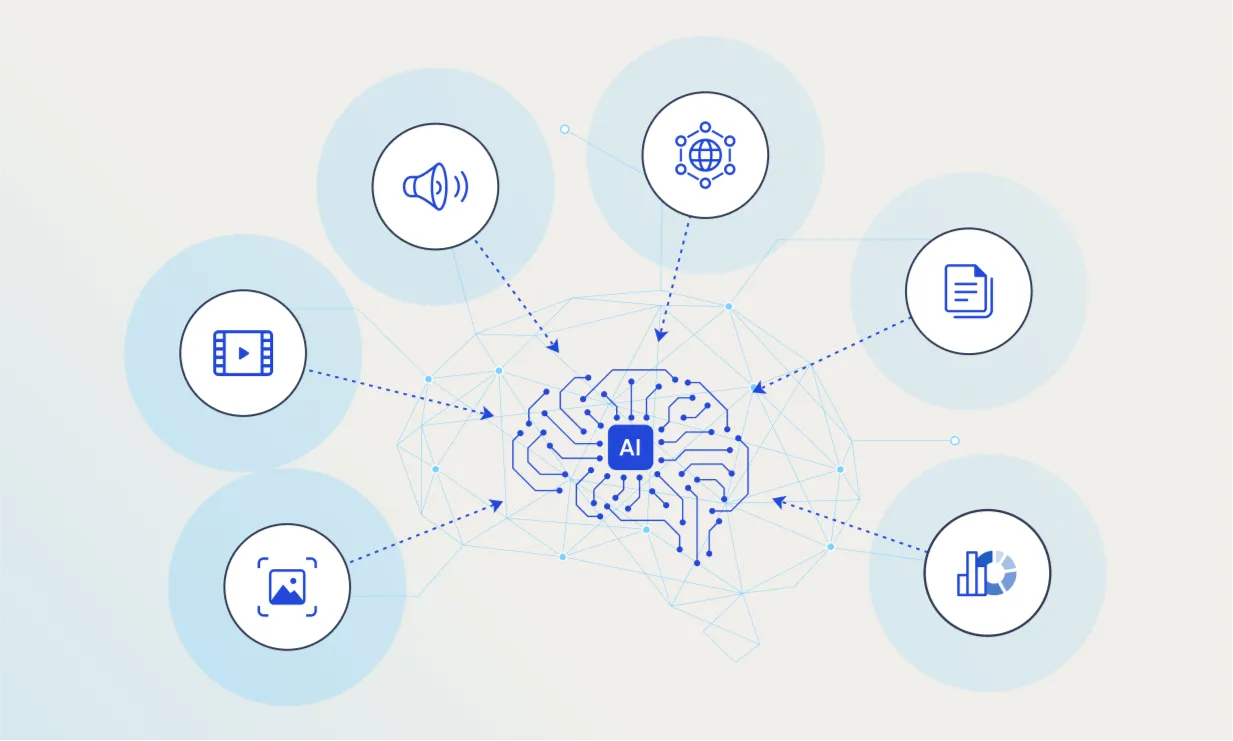
Multimodal learning is an emerging field of AI that seeks to address this limitation by enabling machines to combine and process multiple types of data—such as text, images, audio, and video—in a unified way. This approach aims to replicate human perception, which naturally integrates information from various senses (sight, sound, touch, etc.) to form a coherent understanding of the world. By mimicking this process, multimodal learning can enhance AI’s ability to perform tasks such as image captioning, sentiment analysis, and autonomous driving with greater accuracy and contextual awareness.

This article will explore the concept of multimodal learning, its key components, applications, challenges, and future prospects. We will discuss how it is revolutionizing various fields, from healthcare to entertainment, and its potential to create AI systems with more human-like perception capabilities.


What is Multimodal Learning?

Multimodal learning refers to the process of combining multiple forms of data (or modalities) to improve the performance of machine learning models. In traditional AI systems, a single data type, such as text or images, is used to train models. However, the real world is full of rich, multimodal data—such as videos that combine images and audio, or social media posts that contain text, images, and emojis—that provides a deeper, more nuanced understanding of a given context.

Multimodal learning aims to combine these diverse types of data into a single, cohesive framework that allows AI systems to process and interpret information more like humans do. For example, when a human watches a video, they are not only processing the visual information but also the audio and any text or speech involved. By mimicking this multisensory processing, AI can achieve a more holistic understanding of the data.

Key Components of Multimodal Learning

To understand how multimodal learning works, it’s important to explore its key components:

1. Data Modalities

Data modalities refer to the different types of information that can be processed in a multimodal system. These may include:

  • Text: Written language, such as articles, books, or social media posts.
  • Images: Static visual content such as photos, drawings, or medical scans.
  • Audio: Speech, sounds, and other auditory information.
  • Video: Dynamic content that combines images and audio.
  • Sensor Data: Information from devices such as accelerometers or LIDAR sensors used in robotics and autonomous vehicles.

Each of these modalities provides unique information that, when combined, can offer a richer, more complete understanding of a given situation.

2. Feature Extraction

Once the data is collected, it must be processed to extract meaningful features. Feature extraction involves identifying the key attributes or characteristics of the data that are important for the task at hand. For example:

  • In image data, features might include shapes, colors, textures, or objects present in the image.
  • In audio data, features could include speech patterns, pitch, or tone.
  • In text data, features might include sentiment, key phrases, or named entities.

Effective feature extraction is crucial for multimodal learning, as it allows the system to focus on the most relevant information from each modality while ignoring noise or irrelevant details.

3. Data Fusion

The next step in multimodal learning is data fusion, which involves combining the extracted features from different modalities into a unified representation. There are several approaches to data fusion, including:

  • Early Fusion: Features from different modalities are combined at the input level, before any processing is done. This approach is simple but can lead to challenges if the modalities differ greatly in scale or type.
  • Late Fusion: Each modality is processed separately, and the results are combined at the output stage. This method allows each modality to be handled independently, but may miss potential correlations between modalities.
  • Hybrid Fusion: A combination of early and late fusion, where features are initially processed separately but are then combined at intermediate stages. This approach strikes a balance between flexibility and integration.

The goal of data fusion is to create a rich, comprehensive representation of the information that captures the relationships and interactions between the different modalities.

4. Model Architecture

Once the multimodal data is fused, a machine learning model is applied to process the integrated features and make predictions or decisions. Deep learning models, particularly neural networks, are commonly used in multimodal learning due to their ability to handle complex, high-dimensional data. Architectures like multi-input neural networks and attention mechanisms allow the model to process and prioritize different modalities based on their relevance to the task.

For instance, in a video captioning task, a deep learning model might combine the visual features extracted from each frame with the audio features and the textual content of the scene to generate a coherent caption. The model would “pay attention” to the most relevant parts of the video—whether it’s the images, the speech, or the text—depending on the context.

Applications of Multimodal Learning

Multimodal learning is being applied in a wide range of fields, transforming industries and enhancing the capabilities of AI systems. Some of the most notable applications include:

1. Autonomous Vehicles

Autonomous vehicles rely on multimodal learning to navigate complex environments. These vehicles process data from multiple sensors, including LIDAR, radar, cameras, and GPS, to create a comprehensive understanding of the surrounding environment. For instance, LIDAR provides detailed 3D maps of the vehicle’s surroundings, while cameras and radar help detect pedestrians, other vehicles, and road signs. By combining these data sources, autonomous vehicles can make informed decisions about speed, direction, and safety.

2. Healthcare

In healthcare, multimodal learning can be used to enhance diagnostic accuracy by combining various types of medical data. For example, AI systems can integrate medical imaging (such as CT scans or MRIs), patient health records, and genomic data to provide more accurate diagnoses and treatment plans. This holistic approach can also be used in personalized medicine, where AI analyzes multiple data types to recommend customized treatments based on a patient’s unique characteristics.

3. Multimedia Content Understanding

In the entertainment industry, multimodal learning is being used to improve the analysis and understanding of multimedia content. For example, video captioning systems can use both visual and auditory data to generate more accurate and contextually relevant captions. Similarly, recommendation systems can combine user behavior data (such as clicks or likes), text descriptions, and images to recommend movies, songs, or products that are more aligned with a user’s preferences.

4. Human-Computer Interaction

Multimodal learning is also playing a key role in improving human-computer interaction (HCI). AI systems can combine data from various sources, such as speech, gesture, and facial expressions, to create more natural and intuitive interfaces. For instance, voice assistants like Google Assistant or Amazon Alexa can integrate speech with contextual data (such as the user’s location or previous interactions) to provide more accurate and personalized responses.

5. Sentiment Analysis and Social Media Monitoring

AI systems can combine textual data (such as tweets or posts) with visual and audio data to improve sentiment analysis. For example, analyzing both the text of a tweet and the accompanying images or videos can help the AI system better understand the sentiment behind a social media post. This approach is increasingly used by companies for brand monitoring, customer service, and public relations.


Challenges in Multimodal Learning

While multimodal learning offers significant advantages, there are several challenges that need to be addressed:

1. Data Alignment

One of the key challenges in multimodal learning is ensuring that data from different modalities is properly aligned. For example, in video analysis, the visual data and audio data must be synchronized so that the model can correctly associate the two. Misalignment can lead to inaccurate interpretations and reduced model performance.

2. Scalability

As the number of modalities and data sources increases, the complexity of processing and fusing the data also grows. Handling large-scale multimodal datasets requires significant computational resources and efficient algorithms to ensure real-time processing and scalability.

3. Domain Adaptation

Multimodal learning systems trained on one domain or dataset may not perform well when applied to another domain with different types of data. For example, a system trained on social media data may struggle to interpret medical images or voice recordings from a different context. Adapting multimodal models to new domains remains a significant challenge.

4. Interpretability

With multimodal models often involving deep learning techniques, understanding how these models make decisions can be challenging. Ensuring transparency and interpretability in multimodal systems is essential for applications in fields such as healthcare, where decisions must be explainable and justifiable.


Conclusion

Multimodal learning represents a significant step forward in AI’s ability to perceive and understand the world in a more human-like way. By combining diverse types of data—such as text, images, audio, and video—AI systems can achieve more accurate, contextually aware, and robust performance across a wide range of applications.

As multimodal learning continues to evolve, it holds the potential to transform industries such as healthcare, transportation, entertainment, and beyond, creating AI systems that are not only more powerful but also more capable of interacting with the world in a way that mirrors human perception.


Tags: AI PerceptionMultimodal LearningTechnology Trends
ShareTweetShare

Related Posts

AI Can Generate More Than Just Text and Images: The Creation of Music, Videos, and Other Multimedia Content
Technology Trends

AI Can Generate More Than Just Text and Images: The Creation of Music, Videos, and Other Multimedia Content

December 8, 2025
Generative AI: Mimicking Human Creativity to Generate New Content
Technology Trends

Generative AI: Mimicking Human Creativity to Generate New Content

December 6, 2025
Self-Supervised Learning: The Next Big Breakthrough in Deep Learning
Technology Trends

Self-Supervised Learning: The Next Big Breakthrough in Deep Learning

December 5, 2025
Multimodal Learning: The Future of AI and Deep Learning
Technology Trends

Multimodal Learning: The Future of AI and Deep Learning

December 4, 2025
Reducing Dependency on Manually Labeled Data: A Game Changer for Training AI Models
Technology Trends

Reducing Dependency on Manually Labeled Data: A Game Changer for Training AI Models

December 3, 2025
Enhancing AI Understanding Through Self-Supervised Learning: Unlocking the Power of Raw Data Representations
Technology Trends

Enhancing AI Understanding Through Self-Supervised Learning: Unlocking the Power of Raw Data Representations

December 2, 2025
Leave Comment
  • Trending
  • Comments
  • Latest
How Artificial Intelligence is Achieving Revolutionary Breakthroughs in the Healthcare Industry: What Success Stories Teach Us

How Artificial Intelligence is Achieving Revolutionary Breakthroughs in the Healthcare Industry: What Success Stories Teach Us

July 26, 2025
AI in the Financial Sector: Which Innovative Strategies Are Driving Digital Transformation?

AI in the Financial Sector: Which Innovative Strategies Are Driving Digital Transformation?

July 26, 2025
From Beginner to Expert: Which AI Platforms Are Best for Beginners? Experts’ Take on Learning Curves and Practical Applications

From Beginner to Expert: Which AI Platforms Are Best for Beginners? Experts’ Take on Learning Curves and Practical Applications

July 23, 2025
How to Find Truly Useful AI Resources Among the Crowd? Experts Share How to Select Efficient and Innovative Tools!

How to Find Truly Useful AI Resources Among the Crowd? Experts Share How to Select Efficient and Innovative Tools!

July 23, 2025
How Artificial Intelligence Enhances Diagnostic Accuracy and Transforms Treatment Methods in Healthcare

How Artificial Intelligence Enhances Diagnostic Accuracy and Transforms Treatment Methods in Healthcare

How AI Enhances Customer Experience and Drives Sales Growth in Retail

How AI Enhances Customer Experience and Drives Sales Growth in Retail

How Artificial Intelligence Enables Precise Risk Assessment and Decision-Making

How Artificial Intelligence Enables Precise Risk Assessment and Decision-Making

How AI is Driving the Revolution in Smart Manufacturing and Production Efficiency

How AI is Driving the Revolution in Smart Manufacturing and Production Efficiency

AWS: Excellence in Big Data Processing and Model Training

AWS: Excellence in Big Data Processing and Model Training

December 8, 2025
The Application of AI in Finance: Balancing Accuracy and Compliance

The Application of AI in Finance: Balancing Accuracy and Compliance

December 8, 2025
Global Frameworks for AI Regulation: Ensuring Ethical Application and Minimizing Negative Impact on Society

Global Frameworks for AI Regulation: Ensuring Ethical Application and Minimizing Negative Impact on Society

December 8, 2025
AI Can Generate More Than Just Text and Images: The Creation of Music, Videos, and Other Multimedia Content

AI Can Generate More Than Just Text and Images: The Creation of Music, Videos, and Other Multimedia Content

December 8, 2025
AIInsiderUpdates

Our platform is dedicated to delivering comprehensive coverage of AI developments, featuring news, case studies, expert interviews, and valuable resources for professionals and enthusiasts alike.

© 2025 aiinsiderupdates.com. contacts:[email protected]

No Result
View All Result
  • Home
  • AI News
  • Technology Trends
  • Interviews & Opinions
  • Case Studies
  • Tools & Resources

© 2025 aiinsiderupdates.com. contacts:[email protected]

Welcome Back!

Login to your account below

Forgotten Password?

Retrieve your password

Please enter your username or email address to reset your password.

Log In