



























Introduction
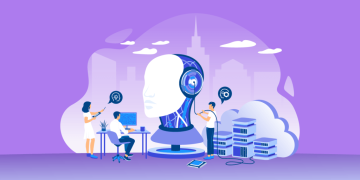
The convergence of Artificial Intelligence (AI) and cloud computing has become one of the most transformative developments in the tech industry in recent years. As AI technology continues to evolve and cloud platforms expand their capabilities, the integration of these two powerful forces is reshaping how businesses, governments, and individuals interact with technology.
AI and cloud computing, once distinct fields, are now working hand in hand to drive innovations across a wide range of industries, from healthcare and finance to retail and manufacturing. The seamless integration of AI with cloud platforms has enabled scalable, cost-effective AI solutions that were once only accessible to large corporations and research institutions. Today, businesses of all sizes can leverage AI tools and services, democratizing access to advanced technologies and driving more personalized, efficient, and data-driven decision-making.
In this article, we explore how the integration of AI and cloud computing is transforming industries, the benefits and challenges of this convergence, and what the future holds for cloud-based AI solutions.
What is Cloud Computing?
Cloud computing refers to the delivery of computing services—including storage, processing power, networking, databases, and software—over the internet. Rather than maintaining on-premises infrastructure, users can access these services remotely through the cloud, typically on a pay-as-you-go or subscription model. The key benefits of cloud computing include:
- Scalability: Cloud platforms provide on-demand resources that can be scaled up or down based on usage requirements. This is particularly beneficial for businesses with fluctuating workloads or rapidly growing data needs.
- Cost Efficiency: By outsourcing IT infrastructure and leveraging shared resources, businesses can reduce costs related to hardware, maintenance, and energy consumption.
- Flexibility: Cloud computing supports a wide range of applications and use cases, enabling businesses to innovate and experiment with new technologies without committing significant capital to infrastructure.
- Accessibility: Cloud services are accessible from anywhere with an internet connection, allowing for greater mobility and remote work capabilities.
What is Artificial Intelligence (AI)?
Artificial intelligence refers to the simulation of human intelligence in machines. AI systems can analyze data, recognize patterns, make predictions, and perform tasks that typically require human-like cognition, such as problem-solving, decision-making, and language processing.
AI technologies include:
- Machine Learning (ML): A subset of AI that focuses on algorithms that allow systems to learn from data and improve performance over time without explicit programming.
- Natural Language Processing (NLP): The branch of AI that enables machines to understand and process human language, making it possible to build applications like virtual assistants, chatbots, and language translation systems.
- Computer Vision: The ability of machines to interpret and analyze visual information from the world, enabling applications like facial recognition, object detection, and image classification.
- Robotics: AI-powered systems designed to perform physical tasks, often in dynamic environments, with applications in manufacturing, healthcare, and logistics.
How AI and Cloud Computing are Integrated
As AI technologies have matured, they have increasingly been deployed on cloud platforms, taking advantage of the cloud’s scalability, storage capacity, and computing power. AI integration with cloud computing can be understood in several key ways:
1. AI as a Service (AIaaS)
Cloud service providers like Amazon Web Services (AWS), Microsoft Azure, and Google Cloud have made AI more accessible to businesses through AI as a Service (AIaaS). These platforms offer a wide range of pre-built AI models, algorithms, and APIs that organizations can leverage without needing to develop complex AI solutions in-house.
AIaaS allows businesses to integrate AI functionalities such as image recognition, speech processing, language translation, and predictive analytics into their applications with minimal upfront investment in infrastructure or AI expertise.
- Example: Google Cloud’s AI Platform offers a suite of tools for building, training, and deploying machine learning models. It also provides pre-trained models like Vision AI (for image analysis) and Dialogflow (for building conversational interfaces).
2. Scalable Computing Power for AI
AI workloads, particularly machine learning and deep learning tasks, require significant computational power, which can be expensive and resource-intensive to maintain on-premises. Cloud computing provides the necessary resources to run complex AI models at scale.
Cloud providers offer specialized services like GPU-based instances for deep learning and TPUs (Tensor Processing Units) for high-performance machine learning tasks. These resources allow AI researchers and businesses to train models faster, iterate more quickly, and scale their solutions without investing in expensive hardware.
- Example: AWS SageMaker is a fully managed platform that enables businesses to build, train, and deploy machine learning models at scale, using powerful compute resources like GPUs and distributed processing systems.
3. Big Data and AI
The effectiveness of AI systems is often tied to the amount and quality of data they can access. Cloud computing enables businesses to store vast amounts of data in a centralized, secure location and provides the processing power needed to analyze it. AI models can leverage this data to uncover insights, make predictions, and drive decision-making.
Cloud platforms provide the ability to manage and analyze large datasets, from structured data (e.g., customer transaction records) to unstructured data (e.g., social media posts, images, and video). The integration of AI with big data on the cloud allows for more advanced analytics and the discovery of patterns that would be difficult to identify with traditional methods.
- Example: Microsoft Azure Synapse Analytics combines big data and AI capabilities, enabling businesses to analyze large datasets with integrated machine learning and AI tools.
4. Machine Learning Model Deployment
Once machine learning models are developed, they need to be deployed into production environments. Cloud platforms offer powerful tools to streamline this process, allowing businesses to deploy, monitor, and update AI models in real-time.
Cloud-based AI platforms provide a variety of deployment options, including serverless computing, containerization (e.g., Kubernetes), and edge computing, allowing models to be deployed efficiently and updated as new data becomes available.
- Example: Google AI Platform Prediction allows users to deploy machine learning models for real-time predictions, whether it’s in a web application or a mobile app, and automatically scales as needed.

Benefits of AI and Cloud Computing Integration
The integration of AI with cloud computing offers several compelling benefits for businesses and organizations:
1. Reduced Time to Market
Cloud platforms allow businesses to quickly integrate AI capabilities into their existing systems without needing to invest in expensive hardware or specialized AI talent. This reduces development time and enables businesses to bring AI-powered products to market faster.
2. Cost Efficiency
By leveraging the cloud, organizations can take advantage of a pay-as-you-go model, avoiding the high costs of maintaining on-premises infrastructure. This is particularly beneficial for businesses that need to scale their AI applications based on demand.
3. Accessibility and Flexibility
Cloud-based AI tools are accessible to organizations of all sizes, from startups to large enterprises. This democratization of AI allows even small businesses to implement sophisticated AI solutions without the need for in-house AI specialists or large capital investments.
4. Enhanced Collaboration
Cloud platforms facilitate collaboration across teams, departments, and even geographies. With AI tools and data stored in the cloud, teams can access and work on projects remotely, making it easier to share insights, iterate on models, and deploy AI-driven solutions.
5. Innovation and Agility
Cloud platforms are constantly evolving, offering new services and tools to support the development of AI applications. This allows businesses to stay on the cutting edge of AI technology and experiment with new models and algorithms with minimal risk.
Challenges in AI and Cloud Computing Integration
Despite the many benefits, the integration of AI and cloud computing also presents several challenges:
1. Data Privacy and Security
Storing sensitive data on the cloud raises concerns about data privacy and security. Organizations must ensure that they comply with regulations like the General Data Protection Regulation (GDPR) in the EU or the Health Insurance Portability and Accountability Act (HIPAA) in the U.S. to protect user data and privacy.
2. Integration Complexity
Integrating AI tools into existing IT systems can be complex, especially for businesses that do not have dedicated AI teams or the necessary technical infrastructure. Ensuring that AI models work seamlessly with other systems requires significant planning and expertise.
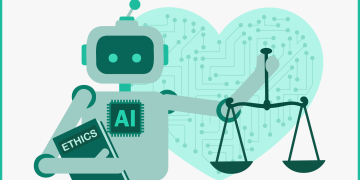
3. Ethical Considerations
AI models are only as unbiased as the data they are trained on. Organizations must be mindful of the ethical implications of their AI systems, including the potential for algorithmic bias and discrimination. It is crucial to ensure that AI models are transparent, explainable, and fair.
4. Skill Gap
While cloud platforms make AI more accessible, there is still a shortage of skilled AI professionals. Businesses may need to invest in training their workforce or hire external expertise to fully leverage the potential of AI in the cloud.
The Future of AI and Cloud Integration
The future of AI and cloud computing is promising, with ongoing advancements in AI algorithms, cloud infrastructure, and data storage capabilities. As businesses continue to embrace AI, we can expect further innovations in areas such as edge computing, 5G networks, and quantum computing, which will further enhance the capabilities of AI in the cloud.
The convergence of AI and cloud computing will continue to drive new opportunities in industries like healthcare, finance, retail, manufacturing, and beyond. As these technologies evolve, we can expect AI to become an even more integral part of the digital landscape, empowering businesses to make smarter, data-driven decisions at scale.
Conclusion
The integration of AI with cloud computing has opened new doors for businesses seeking to leverage artificial intelligence for innovation, scalability, and efficiency. As cloud platforms continue to evolve, and AI technologies become more accessible, the potential for AI to transform industries and improve everyday life is limitless. By embracing this convergence, organizations can harness the power of AI to create smarter, more personalized, and more impactful solutions across a wide range of sectors.