

















Introduction
The rapid proliferation of Artificial Intelligence (AI) is reshaping industries, economies, and societies at an unprecedented pace. From autonomous systems in manufacturing to AI-driven diagnostics in healthcare, AI technologies are fundamentally altering the nature of work. Consequently, the education system faces a critical challenge: how to adequately prepare students for a future in which AI is both a tool and a collaborator in virtually every field.
Traditional curricula, often focused on rote learning and standardized skill sets, are ill-equipped to meet the demands of an AI-augmented workforce. Preparing learners for this landscape requires a comprehensive reevaluation of educational priorities, instructional methods, and policy frameworks. It demands an integrated approach that combines technical proficiency, critical thinking, ethical awareness, and adaptability.
This article explores the multifaceted implications of AI for education systems, analyzing how curricula, teacher training, assessment methods, and policy strategies must evolve to equip future workers with the skills and competencies required in an AI-driven economy.
1. AI and the Transformation of Work
1.1 The Changing Nature of Jobs
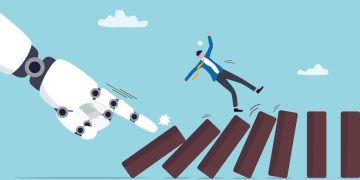
AI is increasingly automating tasks that were traditionally performed by humans, ranging from data analysis and logistics optimization to customer support and medical imaging. This automation affects not only low-skilled labor but also white-collar professions, including finance, law, and engineering.
Key Trends:
- Task Automation: Routine, repetitive tasks are being automated, while demand for creative, strategic, and problem-solving roles is rising.
- Hybrid Human-AI Collaboration: Workers increasingly interact with AI systems as assistants, augmenting human capabilities rather than entirely replacing jobs.
- Rapid Skill Evolution: Job descriptions are changing faster than ever, requiring continuous upskilling and reskilling throughout a career.
1.2 Skills for an AI-Augmented Workforce
To thrive in an AI-driven economy, workers need a combination of technical, cognitive, and socio-emotional skills:
- Technical Skills: Basic understanding of AI, programming, data literacy, and computational thinking.
- Cognitive Skills: Critical thinking, complex problem-solving, and decision-making in uncertain environments.
- Socio-Emotional Skills: Collaboration, empathy, creativity, and adaptability.
Education systems must prioritize these competencies to ensure that learners can work effectively alongside AI tools and navigate the complexities of a technologically advanced workplace.
2. Rethinking Curricula
2.1 Integrating AI and Digital Literacy
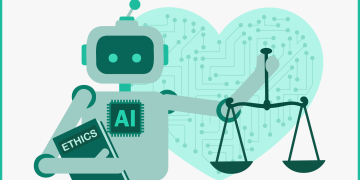
The foundation of future-ready education lies in digital literacy, including familiarity with AI technologies and their applications. Students should not only know how to use AI tools but also understand their limitations, ethical implications, and data-driven nature.
Implementation Strategies:
- Embedding AI-focused modules in STEM courses.
- Offering interdisciplinary courses combining computer science with ethics, social studies, and communication.
- Encouraging project-based learning using AI applications to solve real-world problems.
2.2 Emphasizing Critical Thinking and Problem-Solving
AI systems excel at pattern recognition and data processing but are limited in abstract reasoning, ethical judgment, and contextual understanding. Thus, education should emphasize human-centric skills:
- Critical Evaluation: Teaching students to question AI outputs, identify biases, and assess data reliability.
- Problem Decomposition: Encouraging students to break complex challenges into manageable components, integrating AI tools when appropriate.
- Creative Application: Leveraging AI as a tool for innovation, experimentation, and design thinking.
2.3 Promoting Lifelong Learning
Given the pace of technological change, static education models are no longer sufficient. Lifelong learning becomes essential:
- Micro-credentials: Offering short, targeted courses in AI-related skills to facilitate continuous development.
- Flexible Learning Pathways: Allowing learners to acquire skills incrementally and adapt to emerging technologies.
- Collaborative Learning Platforms: Using online and AI-enabled platforms to enable peer-to-peer learning and adaptive content delivery.

3. Teacher Training and Professional Development
3.1 Empowering Educators
Educators are central to preparing students for an AI-driven future. However, many teachers lack formal training in AI or digital pedagogies.
Recommendations:
- Professional Development Programs: Offering AI literacy courses, workshops on integrating AI tools into the classroom, and ethics training.
- Teacher Collaboration Networks: Creating communities of practice where educators can share strategies, lesson plans, and AI resources.
- AI-Assisted Teaching Tools: Providing AI-driven analytics for personalized learning and classroom management, reducing administrative burdens.
3.2 Ethical and Societal Awareness for Teachers
Beyond technical knowledge, teachers must understand the ethical, social, and economic impacts of AI. This includes:
- Recognizing AI bias and ensuring equitable access to AI resources.
- Guiding students in responsible data use and digital citizenship.
- Preparing students for the societal shifts induced by AI, including job displacement and inequality.
4. Assessment and Evaluation in an AI Era
4.1 Limitations of Traditional Assessments
Standardized tests often fail to measure critical skills such as creativity, collaboration, and adaptability—skills increasingly essential in an AI-driven world.
4.2 AI-Enhanced Assessment Methods
AI offers opportunities for personalized and formative assessment:
- Adaptive Testing: AI algorithms can adjust the difficulty of questions in real-time based on student performance.
- Automated Feedback: Intelligent tutoring systems provide instant, individualized feedback to reinforce learning.
- Learning Analytics: AI can track progress, identify skill gaps, and suggest personalized learning paths.
4.3 Ethical Considerations in AI-Assisted Assessment
While AI can improve evaluation efficiency, ethical concerns must be addressed:
- Data Privacy: Ensuring student data is collected and stored securely.
- Bias Mitigation: Preventing AI assessment tools from reinforcing existing disparities in education.
- Transparency: Explaining how AI-generated scores are determined to students and educators.
5. Policy and Governance for AI-Ready Education
5.1 National and Regional Strategies
Governments must implement policies that support AI integration in education systems:
- Curriculum Guidelines: Mandating AI and digital literacy as core competencies.
- Investment in Infrastructure: Ensuring schools have access to AI-enabled devices, high-speed internet, and learning platforms.
- Teacher Training Incentives: Funding continuous professional development in AI and technology-enhanced pedagogy.
5.2 Collaboration Between Stakeholders
Preparing students for an AI-driven workforce requires collaboration among:
- Government Agencies: Setting standards, funding research, and ensuring equitable access.
- Industry Partners: Providing expertise, internships, and real-world projects to bridge classroom learning with workplace demands.
- Academic Institutions: Designing curricula that balance technical skills, ethics, and socio-emotional competencies.
5.3 Equity and Inclusion
AI integration in education must address potential disparities:
- Ensuring access to AI tools for students in low-income or rural areas.
- Providing inclusive learning resources that reflect diverse cultural and linguistic contexts.
- Monitoring AI adoption to prevent widening educational gaps.
6. Preparing Students for the Workforce
6.1 Developing AI Literacy
AI literacy encompasses understanding how AI works, its potential, limitations, and societal implications. Students should be able to:
- Interpret AI outputs and question algorithmic decisions.
- Collaborate with AI systems in workplace tasks.
- Apply AI knowledge creatively across different domains.
6.2 Soft Skills for Human-AI Collaboration
Human workers will complement AI rather than compete directly. Developing soft skills is crucial:
- Creativity and Innovation: Generating ideas that AI cannot produce autonomously.
- Empathy and Communication: Building relationships and understanding human contexts where AI operates.
- Problem-Solving and Adaptability: Applying human judgment to complex scenarios and adapting to evolving technological landscapes.
6.3 Reskilling and Upskilling
The workforce must continually adapt:
- Governments and employers should provide reskilling programs for displaced workers.
- AI-driven learning platforms can personalize training to individual skill gaps.
- Collaboration with industry ensures education aligns with evolving job requirements.
Conclusion
The proliferation of AI represents both a challenge and an opportunity for education systems worldwide. Preparing students for an AI-augmented workforce requires reimagined curricula, teacher empowerment, innovative assessment methods, and robust policies that ensure equity and access. By emphasizing technical skills, critical thinking, creativity, and lifelong learning, education can equip students to thrive in a future where AI is an integral part of work and society.
Only through strategic planning, interdisciplinary collaboration, and ethical awareness can education systems transform to meet the demands of the AI-driven era, preparing a workforce that is not only skilled but also adaptable, responsible, and capable of harnessing AI for human progress.