










Introduction
Machine learning (ML) has come a long way in recent years, with notable progress across various domains such as natural language processing (NLP), computer vision, and robotics. While supervised learning has long been the dominant approach in training machine learning models, recent advancements have shifted focus toward self-supervised learning (SSL), an exciting and increasingly important paradigm. This trend represents a shift away from traditional reliance on labeled data and opens up new possibilities for AI systems to learn from raw, unstructured data in a more autonomous and efficient manner.
Self-supervised learning has gained traction because of its ability to learn useful representations from vast amounts of unlabeled data—data that would otherwise be difficult or expensive to label manually. With the rapid growth of data availability and the increasing demand for more scalable machine learning systems, self-supervised learning promises to be a game-changer for industries ranging from healthcare to entertainment, enabling AI to better understand and interact with the world.
This article explores self-supervised learning in depth, examining its fundamentals, applications, challenges, and future potential. We will also compare it with other machine learning paradigms, such as supervised and unsupervised learning, to understand how SSL fits into the broader landscape of AI research and development.
1. The Evolution of Machine Learning Paradigms
1.1. The Traditional Supervised Learning Approach
In traditional supervised learning, models are trained using labeled data—datasets where the input and corresponding output labels are clearly defined. This approach has been highly successful, particularly in tasks like image classification, speech recognition, and sentiment analysis, where labeled datasets are available and the task is well-defined. The main advantages of supervised learning include clear objectives and measurable performance, which make it relatively easy to assess and optimize.
However, supervised learning faces significant challenges:
- Data Labeling Cost: Acquiring labeled data can be resource-intensive and time-consuming. Labeling data for tasks like medical image classification or legal document analysis often requires domain expertise, which can be expensive.
- Data Scarcity: For many real-world problems, obtaining sufficient labeled data is not feasible, especially in specialized domains where labeled examples are rare.
- Scalability: As the volume of data increases, labeling every data point becomes less scalable, making it impractical for large-scale applications.
1.2. The Shift to Unsupervised Learning
To address the limitations of supervised learning, unsupervised learning methods were developed. Unsupervised learning aims to extract patterns and structure from data without the need for labels. Clustering and dimensionality reduction techniques, such as k-means clustering and principal component analysis (PCA), fall under this category.
While unsupervised learning opens up new possibilities by leveraging unlabeled data, it often lacks the supervision that guides the learning process. As a result, unsupervised models may struggle with tasks that require clear objectives, such as classification or prediction.
1.3. Introducing Self-Supervised Learning
Self-supervised learning (SSL) can be seen as a middle ground between supervised and unsupervised learning. In SSL, the model learns to predict part of the data based on other parts of the same data. This approach allows the model to generate its own labels from the input data, reducing the need for external supervision. SSL can be applied to a wide variety of tasks, and it has the potential to harness large amounts of unlabeled data to train highly effective machine learning models.
In contrast to unsupervised learning, SSL provides a form of self-generated supervision that is particularly useful for tasks that involve learning representations or understanding data structure. This makes SSL more aligned with the objectives of supervised learning, where specific goals (e.g., classification, regression) guide the training process.
2. How Self-Supervised Learning Works
2.1. The Core Concept: Learning from Data Structure
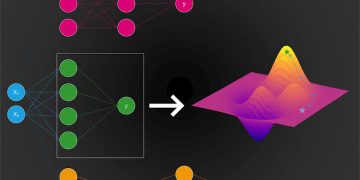
At its core, self-supervised learning works by creating auxiliary tasks that force the model to learn useful features from raw, unlabeled data. These tasks are designed in such a way that solving them requires the model to develop an understanding of the underlying structure or representation of the data. SSL leverages the inherent properties of the data to generate “pseudo-labels” for learning.
Examples of Common SSL Tasks:
- Contrastive Learning: In contrastive learning, the goal is to teach the model to distinguish between similar and dissimilar data samples. The model learns to embed the data into a feature space where similar items are close to each other and dissimilar items are far apart. One of the most well-known approaches to contrastive learning is SimCLR, a method widely used in computer vision.
- Masked Modeling: In this approach, certain parts of the input data are masked or hidden, and the model is trained to predict the missing information. This method is frequently used in natural language processing (NLP) tasks, where the model might be given a sentence with some words masked and tasked with predicting the missing words (e.g., the BERT model).
- Predictive Modeling: Predictive modeling involves training the model to predict a portion of the data from other portions. This task encourages the model to learn useful representations by predicting missing values. This approach has been used in applications such as video prediction, where the model learns to predict the next frame of a video sequence based on previous frames.
- Autoencoders: Autoencoders are neural networks designed to learn efficient data representations. In SSL, autoencoders are often used to compress the input data into a lower-dimensional space and then reconstruct it, learning essential features in the process.
2.2. The Benefits of Self-Supervised Learning
Self-supervised learning offers several key advantages over traditional supervised learning:
- Reduced Dependency on Labeled Data: The most significant advantage of SSL is its ability to learn from vast amounts of unlabeled data, reducing the need for costly and time-consuming data labeling. This opens up new possibilities for AI systems to be trained on datasets that were previously difficult to use in supervised learning.
- Improved Generalization: By learning from the inherent structure of the data, SSL models often generalize better to new, unseen data. Since the model is not overfitting to specific labeled examples, it is better equipped to handle new or noisy data.
- Scalability: SSL enables models to scale to much larger datasets than supervised learning models. Since labeled data is often a bottleneck in traditional ML pipelines, SSL’s ability to leverage massive amounts of unlabeled data makes it highly scalable and efficient.
- Transfer Learning: Self-supervised learning is highly conducive to transfer learning, where pre-trained models can be fine-tuned for specific downstream tasks. This makes SSL particularly useful in domains where labeled data is scarce, but large amounts of raw data are available.
3. Applications of Self-Supervised Learning
Self-supervised learning has already demonstrated promising results across various domains. Some of the most notable applications include:
3.1. Natural Language Processing (NLP)
NLP has been one of the major beneficiaries of self-supervised learning. Models like BERT, GPT, and RoBERTa use self-supervised techniques to pre-train large language models on vast amounts of unstructured text data. These models are then fine-tuned on specific tasks like text classification, named entity recognition, and question answering.
In BERT, for instance, the model is pre-trained using a masked language model task, where certain words in a sentence are randomly hidden, and the model must predict them. This task forces the model to learn rich representations of language, which can be fine-tuned for specific downstream tasks.
3.2. Computer Vision
Self-supervised learning has also been widely applied in computer vision, where models learn to recognize objects, scenes, and relationships between images without needing extensive labeled datasets. For example, in contrastive learning methods like SimCLR and MoCo, models are trained to distinguish between similar and dissimilar images, learning meaningful visual features along the way.
DeepFake detection is another application where SSL has been leveraged. By using large amounts of unlabelled video data, SSL models can be trained to identify manipulated images or videos, even without prior knowledge of specific manipulation patterns.
3.3. Robotics
Self-supervised learning has also made inroads in robotics, where robots learn to understand their environment and perform tasks by interacting with it. SSL can help robots learn from their interactions without explicit human supervision. For instance, a robot may learn to manipulate objects by observing its own movements and the resulting changes in its environment.
3.4. Healthcare
In healthcare, SSL has great potential in medical image analysis. Given the high cost and time required to label medical images, SSL can be used to learn from unlabelled medical scans, such as X-rays or MRIs, to identify patterns associated with diseases like cancer or neurological disorders. By using SSL to learn from large-scale unlabeled datasets, models can help clinicians with earlier detection and diagnosis.
4. Challenges in Self-Supervised Learning
While self-supervised learning shows great promise, it is not without its challenges:
4.1. Designing Effective Pretext Tasks
The success of SSL depends heavily on the choice of pretext tasks—tasks that allow the model to learn useful representations from raw data. Designing good pretext tasks that encourage learning of generalizable features, while avoiding overfitting to spurious patterns, can be challenging.
4.2. Computational Resources
Self-supervised learning often requires substantial computational power, especially for large-scale pre-training tasks. Training large models, such as GPT-3 or BERT, requires access to high-performance computing resources, which may not be accessible to all researchers or organizations.
4.3. Lack of Benchmarks
Although SSL has shown great promise, there are still few standardized benchmarks to measure its effectiveness across different tasks and domains. Developing robust and comprehensive evaluation frameworks for SSL is essential for comparing models and ensuring their real-world applicability.
5. The Future of Self-Supervised Learning
Self-supervised learning is a rapidly evolving field, and its potential applications seem limitless. As research in this area advances, we can expect improvements in model architectures, pretext tasks, and training methods that will enable even more effective learning from unlabeled data.
Looking ahead, we expect that SSL will continue to play a pivotal role in the development of next-generation AI systems. By enabling machines to learn in a more autonomous and efficient manner, self-supervised learning may significantly reduce the reliance on labeled datasets and unlock new opportunities for AI applications across diverse industries.
Conclusion
Self-supervised learning is undeniably one of the most exciting trends in machine learning, offering a powerful approach for learning from unlabeled data. By enabling models to create their own supervision signals, SSL has the potential to revolutionize the way AI systems are trained and deployed across various domains, from healthcare to robotics.
While challenges remain, particularly in designing effective pretext tasks and ensuring scalability, the continued advancements in self-supervised learning promise to drive the future of AI toward more flexible, efficient, and robust systems. As the field evolves, we can expect SSL to become a central component of machine learning pipelines, helping to overcome the limitations of traditional supervised and unsupervised learning paradigms.