




























AIInsiderUpdates
  • Home
  • AI News
    Global Regulatory Frameworks for AI: Progressing Towards Security, Ethics, Accountability, and Data Protection

    Global Regulatory Frameworks for AI: Progressing Towards Security, Ethics, Accountability, and Data Protection

    International Collaboration: A Key Driver for AI Technology Standards and Ecosystem Development

    International Collaboration: A Key Driver for AI Technology Standards and Ecosystem Development

    Industry-Leading AI Companies and Cloud Service Providers

    Industry-Leading AI Companies and Cloud Service Providers

    An Increasing Number of Enterprises Integrating AI into Core Strategy

    An Increasing Number of Enterprises Integrating AI into Core Strategy

    Large Model Providers and Enterprises in Speech & NLP Continue Expanding Application Scenarios

    Large Model Providers and Enterprises in Speech & NLP Continue Expanding Application Scenarios

    Breakthrough Advances in AI for Complex Perception and Reasoning Tasks

    Breakthrough Advances in AI for Complex Perception and Reasoning Tasks

  • Technology Trends
    AI Explainability and Ethics: Balancing Transparency, Accountability, and Trust in AI Systems

    AI Explainability and Ethics: Balancing Transparency, Accountability, and Trust in AI Systems

    Multimodal AI: Revolutionizing Data Integration and Understanding

    Multimodal AI: Revolutionizing Data Integration and Understanding

    Smart Manufacturing and Industrial AI

    Smart Manufacturing and Industrial AI

    Multilingual Understanding and Generation, Especially in Non-English Language Contexts: A Global Innovation Frontier

    Multilingual Understanding and Generation, Especially in Non-English Language Contexts: A Global Innovation Frontier

    AI Systems Are No Longer Limited to Single Inputs: The Rise of Multimodal AI

    AI Systems Are No Longer Limited to Single Inputs: The Rise of Multimodal AI

    Optimizing Transformer and Self-Attention Architectures to Enhance Model Expressiveness

    Optimizing Transformer and Self-Attention Architectures to Enhance Model Expressiveness

  • Interviews & Opinions
    Human-Machine Collaboration and Trend Prediction: The Future of Work and Decision-Making

    Human-Machine Collaboration and Trend Prediction: The Future of Work and Decision-Making

    Despite AI Automation Enhancements, Human Contribution Remains Unmatched in Data Creation and Cultural Context Understanding

    Despite AI Automation Enhancements, Human Contribution Remains Unmatched in Data Creation and Cultural Context Understanding

    Investment Bubbles and Risk Management: Diverging Perspectives

    Investment Bubbles and Risk Management: Diverging Perspectives

    CEO Perspectives on AI Data Contribution and the Role of Humans

    CEO Perspectives on AI Data Contribution and the Role of Humans

    Differences Between Academic and Public Perspectives on AI: Bridging the Gap

    Differences Between Academic and Public Perspectives on AI: Bridging the Gap

    AI Technology is No Longer Just a Tool: It Has Become a Core Component of Enterprise Competitiveness

    AI Technology is No Longer Just a Tool: It Has Become a Core Component of Enterprise Competitiveness

  • Case Studies
    Multidimensional Applications of AI in the Digital Transformation of Manufacturing

    Multidimensional Applications of AI in the Digital Transformation of Manufacturing

    AI Customer Service Bots and Smart Advisors: Helping Banks Reduce Human Customer Support Costs While Enhancing Response Efficiency, User Engagement, and Satisfaction

    AI Customer Service Bots and Smart Advisors: Helping Banks Reduce Human Customer Support Costs While Enhancing Response Efficiency, User Engagement, and Satisfaction

    Personalized Recommendation and Inventory Optimization

    Personalized Recommendation and Inventory Optimization

    How Retailers Use AI Models to Predict Sales Trends and Optimize Inventory Levels

    How Retailers Use AI Models to Predict Sales Trends and Optimize Inventory Levels

    AI Not Only Enhances Diagnostic Capabilities but Also Significantly Improves Backend Healthcare Services

    AI Not Only Enhances Diagnostic Capabilities but Also Significantly Improves Backend Healthcare Services

    AI in Manufacturing: Achieving Significant Cost Savings and Efficiency Improvements

    AI in Manufacturing: Achieving Significant Cost Savings and Efficiency Improvements

  • Tools & Resources
    Real-World Testing and Efficiency Evaluation of Emerging Technological Trends

    Real-World Testing and Efficiency Evaluation of Emerging Technological Trends

    Auxiliary AI Toolset: Enhancing Productivity, Innovation, and Problem Solving Across Industries

    Auxiliary AI Toolset: Enhancing Productivity, Innovation, and Problem Solving Across Industries

    Dataset Preprocessing and Labeling Strategies: A Resource Guide

    Dataset Preprocessing and Labeling Strategies: A Resource Guide

    Recommended Open Source Model Trade-Off Strategies

    Recommended Open Source Model Trade-Off Strategies

    Practical Roadmap: End-to-End Experience from Model Training to Deployment

    Practical Roadmap: End-to-End Experience from Model Training to Deployment

    Scalability and Performance Optimization: Insights and Best Practices

    Scalability and Performance Optimization: Insights and Best Practices

AIInsiderUpdates
  • Home
  • AI News
    Global Regulatory Frameworks for AI: Progressing Towards Security, Ethics, Accountability, and Data Protection

    Global Regulatory Frameworks for AI: Progressing Towards Security, Ethics, Accountability, and Data Protection

    International Collaboration: A Key Driver for AI Technology Standards and Ecosystem Development

    International Collaboration: A Key Driver for AI Technology Standards and Ecosystem Development

    Industry-Leading AI Companies and Cloud Service Providers

    Industry-Leading AI Companies and Cloud Service Providers

    An Increasing Number of Enterprises Integrating AI into Core Strategy

    An Increasing Number of Enterprises Integrating AI into Core Strategy

    Large Model Providers and Enterprises in Speech & NLP Continue Expanding Application Scenarios

    Large Model Providers and Enterprises in Speech & NLP Continue Expanding Application Scenarios

    Breakthrough Advances in AI for Complex Perception and Reasoning Tasks

    Breakthrough Advances in AI for Complex Perception and Reasoning Tasks

  • Technology Trends
    AI Explainability and Ethics: Balancing Transparency, Accountability, and Trust in AI Systems

    AI Explainability and Ethics: Balancing Transparency, Accountability, and Trust in AI Systems

    Multimodal AI: Revolutionizing Data Integration and Understanding

    Multimodal AI: Revolutionizing Data Integration and Understanding

    Smart Manufacturing and Industrial AI

    Smart Manufacturing and Industrial AI

    Multilingual Understanding and Generation, Especially in Non-English Language Contexts: A Global Innovation Frontier

    Multilingual Understanding and Generation, Especially in Non-English Language Contexts: A Global Innovation Frontier

    AI Systems Are No Longer Limited to Single Inputs: The Rise of Multimodal AI

    AI Systems Are No Longer Limited to Single Inputs: The Rise of Multimodal AI

    Optimizing Transformer and Self-Attention Architectures to Enhance Model Expressiveness

    Optimizing Transformer and Self-Attention Architectures to Enhance Model Expressiveness

  • Interviews & Opinions
    Human-Machine Collaboration and Trend Prediction: The Future of Work and Decision-Making

    Human-Machine Collaboration and Trend Prediction: The Future of Work and Decision-Making

    Despite AI Automation Enhancements, Human Contribution Remains Unmatched in Data Creation and Cultural Context Understanding

    Despite AI Automation Enhancements, Human Contribution Remains Unmatched in Data Creation and Cultural Context Understanding

    Investment Bubbles and Risk Management: Diverging Perspectives

    Investment Bubbles and Risk Management: Diverging Perspectives

    CEO Perspectives on AI Data Contribution and the Role of Humans

    CEO Perspectives on AI Data Contribution and the Role of Humans

    Differences Between Academic and Public Perspectives on AI: Bridging the Gap

    Differences Between Academic and Public Perspectives on AI: Bridging the Gap

    AI Technology is No Longer Just a Tool: It Has Become a Core Component of Enterprise Competitiveness

    AI Technology is No Longer Just a Tool: It Has Become a Core Component of Enterprise Competitiveness

  • Case Studies
    Multidimensional Applications of AI in the Digital Transformation of Manufacturing

    Multidimensional Applications of AI in the Digital Transformation of Manufacturing

    AI Customer Service Bots and Smart Advisors: Helping Banks Reduce Human Customer Support Costs While Enhancing Response Efficiency, User Engagement, and Satisfaction

    AI Customer Service Bots and Smart Advisors: Helping Banks Reduce Human Customer Support Costs While Enhancing Response Efficiency, User Engagement, and Satisfaction

    Personalized Recommendation and Inventory Optimization

    Personalized Recommendation and Inventory Optimization

    How Retailers Use AI Models to Predict Sales Trends and Optimize Inventory Levels

    How Retailers Use AI Models to Predict Sales Trends and Optimize Inventory Levels

    AI Not Only Enhances Diagnostic Capabilities but Also Significantly Improves Backend Healthcare Services

    AI Not Only Enhances Diagnostic Capabilities but Also Significantly Improves Backend Healthcare Services

    AI in Manufacturing: Achieving Significant Cost Savings and Efficiency Improvements

    AI in Manufacturing: Achieving Significant Cost Savings and Efficiency Improvements

  • Tools & Resources
    Real-World Testing and Efficiency Evaluation of Emerging Technological Trends

    Real-World Testing and Efficiency Evaluation of Emerging Technological Trends

    Auxiliary AI Toolset: Enhancing Productivity, Innovation, and Problem Solving Across Industries

    Auxiliary AI Toolset: Enhancing Productivity, Innovation, and Problem Solving Across Industries

    Dataset Preprocessing and Labeling Strategies: A Resource Guide

    Dataset Preprocessing and Labeling Strategies: A Resource Guide

    Recommended Open Source Model Trade-Off Strategies

    Recommended Open Source Model Trade-Off Strategies

    Practical Roadmap: End-to-End Experience from Model Training to Deployment

    Practical Roadmap: End-to-End Experience from Model Training to Deployment

    Scalability and Performance Optimization: Insights and Best Practices

    Scalability and Performance Optimization: Insights and Best Practices

AIInsiderUpdates
No Result
View All Result

How Has AI Improved Manufacturing Processes in 2025?

April 7, 2025
How Has AI Improved Manufacturing Processes in 2025?

The manufacturing industry, a cornerstone of global economies, has undergone profound changes over the past few decades. With the rise of new technologies such as Artificial Intelligence (AI), the manufacturing sector has seen significant transformations. AI, with its power to process vast amounts of data, automate processes, and optimize decision-making, has revolutionized how manufacturers operate. By 2025, AI-driven solutions are at the heart of manufacturing processes, from production lines to supply chain management, and everything in between.

This article delves into the advancements AI has brought to manufacturing, highlighting key innovations and real-world case studies that demonstrate how AI has improved automation, quality control, maintenance, and efficiency in manufacturing settings.

1. AI-Driven Automation: Revolutionizing Production Lines

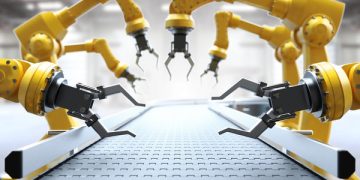
AI’s most significant impact in manufacturing has been in the realm of automation. In 2025, AI technologies such as machine learning, computer vision, and robotics have become integral components of manufacturing lines. These AI-driven systems allow for more efficient production processes, reduced errors, and faster time-to-market for products.

Robotic Process Automation (RPA)

One of the key advancements in manufacturing automation is the widespread adoption of robotic process automation (RPA). Robots, powered by AI, have taken over repetitive and dangerous tasks, allowing human workers to focus on more complex and creative aspects of production. RPA has also enabled manufacturers to work around labor shortages and rising wage costs by increasing productivity while ensuring worker safety.

Case Study: Tesla’s Gigafactory

Tesla’s Gigafactory in Nevada serves as a prime example of AI-driven automation. The factory uses AI-powered robots to handle everything from assembling battery cells to managing inventory. The robots on the production line work in sync with human workers, performing tasks like welding, part assembly, and material handling. By implementing AI-driven automation, Tesla has significantly reduced the time it takes to manufacture electric vehicles, boosting production capacity and reducing costs.

AI in Customization and Flexible Manufacturing

As consumer demands for customized products increase, AI is helping manufacturers achieve greater flexibility in production. AI-driven systems can adapt production lines in real-time to handle different products or varying batch sizes. This flexibility enables manufacturers to produce bespoke items without sacrificing efficiency.

Case Study: BMW’s AI-Powered Flexible Manufacturing System

BMW has implemented AI to optimize its flexible manufacturing system, which allows the company to efficiently produce a wide variety of car models on the same production line. AI algorithms analyze data from the entire production process to dynamically adjust machine settings, ensuring that each car is built to specification without slowing down production. The system’s ability to handle different models simultaneously improves overall productivity while meeting consumer demand for variety.

2. AI in Predictive Maintenance: Reducing Downtime and Costs

Another area where AI is making a significant impact is predictive maintenance. Traditional maintenance approaches often rely on scheduled checks or reacting to equipment failures, which can result in costly downtime and inefficiencies. AI has transformed this process by enabling manufacturers to predict when machines will require maintenance before they break down.

Machine Learning and Sensor Data for Predictive Maintenance

AI systems are equipped with sensors that continuously monitor machine performance. These sensors collect data on factors such as temperature, vibration, and pressure. AI algorithms analyze this data to detect patterns that may indicate a potential failure, allowing maintenance teams to address issues before they lead to costly breakdowns.

Case Study: General Electric’s (GE) Predix Platform

General Electric’s Predix platform is a leading example of how AI is used in predictive maintenance. GE’s AI-powered platform collects and analyzes data from industrial machines, identifying early signs of wear and tear. This allows businesses to perform maintenance only when necessary, minimizing downtime and reducing the costs associated with unnecessary repairs. The use of predictive maintenance has helped companies across industries like oil and gas, aviation, and manufacturing to extend the life of their machinery and improve overall operational efficiency.

AI-Optimized Supply Chains: Minimizing Interruptions

Predictive maintenance doesn’t only apply to machinery but also extends to the entire supply chain. AI tools predict potential disruptions and allow manufacturers to make proactive adjustments. For instance, if AI identifies that a specific part is prone to failure, it can trigger the procurement of spare parts ahead of time, preventing potential production delays.

Case Study: Siemens’ AI for Supply Chain Optimization

Siemens has integrated AI into its supply chain management to ensure smooth production workflows. By analyzing historical data and real-time information, Siemens’ AI system forecasts potential disruptions in the supply chain, such as transportation delays or raw material shortages. This enables Siemens to take corrective actions, such as adjusting inventory levels or re-routing shipments, ensuring that production continues without interruption.

3. AI in Quality Control: Enhancing Precision and Reducing Defects

Quality control is critical to the manufacturing process. Defective products can lead to increased waste, reduced customer satisfaction, and higher costs. Traditional quality control methods, such as manual inspection, are prone to human error and inefficiency. AI-powered quality control systems are changing the game by increasing precision, speed, and consistency.

Computer Vision for Automated Inspection

AI-driven computer vision systems have become widely used in quality control. These systems use cameras and sensors to inspect products at every stage of production, identifying defects or inconsistencies. The system then flags any defective products for removal from the production line, ensuring that only high-quality items reach consumers.

Case Study: Intel’s Use of Computer Vision for Quality Control

Intel, one of the world’s leading semiconductor manufacturers, uses AI-powered computer vision to inspect its microchips during production. The AI system scans each chip for imperfections such as cracks, scratches, or surface defects, achieving a level of precision and consistency that is impossible with human inspectors. This automated inspection process has significantly improved Intel’s quality control, reducing the number of defective products and ensuring that only the highest quality chips are shipped to customers.

AI-Enhanced Data Analytics for Process Improvement

Beyond product inspection, AI is also used to analyze data from production processes to identify areas for improvement. Machine learning algorithms can detect inefficiencies or patterns that lead to defects, allowing manufacturers to optimize processes and improve product quality over time.

Case Study: Coca-Cola’s AI for Process Optimization

Coca-Cola has implemented AI in its manufacturing facilities to monitor and optimize production processes. The AI system analyzes data from various sources, such as equipment sensors and environmental conditions, to identify inefficiencies that may lead to product defects. By using AI to optimize processes, Coca-Cola has improved its quality control, reduced waste, and minimized defects in its production lines.

4. AI-Driven Supply Chain Optimization: Streamlining Operations

Manufacturers are increasingly turning to AI to streamline their supply chains. The integration of AI with supply chain management allows manufacturers to reduce inefficiencies, minimize costs, and improve delivery times.

AI in Demand Forecasting

AI’s ability to analyze vast amounts of historical data and predict future trends has become a game-changer in demand forecasting. AI algorithms can analyze consumer behavior, market trends, and economic indicators to predict the demand for products with greater accuracy. This helps manufacturers adjust production schedules, inventory levels, and supply chain logistics to meet demand without overstocking or running out of critical materials.

Case Study: Unilever’s AI-Powered Demand Forecasting

Unilever has implemented AI to optimize its demand forecasting, ensuring that its factories produce the right quantity of products at the right time. By analyzing sales data, market trends, and consumer behavior, Unilever’s AI system can predict future demand with a high degree of accuracy. This allows Unilever to adjust production schedules, reducing the risk of overproduction and minimizing the cost of unsold inventory.

AI in Logistics and Distribution

AI is also used to optimize logistics and distribution, helping manufacturers streamline their operations and improve the efficiency of supply chain management. AI-driven systems can analyze real-time data on traffic conditions, weather, and inventory levels to recommend the most efficient routes and delivery schedules.

Case Study: Amazon’s AI-Driven Warehouse Automation

Amazon’s warehouses are a prime example of how AI is transforming logistics and distribution. The company has deployed AI-powered robots to manage inventory, fulfill orders, and optimize warehouse operations. These robots work alongside human employees, picking and packing products at lightning speed. By using AI to automate these tasks, Amazon has significantly reduced order fulfillment times and improved supply chain efficiency.

5. Challenges and Future of AI in Manufacturing

While AI has brought numerous benefits to manufacturing, the adoption of AI technologies also presents challenges. Manufacturers must invest in advanced infrastructure, retrain workers, and address concerns related to data security and privacy. Additionally, there is the question of how AI-driven automation will impact the workforce, as some jobs may become obsolete.

Nevertheless, as AI continues to evolve, its potential to drive even greater efficiencies and innovations in manufacturing is limitless. In the future, we can expect AI to be even more integrated into every aspect of manufacturing, creating smarter, more agile factories that can adapt to market changes in real time.

Conclusion: A New Era in Manufacturing

AI has already transformed the manufacturing sector in profound ways, and by 2025, its influence will be even more significant. From automating production lines and improving maintenance processes to optimizing supply chains and ensuring product quality, AI is reshaping every facet of manufacturing. As companies continue to adopt AI-driven solutions, the manufacturing industry will become faster, more efficient, and more adaptable to changing market demands.


Tags: AI in manufacturingAI quality controlAI-driven automationpredictive maintenancesupply chain optimization
ShareTweetShare

Related Posts

Multidimensional Applications of AI in the Digital Transformation of Manufacturing
Case Studies

Multidimensional Applications of AI in the Digital Transformation of Manufacturing

January 21, 2026
AI Customer Service Bots and Smart Advisors: Helping Banks Reduce Human Customer Support Costs While Enhancing Response Efficiency, User Engagement, and Satisfaction
Case Studies

AI Customer Service Bots and Smart Advisors: Helping Banks Reduce Human Customer Support Costs While Enhancing Response Efficiency, User Engagement, and Satisfaction

January 20, 2026
Personalized Recommendation and Inventory Optimization
Case Studies

Personalized Recommendation and Inventory Optimization

January 19, 2026
How Retailers Use AI Models to Predict Sales Trends and Optimize Inventory Levels
Case Studies

How Retailers Use AI Models to Predict Sales Trends and Optimize Inventory Levels

January 18, 2026
AI Not Only Enhances Diagnostic Capabilities but Also Significantly Improves Backend Healthcare Services
Case Studies

AI Not Only Enhances Diagnostic Capabilities but Also Significantly Improves Backend Healthcare Services

January 17, 2026
AI in Manufacturing: Achieving Significant Cost Savings and Efficiency Improvements
Case Studies

AI in Manufacturing: Achieving Significant Cost Savings and Efficiency Improvements

January 16, 2026
Leave Comment
  • Trending
  • Comments
  • Latest
How Artificial Intelligence is Achieving Revolutionary Breakthroughs in the Healthcare Industry: What Success Stories Teach Us

How Artificial Intelligence is Achieving Revolutionary Breakthroughs in the Healthcare Industry: What Success Stories Teach Us

July 26, 2025
AI in the Financial Sector: Which Innovative Strategies Are Driving Digital Transformation?

AI in the Financial Sector: Which Innovative Strategies Are Driving Digital Transformation?

July 26, 2025
From Beginner to Expert: Which AI Platforms Are Best for Beginners? Experts’ Take on Learning Curves and Practical Applications

From Beginner to Expert: Which AI Platforms Are Best for Beginners? Experts’ Take on Learning Curves and Practical Applications

July 23, 2025
How to Find Truly Useful AI Resources Among the Crowd? Experts Share How to Select Efficient and Innovative Tools!

How to Find Truly Useful AI Resources Among the Crowd? Experts Share How to Select Efficient and Innovative Tools!

July 23, 2025
How Artificial Intelligence Enhances Diagnostic Accuracy and Transforms Treatment Methods in Healthcare

How Artificial Intelligence Enhances Diagnostic Accuracy and Transforms Treatment Methods in Healthcare

How AI Enhances Customer Experience and Drives Sales Growth in Retail

How AI Enhances Customer Experience and Drives Sales Growth in Retail

How Artificial Intelligence Enables Precise Risk Assessment and Decision-Making

How Artificial Intelligence Enables Precise Risk Assessment and Decision-Making

How AI is Driving the Revolution in Smart Manufacturing and Production Efficiency

How AI is Driving the Revolution in Smart Manufacturing and Production Efficiency

Real-World Testing and Efficiency Evaluation of Emerging Technological Trends

Real-World Testing and Efficiency Evaluation of Emerging Technological Trends

January 21, 2026
Multidimensional Applications of AI in the Digital Transformation of Manufacturing

Multidimensional Applications of AI in the Digital Transformation of Manufacturing

January 21, 2026
Human-Machine Collaboration and Trend Prediction: The Future of Work and Decision-Making

Human-Machine Collaboration and Trend Prediction: The Future of Work and Decision-Making

January 21, 2026
AI Explainability and Ethics: Balancing Transparency, Accountability, and Trust in AI Systems

AI Explainability and Ethics: Balancing Transparency, Accountability, and Trust in AI Systems

January 21, 2026
AIInsiderUpdates

Our platform is dedicated to delivering comprehensive coverage of AI developments, featuring news, case studies, expert interviews, and valuable resources for professionals and enthusiasts alike.

© 2025 aiinsiderupdates.com. contacts:[email protected]

No Result
View All Result
  • Home
  • AI News
  • Technology Trends
  • Interviews & Opinions
  • Case Studies
  • Tools & Resources

© 2025 aiinsiderupdates.com. contacts:[email protected]

Welcome Back!

Login to your account below

Forgotten Password?

Retrieve your password

Please enter your username or email address to reset your password.

Log In